edited by David Steffen
Content note (click for details)
AbleismThe Super-Abled 501 Local Union building wasn’t ADA compliant.
I sat in my wheelchair next to the three steps that led to their front door, and groaned. My brand new laser eyes didn’t exactly fix my mobility problems.
Two weeks ago, I’d been zapped by a falling piece of alien spaceship debris and developed laser eyes. Ten days ago, I’d lost my job at the City Planner’s office because of budget cuts. I wasn’t even mad though, because I could never push my projects through and you know who gets stuff done without anyone getting in their way? The super-abled. As soon as I got home I filled in my union application.
Yesterday I’d gotten notice that I could join after I demonstrated my new laser eyes in person. And now here I was. Stuck.
A rubbery guy walked out the front door, legs stretching and compressing like a slinky.
“Excuse me!” I said, brandishing my paperwork. “Is there another way into the building?”
Stretchy-legs looked me up and down. “You sure you’re in the right place?”
I sighed and took off my sunglasses, then lasered the small patch of grass next to the sidewalk. “Yeah. So. Is there another way in?”
He shook his head.
“Sooooo could you get someone to come out? Nobody’s answering the phones.”
“Right. Sure. Hey, why are you in a wheelchair if you’re super-abled?”
I took a deep breath and reminded myself that ignorance wasn’t malice. “Laser eyes ain’t everything. Can you go grab someone?”
Eventually a harried intern came and explained that testing had to be done inside where specialized equipment made sure nobody was cheating, but if I wanted we could get one of their super-strong members to carry me and my chair in.
Normally I’d never submit to such indignity. But, figuring I could get this sorted more effectively as a member than a non-member, I said OK.
A large woman who looked like she was made of striped sedimentary rocks clomped over and gathered me up, wheelchair and all, like I was just a bag of groceries. Humiliating, dehumanizing, and not exactly the best first impression in a professional context. Once she put me back down I hoped that everyone, myself included, would forget that ever happened.
Inside, in a room full of lenses and sensors, I lasered things. I turned paper into ashes, melted concrete into a glowing blob, and then, because nobody was saying anything, with great care I lasered the wobbly words ‘is this enough’ in char marks on the wall.
My application was approved.
***
I’d been trying to get traffic circles built since I’d started at the City Planner’s office. As an assistant I hadn’t had much sway over anything.
Each time there was a different reason. Sometimes there was no budget. Sometimes it wasn’t what the voters wanted, though, had anyone actually asked the voters? Of course not. Sometimes there was no time to spend on this and really I should be focusing on the important things like fixing the coffee machine.
But the super-abled? They could do anything they wanted. They had no bosses to tell them no, and what were you gonna do, try to stop a super-abled person from doing, well, anything?
Over the next week I went through the list of superheroes in the union roster and started contacting them, one by one. I introduced myself and gave my little spiel about how traffic circles save lives compared to regular intersections, and how this little change could make a big difference, and weren’t we super-abled all in the business of saving lives…?
The responses weren’t encouraging.
ExpandiRay wouldn’t lend me his raygun to grow an intersection wider so that I could carve it into a circle after, because insurance wouldn’t cover it.
AscendAnt said she was too busy with an autograph signing to get ants to dismantle bits of pavement and carry them to a new orientation.
NiteFlite wouldn’t lift and move sections of street without consulting with the union PR rep, who wrote that redoing city infrastructure wasn’t “on brand” for the union and maybe I should just find a nice supervillain to fight instead.
The Smash sent me back an email that looked like she’d mashed her fists all over the keyboard and called it a day.
But most of them didn’t respond at all.
***
They still hadn’t built a ramp, and meetings were in-person, so I joined the union meeting by video. The HR rep made a big deal about making a “special exception” for me since I “didn’t really need this accommodation” because “someone could always carry me in like before.” I managed to keep my smile plastered on my face.
The union leader, a woman named “Big Dig” with hands like gopher claws, went through the agenda. Most of it was assigning press stuff. But eventually we got to the one real thing on the agenda—the union wanted to defeat Doctor Croc, a green scaly menace who’d been razing buildings, most recently a conference center.
I knew that place well. Its front doors were too narrow for my chair, and the one time I’d gone to a conference I’d had to get in near the dumpsters in the back. Which had meant waiting by the dumpsters for an hour, until I too smelled like garbage, until someone brought up the service elevator. Which meant my boss was so grossed out he’d sent me home to shower.
Destroying a conference center wasn’t great, but if you absolutely had to, I’d choose this one.
When it was time, I introduced myself and said “Sorry I’m not there in person to meet everyone. I’ll be glad to join you once there’s a ramp!”
Crickets.
“So I was wondering when there was a chance to suggest new business? Traffic circles save lives over intersections, and I was thinking that if someone like PhazeMatter could turn an intersection’s pavement into a liquid and then we reroute it and solidify it back, we could make a big difference to the city without a lot of effort… I have a research paper on traffic circles… if anyone’s interested…”
I trailed off. Nobody was listening.
The union leader ahemmed and said “Everyone, there’s snacks outside, mingle and enjoy! RazorBeam, can you stay on a minute?”
She waited until everyone else filed out of the room. “I wanted to touch base. The 501 really cares about accessibility. But with dues the way they are, we can’t afford to put in a ramp right now.”
“But the ADA says—”
“This building is old enough to be grandfathered in. Besides, if we built a ramp for you, we’d have to make adjustments for everybody. Backless chairs for Lizzardbeth so her tail would fit better, upgrade the bathroom plumbing for RockGal, you get the idea. The budget would explode! There’s even a rule in the union handbook, from about seven years ago, that says we don’t do accommodations when it’s for just one member.”
Temporary ramps were pretty cheap, but I tried switching tactics. Maybe I could still get something else done. “Can we talk about traffic circles then?”
“Unfortunately it’s not on our list of priorities for the year, so maybe some other time. And we’d rather you not bug all the other union members about it. But hopefully you can join us in person for the next meeting! You’re missing out on the networking,” she chirped, and hung up.
I breathed deeply. Then lasered a hole in my living room wall.
***
Throughout the next week, I waited for my union-issued superwatch to vibrate and call me into action. On Friday it finally did, telling me to come to HQ.
Yet again, I hit the problem of the stairs, but it turned out not to matter. They wanted me for an outdoor photo shoot as the newest member of the team, together with an interview with a local journalist.
During the interview, the PR rep held giant cue cards with what I was supposed to say to the journalist. The whole exercise seemed pretty meaningless.
But then the journalist asked, “And RazorBeam, how do you feel about Doctor Croc getting away yesterday, after he smashed up the craft supplies store on Main Street?”
The PR rep’s eyes widened. Probably the journalist hadn’t vetted this question with them. And I was taken aback too—I’d had no idea that there was a new Doctor Croc incident.
“Uhhhh… I’m sure we’ll get him next time?”
“What’s really important here,” jumped in the PR rep, “is that we have a wonderful new member of the team. Our diversity makes us stronger, and that lets us better serve the people of this city. Thank you for your time!”
After the journalist was hurried out, I asked the rep what had happened.
“Oh it’s just a craft store, don’t worry about it.”
“Why wasn’t I called to help? I was free, and maybe if I was there he wouldn’t have gotten away.”
“Oh well.” They looked me up and down. “We want to save your abilities for the projects that use them best. I’m sure the next time you’ll be called. See you then!”
As they sauntered away, I lasered a patch of grass into a charred black splotch in frustration.
But why a craft supplies store? What would a supervillain have against pipe cleaners and construction paper and rolls of fabric? A convention center was the center of big meetups and commerce, it was a big deal to a city to get that destroyed. But a little craft shop?
I wasn’t a fan of that store, not that I needed a lot of craft supplies. But I’d gone once to get poster board and thick markers to make a sign for a rally, and the aisles of supplies were crammed so close together that I couldn’t really maneuver in there.
Still, a craft store made no sense.
***
Two weeks later, at the next union meeting (still via video), I came prepared with a proposal.
If I could get help blocking traffic, I could sort of make traffic circles happen myself. I’d spent the last few weeks experimenting with asphalt and found that after I melted it I could sort of push it around with a shovel. It wasn’t the most efficient, but it could work.
I never got to talk. There’d been another Doctor Croc attack that nobody had invited me to, and it was at a perfectly wheelchair-accessible gym. This time they put up some photos from the gym fight. (They’d brought the journalist! But not me!)
I’d been to that gym. It was a crappy old place where the windows didn’t properly close and all the fluorescent lights flickered and there was a greasy sheen of something on all surfaces, so not that many people went to it anyway and I doubt many people were sad it was destroyed. What was Doctor Croc’s goal here, anyway?
Nobody was trying to figure out what the pattern was, though. And it seemed like nobody could stop the guy. ExpandiRay was in the hospital with a shattered femur from some barbells Doctor Croc had thrown at him during the fight. And RockGal had some new epoxy-filled cracks on her face.
I didn’t even try to bring up traffic circles.
***
The attacks kept coming, and I kept not getting an invitation to come help.
I did experiments in my own backyard on how far I could accurately laser things, and sent the results to Big Dig. It didn’t change anything, even though I was pretty sure I had the most reach out of any of the super-abled who had distance or projectile abilities. (I got an angry letter from my landlord who saw the charred remains of my experiments and I had to buy a fire extinguisher, so I guess one change. But that was it.)
If I couldn’t help fight, perhaps I could help predict. I went to the library and read all I could about Doctor Croc, and found nothing that made sense. There was no obvious vendetta I could find, nothing about past grudges, or feuds, or specific needs for revenge. As a twentysomething he’d had an airboat accident in a swamp and had been bitten by a mutated crocodile. The toxic waste plant that had oozed its sludge into the swamp to affect the crocodiles had long since been dealt with. There’d been lawsuits, cleanup efforts, the works, and it hadn’t been in business in years. It looked like the site was now an ecology museum with exhibits about the dangers of pollution in wetlands.
So I needed a new theory. I made one of those conspiracy boards at home, with the printed out pictures and thumbtacks and pieces of string connecting pieces of information. He’d destroyed the conference center, craft supplies store, and gym, and previously had demolished an ancient movie theater that showed old movies on a rattling old projector, and a little hardware store crammed full of tools and paints all the way to the ceiling, with really high checkout counters that displayed even more goods beneath them. After weeks of trying to put together the puzzle pieces, I still had nothing.
***
Chez Louisette was the one fancy restaurant in town. And it was having a grand re-opening on Wednesday. It was no crappy gym or dusty craft store, but it was an opportunity with a lot of press so maybe, just maybe, Doctor Croc would be there? Maybe?
So on Wednesday morning I sent a note to Big Dig about my theory, then went to stake the place out.
Not only was I right, but Doctor Croc had beat me there. As soon as I got near I heard a big crash. And another. And then two green scaly fists burst through its wall, raining down bits of brick.
Nobody else was here, but this was my chance! Maybe if I could take him down alone, the union would take me seriously, and we could get something done.
I lasered a giant hole in the wall, which then tottered and fell forward, revealing a very angry crocodile man. He was about eight feet tall, mostly a torso on stubby green legs, and his arms were muscular, massive, and gearing up for another punch.
“Hey!” I said. “Doctor Croc! Put your hands in the air!” I remembered protocol, and pushed the button on my new superwatch for the union to send backup to my location.
He looked me up and down. “You?” he said. “YOU. Of all people. Are trying to stop ME.”
I suppressed a scream. Why were people so difficult everywhere! “Disabled people can be super-abled too, you know. Now I can laser you dead from here in less time than it’d take you to throw a chunk of wall at me, so I suggest you put your hands up.”
“You don’t get it. Do you know what this restaurant’s been doing?”
“Uh, being snooty?”
“They won’t reveal their ingredients, which is dangerous for people with allergies and Celiacs and whatnot.” He looked smug, as though this magically explained everything.
“I mean, that’s awful, but that’s no reason to destroy the whole building. Or any of the other places you’ve been smashing up. Now, you’re under arrest, by the order of the Super-Abled 501 Local Union! Hands up!”
He scoffed, but slowly raised his hands and stepped out towards me. Behind him were the twisted stainless steel remains of what had been a kitchen. “Still a believer, huh? Tell me, did the 501 ever add any outdoor handrails?”
“What does that have to do with anything? No…”
“I was a member seven years ago. Asked for some accommodations so my kid could join on Take Your Child to Work Day. They never added any. Each time it was ‘there’s no budget’ or ‘that decision was made by the previous leadership’ and nothing. Ever. Changed. Eventually they had a vote that said that any changes to the union of any kind, which benefit only one person, were out. Specifically to shut me up. Even though accessibility accommodations help loads of people, and they wouldn’t even know how many people weren’t applying in the first place because the building was inaccessible.”
Sounded familiar. And enraging. “It’s crappy,” I said, “but still no reason to destroy everything.”
“Oh yeah?” he asked, moving closer. “Have they built you a ramp yet?”
“Um. No…”
“Didn’t think so. They just can’t be bothered.”
“OK so they suck, fine, but why destroy all these other buildings?”
Doctor Croc continued, “Nobody can be bothered to make accommodations. The ADA’s only enforced when people bring lawsuits. I’m in a giant Facebook group of parents with disabled kids and basically nobody has the time and money to sue, ever. And even then most lawsuits fail. But when I destroy an inaccessible building, the insurance covers it, and when they rebuild, it’s no longer so old that it gets an accessibility exemption. Plus, it’s safe since everyone gets evacuated. No people get harmed, and we get the accessibility we need. There was nobody here this morning when I started smashing.”
“That can’t be right,” I said, as his hands started floating downwards. “Hey, hands stay up! Look, I used to work for the city. There are plenty of avenues to ask for accommodations. And besides, what was so inaccessible about that gym? Or the other places?”
He put his hands up again. “That gym had flickering lights, which can trigger migraines, seizures, or meltdowns. The movie theater never bothered to add closed captioning devices. The hardware store had high checkout counters and never let its cashiers sit even when one of them broke a leg.”
“OK, that makes no sense. Why not just destroy the gym’s lights? Or the hardware store’s checkout counters? There’s no reason they couldn’t rebuild with the same exact problems. Plus I doubt anyone even knows that this is why stuff’s getting destroyed. You’re not exactly getting headlines that say ‘Doctor Croc Destroys Another Inaccessible Building’.”
“Huh,” he said, lowering his hands briefly then thinking better of it and shoving them up again. “Yeah that’s a good point. Probably should’ve just smashed up those counters, and probably should’ve left a note or something. Hey you’re good at this! You should join me!”
“I’m not going to start smashing up buildings! I’m one of the good guys.”
“Oh yeah? Those good guys that can’t even get you a ramp? Those things cost what, like $200 at Home Depot?”
He had a point. With the union taking a percentage of all sponsorships and deals, and members working with giant brands like Nike, they could absolutely find space in their budget for a measly $200. They could get a single backless stool for Lizzardbeth for cheap. They just weren’t bothering to take those two minutes to think of solutions to help. Even I hadn’t thought of the problems with flickering lights and old movie equipment.
Most of all, nothing was getting done. The local 501 was so busy with its public image it wasn’t doing jack. Here I was, talking to their archenemy for a good five minutes, and nobody else was showing up.
“This is ridiculous,” I muttered.
“It is ridiculous! We’d make great partners, you and me, actually make some changes around here. What would you do about the movie theater?”
“Huh? I don’t know, I guess I’d laser ‘GET CAPTIONING DEVICES OR ELSE’ on their walls. Or send a note to local insurance companies that says that their clients are at risk of expensive damages if they don’t shore up accessibility, and they have two weeks to fix things.” I shook my head. “But that’s irrelevant!”
“See? Those are great ideas. You’re full of them. So join me, whaddaya think? No more smashing up buildings when you’ve got a better plan, I promise.” He gave me a crocodiley grin, showing all his teeth. “My garage is fully accessible and is a great place to meet. And I make a mean dairy-free hot chocolate.”
Something inside me snapped. It had been years since someone thought about accessibility for me without me having to even ask. And maybe this way I could actually get something done, especially if Doctor Croc was willing to let me focus him. Get him laser-focused, if you will. And with a bit of time I could probably come up with some better plans that were less destructive and more effective.
“Hell,” I said. “Only if we make some traffic circles too.”
“Oh I read those things save a lot of lives! Great idea, let’s do that next. You in?”
“Why not,” I said, and grinned back.
And just for some much-needed catharsis, I lasered an already-wrecked piece of kitchen behind him. The metal melted into a ramp-like shape.
© 2025 by Effie Seiberg
3479 words
Author’s Note: In 2017 I became disabled with ME/CFS, turning me into an ambulatory wheelchair user. The transition from abled to disabled is a tough one, and one of the hardest things is seeing people refuse to make even super easy accommodations. I’ve seen every one of the excuses in this story—there’s no budget, but then we’d have to do things for everyone and that’s just too much, there’s no bandwidth to deal with this but maybe later, this is an old building with an ADA exception, etc. (Don’t get me started on a lack of Covid mitigation policies… even if nobody wears a mask, you can do cheap and easy things to help air filtration/circulation.) And this part really sucks, because it excludes people like me from stuff we otherwise could still do, effectively making our disabilities even more disabling. So this story is my frustration about the lack of easy-to-accomplish accessibility accommodations that still just don’t happen.
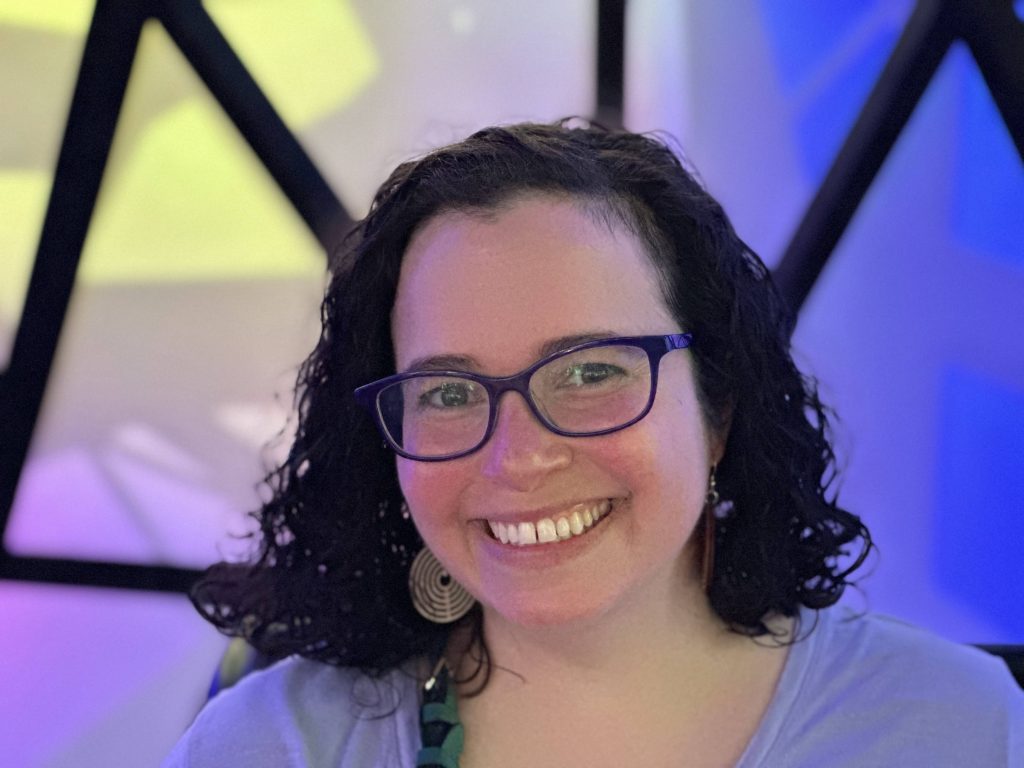
Effie Seiberg is an ambulatory wheelchair user, and a fantasy and science fiction writer. Her stories can be found in Lightspeed, Galaxy’s Edge, Analog, Fantasy Magazine, and PodCastle, amongst others. Her stories include a finalist in the AnLab Awards, a nomination for the Subjective Chaos Kind Of Award, and an honorable mention in the Year’s Best YA Speculative Fiction.
She encourages anyone who cares about US disability rights to call their elected representatives (it’s easy at 5calls.org) and ask them to reject cuts to Medicare, Medicaid, and Social Security, all services critical for disabled folks.
If you enjoyed the story you might also want to visit our Support Page, or read the other story offerings.