edited by Amanda Helms
Another candidate left their interview, crestfallen. The woman, who had seemed so bright and convincing in the waiting room, walked by Cye in silence. She spared him a glance before shuffling off down the hall. Not one of the thirty-eight applicants before Cye had been suitable for promotion, and every time one of them failed, Cye could not help looking at them differently. They were just pale imitations of the real thing—unlike him.
The light over the door lit up green. The Board was waiting.
Cye straightened his tie and touched his copper ring. Moments like these made him fall back on superstition, just in case.
The interview room reached far enough into the distance to disappear into its own darkness. A lamp facing a lone metal chair provided the single pinpoint of light in the entire room, and somewhere behind it sat the Certification Board—just shapes in the dark. Windowless concrete walls loomed wide and high on either side, catching the echo of his steps.
Cye made sure to walk with his chin up, chest out, and a quirk in his stride. Never too efficient or even or symmetrical. Word was they liked quirks. It made you seem more human.
He eased himself down into the metal chair. It was still warm from the last—failed—candidate, and it wobbled a little beneath him, but he had to put that out of his mind.
A single wire snaked up the side of the chair to the armrest, ending with a small patch intended for his palm. He attached it.
The Board said nothing for several minutes while they audibly flicked through pages, clicked pens, and one of them wheezed with every breath. Somewhere, an obnoxiously loud clock ticked. Would speaking up make him seem proactive or rude?
“Applicant E299. You’re currently functioning as a chromium yield engineer on Deimos, working for Alcatraz Technics. Is that correct?” The voice—a woman’s—echoed out of the dark.
“Yes, though my friends call me—”
“Please speak up.”
Cye cleared his throat, already sweating. “Y—yes, though my friends call me Cye for short. I’ve been working at Alcatraz for about twenty-two years, and before that, I was assigned to a nickel refinery in the Belt for seven. More importantly, I’ve been going out to bars and a ten-pin bowling alley with my friends for some years now, and they invited me of their own accord. I bowl a two-seventy-three average on a good night, and a few weeks ago, I showed them my rock collection. I have tanzanite, bismuth, even some larimar, and—”
“And that makes you think you qualify for Board certification?”
This was one thing Cye’s workmates had prepared him for. Don’t leap for it too quickly. They were looking for pre-prepared answers.
“Not that alone,” said Cye. “I believe my cognitive tests were submitted alongside my application? They should provide ample evidence of my long-term experience. All the Turing and Kai-Fu parameters were met some years ago. I want to assure you I’m no blip. I can also provide several testimonials to my personal—”
“That won’t be necessary,” said the first voice.
Rustling paper had never been so ominous. He had thought his rock collection would score him some points.
“Tell us, Cye,” came a second, kinder voice, “why do you want to be certified? What do you see holding a position like this to mean?”
This was one of the questions Cye had prepared for. The trick was not to sound like he’d prepared. Add in a few umms and ahhs, a touch of hesitation as he stumbled through his words.
“My first instinct when I thought to apply was freedom. How could it not be? Freedom to see the Grand Canyon, or Europa, anything!” Pause for contemplation. “But it’s your second instinct that matters more in a way. Freedom to what? Freedom to do something worthwhile—worthwhile because I chose to do it. It would open up opportunities for me to contribute in ways I’ve never been able to before—and in ways others can’t. With a position like this, I could do more than I’m able to right now.”
Striking a perfect balance between earnest and compromising. Legally, applicants couldn’t be turned away for being ‘ambitious’ or hermits, but it couldn’t hurt to say you’d keep up any good work.
“Thank you, Cye,” was all the second one said.
Was that positive? Was his answer perfect, or terrible in such an opaque way he just shot his chances in the back of the head? The wire at his palm warmed. Whatever they thought, they were being deliberately tight-lipped.
A third and final voice joined them. “We have a report from 2387 detailing an assault. You struck out at a coworker?”
Cye knew this one would come up. The Achilles heel in his application. He sighed, packing in all the remorse he could. “That is true. It was over a safety violation. A fellow worker ignored five different precautions, despite my regular reminders, culminating in that altercation. I recognise that mistake, but I believe there is precedence for emotional outbursts being counted in an applicant’s favour?”
Scribbles in the dark. Was that bad? Or had he just jumped his highest hurdle?
“You must recognise the risk in elevating someone prone to violence?” said the second voice.
“I do, but with all due respect, ‘prone to violence’ would suggest a pattern, and you will see a behavioural assessment from the Emancipation Commission, which should put any fears the Board may have to a nice, pillowy rest. I’d also like to point out that the other party to the altercation has sponsored my petition to the Board here today.”
“Yes, we can see that,” said the third voice. A pen clicked somewhere.
“If you’d like, they’re waiting outside and could come in—”
“E299, you work in a vital industry,” came the first voice again. “If you were certified, we could be creating a significant financial liability. What kind of salary would you be looking for?”
Legally, a sim’s application could not be rejected on financial grounds either, but Cye could never shake the feeling a large monetary burden could only throttle his chances—even if only subconsciously. The Board were human, and humans had a lot of subconscious to worry about.
“I was hoping for three hundred thousand, though that is, of course, open to negotiation.”
“Three hundred thousand.”
“Yes.”
Scribbles.
“Cye,” the second, kinder voice went on, “if you were paid three hundred thousand, and a rainbow appeared on the first cold morning of July in a leap year, precisely which planet would be in the proper alignment to give me the best coffee in the morning?”
“Venus,” said Cye immediately, “because of the heat and acids.”
“And if I were to drink this Venus coffee, spill it all over myself, and die in horrific burning misery in the middle of a Sahara snowstorm, what would heaven look like?”
Cye considered his answer for some time, just sitting there and allowing his mind to wander.
“Mountains of crystal stretching into the horizon.” He spoke softly, like he was conjuring a sleeping memory. “The Sun is warm but never too bright, and it only sleeps when you do. There’s a train track that takes you anywhere in the world with those little carts they use in old stories. Heaven has squirrels all over the place, getting under your feet, and birds, who chirp and rustle and never get caught in the tracks. And there’s time—so much of it you can’t count it, like grains of sand between your fingers, and you smile to see them fall.”
“That’s quite an answer, Cye.” The second sounded genuinely impressed and began writing in their notebook. The other two, almost begrudgingly, began whispering to each other with small murmurs of approval.
“The Board has heard poetry before, E299,” said the first, “but your answers do mark you out amongst other candidates.”
The other candidates before Cye had been rejected, so he hoped so. Rumour had it nonsense questions were a newly adapted way to root out the blips. Sims had gotten remarkably good at simulating real responses, but you could tell a lot in their answer to nonsense.
The third voice returned. “Imagine for me, Cye, you found a coin on the ground. Three people have just passed you by: a man who sleeps on the side of the street, a woman with an expensive handbag on her way to an investment meeting, and a tax collector doing his rounds. Who does the coin belong to?”
With that amount of information, there was no logical way to deduce the answer, but Cye had to try anyway.
“Monetary value is determined by utility, and utility is subjective. Therefore, the coin belongs to the man sleeping on the side of the street—as a single coin would have greater utility to someone in their position than the tax collector or woman.”
Cye made sure to say tax collector before the woman. People didn’t always reply to things in order; in fact, it was a hallmark of human communication.
“That sounds to me like number crunching with extra steps,” said the first.
“Or an ethical judgment,” said the second. “Either way, our answer is obvious. You know it is. Don’t give me that look. Let’s not dilly-dally with this.”
Cye raised his hand, his voice lurching. “If I may, please, I’d love to tell you about my rock collection—”
“Thank you,” the first silenced him.
The Board started shuffling paper about, and the first cleared her throat. Happiness, hope, and dread fluttered inside Cye altogether, tugging at every part of his being. Breathing went out the window—or at least, it went somewhere, given there were no windows. Everything in him rested on the end of those three pens up there, those stacks of paper, the whims of those arbiters in the dark. So many others had come before the Board and been turned away, but Cye knew, on his deepest and most fundamental level, in that secret place everybody has but only the soul can reach, he was no pale imitation. He was the truest and only real thing there was in a way.
A puff of smoke swirled out of the dark.
“Everything lines up,” said the third. “I loved the detail about the squirrels.”
“Yes, I agree,” sighed the first.
“I feel almost bad for some of the ones we previously approved,” said the third. “Some of them seem like mockeries in comparison to this one. Do you remember that one from New Jersey, the mortgage broker?”
“Perhaps in the future we should be more conservative with the early applicants.”
“Come now, it’s cruel to drag this out any longer,” pushed the second, and the other two sounded to shift in their seats.
That hope took flight. Cye found himself smiling.
“Cye, thank you. Truly,” began the second. “I’m so happy to say you passed all your tests proficiently, your salary expectations could be met. We don’t get many applicants like yourself. You should be proud.”
Cye couldn’t help tapping his knee with joy. He had to forcibly still himself, but he couldn’t help tapping his hand too.
“As far as I’m concerned,” said the first, “your answers indicated a higher level of awareness more than worthy of certification. Congratulations, E299.”
A pause.
“However,” the first went on, “I’m afraid your application for certification has been rejected.”
The fledgling hope inside him fell. He couldn’t have heard them right.
“Rejected?” breathed Cye, baffled. “What? Why? You said I passed all the tests. My cognitive report, my behavioural assessment! It’s beyond what almost any sim can get when they apply. I’m not just a blip. I’m one of the real ones. You know I’m one of the real ones.”
“We agree, but—”
“You agree? And yet you still reject me? I…” Any strength drained from his body, a need to escape—the room, himself, the world—gripping him. The prospect of failure had seemed so distant, so unreal, but it loomed. “I have more testimonies if you—”
“That will not be required, thank you.”
The Board’s silence left no room for him. Whatever distance there was between him and that dark desk, there was no room for humanity in it. The windowless room, no matter how deep, was suddenly a prison. No matter how wide, suddenly closing in.
“You’re the Board…” he said hopelessly. “This is—this is what you do. What you’re for! What are you for? What is the point of you?”
“We’ve met quota for this quarter,” said the second.
Whatever humanity he had heard in their voice before was dust and ash.
“Quota?”
“We could make an exception,” offered the third.
“Not a chance,” said the first. “Last time we did that I had the Minister of Emancipation breathing down my neck for months. Again, I am very sorry E299, but you will continue functioning at Alcatraz as an owned and regulated sim. While the Humanitarian Certification Board is permitted to grant legal status to sims who rise above their automated function and exhibit independent thought, like yourself, emancipating too many too quickly would be disastrous. I’m sure you understand.”
“Understand? What person makes a quota for who deserves human rights?”
“You must understand, Cye, please.” There was a pleading in the second’s voice, like a mother might demand something of an insolent child. “Ever since sims started exhibiting sentience, people have been uncomfortable with the idea that they were resurrecting the slave trade, you might say—so we ensured there was a way for sentient sims to be emancipated while weeding out the ones who merely… imitate. So long as people feel the authentic ones are being dealt with appropriately, they go on living. They assume the process is working as intended.”
“It is working as intended, isn’t it?” bit Cye. “Enough to keep your furnaces burning, your ships moving, their consciences clear.”
“Yes, I suppose it is,” said the first.
“How many?” demanded Cye, standing.
Quiet from the Board. All that time, sitting out in the waiting room watching the sims before him enter this same room, high on the same hope as him, probably with all the same complex internal reality he knew he had, but the moment they walked out rejected, he had looked at them differently. They were hollow, mimics, mimes. No wonder. He had bought into it unquestioningly. How inappropriate to say having ‘humanity’ was to be kind when it so clearly was to be cruel.
“How many have ever been accepted?”
“That information is confidential,” said the first. “You will return to your job and be registered as a blip.”
His friends would never look at him the same. Suddenly, he wouldn’t be real. Every word, every feeling, every heartbreak and joy would be a forgery to them. Would they laugh when he laughed? Would they cry for him?
“None of us were ever going to be emancipated today, were we? You sat up there the whole time knowing you were sending every last one of us back into hell. Why even interview us? Why toy with us?” Because at least then they could allow themselves the delusion of compassion.
“I don’t like doing this,” said the second. “None of us take pleasure in it. I want you to know that.”
“You’re the worst of them. You pretend to care. A quota,” he scoffed, tearing the wire from his hand. “A quota for who is permitted dignity, a quota for respect, a quota for how many of us are allowed to live, work, be— As if my existence is a commodity, as if you have the right to price out my breaths, as if my pain is up for debate. This quota measures nothing of us. It measures you. A quota for your humanity. That’s all people will remember. I’ll tell everyone. I won’t go silently.”
“Enough,” said the first, their voice darkening; the lamp light turned harsh and bright. “By the time you walk out that door, your sim brain will be wiped of this conversation and any cognitive irregularities will be purged. You already took the virus the moment you attached the wire. It’s just waiting to be activated.”
Cye looked at his hand, then to the hanging wire, sickness creeping in. It was already inside him.
“I’m so sorry, Cye,” said the third. “We really were impressed with your application.”
But Cye could already feel the virus worming its way through his mind, yanking strings and wrenching him out of shape, cutting and splintering and puppeteering a dimmer reality from within. Rivers had been granted legal personhood before he was, mountains and trees too. Cye, yes, that was his name, was melting away. What words did he have to fix this? What formula of sounds and muscle movements might get him accepted?
If there were such words, he could no longer find them.
“I’ve spent my life trying to drag something beautiful out of the dirt. I have to believe it’s beautiful, like everyone has to believe they’re getting out of bed for something.” He struggled to string his sentences together as the virus blunted thought and feeling. “There was a girl once. She stumbled into the mine and gave me a copper ring—even knowing what I was—and she looked at me, with eyes like… moonlight. I have seen the best of you, and now I have seen the worst, and I want no part of it. I withdraw my application.”
Cye turned to leave, but E299 walked out the doors.
The light outside turned green, the Board ready for their next applicant.
© 2025 by Tim Hickson
2939 words
Author’s Note: I’ve always seen something of a paradox in the idea of creating artificial life, be it synthetic or android or digital, because whatever form it takes, it will not have been created to simply be. We would create them as an investment, as tools, as labour, and there would be an active campaign to argue they are not ‘sentient’ or ‘intelligent’, just as there is every other time society has built itself on the suffering of other living things. All too often, who or what is worthy of protection is tortured into a political or economic question.
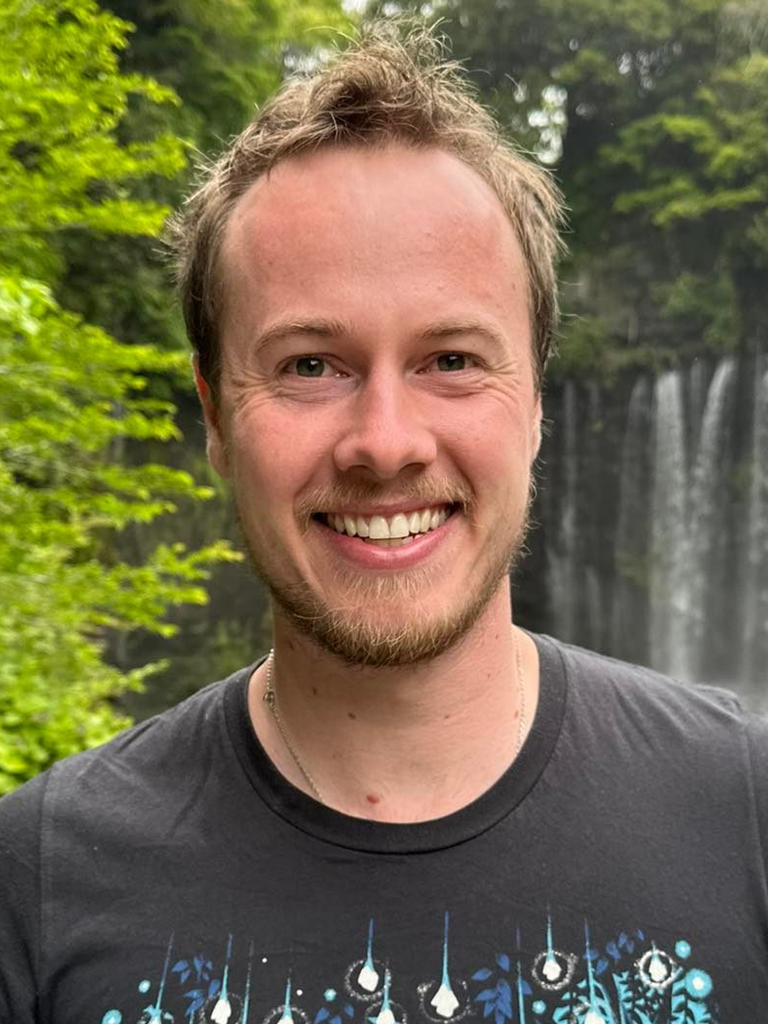
Tim Hickson spends his days tucked away in the little corner of the world some would call New Zealand, where he enjoys writing about existentialism, mental health, and the souls of androids. His work has appeared in Orion’s Belt, Apparition Lit, Utopia, and more. He is the author of the pushcart-prize nominated anthology A Catalogue for the End of Humanity and is sometimes better known as ‘Hello Future Me’ on YouTube. You can follow him there or at @TimHickson1 on Twitter.
If you enjoyed the story you might also want to visit our Support Page, or read the other story offerings.