
Interview: Literary Agent Amy Boggs

interviewed by Carl Slaughter
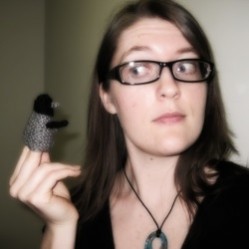
amy-boggs-photoLiterary agent Amy Boggs is a sci-fi/fantasy geek who has been professionally geeking out over books at Donald Maass agency since 2009. She specializes in speculative fiction and is especially interested in high fantasy, urban fantasy, steampunk (and its variations), YA, MG, and alternate history.

Her recent books include: Tom Pollock’s Our Lady of the Streets, the final book in the Skyscraper Throne series (urban fantasy); Thea Harrison’s Knight’s Honor, book #7 in the Elder Races series (paranormal romance); Jacey Bedford’s Empire of Dust, the first in space opera series.


CARL SLAUGHTER: Why get into agenting? Rather than writing or editing, or marketing or publicity, or publishing.

AMY BOGGS: I knew I wanted to get into the agenting side of the business after interning at an agency my sophomore year at college. Right out of college, I would have been very happy to have a job that touched publishing in any way, so I could have spent time in any division of a publishing house, but I knew agenting was my end goal because it combines many of my favorite things about the book business. You brainstorm with your authors and help them revise and negotiate fair contracts and fight bad covers and talk them into good covers they don’t particularly like and tell everyone you can about their fabulous books. I work solely for the author, because what benefits the author benefits the agency and me. I like that my job is purely championing my authors and their work.


How did you know as early as college that you wanted to be a literary agent?

Vassar College’s Career Development Office had a weekly newsletter they left in our mailboxes, and one day there was a notice for an internship at a literary agency. I had a vague idea of what agents did and thought it would be good experience. Once I got on the job, I knew it was what I wanted to do in my future.


How did you rise from intern to agent so quickly?

Did I? I think agent careers reflect author careers in that you can’t really say there is a typical timeline they’re supposed to follow. This varies by the agency, of course, but I did my first agency internship in 2005 and then interned at DMLA in 2008 (with jobs at two magazines in between) and then was hired as an agency assistant in 2009. Eight months later I found a brilliant author in my boss’s queries and he thought I should be the one to take him on. Two months later I signed my next client, and five months later I sold a three-book deal. I don’t know if that’s quick or slow or typical, but it happened very organically. I do know that I’m fortunate to work at an agency that encouraged my growth and has a few decades of experience to back me up.


Why so keen on sci-fi/fantasy?

I’ve always loved it. When I was three, I was obsessed with Scooby-Doo. Bruce Coville was my childhood. My pre-teen self couldn’t get enough of Unsolved Mysteries, but only the segments with aliens, UFOs, ghosts, and supernatural critters. The Princess Bride was my family’s first DVD. I played Legend of Zelda and read Harry Potter and wrote portal fantasy all through middle and high school. I’m not entirely sure why; I just find other worlds more interesting, and a better avenue for exploring the quandaries on our own world. Perhaps I’m the opposite of Drax from Guardians of the Galaxy; my mind works mostly in metaphors.


How do you size up whether an author is a good fit for you and a good fit for your agency?

99% of it is the manuscript; can’t do anything without a good manuscript. 1% is whether or not the author is a jerk. I have lots of authors and lots of excellent manuscripts coming my way and only a finite amount of time, so I’d prefer to spend it with cool people and not jerks. How do I determine if someone is a jerk? Well, if they’ve ever seriously blogged things like “I’m not racist, but†¦” or “I just happen to read only male authors.” then chances are I’m not the right agent for them.


When you read a manuscript, how do you tell when you’ve got a winner? Characters, plot, writing style? Current market? Or do you listen to your instinct?

All of the above. Intriguing characters fall flat with a monotone writing style, no amount of exciting plot can make up for characters that aren’t worth following, all the elements have to work together. All of those have to be doubly unique and amazing if it’s in a subgenre that’s recently been hot and now everyone’s sick of it. And instinct is really just a combination of all this and having read enough to know when something stands out. There is nothing quite like it when you’ve read 100 queries that day and one of them makes you sit up in your chair.


Do you get most of your new clients over the transom, through networking, or at conventions and workshop?

70% of my clients came to me through my queries. The rest are from recommendations from co-workers, clients, and even one from my mom (she is a children’s bookseller, so she knows her stuff).


How many manuscripts a year do you consider and what percentage do you accept?

I actually don’t have those numbers; when I check a manuscript off my list to read, I literally delete it off the list! But I would guess I consider about 100 manuscripts a year, and I end up signing about 2% of those. I wouldn’t say I accept them; when an agent offers representation, they are offering to partner with the author. So really what happens is both agent and author agree to a partnership.


Do you work with authors on revising?

Yes. I am pickier about the amount of revision I’m willing to take on (more clients equals less time for revising debut manuscripts), but I always want a manuscript to be as perfect as both the author and I can make it before it goes to editors.


Do you get involved on the publicity/marketing end?

I help where I can, but I am not a publicist. That’s a position that requires a particular set of skills, skills acquired over a very long career.


If you take on a new client, what kind of productivity do you expect? How many books a year?

That depends entirely on the client and the genre(s) they write in. In romance, anything less than one book a year isn’t enough. In literary fiction, one book every five years isn’t far out there. What I really want is for my authors not to feel overwhelmed and pushed into delivering inferior books. So far that hasn’t happened; publishing is more accommodating than one might fear.


Do you prefer an author stick with a series? Are stand alones trickier commercially? Or does it matter?

Again, depends on the author and genre(s). And really, it’s not about my preference, but what I advise to the author. It is their career and it is my job to make sure they are well-informed so that regardless of the choices they make, they won’t be sideswiped by the outcome.


Any subgenres you can’t get enough of? Any you get too much of?

High fantasy. Richly built, other-world high fantasy with fantastic characters I want to follow forever, like N.K. Jemisin, Megan Whalen Turner, Scott Lynch, Ellen Kushner. Most of the fantasy I get is tied to our world (historical, contemporary, urban, steampunk) and those are lovely, but I want more high fantasy. And it’s not so much that I get too much of any subgenre, but that I get things typical of a subgenre. Like portal fantasy where the protagonist is mystically taken to another land and the plot is their quest to get home. I want something new, regardless of subgenre.


What are the most common misconceptions new writers have about finding and working with literary agents?

1. Agents are gatekeepers. As cool and ominous as that sounds, it’s not true. An agent’s job isn’t to keep people out, it’s to find those they have the time and ability to help get published. Like I said above, it’s a partnership. Agents put out their information to say they’re looking for authors to partner with, writers pick which agents they want to reach out to partner with, agents decide which of those writers they think they could make a good partnership with, and writers decide whether or not they want to partner with the agent who offers. I know from a querying author’s perspective it can seem like agents have all the power here, but the thing is, we’re nothing without authors.

2. After you get an agent, things get easier. Ha. If only. No matter what level you’re at as an author, things are hard. Even that beloved author of multiple series has that major newspaper that trashes each book and faces the same blank page when they go to write their next book. It’s always hard, just different kinds of hard.


What are the most common manuscript mistakes new writers make?

1. Emulating books that aren’t debuts published within the last five years. Writing changes with society and readers have continually changing expectations for debut novels. Imitating Tolkien in a world that has had Tolkien’s books for 77 years is like trying to get people to invest in your new invention “the zipper.” We’ve already got that. Show us something new.

2. Transcribing literally what published novelists do subtly. I think this is why I get so many queries that start with the protagonist telling you the daily nuances of their life or a prologue that goes into detail about the world the book is set in. Novelists often get this information across subtly over the course of a novel, and by the end a reader knows ever detail intimately, so the impulse to start a book by describing the details is an understandable one. It’s just one that must be fought.

3. Going with the path of least resistance in writing. Writing is not easy, and so when plotting along, it’s tempting to go with the first thing that comes to mind. Often, however, the first thing to come to mind is something already seen in other books. It’s too easy to let inspiration become imitation become a clichà ©. Author Kate Brauning had a recent post about how she comes up with fresh ideas with “The Rule of Ten.” I think it’s utterly brilliant and challenges writers to question their gut.


Advice to new writers?

Be daring and be true. It will come across in your work.

 

Carl_eagle Carl Slaughter is a man of the world. For the last decade, he has traveled the globe as an ESL teacher in 17 countries on 3 continents, collecting souvenir paintings from China, Korea, Thailand, Vietnam, and Egypt, as well as dresses from Egypt, and masks from Kenya, along the way. He spends a ridiculous amount of time and an alarming amount of money in bookstores. He has a large ESL book review website, an exhaustive FAQ about teaching English in China, and a collection of 75 English language newspapers from 15 countries.

Book Review: Speaker for the Dead

written by David Steffen

Speaker for the Dead is the sequel to Ender’s Game. Ender’s Game was first a short story and then was expanded to a novel, and just last year was made into a movie. I reviewed the novel and the movie in a previous article. As usual I will try to avoid spoilers for the story being reviewed, but I’m not even going to try to avoid spoilers for Ender’s Game, so if you don’t want to find out some of what happens in that book then go read it and come back.

Background

Three thousand years have passed since the events of Ender’s Game. With the buggers now apparently extinct, humanity has colonized the galaxy unopposed, a hundred worlds all connected together and governed via their ansible connection that allows instantaneous communication across unlimited distances even though the movement of matter between stars is still limited by the speed of light.

The book The Hive Queen and the Hegemon, which is written by someone the general public knows only as the Speaker for the Dead has told the story of the buggers in a way that captured the empathy of the general public so that by the time of this story everyone laments the loss of this alien intelligence and condemns Ender the Xenocide. The book has gained such popularity to as to spawn its own religion in which people who call themselves Speaker for the Dead respond to requests to illuminate in unvarnished fashion the life of a person. The Speaker for the Dead not only tells of the actions of the deceased, both good and bad, he also explains the reasons those actions were taken as best he can. This goes against the custom of not speaking ill of the dead, and so can make many people uncomfortable, but it’s meant to be as honest a story of the deceased as can be told because to tell of only the good or only the bad of a person’s life is like a second death for the person to withhold the telling of part of that life. This movement gains such a following that over three thousand years it has become its own religion.

Little does anyone know, let alone the adherents of the religion, that Ender Wiggin was also the one who wrote The Hive Queen and the Hegemon. Not only that, but he is still alive, because he and his sister Valentine have spent most of the last three thousand years in the time-slowing relativistic speeds of interstellar travel as Ender speaks for the dead and his sister shares her political views through the continued existence of her Demosthenes alias that she established in the first book.

All of that is little but backstory, just the minimum necessary to kind of get a grasp where the book starts. On a Catholic colony world a new intelligent alien species has been discovered, a species of small creatures that look like pigs and so are nicknamed “piggies”, the first to appear since the buggers. The Starways Congress, which control the ansible network between the hundred worlds, has strict limitations in place to control interaction with new intelligent alien species that are all centered around not contaminating the alien culture with human influences while learning as much as possible about them. These limitations make the quest for knowledge extremely difficult, but violation of them could be punished by means as serious as cutting the colony off from outside supplies and communication. After decades of work, very little is known about them, not even their basic social structure or reproductive methods.

One day, with no warning, one of the researchers tasked with working with the piggies is found dead, having been tortured. The young xenobiologist calls for a Speaker for the Dead to come speak for the researcher, and Ender Wiggin answers the call. The colony had previously been out of his reach because its Catholic license prohibited non-Catholics from visiting without reason, but as an invited Speaker for the Dead he could finally go and see the new intelligent species himself, to make up for the near-extinction of the buggers. I say “near-extinction” because unbeknownst to anyone else, he carries with him the larva of a bugger Hive Queen which can repopulate the species.

The travel to Lusitania to speak for the dead takes just two weeks from Ender’s point of view, but takes twenty-two years from the colony’s point of view. Novinha has married and had a handful of children since then, and has changed much since the message that Ender received. She rescinded her request for a Speaker less than a week after she made it, but two of her children have made requests in the meantime.

Review

I thought this book was very good, and made a very good followup for anyone who liked the first one. Again the emphasis is on the power of empathy. Ender Wiggin is an extraordinary human being because he has an extraordinary proficiency for empathy, both towards his fellow human beings and for creatures of different species. This makes him the ideal ambassador for dealing with new intelligent species. My favorite aspect of the book is gradual reveal of how the piggies’ social structures and stages of life work together to form the society. It’s a master craft of speculative work to put together something that is so foreign, but which can be understood, and which has the complete feeling that a real ecosystem has while being novel enough to be interesting.

The characters of the book are another strong point. particularly Novinha and her children. Their family is terribly damaged from a net of lies that has affected everything that has happened to them over the past twenty-two years. When Ender left the family didn’t exist yet, and now Ender’s first thing to do is to try to interact with the family to discover what he needs to discover to be able to speak for the dead. All tied up with the fate of the family is the interactions with the piggies, which I found absolutely fascinating in every conversation.

And just the basic concept of Speaker for the Dead I found incredibly alluring. I don’t know how I would feel if someone spoke that way about one of my dead relatives, to hear unvarnished truth about the wrongs they committed on other people but while trying to understand what motivated them to do these things. But the book never claims that the reveal is a pleasant experience, but after the reveal people do typically find a measure of peace in understanding the ones they loved better than they ever had before. It does make me wonder how Ender would speak of, say, a pedophile. I’m not sure how he could spin that in a way that people could empathize with. But that small wrinkle aside, I really thought it was alluring.

Conclusion

I would highly recommend this book to any SF fan. I would also recommend reading Ender’s Game first, because even though it’s not strictly necessary it would help to see that story to understand the potential for destruction in the ability to empathize, while this book focuses on the potential for creation and healing in the same.

I have not read any books in this series besides these two. I have heard from a couple people that these two are the only ones that really stand out as great works. Any opinions on that, dear reader? Are there any others that you’ve read that you found very valuable?


Interview: Nancy Kress

Nancy Kress

editor’s note: We interviewed Nancy Kress in 2009–feel free to check that interview out as well.

Nancy Kress is an award winning author, Asimov’s regular, and workshop instructor. She authors a book in Writer’s Digest‘s “Write Great Fiction” series and was a columnist for Writer’s Digest. Here she offers how-to insights into character development.


CARL SLAUGHTER: Humans are complicated. How does a writer know when to develop a character through personality, feelings, experiences, biochemical makeup, relationships, circumstances, motives? When to emphasis which aspect of a person? Are certain aspects of a character inherently more useful for storytelling?

NANCY KRESS: That’s a complicated question! The most useful aspect of a character for story-telling purposes is motive: What does this person want and why? That’s what drives plot. A character’s personality will determine how he tries to get what he wants (earning it, stealing it, getting someone else to provide it, etc.) and how he handles frustration along the way. The character’s prior “experiences” (otherwise known as backstory) are good for the writer to know in order to provide the character with the feelings, relationships, and reactions that will make him vivid to the reader. Each of these elements is important.


How to know when to take the reader into the character’s head versus letting the character express themselves versus letting the reader discern through the character’s actions?

What feels natural? If it’s natural for this particular character in this particular situation to express his feelings directly through dialogue, let him do it. If his actions make his feelings clear (“James hurled the frying pan at Pamela”), then do that. If your character is inarticulate or has no one around to express to, then take us into his thoughts. The biggest mistake I see in student writing is not going deeply enough into a character’s point of view.


How to determine whether a character should evolve, devolve, or remain flat? Do you start with a character who is predetermined to evolve/devolve, or do you build a plot and let the plot determine whether the character should evolve/devolve?

The latter. I do believe that nearly all protagonists should change in some way , after all, if the events of the story don’t affect him, why should they affect the reader? How he will change is something I often don’t know until I’m about halfway through the book. Then I must go back on rewrite and set up the foreshadowing that makes it believable that this character can and will change in that specific way.


When to use sinister character versus victim/hero and when to give every character a legitimate motive and a compelling case?

Always. Every character must be believably motivated, and that includes the villain (sinister or not). When characters do things not from their own reasons but because the plot requires it, the whole story collapses. Their reasons may be 180 degrees away from objective reality (“I know that I’m Napoleon reincarnated”), but the writer still must convince us that the character believes it.


How to integrate premise, plot, and theme into character development.

Premise is the situation the character finds himself in, and it should appear fairly early on in the narrative. Plot is how he deals with that situation, which in turn is determined by his character. For example, Luke Skywalker in STAR WARS finds a hologram of Princess Leia begging for help from someone named Obi-Wan. Another boy might have shrugged and erased the holo, or tried to sell R2D2 on eBay, or whatever. Because of Luke’s personal character (plucky, curious, bored to death on Tatooine), he goes looking for this Obi-Wan, and the plot is off and running.


Do we really need to know that a character wears a goatee, listens to Bach, uses standard language instead of colloquialisms, and prefers omelet over scrambled? How does a character’s appearance or lifestyle help the reader understand and appreciate the story?

All those things can help readers (1) visualize the character, (2) learn something about his socioeconomic background, and (3) identify with him (or not, if that’s what the writer wants). People form first impressions of other people in seconds, and those impressions are remarkably sturdy. Use details to make sure we have the first impression of your protagonist that you want us to have.


Most/least useful strategies for character interaction?

The most useful: dramatize. SHOW us your character talking with others, doing things with others, treating others well or badly or indifferently or exploitatively or tenderly. We want to be a fly on the wall observing your story, as if it were a play or movie. Least useful strategy: Nothing but dialogue. You actually aren’t a playwright or screenwriter,you have the added advantages of (1) being able to show us your character’s thoughts and (2) of using exposition to provide background. Use all the narrative tools available to you.


Common misconceptions aspiring writers have about character development?

The most common: “My readers understand what my character’s feelings are because they’re the same ones anybody would have in those circumstances.” No. People are amazingly varied. If you don’t provide enough dramatization of your character’s motives and emotions, we may misconstrue them entirely. Or,worse,assume the character is a big bore. Another common misconception is that saying “John was sad” amounts to showing emotion. You must make us feel his sadness.


Common mistakes writers make in developing characters?

Writing villains with no motivation other than pure evil.
Giving us too few details to grasp a character’s personality.
Having characters change without enough foreshadowing to show that they are capable of change.
Not taking us deep enough into a character’s POV.
Having all your characters sound exactly alike in dialogue.
Making heroes all-good and all-powerful.


Where can writers get book length advice from you?

I’ve written three books on writing: BEGINNINGS, MIDDLES, AND ENDS; DYNAMIC CHARACTERS; and CHARACTERS, EMOTION, AND VIEWPOINT. All are available from Writers Digest Books and on such book-selling sites as Amazon.com.


Where can writers workshop length advice from you?

I teach at various venues, depending on the year, but the two most consistent are at Hugo House in Seattle and at Taos Toolbox in Taos, New Mexico. The latter is a two-week intensive seminar in writing fantasy and science fiction.


Where can writers get article length advice from you?

I no longer write my column for WRITERS DIGEST MAGAZINE, but much of the same information is collected in my books on writing.


Carl_eagleCarl Slaughter is a man of the world. For the last decade, he has traveled the globe as an ESL teacher in 17 countries on 3 continents, collecting souvenir paintings from China, Korea, Thailand, Vietnam, and Egypt, as well as dresses from Egypt, and masks from Kenya, along the way. He spends a ridiculous amount of time and an alarming amount of money in bookstores. He has a large ESL book review website, an exhaustive FAQ about teaching English in China, and a collection of 75 English language newspapers from 15 countries.