 Jeremy C. Shipp is a writer of all kinds of disturbing stories that have been seen, or will be seen at Cemetery Dance, ChiZine, Harlan County Horrors, Apex Magazine, and Pseudopod. His books include Vacation, Sheep and Wolves, and Cursed.
I first came across his writing in audio form on Pseudopod, a weekly horror podcast. The story is titled “Camp” and it tells the the story of a boy trying to fit in at a not-so-ordinary kind of summer camp. It’s creepy as hell, and very original. If you’re looking for something that keeps you up at night, and leaves you wanting more, you’ve got to check it out.
Check out his website for a complete bibliography, a list of his stories that you can read for free, and opportunities to purchase signed books.
David: Why did you decide to become a writer?
Jeremy: Even before I knew how to write, I enjoyed storytelling and using my imagination. My brothers and I would play pretend and create strange worlds and characters. Super-powered robots, friendly mummies, Neanderthal side-kicks, the grim reaper. Then, in 4th grade, I wrote my first short story, and I loved the experience. So on the one hand, I’m a writer because I love writing. On the other hand, I want to do what I can to affect people positively. And I might as well have a good time doing that.
David: Why horror?
Jeremy: I never set out to write a story that will be classified as horror or Bizarro or dark fantasy or magic realism. I give my muse freedom to speak her mind, and these are the stories she needs to tell. I suppose my stories are often horrific, because the world is often horrific. When reality affects me deeply, the compassion and horror I feel affects my writing. I hope that by shining a light on darker subjects, my stories can help change the world, even in the smallest of ways.
David: What would you say is the defining moment in your writing career to date?
Jeremy: Getting Vacation published was a big thing for me. But in truth, every day of my life is filled with monumental moments. For instance, I received an email today from a reader who told me that Cursed touched her deeply.
David: Do you keep specific goals for your writing success? If so, can you share some of them?
Jeremy: There are times when I hold specific goals close to my heart. For instance, I always wanted to get a story accepted by Cemetery Dance. But in general, my goals are to write the best stories I can and to share these stories with people who will connect with them.
David: Have you ever noticed a perceptible shift in how people react to you after they read your stories? For instance, if someone met you in person and thought you were a nice guy, but after they read one of your stories they suddenly start acting extra nice to you, just in case you go the way of Norman Bates.
Jeremy: Here’s a conversation I’ve experienced on more than 5 occassions:
“What do you do?”
“I’m a writer.”
“Wow! What do you write?”
“Most people classify my stories as Bizarro, horror, dark fantasy.”
“Ohâ€.”
And I’ve heard this quite often:
“Why do you write stories like that? You seem like such a nice guyâ€.”
I’ve also heard:
“Why don’t you write Christian romance novels instead?”
David: I’m always interested in hearing where the idea for different stories came about. What was the idea that sparked the creation of “Camp” in your mind? (If you tell me you went to that camp as a kid, I’m going to be really freaked out)
Jeremy: I did go to that camp as a kid, and I write in order to atone for the horrors I caused. Nah, I’m kidding. Or am I? Yeah, I am. Anyway, with Camp, I wanted to write a story about social pressure and about the exploitation of new generations. Children are often willing to sacrifice their souls in order to please their parents. As for the camp system itself, the idea just sort of hit me, like a baseball bat in the skull.
David: As a horror writer, you’re well acquainted with your ability to draw out fear in others through your words. What is your own greatest fear?
Jeremy: The loss of loved ones is definitely my greatest fear. As a kid and as a young adult, I was an extremely fearful person. I worried about everything. And I reacted to these feelings in unhealthy ways. These days, however, I’m much more laid back and fun to be around. I try to reserve my states of fearfulness for when I really need them, such as when I’m being chased by giant man-eating babies. They can crawl faster than you’d imagine.
David: What fictional story, other than your own, has done the best job of scaring the hell out of you?
Jeremy: Movies scare me. Audition, Eraserhead, The Ring. But somehow, I feel much less vulnerable when reading a story. Still, there are many books that have disturbed me deeply. American Psycho, Let the Right One In, Pressure.
David: If you could meet one fictional character (not from your writing) who would it be?
Jeremy: I’m a total Harry Potter nerd, and I’d love to meet Hagrid. He seems like a nice guy.
David: If you could give only one piece of advice to aspiring writers, what would it be?
Jeremy: Write from your heart, and share your stories with the world as best you can, and don’t give up.
David: What was the last book you read?
Jeremy: Recently, I’ve been reaidng a bunch of graphic novels and manga. American Born Chinese, Kare Kano, Jimmy Corrigan: The Smartest Kid on Earth. The last novel I read was Gossamer by Lois Lowry.
David: Your favorite book?
Jeremy: The God of Small Things. Or 1984.
David: Who is your favorite author?
Jeremy: Arundhati Roy, perhaps. I also love Piers Anthony, Kurt Vonnegut, Brett Easton Ellis, Barbara Kingsolver, Neil Gaiman, Franny Billingsley, Amy Hempel, Aimee Bender, George Orwell, Haruki Murakami, Chuck Palahniuk, Anthony Burgess, CS Lewis, Douglas Adams, Francesca Lia Block, Roald Dahl.
David: What was the last movie you saw?
Jeremy: Totoro. I love Totoro.
David: What is your favorite movie?
Jeremy: The Lost Skeleton of Cadavra. Or Princess Mononoke. Or Oldboy.
David: Your novel, Cursed, is now available. Can you tell us a little bit about it? Why should we buy this book over all the other ones on the shelf?
Jeremy: Cursed is the story of Nick, Cicely, and their friends. They’re all cursed, so they create an informal support group, of sorts. Together, they try to figure out who cursed them, why, and what the heck they can do about it. But more important than all that, Cursed is about weird, complex people with weird, complex lives. You shouldn’t buy this book over all the others on the shelf, unless you connect with my writing. So here are some free stories of mine, in case you’d like to check out my work.
David: I see on your website that readers can sign up for subscriptions. Can you tell us about that? Are these previously unpublished stories?
Jeremy: For $12, my Bizarro Bytes subscribers receive 12 new, previously unpublished stories. You get one story a month, delivered to your email account in e-book format (PDF, Mobi, or ePub). Higher level subscriptions are available to those readers who’d like their name in one of my stories and other such bonuses. You can learn more here.
David: Can you tell us about your works in progress?
Jeremy: The novel I’m working on now is called Bridge. Bridge is a very strong, very fragile young woman with a lot of passion locked in her heart. She’s lost, and there are forces in the world that want to use her. Claim her. Hopefully, she’ll be able to discover her own path. I’m also working on a story collection, a comic series, and a short film. And I have stories forthcoming in Cemetery Dance, 10 Nails on a Screaming Chalkboard, and other publications. In addition to all this, I’m hoping to boost my abilities in gnomic magick so that I can transform the moon into a giant vegan cookie.
David: Thanks, Jeremy, for taking the time for this interview. I’m looking forward to checking out your new book.
Jeremy: Thank you kindly, David!
Cursed is the story of Nick, Cicely, and their friends. They’re all cursed, so they create an informal support group, of sorts. Together, they try to figure out who cursed them, why, and what the heck they can do about it. But more important than all that, Cursed is about weird, complex people with weird, complex lives. You shouldn’t buy this book over all the others on the shelf, unless you connect with my writing. So here are some free stories of mine, in case you’d like to check out my work:
http://www.jeremycshipp.com/onlinestories.htm

 I’m happy to announce that my 2nd piece of published fiction has now been set loose on the unsuspecting public. The story is titled “The Disconnected” and is available as a free audio file download from Pseudopod.
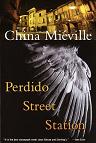 VERDICT: Recommend, try to read at least 50 pages to get through the slow beginning.
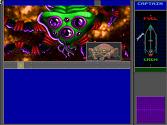
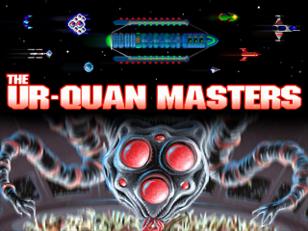
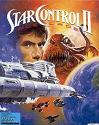 The original Star Control was developed by Toys for Bob and released on computer platforms as well as the Sega Genesis in 1990, and is a great space combat games, pitting a diverse array of ships against each other one on one. This was followed in 1992 by Star Control II, a vast expansion on the original game, providing many more alien races, each with their own unique ship. On top of this is the very best part, the space exploration aspect, which I’ll go into more later on. Star Control 3 was developed by Legend entertainment, which was hired by Accolade to create a sequel when Toys for Bob refused to create a sequel for the same amount of money they produced Star Control II for (Toys for Bob had to work for no money for several months for that game already). It’s obvious that the original creators had nothing to do with this one. Despite its 3-D rendering of the ships, and the addition of new races with their new ships, new regions to explore, and claymation of the alien species, this game was vastly inferior to its predecessor. If you want to try the series out at its very pinnacle, try out Star Control II. Star Control 3 is okay, and may be interesting if you loved Star Control II as much as I do just as a means of holding off the impending cravings for more content. Star Control 4 was scrapped during the development stages.


 The first annual Absent Willow Review Anthology is now available
  You are standing in an open field west of a white house, with a boarded front door.
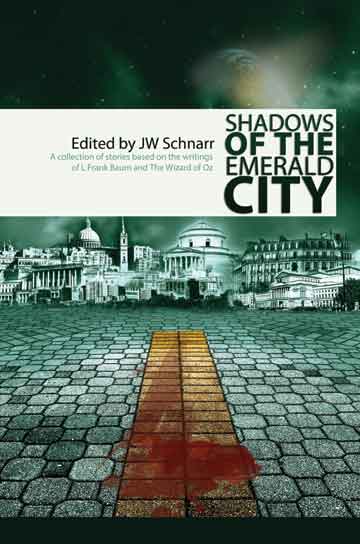 We performed our super-secret giveaway ceremony. I can’t tell you too much, but it involves both names and hats. And we can now declare a winner!