DP FICTION #131B: “The Book of Fading Gods” by E.M. Linden

edited by Amanda Helms

The first god on our list wears the skull of a polar bear. The god is shrunk to the width of my little finger and almost transparent. Darkness seeps like squid ink from their eyes.

“Sir,” I address the tiny god. “Can you give me an account of—?”

ice, the god interrupts, their voice like crunching frost. ice.

Cata winces. She hasn’t been in the After Realm very long, and she’s only just been assigned an internship at the Department of Fading Gods. This is probably the first time she’s had a god speak directly into her thoughts.

The God of Ice—to give them their full title—once echoed through icebergs and glacier chasms. They sang themself awake against a chorus of scraped whale-bone, drowned men caught like blebs in the ice, the splintering of coracles and then ships. Now they’re the skitter of mouse claws in winter, a puddle cracking under a child’s shoe. They’re lucky; they don’t realise how far they’ve shrunk. They still have their tiny glee in violence, their hunger, their righteous fury.

The cold gnaws at my ankles. “Please state your case.”

ice, they say. ice!

I could shave this tiny god into a cocktail. I could melt them with a breath. What I can’t do—never can—is get a straight answer.

“Fine. Ice. Autumn leaves limned in frost, that sort of thing?” I’m not strictly meant to suggest paths of belief, but otherwise we’ll be here all day. “How about the existential dread of glaciers melting?”

ice, the god repeats, triumphant.

Cata’s trying not to laugh. “Or praying you’ve remembered to put antifreeze in the car?”

“Good point.” I say, with dignity, and turn back to the God of Ice. “Happy with that?”

Baffled silence. The concept of good and the concept of happy are so far beyond their comprehension that the god doesn’t even rage.

“That’s enough for another year, then.” I make a note in the book.

ice, they command. Unknowing, ungrateful, entirely oblivious to their reduced state and the grace that’s just been extended to them. A housecat that’s never met a dog, never been cowed by a rampant toddler, never even left a house.

ice, ice—

***

“And that was a god?” Cata asks, when they vanish. “Seriously, Aoife, that was weird.” Cata pronounces my name perfectly. Normally that would be enough for me to warm to her, but I’m still feeling defensive.

“Didn’t you get the briefing?” I ask.

“The Organising Powers of the After Realm… blah blah.” Cata shoves her hands in her pockets. She must have graduated on Halloween, Día de los Muertos or something like that, because she’s wearing this amazing black jumpsuit embossed with a skeleton. The bones aren’t quite anatomically correct; some of the smaller phalanges are missing and others are simplified, but Cata’s too cool to care. She’s got big black boots on, and tiny skulls swing from her silver hoops. Compared with my grubby old clothes, my stained trainers, the river-water darkening my hair and dripping down my collar, it’s hard to believe we’re from the same planet. “Something about winnowing?” she says.

I nod. “Yep. The Powers that run the After Realm like things to be tidied away. For those gods with insufficient belief, we erase their Names, so that no record remains.”

Cata nods. “Eternal decluttering.”

“You could say that.” I can’t tell if she cares. The Powers see no use for tiny gods, or any of the other scraps of belief that stray into their Realm like autumn leaves blown in through the front door. Human sensibilities are much more forgiving of small and messy things; after all, we’re small and messy ourselves. We have our instructions, here at the Department, and we enforce them to the letter.

“But we’re not Powers,” she says. “We’re human.”

“Yes, well. Gods are a human thing, so they need humans to deal with them.”

Cata frowns. “My abuela would argue it was the other way round.”

I shrug. “I’m not an expert in theology. I didn’t expect to Graduate so early, and—”

I stop, embarrassed. Cata Graduated early, too. She doesn’t need to hear my life story, even if there’s no one else to talk to. But Cata only nods. The eternal starlight pours through the temple’s open roof and glints off the hoops in her left ear.

“So that’s it?”

“That’s it? We decide whether a god has been forgotten,” I remind her as sternly as I can. “Whether they live or fade away forever. We summon them. And god by god, they plead their case. To us.”

I hand Cata the Book of Fading Gods ceremoniously; she takes it with no ceremony at all. It’s heavy, bound in bog-oak. The wood seems dead but every now and then, when least expected, a green shoot emerges.

Not subtle, as metaphors go.

Metaphors matter here. Belief sustains gods, but old gods fade. They become scraps of divine consciousness. Rags in the wind, looking for something to cling to. A good fishing ground. A twist in someone’s luck. Sometimes, even one believer is enough.

Everyone knows that. Nobody thinks about the paperwork behind it.

Cata shrugs, hands still in her pockets. “But these gods… they’re the size of insects. They don’t do anything. Why do you care what happens to them?”

“Because I met one,” I say quietly.

“Met one?” Cata’s smiling. Ready to make a joke of it. But I can’t.

“Yes.” The God of Aoife’s Nephew. The God of the Nick of Time. I can’t think of a way to change the subject. “Back when I was alive. I met one.”

Cata looks at me. At the river-weed in my hair and tractor oil on my jeans. At my old grey jumper, unravelling along the hem. I’d been helping out on my brother’s farm when I Graduated. I know Cata’s look. She’s deciding whether or not to ask how it happened.

Goody Moonraker told me to talk about it. She used to run the Department, and she was something of a mentor for me, even though she died five hundred years before I was born. “Centuries go by, Aoife,” she’d said in her cracked voice. “And it ossifies. Your truth gets stuck deep under the bone. And you can’t ever get it back.” She was right. But it’s hard. To say, there was an accident. Anyway if I talk about it, I cry, and that’s embarrassing for everyone.

Cata breaks the silence before it becomes awkward.

“Show me the summoning bit again.”

“Like this.” I prick my thumb with the silver pin we keep for the trickier gods, and smear a bead of blood across the second Name on my list. Its runes are as jagged as broken branches.

Cata leans away, eyeing the pin. “Do the interns get put on blood sacrifice duties? Or just the coffee run?”

I smile painfully. Coffee is near the top of my personal Things I Miss about Life list. Right after my family and sunlight. Also biking downhill in summer, my old cat Toggles, and those deep-fried cinnamon-dusted donut holes they sell in fairgrounds. There’s tea in the After Realm, thank all the tiny gods, but you can’t get a decent coffee this side of death.

***

The blood soaks into the runes. The God of Chestnut Trees in Autumn embodies in a crackle of dry leaves, a plump man in robes of russet and amber. The air smells of cinnamon and firewood. Another angry one. He stamps around our summoning platform, every inch of him trembling with fury. He shouts up at us, shaking a pea-sized fist.

“We have to give him a fair hearing,” I say, after an embarrassed pause. The tiny god rants and raves inaudibly.

Cata rolls her eyes. “And we can’t hear him. I think I get it.”

I mark the book. The god disembodies for another year. “Thanks, Cata.” Then I remember she’s an intern and I’m meant to be encouraging her. “Great job. “

“They’re just making stuff up,” she says. You’re just making stuff up, she means. I can see where this is going; our last intern quit over what he characterised as an excess of sentimentality and went to work for Spiritual Accounting.

“Everything was made up once.” That’s what Goody Moonraker told me. “Even gods. Doesn’t mean they’re not real.”

Cata just side-eyes me. I wish Goody were here; she was a lot more convincing than I am.

***

Still, we make good progress. There are dozens of gods scheduled for review today, and hardly time to catch our breath between them. “It’s not normally this busy,” I say. “Things are hectic because of the Festival.”

“The Festival?”

“The Festival of Memories. It starts today.”

Cata scrunches her forehead. “On the third of August?”

I’m impressed by her quick maths. “Well, it changes.” The Festival is meant to fall on quiet days, when nothing much is happening on Earth. But almost every day on Earth has celestial and divine significance. Holy dates change with the moon, or the Earth’s angle to the stars and the sun. And don’t start me on weeks. I still can’t fathom why weeks are patterned around a prime number. Earth calendars really are a shambles.

Nearly every other realm is better organised. There’s a fairyland with five seasons—Starlight, the Dances, the Knives, Frost and Despair—but no months. There’s a world of pristine snow, where each day lasts a hundred hours and each year exactly ten thousand days. And in the Underworld of Endless Dark, you don’t have to worry about calendars at all.

I shouldn’t compare Earth to them. I’m like that friend with rich parents who did an exchange to France and came back complaining that the bread at home doesn’t taste the same.

Except I can’t go home.

***

We summon and dismiss the God of Items Lost on Trains, the God of Lemons, the God of Missing Someone Whose Face You Can’t Remember. Cata’s very quiet.

“Are you all right?”

Cata’s eyes are shadowed, but the marigold tucked behind her ear is bright and warm, like morning sunshine. “I’m fine,” she mutters. She glimpses eternity out of the corner of her eye and winces. “Imposter syndrome.”

“Mortal Resources chose you.” The earnestness in my voice makes me cringe. I wish I could be as nonchalant as Cata. “You don’t have to stay here once your internship is finished, but you’re here for a reason. Everyone is.”

Sometimes I worry about that. I could have trained as a dream-stalker, a shuck-whisperer, a scribe for the Union of Hauntings. Why am I here? I shake those thoughts away. “There’ll be something about you. Some conversation with divinity, even if it’s an argument.”

Cata slams the book shut. “Aoife, I don’t think I can do this.”

***

We sit in the staff room out the back of the temple complex and I pour the tea. The room has dark curtains and a slouchy sofa. The Eternal Void is a nice shade of blue and streams with stars, but it strains the human soul. Sometimes you need a roof over your head.

“Thanks.” She warms her hands on the cup. “It’s just… Aren’t you, well, hoarding gods?”

“Belief generates belief.” Goody Moonraker told me that once; I hope Cata doesn’t ask me to explain it: I’m only half-sure what it means myself. “Anyway, we don’t keep them. Didn’t you cover this in training? They’re not like… I don’t know, butterflies ethered in a collection case.”

Cata wrinkles her nose. “I can’t believe people used to do that. Old white men have a lot to answer for.” She looks at me accusingly. “But do you ever winnow the list of gods at all?”

“Sure,” I say. “We had a God of Teapots until a few years back. The last intern got over-enthusiastic, and bam. Winnowed.”

A careless act of unbelief. I look sadly at an escaped dribble of tea. I miss the God of Teapots. Ever since then, it’s been impossible to find a teapot with the perfect pour.

“Okay.” Cata adds a spoonful of celestial honey to her tea. “What about gods that were, you know, colonised out of existence?”

“Good question.” Her thoughtful tone encourages me. “There are special pages in the book for murdered gods. Gods that people tried to erase by violence.” The Powers are cold and inhuman, but they’re quite big on justice. Justice, I suppose, is tidy. A kind of ordering of the universe, a correcting of things that should never have happened. “Their Names are written in indelible ink. They will outlast the stars.”

The indelible ink is one of my favourite parts of the job. I have a special quill for it. Cata raises her eyebrows. Maybe she’s the tiniest smidgeon impressed.

***

It only sinks in after we’ve finished our tea. Cata’s not nonchalant; she’s sad. Makes sense, for someone who Graduated so recently. I should have noticed earlier.

I wish she could see the Festival of Memories. Each year, one lucky intern designs it, using their Things I Miss Most About Life list as a blueprint. This year, there are vegan dumplings, blue-sugared almonds, ghost stories, crochet and phoenix-shaped kites. It smells of mint and libraries, sounds like rain and firecrackers, and feels like a dress with generous pockets. Everyone loves the festival, the tiny glimpses of home, the annual catharsis of joy and life. Everyone except the Powers. They don’t like it, but they can’t stop it, either, so they pretend it was their idea in the first place. One of those things that make me realise the Powers aren’t quite as powerful as they portray themselves, even here in the After Realm.

Maybe we should just go to the festival, I think. Cheer Cata up. But Cata hardly knows me. She’ll realise I have no one else to go with. Feel sorry for me. And that would embarrass us both.

It’s true that company would be nice. Last year there was bubble tea and jasmine blossoms, ducks and the music of ouds and a planetarium, but I ended up wandering around aimlessly, watching the crowds, until I gave up and came back to the temple and the fading gods.

“You know, my god was always small.” I don’t know why I’m telling Cata any of this. I want her to know she’s not alone, I guess. “She was the God of a Small Stretch of River-water, of duck-weed and waterlilies and empty beer cans. She was already almost forgotten when we strayed into her waters. Too small to save us both. But she—” I have to stop talking until I get my voice under control. “But she heard me. She gave me enough strength to save him.”

“Him?”

“My nephew.”

He was four. We were at the river at the edge of my brother’s farm. He slipped down the bank and into the water. I tried to pull him out but I slipped too, and I couldn’t swim well myself. The current was strong.

Then the god came.

My nephew’s the tallest person in our family now. He’s at university, and the same age as I was when I drowned. I wish I could say he’s studying medicine, like I was, but at the moment he wants to be a DJ. I’m not so sad about the accident anymore; in time, Goody said, the sadness fades completely. But I will never not be grateful for his life. When I see what he’s up to, when he remembers it’s my birthday, when he puts a jam-jar of bluebells on the sunny windowsill overlooking the river where it happened, because my brother told him that my favourite colour was blue.

Still is.

I brush at my eyes.

Cata half-reaches out to me. I shrug, plaster a smile on my face to hide my embarrassment. “Who’s next?”

She lowers her arms. She flicks through the book, the neat lines of Names. “We haven’t winnowed a single god so far. What’s the secret? Don’t tell me it’s because they believe in themselves or some rubbish.”

My face heats. “I believe in them,” I mumble. “I believe in all of them.”

She puts the book down and stares at me. “Of course,” she says. “We believe in them. You and I. The Department. This isn’t about fading gods, is it? It’s a way to remember the gods. A system to nourish them?”

I shrug. She figured it out years faster than I did. “Not exactly. It’s more of a loophole. Our bosses don’t know.”

She waves this away as if the Powers of the After Realm aren’t worth considering. “But why bother remembering? What’s the point?” She’s not being difficult; she wants, she needs, to know. I remember how that felt.

She might as well say, what’s the point of us?

“Because,” I blurt out. “They matter. The gods matter.” Words rush out of me. Heartfelt, embarrassing words. “The world isn’t only for the big and strong and successful. Small things matter too. A secret language, a bird’s nest, a photograph. The smell of rain in a city you can’t return to. The fragile and the odd, the broken things, the things you care about even if nobody else does. They deserve to be remembered.”

She doesn’t say anything, just stares down at the book in her hands. I try to find better words.

“Many things are sacred,” I say at last.

Cata almost smiles. Her eyes go soft and sad. It’s obvious her thoughts are a lifetime away, with someone she loves in another world altogether.

***

We don’t summon the next god. She’s just suddenly here, all around us. That happens, sometimes. A strong emotion, a certain look on someone’s face—that can be enough to call a god into being.

The sky is as cold as always, but out of nowhere, sunlight warms my shoulders. A swirl of pink-white blossoms drifts on a soft breeze. I smell lime-blossom, cinnamon, and clean laundry.

This is grace, for someone.

I stretch out my hand. A petal drifts onto my sleeve. “That’s a new one. I wonder why…?”

I see Cata’s expression. The tear tracks on her face. “Oh,” is all I can manage, feeling foolish.

“The God of Wildflowers Gathered by a Child for Her Mamá.” Cata’s voice hitches then cracks on the Name. Cata’s never heard of this god until now, nobody has, but she recognises Her instantly. Of course she does. She’s hers.

I take the book and busy myself with it to give her time to wipe her eyes, if she wants to. I write the Name of her god into the book in indelible ink, where it will remain, year after year, forever.

Like I say, the job does come with some perks.

I don’t ask about the child or the mother. What happened, or which one Cata was. Instead, I rustle the pages, and hum to myself until Cata clears her throat and says, “Right, what’s next?” and I can hear that she’s stopped crying.

***

“You know something?” I take the book out of Cata’s hands. “The festival really gets swinging about now. Everyone will be dancing. There’ll be thousands of silk kites in the skies, and spiced hot chocolate, and friendly dogs. Silly things, maybe, but—”

“Sacred things,” Cata says. “Memories.” She smiles, though her face is still wet, and I smile back.

“Shall we leave the rest of our list for later?” I look down, see my cowpat-stained jeans, and sigh. “Not that I’m dressed for a festival.”

Cata grins. She takes her marigold from her hair and tucks it behind my ear. It glows among the riverweed. In place of the marigold, Cata’s tiny god has left her wildflowers. They glimmer in Cata’s hair, translucent, knotted into the sort of clumsy flower crown a child might make in spring.

“Now you’re ready,” Cata says. “Let’s go.”


© 2025 by E.M. Linden

3320 words

Author’s Note: I started playing with the idea of a tiny, impotent, but absolutely furious god and just got carried away from there. It took me a while to figure out the emotional core of the story was not the fading gods, but the relationship between the two main characters and their reasons for being there. I suspect reading too much Discworld at an early age was an influence as well.

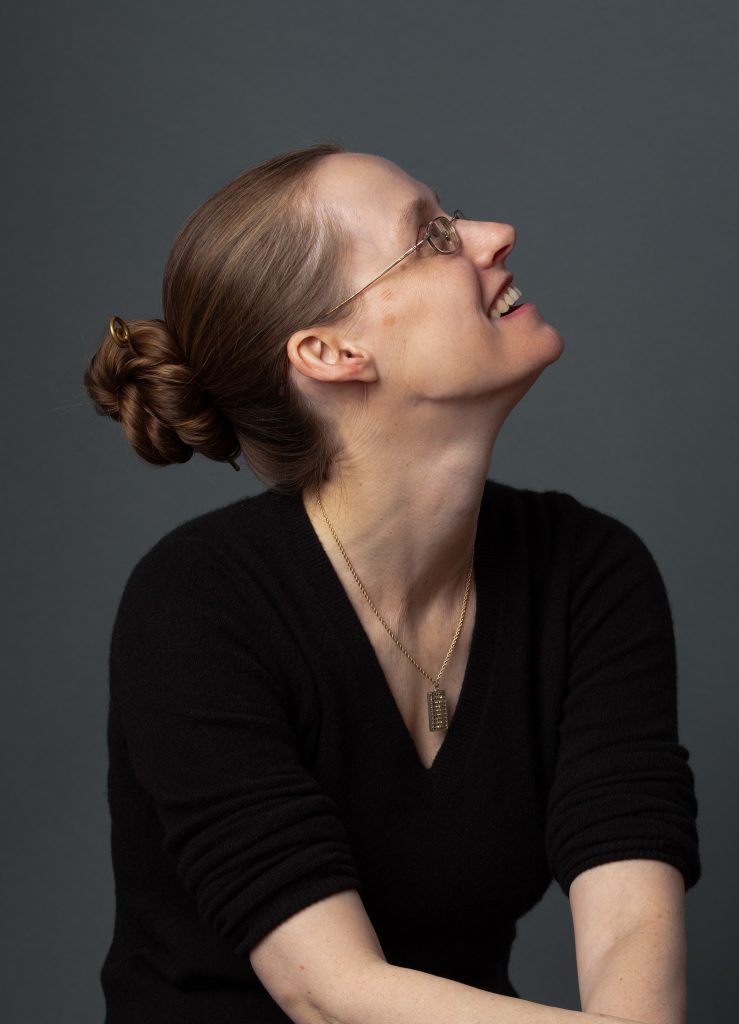
E.M. Linden is a writer from Aotearoa New Zealand whose work has appeared in Strange Horizons, The Deadlands, PodCastle, The Dark, the Shirley Jackson Award-winning anthology Why Didn’t You Just Leave, on the Locus Recommended Reading List, and various other places. She likes coffee, books, owls, and the sea.


If you enjoyed the story you might also want to visit our Support Page, or read the other story offerings.
DP FICTION #76A: “One More Angel” by Monica Joyce Evans

“What was it this time?” She looked exhausted, shoulders slumped over a file covered with names, and ruffled her wings at me like an angry pigeon. “Transporter trip? It’s usually a transporter trip.”

“Um,” I said. The last thing I remembered was the departure platform at Greater Houston, and the familiar buzz and glare of a successful transport. “Is this what it looks like?”

“I’m marking it as a repeat,” she said, and pointed me toward a small white room, already looking at the next file. There were fine lines at the corners of her eyes. I wondered if she had a flaming sword, and if I should be worried.

In the white room, I was met by myself.

“Hello, you,” the other me said, swinging one leg over the back of a chair and straddling it. “Where was it this time?”

“Mars,” I said cautiously. “Just a weekend trip. I’m dead, right?” The room was as bare as a VR stage. “Or this is the weirdest ad I’ve ever been in, and I’m not sure what you’re selling.”

“No, you’re dead,” said the other me. “Look, I keep drawing the short straw on this whole explanation thing, so I’m going to go fast. Two things that are true.” She held up two fingers and waggled them. “One, Heaven is real, God is real, all that religion stuff is real. Not the nasty bits, just the simple, straightforward, everybody gets an afterlife part. That’s real. That’s thing one. Thing two? Transporters are murder.”

“No, they’re not,” I said. “I use them all the time.”

My other self twisted her mouth into a crooked smile. “Follow that thought through,” she said.

“I mean,” I said carefully, “they just take your atoms apart and put them back together again. On the other end.”

“That’s death,” the other me said. “Literally and technically. You’re dead, and your copy goes to Mars for the weekend. Well,” she amended, “your new copy. We’re all copies here, except for the ten year old. She was first.” Outside the open door, the pigeon-winged woman had started laughing, the way an exhausted parent laughs when the children start drawing on the walls with crayon.

I swallowed. “I don’t use transporters that much. I mean, I don’t really keep count.”

“Yes, we can tell,” the other me said, and guided me into the next room. About forty versions of myself were grouped in small clusters, having quiet conversations and looking bored. They were all about my age, but slightly younger. Except for one little girl who seemed particularly bitter.

None of them looked happy. “You’re sure this is Heaven?”

“Yep,” said the other me, and put a hand on my shoulder. “That’s every transporter trip you’ve ever taken. And that thing with the jellyfish when you were a kid, when you were dead for twelve seconds and change. That counted.” She waved at the ten year old, who glared at us.

“I guess we all led good lives or something,” I said weakly. Ten year old me should definitely have been happier. I mean, she’d been here for what, thirty years? Give or take?

The other me, the first one, looked where I was looking and nodded. “Oh, the first few decades were great. It’s recently, really, that everybody’s gotten… well, like this.”

It was deeply awkward. There wasn’t anything else in the big white room to take our minds off each other, and none of my previous selves seemed to want to talk to me. “Shouldn’t there be marble columns or something?” I asked finally. “Trees and fountains? Lots of light?”

As I spoke, two columns and a fountain sprouted gently, and the room was bathed in warm golden sunlight, like it was four-thirty on a perfect afternoon. “Oh, sure,” said the other me, poking at a column. “Lots of people start with this. Don’t feel bad,” she said to the expression on my face. “Familiar’s just fine. Anyway, we’ll go through all this again in a few days, when the next one of us gets back from Mars, so…”

“Okay, no. No more,” I said, looking around at myself. “This can’t be it. I can’t end up like all of you.” Sunlight sparkled, perfectly, on the fountain next to us, and I resisted the urge to kick it.

The other me cocked an eyebrow. “You’ve been traveling a lot lately.”

“Well, how was I supposed to know?” I said. “Everybody uses transporters.”

“That’s the point,” she said, guiding me past a pair of shining trees. Some of the others followed us, not closely. “All those little deaths, all the time now. People used to spend time with relatives, ancestors, some interesting famous people, but now, well.” She shrugged. “There’s just too many of us.”

“Heaven’s overcrowded? I thought Hell was other people,” I said. Nobody laughed. The ten year old rolled her eyes and left the room, which at least meant there was a way out, I thought.

The other me sat us down on a delicately filigreed bench, by a small pond rippling with fish. “They’re calling us multiples,” she said. “Repeats. And there’s talk, you know, that it’s not really sustainable. People think the whole system’s going to break down.”

“The afterlife?” I had a brief moment of panic, then remembered I was already dead. “Is that possible?”

“Oh, no,” the first me said, waving her hand like she could wave the thought away. “But it’s a strain, you know. The place wasn’t built for repeats.” Some of my other faces looked worried.

“Just hypothetically, though, if it did break,” I said. “What would happen?”

The other me shrugged. “You know, nobody’s saying. It’s probably fine, though.”

“Probably.” I looked around, imagining stacks of myself piled like cordwood, grumbling. Or maybe the whole place would shatter like a mess of pixels, or something even worse. “Can we do anything?”

She smiled wide, and I swallowed. “Well, if you think of anything, you be sure and let everyone know.”

Fish turned in gentle loops under the pond’s surface, perfectly. It wouldn’t be nice to kick at them, I thought. Besides, the sunlight was warm on my skin, the fountain burbled pleasantly in the distance, and life had always been short. “So, what do you all do?” I asked, settling back on the comfortable bench. “When you’re not running slightly older versions of yourself through the tutorial.”

“Oh, well,” she said. “Pretty much anything nice you can imagine.” She waved in the direction my child self had gone. “Our ten year old made an ice cream land with tame dinosaurs. And you can still meet your relatives and ancestors, if you can find them. They’ll still talk to some of us, the younger ones.” She chattered on, and I thought about the news story I’d seen, when I was waiting my turn at the transporter to Mars.

Home versions. Just announced. So convenient, to transport back and forth from home every day. Multiple times, probably.

Everyone was going to want one.

“Tell me about the ice cream land,” I said, and smiled at the fish. Let the next version of me tell everyone the bad news. Meanwhile, I’d see as much of the place as I could, while it lasted.

Death was too short not to enjoy it.


© 2021 by Monica Joyce Evans

1200 words

Author’s Note: I’ve always been somewhere on the scale of bothered-to-terrified about the standard transporters in Star Trek. Site-to-site matter teleportation would be fantastic, if only I didn’t have to worry about whether it was “me” that emerged on the other side. I’ve also been replaying The Swapper, an indie game in which you’re constantly abandoning cloned versions of yourself that may or may not be conscious, and started thinking about all those potential transporter copies – what if they didn’t die, but went somewhere else? An overcrowded afterlife was the logical next step.

Monica Joyce Evans is a digital game designer and researcher who began publishing speculative fiction in 2019. Her short fiction has been published or is forthcoming in Analog, Nature: Futures, Flash Fiction Online, and DreamForge Magazine, and her most recent academic work can be found in Vector, the critical journal of the British Science Fiction Association. She lives in North Texas with her husband, two daughters, and approximately ten million books. You can reach her at monicajoyceevans@gmail.com.


If you enjoyed the story you might also want to visit our Support Page, or read the other story offerings.
DP FICTION #43B: “The Fisher in the Yellow Afternoon” by Michael Anthony Ashley

You feel an explosion and wake up face down on a rocky patch of dirt. A spurt of blood fills your mouth with iron and salt, and you push to your knees, gagging, but all that drools off of your lips is soil and leaves and a few bitter-tasting pine needles. You breathe and spit, but the blood taste is gone. It never was. You exhale relief as the panic fades with the dream.

You raise your face to a clear yellow sky and chilly air, the white sound of water rushing over you with a comfortable, misty breeze. It’s the smell of the park when the elk are bugling and camping means nights in flannel over canned spaghetti, and no problem with the cold because it makes the heat of the fire so incredibly perfect.

And you hear an enormous voice. “Is that a memory?”

You end your moment with the sky and lurch to your feet, backing away from the rocks and slick bracken along the river bank, which you realize is very close. And straddling the river with its hind-claws—its left fore-claw gripping the soil on the far bank and its right fore-claw stirring down in the white rush—is the bear.

“Hello,” he says through the wet of his muzzle.

He is huge. Impossibly. The river tumbles down a falls and through the bear’s legs and off into mist down the second falls, where the woods and the rocks and the world seem to end. The river is too wide for the rotted trunks to reach across where they’ve fallen, and yet the bear stands across. And you watch as his right fore-claw snaps up from the river, trailing silver droplets, and flicks the strong, twisting, desperate body of a fish into his jaws. He eats it whole.

“Don’t be a cliché,” he says, and you know he means the question you’d taken a breath to ask. You feel embarrassed, and then immature for the embarrassment, but you can’t help it. Bait or no, you take the challenge. And instead of “where am” or “how did,” you decide on “what the.”

“Are you really a bear?” you ask.

He takes another fish, this time lopping it in half with a bite and flinging it aside so that its back half flies into the woods streaming entrails and a rain of blood. “There are no bears here,” he says.

The river is crowded with fish. You can see them just below the surface where the rushing white foam occasionally separates to give clarity, all swimming against the current. Even as the bear says “here” a fish leaps out of the river, thrashing and aimless. The bear rakes it in mid-air and the fish lands near you in a skid of dirt, split by three gashes along its body.

You step close and see that it’s a big fish, and the mess of its organs is very still, and there is no gasping like you expect. Something is very wrong. You pinch the tail. It feels like suffocating in a hot adobe hospital from a throat closed by snake venom and being too young to go this way, mierda, too young. You let go of the fish and leap back. God damn. God damn, what is that? Who is that?

“That’s not a fish,” you say.

“There are no fish here,” he says with three fish squirming in his mouth. He grumbles pleasure around the tearing of their scales by his teeth.

You run. With the roar of the river at your back you dodge the rocks and fungus-ridden trunks that the erosion has brought down. You scramble over a big rock with its inch-thick moss and jump off to land in the shadow of the trees of the heavy green wood with your slippers thudding wet in a cluster of mushrooms. (You’re wearing pink slippers.) The low leaves are wet on your face as you push far away from the bear. (Slippers. Isn’t that strange?) Fish bones lie among the roots, their rot feeding the trees, which are old and soon to fall to add to the rot, the fungus and mushrooms the only brightness.

Eventually you overcome the panic and you start to think again. And you slow down. You stop. You think about the bear and the river and the fish and the falls while you pace tree to tree, while you watch that yellow sky and taste the air full of moldy years, and soon you turn around and follow the sound of the rushing water.

You find the bear straddling the river eating fish, snatching fish from deep in the stream, snatching fish from near the surface, swatting or biting the ones that leap. Two at a time. Four at a time. Some are small and bright and young. Some are old with milky eyes. The one from the bank is gone. In his belly, you know.

You’re afraid to ask. But you ask.

“Those,” you say of the fish being slaughtered, “are they people?”

“Sort of,” says the bear.

“Souls?” you ask.

“That’s closer.”

You try to remember the dream that woke you here. It was terrible, and more important than anything. And you can’t remember any real part of it. Just the feelings, and they’re fading.

“This is all you do?” you ask. “You eat them?”

“They’re delicious,” he says with a simple black madness in his eyes. “The fast ones are delicious. The slow are delicious. Big, small. I love the taste.”

“Are you Death?”

The enormous and magnificent bear, with his perfection of fur and hugeness of musk and multitude of teeth, who feeds from this river and all of its millions of fish as they thrash ceaseless against the current, the being and master of this place, he nods.

“But not God,” he adds.

“No,” you say. And he seems offended, though you’ve only agreed with him.

“Am I dead?”

“Absolutely.”

You sob. It’s what you expected to hear and still it hits you with horrible sharp stabs in your chest, and you bend with your hands on your knees and sob with a grief you don’t understand.

“There are no tears here,” says the bear.

But you’re crying. You kneel down by the water and look past the foam to the fish swimming with every bit of muscle in their bodies, some thumping against the river rocks, some dodging. Their wild silvery mass is in one place rhythmic, the long shapes in sinuous concert like a dance, and in another place chaotically brutal with each swimmer thrashing against the other. You want to jump in. You need to jump in. You need it more than you can stand.

You never see the bear’s claw. You only tip yourself forward to drop into the water and the claw swipes you, knocking every sense into blackness, and you land hard on the bank. And slowly, in the brown drooping ferns, you come back to yourself.

You force yourself to stand straight, hands atop your head to ease the ache in your chest, and you pace along the bank while the bear devours fish. The pacing helps you ignore the queasy sound of his meals and the need for the river and your rage at the bear. Pacing helps you think. And you know this is a habit you have, though there are no memories attached to it. No memories at all.

“How did I get here?”

The bear chuffs. “The cliché.”

“Whatever. Just answer.”

The bear yanks out a fish. “I yanked you out.” He crushes it so it bursts, and he licks the meat from his claw.

“But you didn’t eat me.”

Silence.

“Why didn’t you eat me?”

More silence. Even the river seems hushed.

“You don’t want to say,” you tell him. “Why not?”

The bear says nothing. He catches fish and eats them, but all the relish is gone, all the flair gone flat and mechanical, claw to mouth to water to mouth, until finally he nods and the moment passes. The river sound roars back to life. The bear knocks a huge fish high into the air and snaps it on the way down.

“I don’t want to tell you,” he admits. “But I will because you’re interesting. You jumped out.”

“Out of the water?”

“There’s no water h–”

“Just tell me!”

“No. I already said, I yanked you out of there.”

“If not there, then what–” And you realize it. “I jumped out of your mouth!”

The bear chuffs.

And you make a choice in that instant, all at once. You’re going back into that river. Fuck this bear. Fuck death. You’re going back. And you know he knows what you’re thinking and you don’t care because the need in you is big enough and mean enough to crush him alive.

“Not likely.”

“I jumped out of your mouth,” you declare to him. “I had my way. I’ll have it again.”

The bear swings his massive head toward the near bank and fixes you with eyes of emptiness, and he roars. The river roars. The rocks roar. The fever-bright mushrooms flare to mad color. The trees and the ferns, the soil under your feet, every molecule around you whips with the explosion of his voice, throws you down hard. You cover your ears and press your face to muck, the old leaves dancing to the vibration, but the roar grinds through you no matter how you brace. And all you can do is take it.

When he’s finished, you’re covered with bits of gnawed fish, you’ve learned you can feel pain in this place, and you have a plan.

You lie where you’ve fallen for a long time in the cold mud, watching him. You watch the bear massacre the fish like a two-year-old ravaging the boxes and wrapping paper on the floor of the living room, high on cake and ice cream and attention. The river mist is a sporadic touch on your cheeks. Your heart aches so sharply you wince.

When the bear knocks a leaping fish to the far bank and turns to devour it, you jump to your feet, dash to his rear, and leap from a rock headlong for the water. The hind leg this time, it kicks you so hard you come to your senses back in the trees, the river out of sight. You brush yourself off and limp back to the bank to sit, and wait, and try again.

You don’t count your tries. You can’t track the time. There’s no time here, he says needlessly. You only know that he swats you every time.

“What’s down there?” you ask of the edge where the river disappears.

The bear shrugs a shoulder.

“Do any of them go over?”

“A few,” he says.

“What about up there?” you ask of the cliff from which the river seems to originate, the fish fighting madly for that goal.

The bear shrugs both shoulders. “Fewer,” he says, spraying guts from his mouth.

“Do you know them, the ones you eat?”

“I know them all.”

“How many have there been?”

“There are no limits–“

“Fine, fine, just— You must like some more than others. Which are your favorites? And why?”

The river’s noise hushes. The bear says nothing as he catches fish and eats them, returning to the mechanical rhythm once more. Finally he nods and the moment passes. The river noise climbs back to its height.

“Jemet, no fear in her, none at all. Bad Foot for the very wild dreams. Wei Wei and Li Jing, brother and sister, nearly psychic. G!au, two lions killed with his bare hands, proudest one ever.” And on he goes. He likes to talk, to brag, even when you’re not listening.

You leap for the river and he smacks you back. You walk the woods and study. Most important, you ask him more whys.

What you learn:
A. You know you’re real. You remember your Descartes. Cogito ergo sum. So you want what you want. No room for doubt.
B. Everything comes here to die. The trees and other plants are wilted and brown, and you find an incredible number of bones. You dig. The bones go deep.
C. He’s a creature of habit.

The pain inside is a constant ache and you weep now at odd moments with a disturbing lack of control, but you know what you need. You’re ready. You position yourself at the best place on the bank where the leap to the river is brief and the water swirls in fast eddies. When you hit the water you’ll fight for the deep among the other fighters, so long as you can keep your mind. And that’s a thought that nags you: you don’t know what will happen when you re-enter. You don’t know how you’ll be.

“It’s odd that you think this will work,” says the bear.

“You have your nature, and I have mine. Don’t you want me to leave?”

“No,” says the bear.

And here’s the moment. Here it is, you know, and the stabs in your chest make you squeeze yourself to keep from screaming. “Why not?” you ask.

Silence. The river’s sound falls to a gurgle. The bear says nothing as he moves mechanically. Rhythmically. Predictably. You wait for his claw to shove a fish into his mouth, those eyes staring off, vacant, and you leap. You leap right under that massive arm, your face passing through the river water dripping from its fur, the stink of fish blood thick all around you. You know his speed from his countless smacks. You know the timing when he’s lost in thought. You’ve studied. And yet passing beneath jaws as long as cliffs and teeth as wide as crags and a head so large it blots the yellow sky, you feel those eyes come back to focus and that claw jerk to snap you up. Too soon. Too quick.

Too late. You hit the water in a shock of pain and cold as behind you the voice of Death admits, “Because you can’t be friends with food.”

You swim. You fight. You pull against the current with the other fish smacking against you. Death’s claws spear the water and you twist away. Down. Down. And down until the yellow light fades and the thumps of striving tails become distant. And you are simply you. Only you. Beating against the current.

You hear crying. You hear the babies calling for you. “Mommee! Mommeeee!”

You wake up with a start. A spurt of blood fills your mouth with iron and salt. You try to spit and something in your chest rips. You try to gasp and the pain rockets into your skull.

“Mommeeeee! Mommy help!”

Think. Oh, Jesus. Think. Focus. You force your eyes to make sense of the light and you realize right away that the car is tilted wrong and the windshield is shattered. Red darkness comes pushing at the edge of your vision, but you can count the lengths of iron rebar jutting from the back of the truck through your windshield and into your chest, three of them, low, center, and high, your ribs scraping when you lift your head to look. And you’re weeping, no breath to sob, and your hand is reaching for the glove compartment because you smell gasoline. And the babies are in the back.

“Mommy, I’m stuck. Mommy! Mommy please!”

You wrench open the glove compartment. Something rips where your heart should be, and you want so badly for the breath to scream. There isn’t any.

You die.

The claw grabs you, squeezing, as you fight against the current, and it snatches you upward and into a wash of old yellow light. The bear’s jaws come closing but you twist against the fucker and you’re free, falling. You hit the water, pulling hard.

“Again!” he calls as you go under.

This time you come back remembering–six days in a row on-call and now sweatpants and pink slippers on your day off, rear ended at the red light and the explosion of your car slammed against the work truck ahead–and your hand is already rummaging through the glove box when your eyes snap open. Your hand is wet and sticky with black ooze, and you know the colorblindness is a sign of head trauma, and the speed of the blood spurting from the wound above your breast means catastrophic damage to the subclavian artery, and your sticky hand closes on the multi-tool. You fling your arm and throw the multi-tool into the back where it lands in the middle, between Olive strapped in her car seat and Weaver struggling with the tangle of his seatbelt. Escape hammer and seatbelt cutter in one. You’ve taught him how to use it. Always teaching. Immune to the rolled eyes. Not a cool mom. But that’s fine now. That’s fine.

“CUT!” you scream with all the breath you have, and you die.

The bear claw pierces you this time, and it’s not the same as the hot animal pain of the rebar in your heart. It’s a slash of nothing. A tatter of you gone.

Instead of pulling away you twist into the claw, feeling it rip deeply. But you’re free.

“Three times!” calls the bear, delighted.

You’re turned in your seat, cold air seeping into your broken cavity, the horrific, greasy smell of fire signaling panic even as your thoughts twitch in jagged fits. The car is burning, and it’s over. You know it’s over. You have nothing left.

And all at once, it’s fine. Your boy. Beautiful boy. He’s free, and he has his sister free, and long arms are reaching through the shattered window and pulling them out, the multi-tool falling to the white litter of glass beside the cut, gray, frayed piece of seatbelt.

“I can’t get to her!” shouts a fish. “Leave her!” screams another. “Get out! It’s going up! Get out of there!” The claw ignores them and snatches you out.

It’s not hard to fight him anymore. You simply give everything you have. You twist and thrash, and this final time you land back on the bank. When you stand, you’re in your slippers.

“I nearly ate you,” he says, his tongue rolling fish meat behind his teeth.

“It’s what you do,” you say.

The bear chuffs. “Getting away is what you do. Four times. That’s impressive,” he says, and means it.

“Is that a record?”

“Not even close. But it’s still very impressive.” He splashes with both of his front claws and shoves a mass of writhing bodies into his mouth. The first bite makes a wet burst, loud even over the river. “What do you want to do now?” he asks.

You think about it, and point. “I may go up there,” you say of the cliff from which the river originates. “Or down there,” you say of the falls into which it disappears. “Or I may just ask you questions. Why do you care?” you ask him.

Silence. The river becomes hushed. The bear says nothing. He catches fish and eats them, but all the relish is gone, all the flair gone flat and mechanical, claw to mouth to water to mouth. You watch one writhe in his grip, fighting for life.

You leap from the bank and knock it loose.


© 2018 by Michael Anthony Ashley


Author’s note: “The Fisher in the Yellow Afternoon” was a round 2 contest submission for WYRM’s Gauntlet 2016.  The prompt was to write the story of a character who has recently died, telling what led to the disappearance and what may be coming next.  The catch was that it must be written in second person POV.  The Gauntleteers, as we were named, were given one week.  Aside from proofing edits and a change to the last line, the story you see here is unchanged from the competition.


Michael Anthony Ashley is a 2004 graduate of the Odyssey Writing Workshop and a longsuffering ghostwriter of nonfiction.  He has published short stories with Beneath Ceaseless Skies, flashquake, and the Czech publication Pevnost.  In his daylight hours he works in public health, helping to broker the peace between bacteria and humankind.


If you enjoyed the story you might also want to visit our Support Page, or read the other story offerings.