DP FICTION #52B: “Bootleg Jesus” by Tonya Liburd

Out where rock outcroppings yearn to become mountains, there was a town cursed with no magic.

In this town, there was a family.

In this family, there was a girl.

She was nine, almost ten, Mara. Childhood hadn’t completely lifted its veil. She had an older brother, Ivan, who was fourteen, and whose voice was changing. Elsewhere, puberty would have signaled all sorts of preparations – acceptance into a special group home as much for his safety as for the general public – while his Unique Gift manifested. Watchfulness. Guidance. Training.

But not here.

Here the rocks, the soil, of the mountains had a special property that had been artificially duplicated thousands of years ago, and before that, the rock itself was transported. Here the rocks and soil prevented the manifestation of magic. There was no ‘curse’, really, of the dampening of magic – just something some said.

Everyone here in this town got along here by their wits, their brains, their strength – things were done from scratch if possible.

For what else had they to do here, this far away from civilization.

So, like everyone here around the age of puberty, Mara’s brother was special, yet not special, because of the rocks.

Mara would be special, yet not special like her older brother someday, like her mummy and daddy, like the rest of the adults. Like the people, families, who showed up sometimes on the outskirts, wanting to find a place for themselves here.

*

One day, Mara was playing in the house, and her father sent her to the yard. Some houses had garages, like hers, and some didn’t – like the oldest of the houses of the people who never had to arrive, who’d been here all along.

The garage wasn’t off-limits, and she was bored, so she went digging around inside.

One after another, she found an item, an item of before, before her family arrived, before she was born, and she discarded them.

In the back of all the clutter in the garage, there stood a bust of a Jesus. Unlike most busts and portraits of Jesus in the Western Hemisphere, this Jesus had brown skin and black features. It was supposed to give advice when priests and counsellors weren’t to be had. “They make them all blonde and blue eyed,” she remembered her mother saying disparagingly. “Like that’s how he was in that part of the world. As if he’d blend into the Egypt that was, if he was there. Hah!” And that would be the end of any religious discussion in the house. This Jesus was manufactured several decades ago as an answer to all the lilly-whiteness in the world, calling them Bootleg Jesuses, and one was bought by an ancestor so the family would remember they had a black ancestor as they headed into whiteness, white-acting, white-passing.

This Jesus had a heart on his chest that he presented to the world with rays of light—or in this case, neon rays—like in numerous postcards. His hair was dreadlocked. All of this was inside a metal box, made to be placed on a table, with no plug where it could be plugged in. So; what made it run?

Oh, she knew. It would run in any other place in the world, where magic ran free…

Where there existed people with Unique Gifts so powerful that they were considered gods…

She picked it up, and put in on a small round picnic table she had to unfold.

She smiled at it.

“Red and yellow, black and white,” she began to sing in her young voice, “we are precious in his sight. Jesus loves the little children of the world…”

It was the only religious thing that she knew, because her mother insisted that if anyone told her that her Jesus was wrong, she was to answer by reminding them of that song.

“Jesus, do you love me?” Mara giggled.

She heard it sputter to life; it lit up. The dreadlocked head of the Jesus bowed up and down, up and down. Then stopped, the light illuminating its white robed chest going out.

Mara gasped, her mouth hanging open. Then she put her hands to her mouth and squealed.

“Mummy, Daddy, Ivan, Jesus bowed to me!”

“That’s nice, dear,” her mother said, and that was the end of that. But little Mara would never forget. The Bootleg Jesus became her favourite thing in the house, in all the world.

*

If one looked around, or even past the hills, there was one constant: goats. They climbed where man feared; they frolicked where man could tame them. So man ate them.

They made a soup out of them called “goat water”.

Mara liked to be outside, and so did her older brother Ivan and their friend Sydney, who visited them often, and one day they all had goat water outside, and they enjoyed it, and it became a thing for them. Goat water, outside. At the borders of the town. Where the wild goats were.

And Mara always brought the Bootleg Jesus with her. Everyone humoured her at first. Then, as the years passed, it became more of a sentimental habit. “Mummy and Daddy don’t have to come with us, Bootleg Jesus will watch over us as we eat and play… haha…”

Everyone knew it wouldn’t work, right?

*

Years.

They remove the veil childhood had over knowing how the world really runs.

Mara knew pain, now. She felt her brother’s.

Mara knew fear and hopelessness. She felt Sydney’s.

Mara knew dreams of being one with the earth, of feeling its ponderous power in her veins, of letting the power out through her to be free.

She and her brother ate goat water near the outskirts of the town. Sydney was absent.

Again.

Ivan’s knuckles were white as he sipped spoonful by spoonful, his eyes dark and fathomless, partially hidden by his dark hair.

Mara looked at him while she ate and winced. She was twelve now. She opened her mouth to speak.

“Ivan…”

“Don’t.”

She sighed, wincing.

They both knew why Sydney wasn’t here with them; she was apprenticed with Mr. Stewart, who demanded long and hard hours. Meeting together was a “childish thing”, a thing of the past. She had better things to do.

But that wasn’t true, was it? They both knew what was really going on behind closed doors, in Mr. Stewart’s house, to Sydney. She’d told Ivan, and then Mara; and Mr. Stewart was a friend of Sydney’s family, and they went back a long way. No one would believe her if she said anything, Sydney knew, what with her mother and her father and their fights.

The next time they managed to meet to have goat water Mara stared at the Bootleg Jesus, a childhood comfort, accusingly.

“Weren’t you supposed to protect us?” she squeaked, not wanting even the wind to hear, so embarrassed was she to still hold onto this faint hope.

She slapped it.

Light and gears sputtered to life, and the Bootleg Jesus’s head went down and up.

Mara sprang onto her bare feet. A strong breeze blew up, and she held her long black hair down with one hand, her brown skirt back with another.

Ivan and Sydney looked her way, expressions curious.

She kicked it.

Again light and gears sputtered to life, and the Bootleg Jesus’s head went down and up.

“WHAT?” Ivan said, springing to his feet as well.

Mara fell to her knees before it, taking it in her arms, then setting it down carefully.

“J… Jesus, do you love me?” she asked it, her voice tremulous, her mind back in the cluttered, unused garage, when she still had her naïveté and her heart was untarnished by life’s darker corners. Where she’d thought about godhood.

The bootleg Jesus lit to life again, bowing its head. A tinny voice. “Yes, Mara.”

Ivan approached. “So what’s inside it? What’s the key thing that makes it run?”

“…You wanna open it up down to its nuts n’ bolts and destroy it to find out? Because I don’t see anyone here who knows how to take it apart and put it back together,” Sydney said.

And all the way home, Mara smiled a gentle, private smile, like she and the Bootleg Jesus that she held in her arms, all the way home, shared something special.

*

“Mara!” her brother called loudly.

She was in the yard, picking out some garlic for this evening’s meal of goat water.

“It’s not working,” he yelled. The Bootleg Jesus.

She got off her knees. “Let me try.”

In the garage, sitting at a table, she said gently, smiling, “Jesus, are you there?”

It came to life, white robe going bright, neon rays from the heart glowing, the head bobbing down and back up. “Yes,” it said in that tinny voice. Then the lights went out, and it stopped moving.

Ivan slapped the table in frustration. “See, it only likes you.”

Mara’s smile went wider. “Maybe because I’ve always had faith.” She turned to leave.

“Wait!”

Mara turned back.

“Ask it for me, then.”

“Ask it what?”

“Will Sydney and I ever get married? Will we get Mr. Stewart to stop?”

“Jesus…”

It lit up, head bowing. “Yes… and no.” It went dark.

Ivan bolted out of his seat and marched out of the garage, punching the door to the house as he passed.

The house rumbled slightly.

“What was that? Earthquake?” She heard her mother wonder out aloud.

“In this area?” she heard her father say.

Mara was the only person who went to the outskirts of the town with the Bootleg Jesus that day.

And the next.

*

Ivan came outside with Mara this time.

Ivan paced back and forth through the lush grass around the bust of the Bootleg Jesus. “So you work, huh? Huh! Well, then tell me this!” he pounced before the bust, snakelike, hissing.

His bottomless brown eyes shone like brown diamonds with the tears in them. “Then tell me what to do about Sydney. She hurts. I hurt. But she hurts more. People hurt her. I want her there when I tell my parents about us, I want her to be able to come out here with me whenever she and I want – what to DO ABOUT THAT?”

The bust of Jesus sputtered with light from within, the head bowed back and forth and a mechanical, tinny voice spoke. “Lose the battle. Win the war.” The light from within sputtered out; it went still.

Mara smiled. Ivan stayed, where he crouched, thunderstruck, fingers gripping green blades of grass, before the Bootleg Jesus.

*

The next day Mara was out, alone again.

Her bowl of goat water lay in the grass, the sun starting to descend. She’d been out here for hours, crying.

“Jesus…”

The Bootleg Jesus lit up.

“What… can I do about Ivan and Sydney? I mean, can I make Mr.Stewart stop?”

“Yes.”

“…How?”

“Force.”

“What do you mean?

The Bootleg Jesus’s dreadlocked head bobbed up and down, the whites of its eyes electric-white. “Do what your heart desires.”

Mara gasped. Hastily, she wiped tears from her eyes. “Will he die?”

“Yes.”

“Will I die?”

“No.”

“Is it worth it?”

“…yes.”

Do what your heart desires… crumble and destruction… death and victory…

Grabbing onto her dark hair from both sides, Mara raised her head and screamed to the sky. The bowl flew away. The ground beneath her rumbled, a nearby tree shuddering its green leaves.

*

Mara walked up the steps to Mr. Stewart’s porch—were those cracking sounds coming from underfoot?—and banged open the flydoor and inside door to Mr. Stewart’s house, the flydoor rattling on its hinges.

She saw Mr. Stewart inside. In a pair of pants and undershirt. He watched her approach.

He wasn’t one to mince words. “What do you want.”

She walked right up to his face. “Leave. Her. Alone.”

Silence.

He scowled.

Then Mr. Stewart roughly took her arm. And that was it.

Then it seemed like Mr. Stewart wasn’t trying to grab her, he was trying to let go. He started to shake. Then he began to convulse. His eyes rolled back ’til you could see the whites; he fell onto a couch seat.

Mr. Stewart had set something in motion inside Mara, and it wasn’t going to stop now.

She had been staring at Mr. Stewart all this time, and she had been hyperventilating. She couldn’t… stop.

Behind the house, she heard a teeth-rending crack. Mr. Stewart’s house seemed to have picked up on his shaking; she looked about wildly.

Mara ran to the door. As her foot stepped in the doorway, a crack split the floor under her feet in half. She jumped down the stairs, onto the ground. The split went into the house, and other cracks branched away from it, taking over the whole house. Windows splintered. The upper floor groaned like it needed to eat, and started caving in alarmingly, warping the roof. Neighbours were coming out of their houses, pointing, shouting and a couple were screaming.

She looked up, past the whole house, to the mountain face that was behind it. And saw the crack in the rock above. Rocks of various sizes were breaking free and pounding down on the house’s roof. She held her breath. The crumbling seemed to stop. Then she realized what it was that was making this all happen.

Her.

She let her breath out in a scream, a scream to release all holding back, all fear, to let the wild things out – or the wild things in. The cracking of the mountain behind the house thunderclapped the air, and huge rocks began to fall. The house rumbled down to its foundation, crushed from above.

People scattered, really screaming for their lives now. But nothing hit them. Nothing hit Mara, either.

Mara simply stared. All the pressures of growing older—and never being old enough for your autonomy—and the ways adults around her had abused that notion… all of it inside her. Calm.

*

She could smell the goat water being made by her mother from the front gate. She eyed a green onion in the garden as she passed and it unrooted itself, trailing her. Her mother froze as she ascended the back steps into the kitchen.

She’d heard, then. Seen. She knew.

The spoon her mother was stirring the pot with lifted from her hand and went into Mara’s. “Let me.”

Lips trembling, her mother stepped back.

Mara put the spoon down and took hold of the green onions still hanging in the air, turning the tap on to wash them. When that was done, she took up a knife—which caused her mother some consternation—and started chopping them, then put them in the pot to cook.

“You always cooked it for me… so many times… I know it by heart now.”

“…Mara…” her mother said, voice trembling.

“Yes?” Mara turned, fingering the knife.

Her mother swallowed.

Mara noticed her mother eyeing the knife and put it down gently. She smiled slowly.

Her father walked carefully up behind her mother, placing his hands upon her shoulders. “You’re… such a big girl now…” he attempted.

“Not so big,” Mara said. “Ivan and Sydney are older.”

“Yes, yes, that’s right,” her mother said, swallowing nervously again.

Her mother stood tall and lifted her chin, lips trembling. “We’ve never hurt you,” she said, trying to be strident.

“No… no you never did. Not you. Not Daddy.”

“You know you can always talk to us,” he said, a strained smile on his features.

“Not about everything, though,” Mara said.

Ivan and Sydney burst upon the scene.

“Mara!”

Mara’s head snapped to see her brother and Sydney behind her, coming up the stairs. The knife lifted from the counter to point at her parents in the blink of an eye. The house rumbled slightly. The air thrummed.

“C’mon, now, Mara,” Ivan said, a cautious laugh, “put the knife down.”

Mara sighed. The knife went back to its place on the counter. The air went still.

“You ain’t gonna hurt anybody now,” Ivan said.

Mara nudged her face towards her parents. “They think I might.”

“No they don’t,” Ivan said, his voice getting louder. “They don’t think you’ll hurt them. Right?”

They nodded.

“Ivan,” Mara said, “Why don’t you tell mom and dad what you wanted to say for so long now?”

Ivan’s lip trembled.

“Well?”

His gaze went to the white floor. “Not like this,” he mumbled.

“Now’s a good time as any.”

Ivan stepped forward, holding Sydney’s hand. He took in a deep breath. “Mom, Dad, Sydney and I love each other. I’d love to marry her someday and I hope that we can have your blessing… now that Mr. Stewart can’t hurt her no more.”

“You have our blessing,” Mara’s father said.

They stood in silence. Mara sighed, turning to look out the kitchen window.

“Well, now what, Mara?” Ivan said. “You have all the cards.”

“No I don’t,” she said softly. She turned back to the kitchen. “I can’t stay here anymore.”

“Why not?” Ivan retorted.

“Here’s a place where no magic can be, yet here I am, manifesting. There’s people out there who know what I can do. They’ll know about me soon enough. There’s places for people like me. You don’t see people like me in public for long.”

“Mara…” her brother started.

“You know it, and I know it,” Mara said. “I have to go.”

“What… what can we do for you?” her father said. Her mother looked near tears.

“You can give me a bowl of that goat water, to go,” she said. “It was always what kept the three of us together.”

“Anything else?”

“The Bootleg Jesus,” she said, a warm smile finally coming to her face.

“I can give you the backpack with the sleeping bag in it,” her father said. “Not like we needed to camp out here with the stars, the open sky…” he caught himself, and coughed.

“I’ll get it,” Ivan said, ducking out of the room.

Mara’s mother began weeping silently, then stepped forward to prepare the soup for her.

“I don’t want you to go,” Sydney said, stepping forward to embrace Mara. She shed tears on Mara’s shoulder for some minutes, before breaking away, wiping at her nose.

“Here, take my poncho,” Ivan said, coming back, dropping the items on the floor.

She didn’t hug her parents as she took the soup and outfitted herself, although her mother looked like she was finally unafraid enough and wanted to do it for all the world. She did hug her brother though.

“Where’s the… oh.” Sydney said as the Bootleg Jesus floated into view.

Mara walked out the door, and down the steps. The sun was maybe a couple of hours from setting, but still hung low enough to set an orange glow across the sky.

The front gate opened of its own accord, and Mara stepped out.

This was all she knew for her entire life. And, just like that, she was unfit to stay here. She’d always been a keen reader, and what technology they had—like television—she knew that it took a massive Gift to do what she’d done today.

The Gift of those considered gods. Townships developed around them. People worshipped them. But they were hard to find, and they might show up in the public consciousness for a while, but just like that, their presence winked out and disappeared.

But she was all of twelve. And yet unafraid.

She looked back to her home. All that stood between her and it was the Bootleg Jesus, bobbing in the air. And it was fitting, in more ways than one.

It started with you, she thought, looking at it, lit up and ready for questions.

Would she ever get the time to control her Gift? Would she be allowed to? How far did her Gift go? Would she ever find out?

She looked forward, to the sky, then to the ground. They were all that stood between her now.

A god.

Mara took one step away from home, and then another.


© 2019 by Tonya Liburd

Author’s Note: If I recall correctly, it was the simplest of things – and this has happened before, for example, with the Ace Of Knives: a name of a player while I was gaming. They had the name Bootleg Jesus and it was a title and an idea generator. What is a Bootleg Jesus? etc.
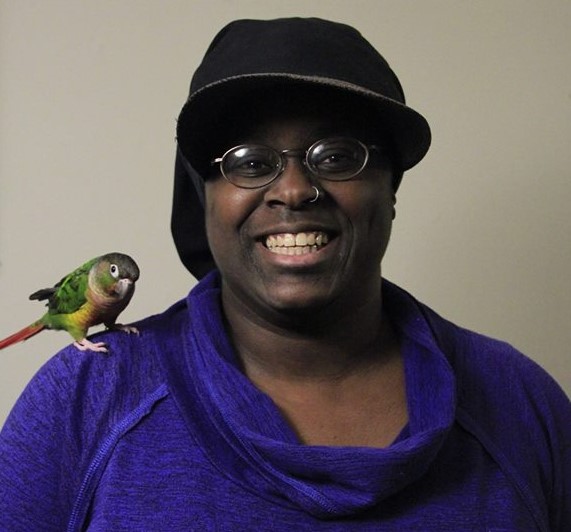
Tonya Liburd shares a birthday with Simeon Daniel and Ray Bradbury, which may tell you a little something about her. She is a 2017 and 2018 Rhysling nominee, and has been longlisted in the 2015 Carter V. Cooper(Vanderbilt)/Exile Short Fiction Competition. Her fiction is used in Nisi Shawl’s workshops as an example of ‘code switching’, and in Tananarive Due’s course at UCLA, which has featured Jordan Peele as a guest lecturer. She is also the Senior Editor of Abyss & Apex magazine. You can find her blogging at http://Spiderlilly.com, on Twitter at @somesillywowzer, or on Patreon at www.Patreon.com/TonyaLiburd


If you enjoyed the story you might also want to visit our Support Page, or read the other story offerings.

TV REVIEW: Chuck Season 3

written by David Steffen

Chuck was an action spy action/drama/comedy show, starring Chuck Bartowski (Zachary Levi), who started as a down-on-his-luck geek working at the BuyMore fixing computers, when he ended up with a supercomputer with government secrets downloaded into his brain, as he has been used as an intelligence asset.  Season 3 ran from January to May of 2010.

Season 2 ended with a major change as Chuck ended up downloading a brand new version of the Intersect computer into his brain which not only lets him suddenly remember government secrets at convenient times, but gives him a wide range of physical skills, especially martial arts.  No longer is Chuck just “the asset”, forever told to wait in the car and stay out of trouble.  Now he has the combat skills (without actually having earned them through training) to be able to take danger head on.  It had also ended with Chuck, Casey (Adam Baldwin), and Morgan (Joshua Gomez) all quitting the BuyMore, with Morgan moving to Hawaii with Anna.

Season 3 begins with much of that being rolled back–Chuck has taken some time off to try to become a full-time spy, even turning down an offer from Sarah (Yvonne Strahovski) to quit and run away, but it has not worked out well, so he ends up returning to work for the BuyMore.  Morgan’s dream to become a chef in Hawaii does not go well and Anna leaves him.  Team Bartowski ends up reuniting, albeit with a much more awkward mood because some drama happened between them that you don’t know about yet.  So, Season 2 felt like it was written as a series finale, and meant to give some sense of closure by ending an era in various ways, but when the writers began writing Season 3 realized they didn’t know how to write Chuck without the BuyMore, without Morgan, etc.  So the first several episodes the season were very awkward and felt off, I think because they were trying to put everything back together without it seeming ridiculous.  And especially with the relationship between Chuck and Sarah being kindof tense and bitter, I was starting to consider giving up on it, but it finally turned around became good again.

Despite the “putting everything back together again” feel, the season 2 finale did have a big permanent change in that Chuck does still have the upgraded intersection that lets him be an action hero.  This changes the dynamic of the show quite a bit because he’s no longer the helpless one, and also that he has to learn to control his emotions for this part of the Intersect to work properly. Which, I have mixed feelings about, because part of the appeal of the show was that the male lead is not macho, is not aggressive, is prone to talking about his feelings at inopportune times during the middle of missions.  After the first few episodes I think they made it work, and it felt like a solid show again, albeit a quite different show, it still had the parallel BuyMore hijinks, still had the comedy with the action, still had the relationship stuff between Chuck and Sarah.

And while the season is slow to start, some of the reveals and happenings later in the season are the best in the series yet.  So, I’d still highly recommend watching, just trying to push through the first 3 or 4 episodes if it’s seeming dull.

TV REVIEW: Chuck Season 2

written by David Steffen

In the premier season of Chuck, the title character Chuck Bartowsky (Zachary Levi) had been living an unextraordinary life working at the BuyMore after being kicked out of Stanford based on false accusations of cheating, and dumped by his girlfriend.  Until he gets an unexpected email from Bryce Larkin (Matt Bomer), (the one who got him kicked out Stanford), that contains coded images containing government secrets that download themselves into Chuck’s brain, and after that if he sees something that is in the Intersect (the name for the computer storing the data), then he will suddenly know the information.  So Chuck has been working with CIA Agent Sarah Walker (Yvonne Strahovski) who has been posing as his girlfriend, and NSA Agent John Casey (Adam Baldwin) who has been posing as a co-worker at the BuyMore.  Season 2 ran from 2008-2009.
As season two starts, the team goes on what Chuck thinks will be his final mission, to retrieve a component needed to make a new computer-based Intersect so that Chuck can retire.  What he doesn’t know is that Casey has been given orders to kill Chuck as soon as the new Intersect is running, because he’s too much of a liability.  (Since this is all in Episode 1 of the season you can guess that neither does our title character get killed nor does he get to go back to normal civilian life).

Season two was a great build from season one, expanding on a great formula.  The BuyMore still plays the comedic foil to the more serious spy action.  The main difference in format from the previous season is that Chuck is getting more accustomed to the spywork, the action, and the lying, which makes sense, but it’s still good old sensitive Chuck, usually trying to talk about feelings on a mission while everyone else is trying to concentrate on not being dead.  There are some major revelations having to do with Chuck’s family in this season that are awesome and fun.

I loved season two just as much as season one.  Highly recommended, fun, generally lighthearted, with lots of spy action.

GAME REVIEW: Baba Is You

written by David Steffen

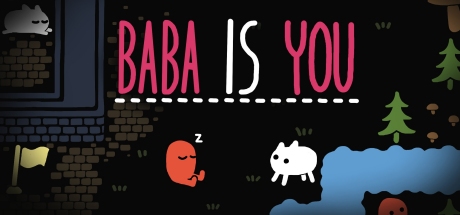
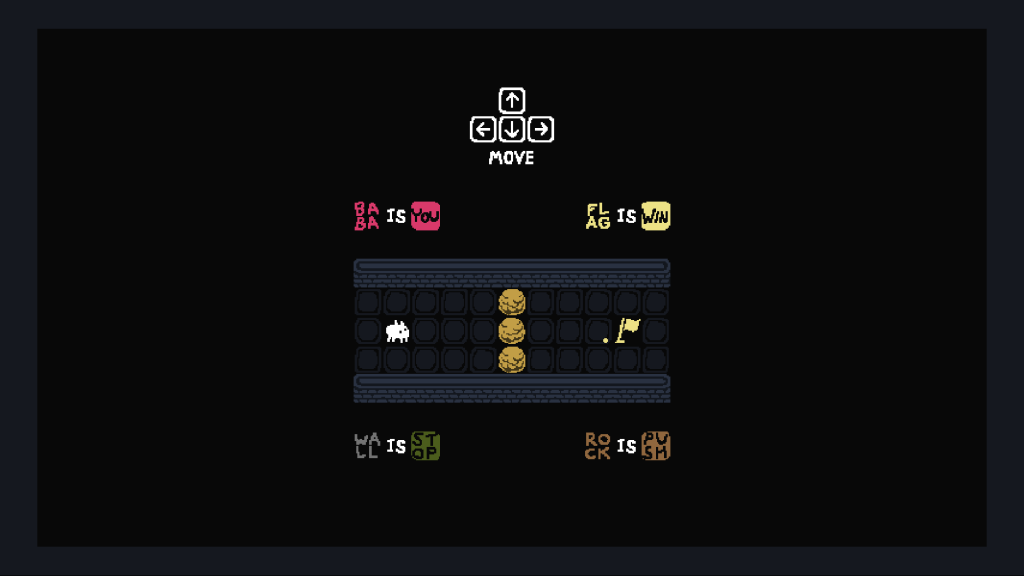
Baba Is You is a puzzle game developed by developer Hempula Oli and released on Steam in 2019.

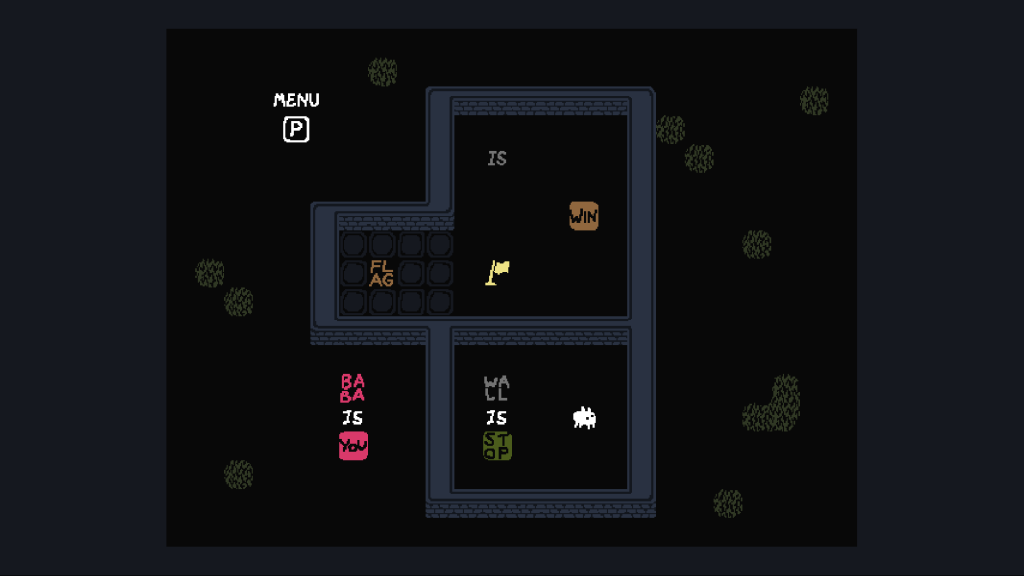
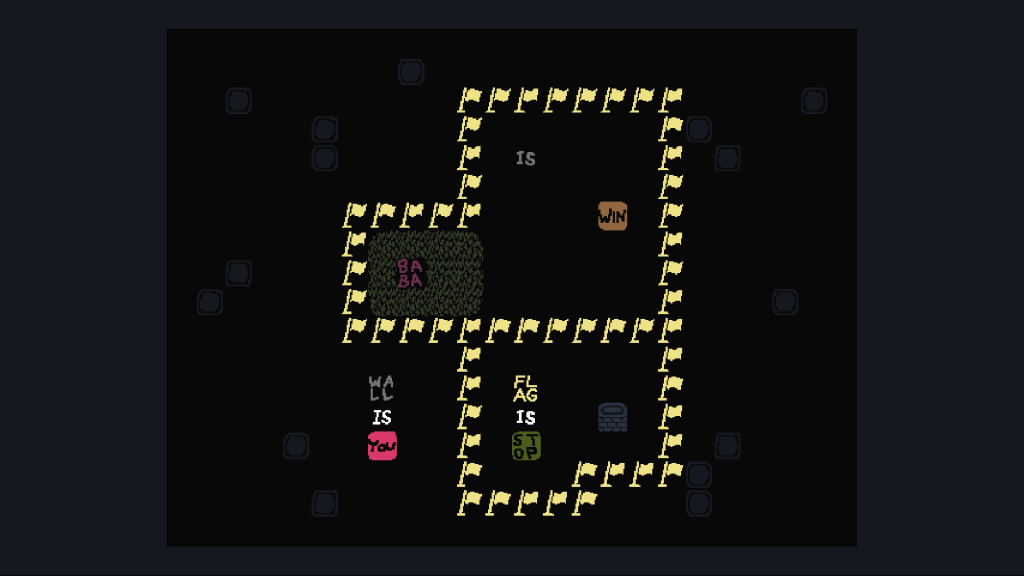
At first glance it seems like a pretty typical block-pushing puzzle game, where you move a character around and push blocks to reach the designated goal. But in this game, some of the blocks are words that when combined form the fundamental rules of the level, and the object is modify those rules to make it possible to reach the goal. The title of the game “Baba is You”, because every level in the game has to have a “___ Is You” rule which defines what kind of object is the player character. While many of the levels have Baba Is You rule to define Baba as the player character (Baba is a white four-legged creature), Baba is only you because of that rule… as you will discover if you accidentally break the “Baba Is You” sentence without replacing it with something else, and will not be able to continue, having no player character.

So let’s say the rules say that you win by touching the flag, but the flag is surrounded by impenetrable walls. Depending on the pieces available, you could win by making the walls pushable, or by making something besides the flag the way to win. Lots of different combinations are possible based on what rules are defined in the level and which ones are malleable (while all words can theoretically be pushed, often they are placed in unreachable parts of the level to make those rules basically immutable for the level).

The game gradually builds up, adding more nouns and verbs and adjectives to further complicate how you have to think about the rules to break them sufficiently to beat the level, such that even levels where you only have a few movable pieces can still be stumpers for quite some time and I find myself often picking through them in my mind as I’m doing other things, trying out different combinations of the available rules, and most of the stumpers I’ve figured out when I’m NOT playing.

The headspace of the game feels very similar to the headspace of a particularly novel and interesting computer programming task, takes you a while to get your head around it but then it is so satisfying when everything turns out the way you imagined. This game will probably be particularly appealing to people who enjoy that kind of challenge.

I haven’t finished the game yet, but I am well and truly hooked and I’ll keep picking at the remaining levels until I get them, and it’s very satisfying when I get one of the stumpers I’ve been stuck on for a while.

Visuals
Cute, in a simple way.

Audio
Fine, though I usually play with the sound off; it doesn’t appear to have made much difference.

Challenge
SO challenging puzzle game, though the game has a well-designed difficulty curve, the first levels breeze by because they’re ingraining the basic rules into your head, but as the simplest cases of those are exhausted and more words are added it becomes frustratingly difficult.

Story
No story, particularly, Baba is moving around a map trying to reach new areas, but you don’t really know what the point of it is.

Session Time
You can quit at any time, and any given level probably only takes a couple minutes once you figure out the strategy, so it’s easy to pick up and set down.

Playability
The movement is very easy, just arrow keys and you can also wait. Other things in the levels only move when the character moves so you can take your time to think if you need to, it’s not a game of fast fingers. The challenge is not in the difficulty of the gameplay.

Replayability
Haven’t finished the first playthrough yet, but I imagine it wouldn’t necessarily have a lot of replay value because you’ll know the puzzles, but maybe there’s some collectibles or unlockables to enhance that.

Originality
It is based around a familiar type of game but with rule rewriting system I’ve never seen before, ends up making it a whole new kind of game.

Playtime
I haven’t finished it yet, but I’ve spent 14 hours of playtime on it, and I’m sure the playtime will vary wildly from player to player based on how fast they solve the puzzles.

Overall
This is an excellent puzzle game if you enjoy mind-warping mental challenges and especially if you have a sort of programmer brain that likes playing with the framework that everything is built on, that when faced with a challenge that seems insurmountable, enjoys rebuilding the entire structure to make it surmountable. I highly recommend it though I warn you that it might drive you to distraction. It’s listed at $15 on Steam. If you’re not sure you understand what I mean by rearranging the rules, watch the video at the bottom of this review, it gives some useful examples.

DP FICTION #52A: “The Ceiling of the World” by Nicole Crucial

This is important. When Margaret moved to the city, you see, the office she worked in was on the top floor, five stories up. The train took twenty-five minutes to travel between Bleek Street—where her office was—and Swallow Avenue—where she lived. She took a room in a basement, and that basement room was ten feet below the ground, and through the eighteen-inch windows at the top of the room, daylight filtered in. The reassuring whisper-hum of the underground trains tickled the soles of her feet every few minutes. 

She’d kept hearing the city was growing. She figured, that’s where the jobs are—so she’d moved there. And yes, it was true, there were all kinds of jobs. You could be a copywriter, or a production assistant, or a construction worker, or pharmaceutical saleswoman, or a waitress at a fancy restaurant, or a waitress at a cheap diner, or a mail woman, or a graphic designer, or a barista, or a zookeeper, or a city planner, or an executive assistant, or a plumber, or an engineer, or a nail technician, or a food truck driver. That was part of the excitement: the possibility. The city was big enough for anything, bold enough to swallow anyone and spit back out a well-adapted spider monkey to climb the skyscrapers. Folks moved with an animal grace through the streets, stepping lithe around the potholes and trash, extracting quarters from their pockets without fumbling when the homeless people jangled their coffee cups. 

She’d liked the office with the view—the bumpy horizon of skyscrapers, historic and glassy-obsidian-new; the obstructed but beautiful sky; the surrealist haze that lingered and that was equal parts factory, cigarette, and vape shop. She’d taken the job at the office with the view without really knowing what the job was about. It had something to do with spreadsheets and calendars. It didn’t much matter what she did. 

“Every morning I walk out of the train platform, and I look straight up and can hardly take my eyes off the ceiling of the world till I walk inside the building,” Margaret told her mother. 

The five-story building was a walkup, and Margaret didn’t mind. She hummed in the stairwell, failing to count her steps. 

This is important. She was distracted and dying to be enchanted. So it took her a while to notice. 

*

One evening Margaret came home and descended the stairs to her basement alcove. Her legs were powerful now, after a few weeks of climbing those five stories, the stairs to the subways, this path to her bed. 

At the bottom, she put her foot down, expecting the tile floor. Instead her pump found the slick edge of another worn stair. She stumbled, barely caught herself on the railing in time to avoid a face plant.

Strange, she thought. 

“These godforsaken shoes,” she said to her mother on the phone. 

The light falling from the high, squat windows seemed a little dimmer. 

*

She noticed, eventually, that where once she’d only been able to hum her favorite Johnny Cash song’s chorus three times while claiming the stairs at work, she now could almost finish a fourth repetition. 

Outside the gilt-edged windows in the historic office building, the construction workers and cheap diner waitresses and engineers looked a little smaller. 

“Nothing is ever finished, is it?” said her boss, dropping a stack of papers on Margaret’s desk. 

The factory-cigarette-vape shop haze shimmered outside the windows.

This is important—or rather, it’s not. In the evenings, when she got home and eased her heels carefully over the unexpected last step into the basement, Margaret could not have told you what she’d done all day. 

*

She noticed the clock more now. How the quiet, stuffy minutes in the train seemed to stretch out between the stops, unfurling, leisurely, absent-minded. When she looked up from the sidewalk, the edges of buildings hemmed the once-unbounded ceiling of the world, the perspective making them narrow dramatically toward the sun. 

Mail began coming in bins, directed to the “6th floor.” 

“Should we change our address on the website?” asked Margaret, who, she remembered in this moment, was in charge of such things. “Facebook?” 

“What do you mean?” asked her boss. He pointed to the website open on her computer—6713 Bleek Street, 6th floor. “It’s always been the sixth floor.”

Margaret read every address on every piece of mail backward, from the bottom line up, to be extra sure that her brain wasn’t automatically filling in a number. Still, the number 6 made her bones feel brittle, fragile. She was glad she took the 8 train home.

*

In her basement room, which she swore now sat two steps lower into the ground, she heard the train passing the wall directly next to her bed. Strange. It didn’t seem like sinking two steps should bring her bedroom latitudinal with the train. 

But, you see, she liked how the rumble had moved from under her feet to level with her chest as she faced the wall at night. It began to feel like the gentle but deep vibrations of a snoring lover, perched next to her under the sheets. 

*

On a Thursday night, she went out. The bar she ended up at was three blocks from her heightening office, a puzzling intentional mix of hole-in-the-wall-dive and classily dim-lit, marble surfaces.

She sat alone at the bar stirring a gin and tonic until some man decided she looked lonely enough. It was an accurate observation. He settled into the stool on her immediate left.

“Where are you from?” 

It was a question no one had ever asked in her hometown. 

She gave its name; added, sheepishly, as one was supposed to do if they hadn’t been raised in the city: “It’s just this little town. I moved to the city a few months ago.”

“Oh? What for?” he said, rolling the tiny straw from his drink between his thumb and forefinger. It was not a frenetic motion—it was something unhurried. 

This was where she was supposed to say what her job was, or admit she had attended an expensive university here. Even though she knew this, Margaret found that the question clotted in her ears, plugged her throat. 

“I work on Bleek Street,” she said. She was changing the subject; the man did not know this. 

“Oh—I work two blocks over.” He held her eyes. Margaret noticed, startled, that he’d looked her straight in the eye for their whole conversation. 

He smiled, a toothy, guileless, out-of-place smile. As if the proximity of office spaces were a serendipitous coincidence, not the rational result of two people wanting to drink after work and not wanting to take a train across the ever-widening midtown expanse just for that. Margaret stared at him, the pads of her fingers dripping condensation on her glass. She felt as if she were on the train again. Trapped in the split second of darkness and encroaching bodies in which she feared, irrationally, that she would never get off, that this was eternity. That the moment would never end, or if it did, that it would never leave her. 

“Have you noticed the buildings?”

“The buildings,” he repeated. 

“They’re… growing.” 

“Growing?” He leaned closer, placing his palm on the stool that separated them to steady himself. 

Strange: a stool, separating them.

“And sinking,” Margaret continued, unable to stop herself. “And moving further apart. The train takes longer. The underground sank deeper.”

He tilted his head. 

“Buildings,” he said again. “Growing.”

*

In the coming months, her office changed its address from the 6th floor to the 7th, then the 8th, 9th, 10th. It remained a walk-up. 

Four more stops appeared on the train between Bleek Street and Swallow Avenue. The stairs leading down to Margaret’s basement room added a platform and doubled back in a second flight, and she had to crouch while descending in darkness. No more light reached her from the small windows. 

She didn’t see the man from the bar again. He’d entered his number into her phone and texted himself from it—a process that made her wrinkle her nose, but remain silent. But when she looked in her messages later, the conversation had disappeared. All her conversations had disappeared. 

Above her, the trains whispered and hummed. The vibrations fell on her as gossamer-light and chilling as spiderwebs. 

*

When she called her mother, the line rang indefinitely. She didn’t pick up; no robotic voicemail came to save her from the anxiety-adrenaline of waiting for the next ring, the silent begging for a dial tone.

Margaret waited for almost an hour, letting each ring saw on her nerves as if a nail file on a piece of string. 

“I miss you,” she said between tones. 

Ring. 

“I met a guy,” she tried. It felt hollow and she was glad, for a moment, that there was nobody on the line. She shook her head, hung up, and redialed: a clean slate. 

Ring. 

“I read a poem once—”

Ring.

“—something about, you know, city as lover.”

Ring. 

“Like how people are home.”

Ring.

“Um, okay, that’s not important.”

Ring.

“This is important.”

Ring.

“Do you remember when I was little?”

Ring.

“And I counted the cracks in the ceiling—”

Ring.

“Every night before I slept.”

Ring. 

“There were seventy-seven.”

Ring.

“I can’t find cracks to count anymore.”

After that, the phone stopped ringing. Only the laden, breathing silence of a receiver, depositing soundbytes into some irretrievable void. Maybe at least the phone company was recording. It comforted her to think that somewhere her voice was frozen, trembling over the syllables in “seventy-seven.” Finally a number that couldn’t change. 

*

A growing city requires all kinds, devours all kinds. Margaret passed the storefronts, caught the job classifieds in her periphery as she handed the morning paper to her boss. You could be an instigator, or a message, or a cookie tin containing only buttons, or a nosejob critic, or a law, or a grocery store mapmaker, or an Internet hoax, or a governess, or a pushpin collector, or a pocket square, or a bottle, or a ringbearer, or a liar, or a mathematician, or a lying mathematician, or a butterfly effect. 

That was part of the excitement: the possibility. The city was big enough for anything, bold enough to swallow anyone. Something about a primate with a prehensile tail. And you see, these days, you really needed to climb, and you really needed that extra limb to hold on with. There was nothing to do but climb. There was nothing to do but be swallowed.

Margaret did something with spreadsheets and calendars. It didn’t much matter what she did. 

*

On a Monday morning, six months after Margaret moved to the city, she stepped onto the sidewalk after a three-hour train ride.

She looked up at the ceiling of the world. She hadn’t been able to sigh about it to her mother for six weeks. Above her, a tiny misshapen circle of sky and an edge of blinding sun peeked from the encroaching gargantuan skyscrapers. The sky was more brick than blue now.

Margaret opened the door in her office building. She took a deep breath. 

She began the climb. She did not hum, because she knew if she did, her voice would give out on the way up. She failed to count her steps. 

She was distracted and enchanted to be dying. 

This is important.


© 2019 by Nicole Crucial

Author’s Note: I was living in New York City for a summer internship. Unsurprisingly, I felt like a very small and young and alone person in a very big city. Unlike other places I’d lived, New York only seemed to get bigger with time—not smaller—and I thought, what if that was literal? This piece was a way for me to work out my loneliness and frustration, the disappointment with myself and with the environment I was in. I’ve since gone happily back to living in and writing zany, semi-magical fiction about the South.

Nikki Kroushl (writing as Nicole Crucial) is finishing up her senior year as a student of various dark arts (one of them creative writing) at the University of North Carolina Wilmington. She writes fabulist fiction and self-indulgent personal essays. She is far too enthusiastic about planners, punctuation, pasta, caffeine, and Instagramming her cat. Read more of Nikki’s work at nicolecrucial.com.


If you enjoyed the story you might also want to visit our Support Page, or read the other story offerings.

BOOK REVIEW: The Forever War by Joe Haldeman

written by David Steffen

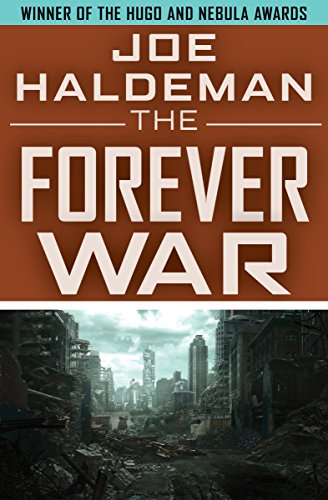
The Forever War is a military science fiction novel written by Joe Haldeman and published by St. Martin’s Press in 1974.  It was followed by the sequels Forever Peace (1997) and Forever Free (1999) and A Separate War (1999), but it works as a standalone book (presumably having been sold and published as one).

The protagonist of the story is William Mandella, a soldier in an interstellar war against an alien adversary (known as the Taurans) that no one understands.  Even though humanity now has the technology to travel through wormholes for quicker interstellar travel, travel is still very slow from a bystanders point of view, and because of time dilation at very fast speeds, relatively fast for the travelers.  This has major implications for the length of the war as well as the way an arms race will play out, because when your ship and a Tauran ship make contact their technology could be hundreds of years more or less advanced than yours depending on the planet of origin and time of departure.  Mandella, through several long tours, experiences a much longer stretch of the war than most of his fellow soldiers, taking some civilian time in between.

I thought the novel did very well at the military SF part of the story, using the alien conflict as a metaphor for our wars, in the hopelessness and separation and desperation of soldiers, doing whatever they can to survive their tour.  This was magnified by the complications of space travel and fighting an alien when you don’t know their technology or language or anatomy.  Haldeman wrote the novel after serving as a soldier in Vietnam, and his experience shows through in the feel of the story, it feels very real.

The civilian and some of the interpersonal parts of the story even during the military sections, I found much harder to get into.  I don’t know if this is a consequence of shifting general views in the 44 years since the book was published, but whenever he was going through a civilian part of his life, I was ready for that part to end–in particular the character’s views on homosexuality as the culture around him grew more and more to accept homosexuality as the norm.  (The character didn’t strike me as homophobic, exactly, but it sometimes seemed like that was all he could see about the people around him)

Overall I thought it was good military SF, lots of actions and strategy, though frustrating at times.

BOOK REVIEW: Tailchaser’s Song by Tad Williams

written by David Steffen

Tailchaser’s Song is a fantasy novel by Tad Williams, published by DAW books in 1985.  The story is set in a world of anthropomorphized cats, a quest fantasy with the young cat Fritti Tailchaser as the hero.  It is set in something like the real world, but from the perspective of cats, where humans are known as the race of M’an, descendents of cats who have been deformed by an ancient curse.

Tailchaser is a young feral cat, living near one of the towns of M’an, but not in a house.  He has always been an ambitious cat, wanting to make a name for himself, though he is happy with his life, and with his female companion Hushpad.  Local cats have started disappearing mysteriously, and the local leadership of the cats organizes a delegation to the royal feline court of Harar to report the disappearances and solve the mystery.  Soon after the start of the story Hushpad and the family of M’an who fed her mysteriously disappear.  Something insidious is afoot, and Tailchaser sets out to find out what it is, he is not included as part of the delegation so he sets out alone.  Soon he befriends a troublemaking kitten Pouncequick in the wilderness, who joins him in his journey.

The feel of the story as a whole is very epic fantasy, though it takes place in something like our world, it will be very familiar in tone to some of Williams’s later books, like the Memory, Sorrow, and Thorn series.  It’s interesting that “praise for the author” quotes on the cover refer to Watership Down by Richard Adams, about a group of anthropomorphized rabbits trying to find a new home after being driven from their own by impending disaster.  They are similar in a lot of ways, but this goes more into the fantasy realm–Watership Down was only fantastical in the sense that one of the rabbits had premonitions and the rabbits had some social structures that seemed unlikely in the wild.  Tailchaser’s Song, on the other hand, has entirely fantastical elements.

I love Williams’s work (the Otherland series being my favorite thus far) and so I’ve been meaning to go back and read his first published book.  I can definitely see similarity in the style and how that grew from there.  This one has some pacing issues, in my opinion, it takes a while to get going, and it takes a while after that to really get into what I’d call the main conflict of the story, and it frustrated me how little the stated quest really had to do with the story, in large part because Tailchaser really has no clue what’s happened to Hushpad so he’s really just setting out in a random direction hoping someone will know, without really any clear idea why they would.  Overall, it’s an enjoyable book and a reasonably quick read, and will especially appeal to you if you like anthropomorphic animals and quest fantasies.

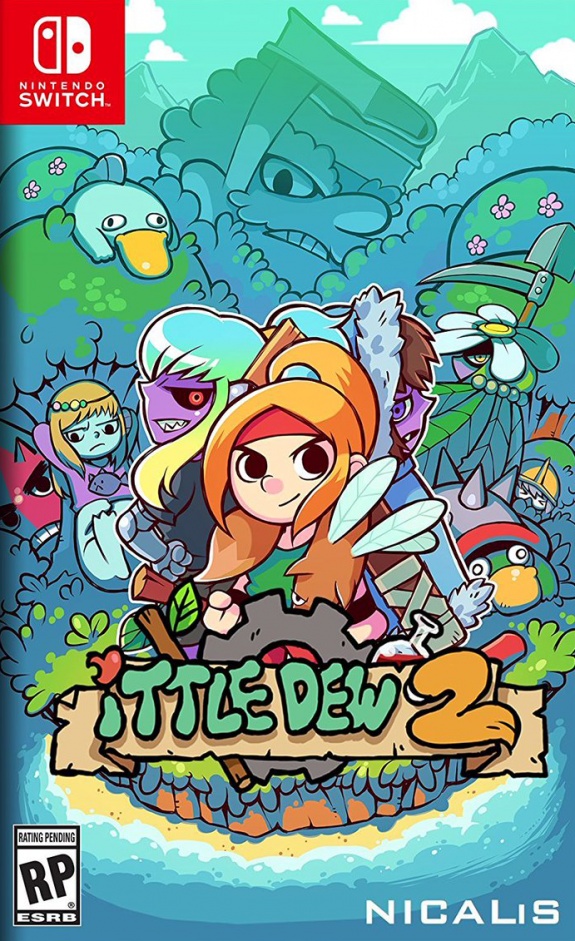
GAME REVIEW: Ittle Dew 2+

written by David Steffen

Ittle Dew 2+ is a Legend of Zelda inspired action/adventure puzzle game released for the Nintendo Switch in November 2016 by Nicalis–other iterations of the game have been released for other platforms, but the + in the name signifies additional content included from Ittle Dew 2.

Ittle the adventurer and her flying fox familiar Tipsy crash their raft on another island full of dungeons and treasure.  They are immediately confronted by an odd stranger with books strapped to the top of his head who tells them they must not explore the island.  But in the crash their raft broke into eight pieces which have somehow ended up at the end of 8 dungeons guarded by puzzles and enemies.

I have not played the first Ittle Dew game, so I don’t know how this one compares to that one, but there wasn’t any point where I felt like the gameplay suffered because I wasn’t familiar with the predecessor.  The games easy to pick up–all you can do at first is move and swing your weapon.  As you find additional items in dungeons then the gameplay gets more complicated as you figure out how to use those to solve puzzles.  It is very similar in style to the NES and SNES iterations of Legend of Zelda, with a broad overworld with dungeons, each of which has an item and a boss.  For those who don’t like open-ended exploring it is more directed than its source material in that the next “logical” dungeon for you to visit is marked on the map–so if you just want to power through it without broadly exploring, you certainly can.

The game eases you into the difficulty in that right at the beginning the enemies really don’t attack you and the puzzles are very tutorial level.  But the game does get genuinely difficult by the end both in puzzles and gameplay.  One aspect I thought was really well done was that, although an immediate use of each item is immediately apparent, they generally have at least a handful of major ways in which each item can be used to help solve puzzles, and some of them are not obvious, you have to experiment, try to mix them, see what happens.  I’m not sure I’ve even figured out all the permutations of the items, because there are some puzzles I haven’t solved and I feel like I’m missing something even though I’ve gotten the major items at least.

This game was a lot of fun, especially if you already know you like Zelda-like games, it’s well worth your time.

Visuals
Simple, fun, cartoonish look.

Audio
Fine, though I often played with the sound off.

Challenge
Later levels of the game, particularly the boss battles, and some of the later puzzles, are very challenging and often took me several tries.  Some of the optional areas of the game like the dream dungeons I haven’t completed because the puzzles there are quite challenging–there are quite a few ways to use each tool you find on the way that aren’t immediately obvious, so it takes quite a bit of experimentation to figure these out.

Story
Slight, but fun.  It’s a game that’s clearly designed for people who have played a ton of Zelda-like games before, so they have fun playing with the tropes and poking fun at some of the sillier ones.

Session Time
As with all Switch games, you can put the console to sleep at will, so that makes it easy to pick up or put down at a moment’s notice.

Playability
Not hard to pick up, the controls expand as you gain more items to use.  Some of the later puzzles are in part challenging because it’s not obvious all the different possible uses of a power.

Replayability
There are optional dungeons and a whole set of dungeons in the dream land that are particularly challenging because you can only use one item in each of them, along with collectibles like extra hearts there’s plenty for extra play-throughs.

Originality
It is intended as a parody of the popular Zelda series, especially the ones from SNES and earlier with the 3/4 overhead view, so it’s not a game whose popularity is based on its uniqueness.  But it takes those familiar elements and does some fun new things with it.

Playtime
The Switch says that I played this for 10 hours, which has been mostly focused on the standard dungeons.  There is certainly a lot more to explore that I haven’t touched.

Overall
If you like real-time fighting and puzzle games, you’ll enjoy this.  If you’re a fan of the Legend of Zelda series, even more so, since you’ll get the references.  Fun, and the later puzzles and boss battles are challenging even for an experienced gamer.  $30 on the Nintendo site if you want to play it on Switch.  Ittle Dew 2 (without the plus) is available on Steam for $20, I think that does not include some of the extra dungeons and etc.

DP FICTION #51B: “Dogwood Stories” by Nicole Givens Kurtz

Content note(click for details)

Content note: harm to children

“Late bloomers have the prettiest blooms,” Sadie’s momma said, after she tapped her on the head with the comb. “So, stop squirmin’.”

“It’s too tight.” Sadie winced, sucking in air to offset the pain. Her scalp burned like someone had set fire to it. She put her hands in her lap and tried to weather the storm, her hands rubbing each other to soothe the pain.

“Tenderheaded. That’s all.” Her momma pinched off a section of hair, and began another braid.

Sadie stifled a groan and squeezed her eyes tight. Once her momma finished the braid, she rubbed a finger full of grease along the parts, oiling her scalp and providing a balm to her irritated skin. The braids still hurt; the hair pulled taut and confined in the creative style.

With her hands sweating, Sadie gritted her teeth and stopped complaining. Not cause her momma’s braiding had stopped hurting. It did, but she wanted to look nice for the Dogwood Arts Festival. It happened once a year in Knoxville and she loved the early spring weather. Fresh grass, the flowers’ sweet smells and the pollen, giving everything a yellow hue.

Other places had festivals honoring dogwoods, cotton, and barbeque. Heck even bacon. Here in East Tennessee, beneath the Great Smoky Mountains’ rolling hills and purple mountains, the dogwood reigned.

Knoxville laid at the foot of the Smokies, in the valley. Protected to the east by mountains and blessed by the Tennessee River on the west, the city of Knoxville bloomed after the 1982 World’s Fair. Sadie only heard stories. The impact on the small county — the town, according to her momma, caused the town to morph into a metropolis.

“Momma?”

“Yeah baby?” Her momma popped her gum. The rush of spearmint tickled Sadie’s nose. Her hands rested heavy against Sadie’s head.

“Tell me about the dogwoods.” Sadie opened her eyes and waited. She loved when her momma read or told her stories about their people. The truth and all its messy bits her teachers didn’t tell her about in school. That’s what her momma called it—messy bits.

Momma’s stories went back as far as the Dogwood Arts Festival itself. Some of the stories Momma got from Grandmomma, Sadie’s Nana. Knoxville didn’t have a lot of folks who looked like her. Most of Sadie’s schooling had been by middle class white women, some well-meaning, but confined by stereotypical beliefs and hatred, both festering inside and foaming outside in whitewashed facts. So, when her momma talked about history, their history, in her rich, southern drawl, Sadie would disappear into those words melting into the past. Those logs fueled her inner fire to burn through the present’s challenges.

“Well, back in the days, a long time ago, the dogwood was strong, as strong as the oak tree. The people who kilt Jesus used the dogwood to make the crosses people was crucified on. The dogwood was a killin’ tree. So when they kilt Jesus on the cross, God twisted the dogwood, punished it by making its limbs thin and skinny…”

“So no one could be crucified on them any more,” Sadie finished, her heart hammering in glee.

“Right. But just so folk don’t forget, God made the white petals of the dogwood look like a cross, four points, with blood bracketed on the tips where they put the nails in Jesus.” Her momma breathed deep and sad as she started braiding again. “Dunno why you like that story so much. It’s sad, Sadie.”

“It isn’t sad, Momma. It’s beautiful.” Sadie sat up straighter against the couch.

“You a strange child.” Her momma tapped her shoulder. “You done.”

Sadie stood. Her legs ached from sitting, but the searing of her scalp blotted that out. Still, she took the stairs two at a time to get changed. Soon, her cousin, Tina, would be by and together they’d make their way downtown to the festival.

As she changed clothes from her pajama bottoms and tee-shirt and into jeans and a long-sleeved, white University of Tennessee tee-shirt. The words “Go Big Orange” spelled out in vibrant U.T. orange. Sadie thought about the dogwoods. She loved the story, not because of God’s punishment of the dogwood. The trees had been changed. Their strength had been used for evil, to hurt people, to inflict suffering. Unable to stop the people from using them for this purpose, the dogwood had been relieved of the burden. She didn’t see it as a punishment, so much as the dogwood being freed.

No, the dogwoods did not belong to white Jesus or his believers. The dogwood belonged to black folks—southern black folks. Like the dogwood, they’d suffered, blooms of potential sliced off by hatred vile and black as the skin of those they despised. Such “nice folks” capable of such monstrous acts as decorating beautiful grand oak and magnolia trees with bodies as ornaments. Smiling families lined up to take pictures in front of those macabre Christmas trees. Those dark, empty husks, dusty and lifeless, had been her family, her people, her kin.

Sadie sat down on the edge of her bed. Not the dogwood. Its petals already bore the blood stain of death. Mostly, the thick oaks and redwoods found themselves defined by evil.

The faint knocks announced Tina’s arrival.

Sadie slapped on her gold bangle bracelets and her big gold hoop earrings.

“You comin’, Sadie?” Her momma shouted up the stairs to her. “Tina’s down here waitin’.”

Sadie checked her braids in the mirror. Her hoops glistened along with the glossy and thick braids. Her head ached a little, but the rising excitement flooded her with a glow that numbed the pain.

“Yeah. Ready.” She scooped up her pocketbook and headed downstairs.

Once Sadie reached the bottom of the stairs, she found Tina and her momma in the living room. The front door stood ajar, but the screen door remained open. Outside, the lemon-yellow sun beamed in the early afternoon sky. Sadie rounded the short corner and walked into the living room—and a debate.

“That’s so 80s. We done did that.” Her momma stood with her arms akimbo on her wide hips, watching Tina. Her satin, multi-colored headwrap hid most of her hair, except her tight spiral curls around her face. She wore a loose blue dress with pockets and house shoes she wore outside.

Her cousin’s box braids swung about her flared hips as she rotated in a circle, shaking her hip-hugging and strategically ripped jeans. Sadie’s momma laughed, throwing back her head, mouth wide, and humor crinkling the corners of her momma’s eyes.

Sadie shrugged. “Everything dies. But then it comes back.”

The chuckles stopped. Tina turned to peer at Sadie, her forehead wrinkled in confusion.

“You such a weird child.” Sadie’s mom shook her head and with scrunched eyebrows turned back to straightening the living room. The smile left and shadows formed on her momma’s face.

Remnants of the shed hair, combs, and decorative beads littered the couch and rug where Sadie had sat.

Sadie let the words glide off of her. Those labels, strange, and, weird, had become worn and faded to her ears. Blunted like a knife that had been used too much.

“It’s a cycle, like spring. Renewal…”Sadie explained to the back of her momma’s head.

Tina rolled her eyes. “Get your pocketbook.” Her voice dipped so low only Sadie could hear. “Sassy Sadie, let’s go.”

“Bye Momma.” Sadie waved goodbye. The screen door slammed with a whap.

Once they got to Tina’s little Honda Civic, she gave Sadie the once over. “Your braids are poppin’! Dang. They tight!”

“Yeah. Momma just finished them.” Sadie shoved her hands into her jean pockets. Eager to go, she fought to keep her hands busy while Tina fished her car keys out of her pocketbook. The silence filled her with dread. Energy buzzed across her skin like lightning, like Saturday morning on Volunteer Football games.

Her cousin, Tina, lived up the street in a house that lined the edge of the projects’ apartment buildings. Older by four years, Tina had her driver’s license and an interest in art. The Dogwood Arts Festival local art show hosted a high school arts competition. Once the works were judged, students won ribbons and prizes. Tina had a few pieces showing and she wanted to show them off to Sadie. That fact alone took sheer courage. Strength. Tina had blossomed from the poor, clay dirt into a creative flower.

“Ready?” Tina unlocked the car, climbed in, and started the ignition.

“Yeah!” Sadie said with relief. At last!

It seemed to take forever, but in no time, they’d made their way from Cherry Street to downtown Market Street. As Tina parked the car, Sadie rushed out of the passenger side before Tina could remove the key from the ignition. The air felt different. It spoke to her.

“Hold ‘em horses, Sadie!” Tina called.

Sadie paused on the sidewalk. “Hurry up!”

Once she cleared the car, Tina tossed her braids. “I’m coming.”

They melded with the crowds of people streaming toward Market Square, a sea of pale faces with occasional spots of color. The Dogwood Arts Festival’s banners of white, mint green, and pink announced the celebration, but the trees showed off. Reaching high to the sky in all their splendor, they decorated Gay Street, the primary artery into Knoxville’s heart—downtown.

Sadie took in the rows of glorious trees. The tension level swelled. People bumped and jostled as people took in the new blooms, the artists, and vendors selling all manner of items. Southern fried foods’ strong aromas wafted through the air. Pink, green, and white balloons decorated vendor and artisans’ tables and booths along Market Square. The free event swelled with individuals beneath the cornflower blue sky and the occasional white cottonball clouds. Postcard perfect.

Sadie’s Nana used to say firm footing could turn to quicksand in a blink.

Whispers circulated, like snakes slithering between people, hissing in warning, when a sharp burning sensation exploded in Sadie’s chest. Her breath caught and a flash of bright light made her wince. She watched, transfixed, as a scarlet dot on her shirt blossomed across her heart, growing as if time-elapsed had been fast forwarded.

Sadie’s joy gushed out of with her blood. She couldn’t feel anything except the soft, downy dogwood petals brushing her cheeks.

For a crowd of branches, they weren’t shy about revealing themselves. Her face—hot and tight—as the whispers intensified couldn’t move. The trees leaned down close to her, their branches cracking like dry spines, shifting to mutter their wisdom into her ears. Blood roared in her ears as adrenaline flooded her system. She gave a wheezing cough. As she removed her hand from her mouth. An awareness settled on her shoulders.

I’ve been shot.

Life grinded to a halt.

Dogwoods didn’t chase ghosts away. They were ghosts. Of her ancestors, of all ancestors of the strong and betrayed.

This. Was. It!

The moment the dogwoods welcomed her into their fold. All of Sadie’s muscles strained as she lifted up her arms. They cradled her. The ivory petals stained with rust, by blood. Hers? Alarmed, she struggled, but their thin, rough bark tightened.

They whispered, “No matter. No matter. Only blood. We know it.”

With this they bobbed in the breeze, and continued to convey their knowledge, such as the wonders of weather that affected their delicate branches and blooms, their wonderful stories of steam and coal, of feasts and famines, and of freedom.

“You been strong for so long,” one dogwood said. It sounded like Nana.

“It hurts.” Sadie croaked, mouth thick and lazy.

“Come on, chile. Rest awhile. Here…” said another dogwood tree.

“But…” Sadie said, “my momma…”

“…is gonna be alright, after a while,” still another tree explained.

Their branches swayed as if cheering on this viewpoint.

“Hush. Hush,” they soothed.

“Come. Come,” they pleaded.

She savored every promise, every whispered word.

“I dunno…” Sadie started to turn away, to see the others in the marketplace. A coldness crept in, chilling her. She shuddered. A grisly, gruesome scene unfolded around her. “Tina.”

“Come on, now. Do not be afraid.” Nana’s voice again. It sounded warm and syrupy with its Southern drawl, thick and sweet.

Sadie’s eyelids grew heavy. Her throat burned, but she managed to say. “My momma, she needs me. I can’t come with y’all, now.”

So hard to talk. Her tongue didn’t want to work right. So tired.

Sadie closed her eyes among the dogwoods’ sweet scent.

*

“This is Robin Sneed with WBIR Channel 10 at the scene of what can only be described as a mass shooting. This time at the Dogwood Arts Festival downtown in Market Square. Police are asking viewers to avoid the downtown area. The festival, usually a time for joy, spring, and renewal, now is a place of violence and death.”

A few feet away, Tina shuddered beneath the blanket the EMS tossed over her shoulders. Yellow caution tape roped off the area as if it were some exclusive club that no one wanted to belong to—a survivor of a mass shooting. No one wanted the alternative either. Fate dealt her and Sadie a cruel blow. The reporter gave vague descriptions of the shooter. Tina scoffed. That cowardly bastard’s soul was deformed. The cops muttered about his deep-seeded grudges, but Tina knew that evil took root in places folks don’t always expect—and places they do.

The crime scene was a hive of activity. KPD and others dressed in POLICE jackets, buzzed around the area, like flies among the corpses. A flurry of activity sped up and slowed down simultaneously. Was this shock?

“Blood everywhere.” So bright against the white.

Tina’s tears flowed so much her eyes swelled and burned. Noise. Wailing. Screams of sirens switched to soft humming and back again. Everything had become jumbled. Nothing made sense.

“Sadie?” she called out.

A short distance from where she stood, her little cousin, Sadie Griffin lay crumbled on the bricked plaza. She’d fell where she stood. A duo of EMS folks hovered around her, blocking her view. Tina tried to distance herself from them, as if she could melt into the blanket, a makeshift invisibility cloak.

Tina closed her eyes, stomach lurching. The scents of copper and gunpowder hung in the air, staining it with death. She couldn’t even smell the dogwoods any more.

Dogwoods.

Tina pictured Sadie’s meddling with such freedom, but it had cost her. She could still see her, Sadie, practically bouncing in her excitement to be out at the festival. Now motionless. Struck down in her moment of joy.

Tina tasted the salt on her lips. She tasted pain. Grief. Of course, they were salty. Anger burned hot at the injustice of it. The police had caught the gunman—unharmed. That murderer would live.

Would her sweet cousin?

Tina remembered Sadie’s face when the bullet plowed through her. Dogwood petals rained down on her. The wind blew them loose, but it looked like they wept at the ugliness of the day. Her dark, round eyes sparked as she watched the dogwoods sway in the breeze. Tina sighed and wiped her tears. She needed to be strong for her aunt and her family.

For Sadie.

*

“She’s awake!” Sadie’s momma’s shout seemed to be piped in from far away. Despite this, the wavering thread of relief came through clear and defined. The thick scent of night blooming jasmine hung along with the harsher hints of something else. Confused, Sadie’s eyebrows knitted together. Too much light for it to be night. Sadie’s everything hurt as she tried to move or sit up. She tried to open her eyes, but the lights hurt, too. But in that brief eyeful, she could tell she wasn’t in her bedroom.

“Where am I?” She managed through cottonmouth. Her lips crackled and she winced again. Each motion brought agony. So she tried to stay still.

“Here. Drink.” Her momma handed her a cup of water.

She leaned up on one elbow. Sadie drank, but the I.V. pulled her dry skin on her hand. It bled.

“You at U.T. Hospital.” Her momma rubbed her hair and took the cup.

Hospital? Once her eyes adjusted to the glare and the fluorescent’s harshness, she looked around the room, as much as she could without moving too much. Then, it all rushed back to the forefront of her mind. She’d been shot!

“Momma, the dogwoods!” Sadie said and struggled to sit up fully. The atmosphere shifted as if certain emotion had been vanquished by her newfound secret knowledge. “The dogwoods are alive! More than that, they spoke.”

Maybe Tina heard it too, Sadie thought.

“Shush, baby girl. They gonna be here. Just like e’ry year.” Her momma kissed her forehead.

Suddenly exhausted, Sadie shut her eyes. Those dogwoods wagging their blooms all over town, running the thread about the foolishness of men. Tossing away life like ruined and withered petals.

Sadie knew it because she could almost hear them, chattering at the end of her consciousness. She’d join the dogwoods, just like her Nana. Later. She smiled as warmth spread through her. They’d embrace her in their creaky limbs and petal soft blooms.

She’d be ready.

So would the dogwoods.


© 2019 by Nicole Givens Kurtz

Author’s Note: As a born and raised Tennessean, the Dogwood Arts Festival in Knoxville was an integral aspect of growing up southern. Over time, the festival marked many rites of passage as I grew up and this story combines the legend of the Dogwood, my  east southern roots, and my love for horror.

Nicole Givens Kurtz’s short stories have appeared in over 30 anthologies of science fiction, fantasy, and horror. Her work has appeared in Stoker Finalist, Sycorax’s Daughters,  Stoker Recommended Read, Black Magic Women, and in such professional anthologies as Baen’s Straight Outta Tombstone and Onyx Path’s The Endless Ages Anthology. Visit Nicole’s other worlds online at Other Worlds Pulp, www.nicolegivenskurtz.com.


If you enjoyed the story you might also want to visit our Support Page, or read the other story offerings.