Diabolical Plots Fiction Lineup (Year Two)

written by David Steffen

Diabolical Plots opened for fiction submissions for the month of July, one story per writer for the submission window.  During that month 425 valid submissions arrived in the slushpile.  59 stories were held for a second look.  13 stories were purchased.  Both rounds of the process were judged entirely by me, and author names were hidden from me until the final decisions had been made, so the stories had to stand for themselves.  Here are the story titles and authors for that year of purchases.  I am very excited to bring these stories to readers.  I hope you enjoy them as much as I did!

March 2016
“One’s Company” by Davian Aw

April 2016 
“The Blood Tree War” by Daniel Ausema

May 2016
“Further Arguments in Support of Yudah Cohen’s Proposal to Bluma Zilberman” by Rebecca Fraimow

June 2016
“The Weight of Kanzashi” by Joshua Gage

July 2016
“Future Fragments, Six Seconds Long” by Alex Shvartsman

August 2016
“Sustaining Memory” by Coral Moore

September 2016
“Do Not Question the University” by PC Keeler

October 2016
“October’s Wedding of the Month” by Emma McDonald

November 2016
“The Banshee Behind Beamon’s Bakery” by Khaalidah Muhammad-Ali

December 2016
“The Schismatic Element Aboard Continental Drift” by Lee Budar-Danoff

January 2017
“Curl Up and Dye” by Tina Gower

February 2017
“The Avatar In Us All” by J.D. Carelli

March 2017
“Bloody Therapy” by Suzan Palumbo


BOOK REVIEW: Chasing the Phoenix by Michael Swanwick

written by David Steffen

Chasing the Phoenix is a science fiction novel by Michael Swanwick, published by Tor Books earlier this month.

The book stars Swanwick’s recurring characters, the con men Darger and Surplus.  As the story begins, Surplus is journeying through a future China with the Darger’s corpse carried on the back of a yak, seeking the services of the legendary healer the Infallible Physician to raise Darger from the dead.  Once that’s happened (it happens early enough in the book that I don’t think that counts as a spoiler).   Considering greed a virtue, the con men are always looking for ways to profit from their circumstances.  Surplus, who is an anthropomorphic dog, has used his appearance to his advantage by pretending to be an immortal, and with Surplus rising from the dead they have soon gained the attention of powerful people involved in a brewing civil war.  Even among one side of the war, there are always those jockeying for power and willing to kill to get their way, and soon the two con men are working all sides just to stay alive.

Since Darger and Surplus are recurring characters, of both novels and short stories, a valid question would be: Can this book be read out of order with the rest?  Yes, you can.  This was my first Darger and Surplus story, though I was familiar with the characters from short nonfiction segments that had featured on the StarShipSofa podcast on the subject of the art of confidence tricks.  My only prior knowledge was that they were con men, and that’s obvious very early in this novel.  I had no trouble picking it up.  I expect that there are probably some references and in-jokes about previous books, but nothing that interfered with my understanding.

I imagine that some people enjoy going on adventures with these con men characters–presumably they are recurring characters because books about them sell.  Honestly, I just found them irritating.  Not because of their professions, necessarily–their ethics are certainly different than mine, but I have related to such characters before.  I just found them… I don’t know what word I’m looking for… smarmy, perhaps?  I didn’t really care what happened to them, and if the book had ended with them both dying I wouldn’t have really minded.  I don’t know if this book is representative of them or not, but I probably won’t try to read any more Darger or Surplus stories unless I hear this one wasn’t representative.

I did read through the whole book.  I was curious how it would turn out.  There were some interesting challenges that the pair faced, varying from war strategies, to battling against future technology, to interpersonal challenges that they were coerced to help resolve.  The challenges and the stakes rise throughout the book as they con men play people off of each other and the war goes on.  A few times in the book the characters they seem to be in an impossible situation and those were the parts I was most interested in, to see how these two could turn things around… but more often than I thought was reasonable things would just take a turn of circumstance and save them at the last moment.  In the end there turned out to be some explanation for this, but I felt like it was a cheat and took the enjoyment out of the part that I really wanted to see–these two actually facing a real challenge.  Apart from those apparently unsolvable challenges, they breeze through the rest of the book, never stymied by anything.  Although the stakes go up and up, they just cut through the challenges like butter.

So, this book is clearly not for me.  I didn’t like the protagonists and I thought the book was too easy for them.  I imagine that fans of Darger and Surplus stories might like it, though I don’t know if this story is representative.  Swanwick is a good writer, and I’ll happily pick up other works by him that star different characters.


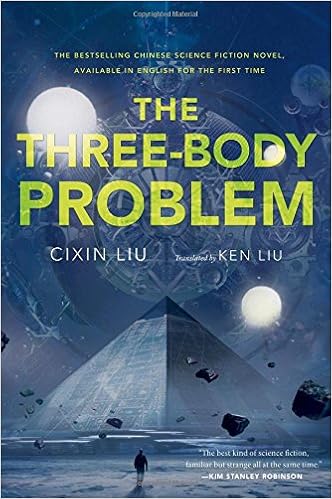
BOOK REVIEW (Conclusion): The Three Body Problem by Cixin Liu (Translated by Ken Liu)

written by David Steffen

Less than a month ago, just before the Hugo Award voting deadline, I gave a preliminary review of the first 100 pages or so of the Hugo-nominated novel The Three Body Problem.  I gave the partial review then to get it published before the Hugo deadline, but since then I’ve finished reading.  This review will be pretty brief because I don’t want to spoil everything, and the truth about what exactly explains the weirdness that’s happened so far in the book takes a while to unroll.

As mentioned in the partial review, I thought the beginning was much too slow, going into a lot of background detail on a character who was important to the story but didn’t end up being the main point of view character.

I continued to especially enjoy the in-book game titled The Three Body Problem in it’s weird representation of a world with chaotic seasons, and generally found those sections more compelling than the other parts of the book.  The book in general is more distantly told than I prefer, often with the POV character bringing up a topic that he said he’d been planning with no prior note about it.  I’m not sure how much of that is a language or cultural difference in the expectations of storytelling but I was interested enough to keep reading.

I guess I hadn’t paid enough attention and hadn’t realized that this was book one of three until it ended.  Some things are resolved by the end of the book, but I wouldn’t call it a real complete story arc on its own–its very much a Part One, not a standalone story.  Without getting into spoilery specifics, I thought the tension kind of ramped down near the end, so I’m not really sure how that’s going to carry over into the next book.

I enjoyed reading the book, finding out what was behind the weird occurrences, and finding out more about the in-book game.  But with the generally slow and uneven pacing the ramp-down in tension near the end I’m not sure I’m into it enough to want to keep reading books two and three.


The Five Best Realistic Science Fiction Films in the Past Five Years

written by Maria Isabelle


There was a time when science fiction films consisted of more fiction than science, but as mankind grows more intelligent about the scientific forces that control the universe, our need for more believable science fiction also grows stronger. Here are some recent and realistic depictions of science and technology in film:


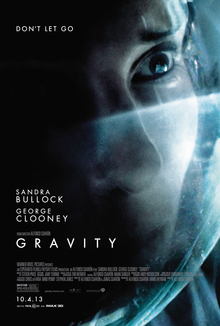
Gravity (2013)

When their shuttle is destroyed, a medical engineer and an astronaut must work to survive in space as they are adrift in orbit. This has become one of the most famous movies in recent times to be completely picked apart by modern rock star scientists like Neil DeGrasse Tyson. The physics is a little hit-or-miss, but there are times when Gravity did capture the zero gravity feeling, according to Buzz Aldrin. Other realistic additions include special props used by astronauts, correct alignment of buttons and controls, and the growing problem of space debris in Earth’s orbit.


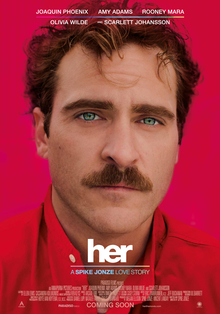
Her (2013)

In this sci-fi dramedy, a man falls in love with an intelligent operating system named Samantha. Not the only film on this list to deal with man falling in love with a machine, Her is steeped in something a little closer to reality. More recently, humans have developed a growing trend of being attached to our technology at all times. How many people never leave the house without their cell phones or take them to bed with them? For some, it also seems that communicating remotely via email or messaging could make it easier to form more personal bonds. Perhaps in the future, when more sophisticated technology is developed, the prospect of relationships with artificial intelligence won’t seem so crazy.


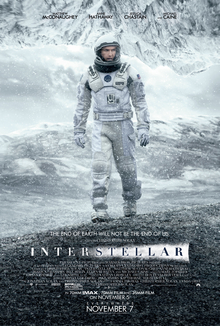
Interstellar (2014)

In a far out scenario, a team of space explorers must travel through a wormhole to save mankind. Even though the premise is a little insane, there is a lot of sound science fact in this film. Using all available information, most scientists agree that the black hole and wormhole in the film are as close to real as we can imagine right now. Another fascinating aspect of correct science is the different aging rates of the cast. The gravitational pull of the black hole would, in theory, slow down time on the planet closest to the black hole.


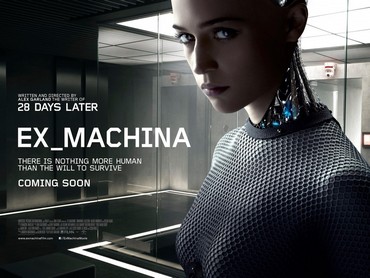
Ex Machina (2015)

Ex Machina sees a man falling in love with an AI robot. Unlike Her, the AI machine here is an actual robot with a very realistic human face. The entire film is centered on the Turing Test, a way of testing AI against the realities of human intelligence. It seems that we may be way off until the technology depicted within the film but we’ve still made some small but great strides in advancing it: smart lights and appliances, remotely controlled home security systems, and even software that actually passed the Turing Test.


Mad Max: Fury Road (2015)

In a far off dystopian future, two people fight to restore balance and order. This film made the list, not for its great technology, but for its realistic depiction of our bleak future. After global climate change and increasing worldwide violence, the Earth is now barren and devoid of any similarities to our modern society in this film. There has been a breakdown in our culture and things such as water and gas have become the top commodities. It isn’t pretty, but close to our reality if we aren’t careful.


Although sci-fi films can sometimes be a bust, they key is to depict relatable and realistic stories in an imagined world. Let’s just hope the tragedies and violence surrounding these technologies and science in film never make it to real life.


Prof Pic 1Maria is a writer interested in comic books, cycling, and horror films. Her hobbies include cooking, doodling, and finding local shops around the city. She currently lives in Chicago with her two pet turtles, Franklin and Roy.

Anime Review: Fate/stay night: Unlimited Blade Works

written by Laurie Tom

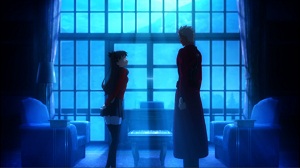
fate stay/night: ubwFate/stay night: Unlimited Blade Works is based on the Unlimited Blade Works storyline from the adult-rated Fate/stay night visual novel. Unlike in the US, it’s not unheard of for erotic games to be repackaged for a broader audience with the explicit scenes removed and for an anime to use the cleaned up version of the storyline.

In the world of the Fate series, there is a tournament held every few decades where seven Masters summon seven Servants and battle to obtain the Holy Grail, which will grant the winners a wish. The Masters are all supposed to be powerful wizards in the present day world, and the Servants are legendary heroes from across time. Each Master and Servant pair work as a team towards their goal and each of them will get their own wish.

The battles don’t need to be to the death, but the only way to eliminate a Master from the tournament without killing them is to kill their Servant, but because the Servant is typically the more powerful of the two, killing the Master is considered easier.

The story revolves around Shirou Emiya, a teenager with some weak magus blood in him that by rights shouldn’t be enough for him to summon or sustain a Servant, but for reasons unknown he manages to summon a Saber-class Servant (considered the strongest one) completely on accident.

When his schoolmate Rin Tohsaka (also a magus) brings up him to speed on the purpose of the tournament, he decides to participate, because really, he doesn’t have much choice. Outsiders are supposed to be killed for witnessing any battles.

I suppose this is how magic stays hidden from the general population, though the series never comes out and says it. Considering the widespread destruction some of the battles cause I’m rather surprised magic has managed to stay hidden at all.

Though well-intentioned, Shirou tends to come off as a bit of a chauvinistic moron. Saber is clearly capable of fighting. The fact she is a Servant means that she was one of the greatest warriors of myth and legend, but he spends a lot of time trying to protect her and Rin (who is a much more powerful magus than he is), even when it doesn’t make sense and results in him just getting the way.

Shirou is the kind of guy who will throw his life away because he thinks it’s important to have made the gesture. It’s sort of a headbanger how idealistic he is, but instead of being endearing it just makes him look stupid.

But even if Shirou’s characterization is its weakest component, and the storyline itself sometimes stretches the bounds of believability, Unlimited Blade Works shines when it comes to its battle scenes, which are gorgeous. Clearly all the attention went to giving the audience a spectacle to remember and the final battle in the last episode does not disappoint.

I admit I don’t quite understand why the Fate series is so popular considering that Fate/stay night is presumably the one that inspired them all, since it’s not all that strong and many times characters do not get a full story arc. I recognize that’s probably a holdover from the game, where some characters get more to do in one storyline than another because of player made decisions, but it doesn’t feel like even the main plot of UBW entirely comes together.

For instance, it’s not until episode 22 (of 24) that the real villain’s name is spoken for the first time. It’s not that it was supposed to be a secret, we’ve seen him lurking around since the first half of the show, but when it finally comes out, he’s not even on camera so if I hadn’t been browsing a wiki for more context I might not have even connected the two of them.

The series suffers a little bit from expecting the audience to already be familiar with the franchise, and to some degree that is probably not surprising. The Fate storyline of Fate/stay night was already animated back in 2006 and the prequel Fate/zero was animated in 2011, and Unlimited Blade Works itself had been done as a movie in 2010, but I still feel that as a storyline based on the original game that started it all, Unlimited Blade Works the TV series should have been understandable and self-contained on its own.

The plot does get more engaging overall in the second half though, because Shirou and Rin eventually start working together instead of passive-aggressively trying to keep each other out of the way, and because by then the other Masters have started falling. It’s clear who the frontrunners are for winning the Holy Grail, and it’s not them.

I do have to mention though that Fate/stay night is not kind to its female characters. There are some creepy male gaze scenes when Rin and Saber are captured at different points in the series and though both of them are portrayed early on as competent and fully capable of looking after themselves, their roles are vastly reduced in the final third while Shirou gets the opportunity to come into his own.

Overall I wouldn’t say Unlimited Blade Works is a bad series, but it’s not a particular good one either, and it’s most saved by its animation quality. I like Rin as a protagonist, and would have been much happier if the series had been following her story rather than Shirou’s. She has a much more realistic outlook than he does while still remaining a person with a good heart.

Number of Episodes: 25

Pluses: gorgeously animated fight scenes, interesting world building

Minuses: treatment of female characters in the second half, plot doesn’t make a whole lot of sense, most characters aren’t well fleshed out

Fate/stay night: Unlimited Blade Works is currently streaming at Crunchyroll and Hulu and is available subtitled. Aniplex has licensed this for eventual retail distribution in the US.

laurietom
Laurie Tom is a fantasy and science fiction writer based in southern California. Since she was a kid she has considered books, video games, and anime in roughly equal portions to be her primary source of entertainment. Laurie is a previous grand prize winner of Writers of the Future and since then her work has been published in Galaxy’s Edge, Strange Horizons, and Crossed Genres.

Summer 2015 Anime First Impressions

written by Laurie Tom

Unlike summer on American TV, new anime debuts year round with every season, and this summer in particular looks like fun times, with multiple shows I’m interested in following. It’s like winter 2015 all over again, where there’s more than I can keep up with, but this time there are no returning series vying for my attention and all of the interesting things are new.

It’s going to be hard to limit my viewing pool to my preferred cap of three shows! There is one exception though, due to a very special bonus show I’m including at the bottom.

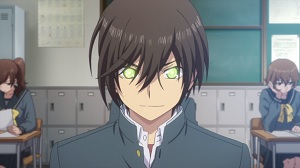
Aoharu x Machinegun
aoharu x machinegun

Why I Watched It: Cross-dressing girl ends up entering a survival game where it’s assumed that she’s male. I like the character designs and I’m fond of genderblender characters in anime. Hotaru’s same design could be a male character voiced by the same actress in a different anime and actually be male due to the fact teenage boys are frequently voiced by women, so it’s extremely easy to buy into her ability pass.

What I Thought: Hotaru is a hot-blooded class president who for reasons unknown, prefers dresses in the male school uniform. Most people who don’t know her assume she’s male. This is even more obvious in Japanese where her word choices indicate a very masculine speaker. She also shouts a lot and is willing to beat up people for social infractions, which makes her pretty fun to watch. It turns out she’s really good at reading people in a fight, so when a misunderstanding leads to her wrecking a host club she gets press-ganged onto a survival game team to pay off the debt.

Verdict: I’d like to watch, but this season is pretty crowded with good stuff. Hotaru’s short fuse is a bit much, but I like that (so far) she just seems to be a girl who likes to wear the male uniform and there’s no tragic backstory to it, and her personality is not one that girls are frequently allowed to have as a starring protagonist. I’m a bit disappointed though that the survival game appears to be paintball or airsoft as I thought it was going to be a more literal survival.

Where to find stream: Crunchyroll

Charlotte
charlotte

Why I Watched It: The latest series from the writer and character designer behind Angel Beats. Writer Jun Maeda is known for pulling on the heartstrings so there will probably be a lot of light-hearted moments before ultimately delving into a tissue box at the finale.

What I Thought: I usually don’t like jerk protagonists, but Yu is the creative kind. In middle school he discovers that he can possess other people for 5 seconds while his own body falls comatose, and as expected for his age, he decides to use his power to get back at other people and also to cheat his way into an elite high school by temporarily possessing other students who are smarter than him so he can read their answers while taking exams. He might not be book learned, but he’s definitely clever and incredibly manipulative. His shenanigans catch up with him though and he is forcibly transferred to another school that is intended for people with powers like him, where he presumably will turn out to be a better person by the end.

Verdict: I’ll be watching. Given the series’ pedigree and the similarly stunted powers the other students have (being invisible to only one person at a time, superspeed without the ability to slow down equally fast) it looks interesting.

Where to find stream: Crunchyroll

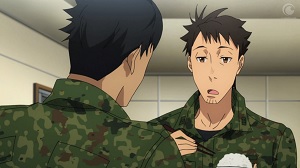
GATE
gate

Why I Watched It: A generic-looking medieval fantasy world invades modern day Tokyo and Japan needs to fight back. Normally I wouldn’t be watching, but the protagonist is a 33-year-old fanboy who also serves in the Japanese Self Defense Force, and getting a thirty-something protagonist in an anime is pretty rare!

What I Thought: In some ways better than expected. I like that it’s an anime that actually includes the appropriate military response when invaded by another dimension and an appropriate timeline for Japan to send invasion forces of their own in reply. On the other, it looks like the thirty-something fanboy soldier is going to gain a trio of teenage fantasy world inhabitants for traveling companions and they’re all girls. That’s going to look creepy. He’s not the only one sent through the gate though so it looks like we’ll get to see a modern army vs. a medieval fantasy army.

Verdict: Going to pass. Looks like it has the potential to be fun, but there’s more than enough going on this season to keep me occupied.

Where to find stream: Crunchyroll

Monster Musume

monster musume

Why I Watched It: I was not going to watch this one on account of it being a harem show (one male character surrounded by multiple love interests vying for his affection), but I had heard from other women who had watched it that it’s unusual for its kind, and not just because all the girls are monsters.

What I Thought: It’s a raunchy romantic comedy with an unfortunate put-upon human male who, no matter what, must avoid having sex with his hot female lamia housemate who was unexpectedly assigned to him as part of a species exchange program (otherwise she will be deported and he’ll be arrested). She doesn’t take the threat seriously though, and really, really likes him. Monster Musume asks questions like, how does a lady who is half snake use a toilet and does she wear underwear? It was surprisingly funny and I felt a little sorry for protagonist Kimihito because Miia is a constrictor so she kinda likes crushing him in her affectionate coils.

Verdict: It’s funny, but I’ll pass. I’m sure the tone of the story will change when more monster girls are introduced, and there will be the usual lack of relationship progress to keep open the possibility that Kimihito could end up with any of them (next episode promises a centaur and a harpy), but it’s a cut above the usual for it’s kind.

Where to find stream: Crunchyroll

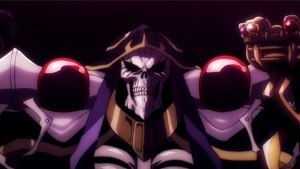
Overlord
overlord

Why I Watched It: This was a moth towards the flame sort of attraction. Though I’m tired of stories where people find themselves living inside of a video game or a video game-like world, this one twists a little differently in that there’s only one person left in the game and he’s not your typical hero-type.

What I Thought: Overlord surprised me with its first scene past the opening credits. Guild leader Momonga’s sadness over the shutdown of his favorite MMO and memories of all the good times shared with his guild are instantly relatable to anyone who has gone through something similar. I also didn’t expect that Momonga would be a working adult in his real life (that we don’t see). Given his weariness towards his day job, it’s not entirely surprising when he wonders if he would want to leave this new reality he’s in, supposing he could even find a way out now that the game controls and any ability to contact the GMs have disappeared. Momonga was previously a max level player and in charge of a massive fortress (built collectively by his guild), and now that all the NPCs have come to life, he has a small army of monsters at his command. They treat him like an overlord, but he’s not really. He just plays one.

Verdict: I’d like to find some time for this, at least long enough to see where it’s going. I particularly like the disconnect between Momonga’s internal thoughts, rendered in a normal voice, and his external ones, which are voiced like you would expect from a skeleton lord. He’s very concerned about staying in character in front of his underlings.

Where to find stream: Funimation and Hulu

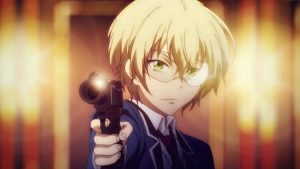
Ranpo Kitan: Game of Laplace
ranpo kitan

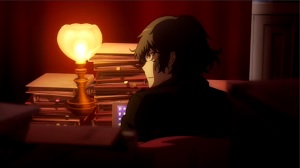
Why I Watched It: Ranpo Edogawa is one of the classic mystery writers of Japan. 2015 is the 50th anniversary of his death and in honor of that, Ranpo Kitan: Game of Laplace is a series inspired by his body of work, which is still read today.

What I Thought: The first episode is based on one of Edogawa’s stories, “The Human Chair,” that will likely end up as grisly as it sounds. Middle school student Kobayashi is an unusual POV character and I’m not even sure he’s intended to be the main character. He wakes up holding the weapon responsible for his homeroom teacher’s murder with no memory of the crime or even how he got into the classroom where it happened. He’s oddly plucky for someone accused of murder, and readily accepts the challenge set by irritable teen detective Akechi (based on Edogawa’s most famous detective character, who was not a teen in the original) to clear his name and catch the real criminal.

Verdict: I’ll be watching. I love a good mystery, and while Kobayashi doesn’t do anything for me, I’m really interested in Akechi who seems to have some malady that requires him to regularly take painkillers. Akechi might be a detective, with special dispensation from the government to work as one on account of his age, but he’s clearly willing to bend his commitment if it suits him.

Where to find stream: Funimation and Hulu

Rokka: Braves of the Six Flowers
rokka braves of the six flowers

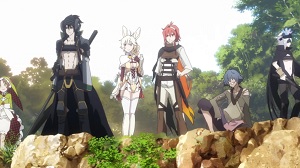
Why I Watched It: Pleasing art style and I read that the premise involves a slight problem in that the Goddess of Fate had chosen six heroes to save the world, but seven people have answered the call.

What I Thought: The Mesoamerican setting is unfortunately just superficial window dressing as everyone’s names feel more at home in the Old World, and the costuming of the main characters, judging by the opening credits, follows typical anime conventions in that they dress however they want and Mesoamerica is not what I would have guessed. Adlet Mayer’s interruption of the holy ceremony at the start of the show feels especially egregious in that you have a pale person with a European-style name ruining the local ceremony run by brown people (not to save a life, but because he wants to be the chosen one), and he’s the hero. It probably doesn’t play out with the same racial implications in Japan, but as a PoC in America it’s rather cringy.

Verdict: Going to pass. I don’t like Adlet, or the hare-brained princess who’s taken a shine to him. If the Mesoamerican setting was more involved I’d be inclined to give it another shot, but since they’ve left the city at the end of the episode I think it’s going to look more like a generic fantasy from here on out.

Where to find stream: Crunchyroll

Snow White with the Red Hair
snow white with the red hair

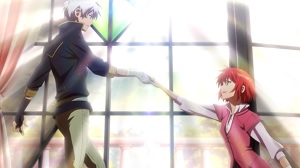
Why I Watched It: Not based on the Snow White of European fairy tales. This Snow White is a healer with unusual red hair, caught between two suitors with nary an evil queen in sight. Clearly looks like a romance/adventure story.

What I Thought: When Prince Raj requests Shirayuki (literally translates into “Snow White”) for his concubine, she doesn’t meekly give in. Shirayuki runs away to the kingdom’s border and through luck meets up with a young man named Zen and his companions. The show plays on the fairy tale a bit with poisoned apples showing up to show Shirayuki that she hasn’t escaped Prince Raj’s notice, and Raj is the one who asks a “mirror” about the fairest in the kingdom, but otherwise the story doesn’t care much about the original. While I like the chemistry between Zen and Shirayuki as romantic leads, I dislike that the climax of the episode still relies on Zen saving Shirayuki from Raj. It’s a good play on Zen’s part that hinges on the reveal he’s also a prince of a neighboring kingdom, but I wish that Shirayuki had been able to get out of the problem herself.

Verdict: I’d like to watch, but I’m probably going to wait due to the other shows this season. As far as fantasy romance goes though, this looks like a good bet.

Where to find stream: Funimation and Hulu

Ushio and Tora
ushio and tora

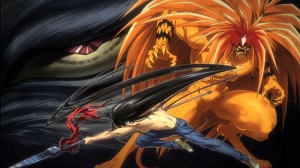
Why I Watched It: Ushio and Tora was one of the first anime I watched, and was the very first manga I ever bought, even though it was in Japanese. It’s a buddy adventure story between a middle school kid and the demon who wants to kill him (seriously!). Since the first anime was only a direct to video release of some of the early story arcs and the manga went untranslated I was disappointed that I never got to experience the whole thing. That’s changed now!

What I Thought: The opening plays out a little differently from what I remember back in the 90s, but doesn’t deviate from familiar territory with the same antagonistic dynamic that will eventually become a budding friendship between the human Ushio and the demon Tora that makes the series what it is. It covers how Tora got impaled with the Beast Spear and offers a compelling reason for just why Ushio would free a human-eating demon. No effort has been made to update the art style, making it look a little dated, but it has all the story bits in the right places and Ushio’s brash personality is one that we rarely have in protagonists these days.

Verdict: I will be watching! Definitely looking forward to more adventures with these two. The show plans for an eventual 39 episodes broken into two parts, and they’re going to cover the entire manga!

Where to find stream: Crunchyroll

Bonus!

The following is not an anime, but is based on a popular manga, and thus likely to be of interest to anime viewers. Other people might have heard of this series but just can’t get into watching animation or reading comic books, in which case, this is also for them.

Death Note
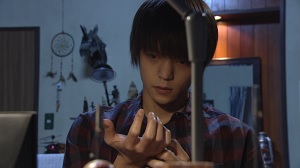
death note live action

Why I Watched It: Death Note has been one of the most popular series in recent years, featuring a protagonist who discovers a supernatural notebook that allows him to kill people by writing their name in it. The original manga and popular anime series tells the story of the cat and mouse game between Light Yagami and the people trying to catch him as he tries to change the world for the better by murdering criminals. The new live action series promises an alternate storyline featuring the same characters, most likely because Death Note has already been adapted as a live action movie before, and this offers viewers something new.

What I Thought: I like the new Light, who despite all his murders, is a much kinder, more sensitive person than the original, though it’s harder to buy into his first attempt to kill the detective, L, because of it. Death Note lives or dies by its protagonist, and I was concerned about changing Light from a brilliant high school kid to an average university student, but surprisingly it works well. The original Light (for all his brilliance) was pretty arrogant and willfully made mistakes to rub his rival’s nose in it. New Light makes the same mistakes, but it’s because he’s not two steps ahead of the game. His struggle makes him more relatable, but also makes me wonder just how well he’ll be able to hold off L, who is clearly still a genius. Since the show is live action the shinigami are portrayed through CG, which is kind of janky since it’s not running on a Hollywood budget and so far is the weakest part of the production as the show doesn’t seem to be able to use Ryuk very well.

Verdict: I’ll be watching it. Though circumstances have been rearranged, all the major story beats from the early part of the manga are still there so it’ll be interesting to see new interpretations of them. Light has always wanted to make the world a better place, even in the original, but the original crossed the moral horizon and accepted his role as judge and executioner very quickly. I’m looking forward to a Light who will struggle longer.

Where to find stream: Crunchyroll

laurietom
Laurie Tom is a fantasy and science fiction writer based in southern California. Since she was a kid she has considered books, video games, and anime in roughly equal portions to be her primary source of entertainment. Laurie is a previous grand prize winner of Writers of the Future and since then her work has been published in Galaxy’s Edge, Strange Horizons, and Crossed Genres.