
Mike Resnick on “No Heavy-Lifting Sales”

interviewed by Carl Slaughter
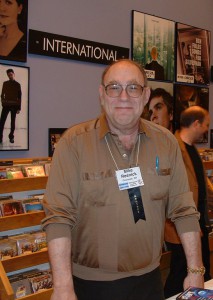
Mike_ResnickGordy Dickson told me close to half a century ago that if you were good, and prolific, and an aggressive marketer, there would come a point 25 years into your career where you received a pleasant surprise (which is to say, a reprint or foreign sale) in your mail box every week, all for writing just those two words, ‘Mike’ and ‘Resnick’ on a contract.


CARL SLAUGHTER: WHAT IS “NO HEAVY LIFTING” SALES?

MIKE RESNICK: It’s my term for sales that require no writing, which is to say: reprint sales, foreign sales, audio sales, movie options, graphic novel sales, etc.


HOW MANY NO HEAVY LIFTING CHECKS ARRIVE IN YOUR MAILBOX PER YEAR?

Better than 100 a year, if you include royalty checks on self-published reprints (which is to say, once a book is out of print and reverts to me, if I can’t sell it for what I think is a good price, I’ll convert it into an e-book and sell it on my web page, and through Amazon, Barnes, Kobo, and the like.) Otherwise, probably 50 to 75.


HOW PROLIFIC DO YOU HAVE T BE TO REAP THIS KIND OF HARVEST?

Over the past 30 years I’ve probably sold 3 books a year (excluding anthologies I’ve edited), and anywhere from 8 to 10 stories a year on average.


HOW MUCH ADDITIONAL INCOME ARE WE TALKING ABOUT? POCKET CHANGE? CONVENTION EXPENSES? MORTGAGE PAYMENTS? COLLEGE FUND? RETIREMENT ACCOUNT?

Depends on your expenses. In 2008, my no-heavy-listing income came to $33K; in 2009, $50K; in 2010, $43K; in 2011, $51K; in 2012, $73K; in 2013, $31K; and for the first 6 months of 2014, $18K. This, I should add, is the gross amount, before paying fees to my domestic agent (where due) and various foreign agents (where due).


WILL THIS STRATEGY WORK FOR EVERY WRITER OR ONLY THE BIG NAMES?

It’ll work for most writers, and of course it’ll vary wildly, not only with the writer’s name and prestige, but also with the writer’s themes and styles, with how easy he is to translate, with whether his themes appeal to other nationalities. But in general, if he’s good enough to sell here, he’s good enough to sell in most places.


HOW CAN A WRITER APPLY THE NO HEAVY LIFTING STRATEGY TO NOVELS?

Novels require agents, so the writer will want an agent who is known to have a top-notch foreign desk. (I should add that “foreign desk” is an industry term which translates as “working relationships with top-notch foreign agents”.) You learn about this by asking, not the agents, but the writers.


HOW CAN A WRITER APPLY THE NO HEAVY LIFTING STRATEGY TO SHORT STORIES?

There you don’t need an agent, any more than you need one to sell to the top domestic magazines. You start studying the market, you find which countries have viable magazines with viable rates, you check to see which of them buy from American writers (and, like novels, these are invariably reprints). Most of the foreign editors are on Facebook or Google+ and most of the writers are happy to share information with you: “This one wants names”; “That one won’t take novelettes or novellas”; “This one looks like it may be folding soon”; etc. In other words, you network and exchange information, preferably with those writers who know what they’re talking about, just the way you do for domestic markets.


HOW CAN A WRITER APPLY THE NO HEAVY LIFTING STRATEGY TO FOREIGN MARKETS?

I think I just answered that. 98% of your foreign sales are novels and short stores. True, I’ve sold a movie option to France, and they’re actually turning one of my stories into a movie in China as I write these words, but it both cases the sales were precipitated because they came across my translated stories in France and China, stories I had sold as described above.


HOW CAN A WRITER APPLY THE NO HEAVY LIFTING STRATEGY TO AUDIO?

There are a number of podcasts and podcastzines , Escape Pod, Starship Sofa, many others , that specialize in short stories. Some only want nominated stories or stories of a certain type, and they’ll contact you once they know you have one. With others, just listen to the shows, talk to people who have sold them, and find out what their submission guidelines are. The real money comes in audio sales of your books. The 800-pound gorilla in the room at the moment is Audible.com, but there’s also Blackstone Audio, Brilliance Audio, and a handful of others. Again, find out who does the buying, make contact, and offer to submit your work.


HOW CAN A WRITER APPLY THE NO HEAVY LIFTING STRATEGY TO SCREEN?

Most of the time it’s entirely up to Hollywood. One of their execs sees something he likes (I almost said “reads”, but no one out there reads) and contacts you. You don’t need a Hollywood agent, but you must have a Hollywood attorney, and you get one by asking writers you trust who have dealt with Hollywood to recommend their own. Once you’ve made a sale , which is invariably an option and not an outright sale , you start befriending as many people as you can meet in the industry, because this industry exists via personal cachet more than any other. Every Hollywood sale I’ve made , and that includes 11 options and 3 screenplays over the years , stems from the very first contact I made (and, as the saying goes, his friends had friends who had friends, etc.)


HOW DO ELECTRONIC EDITIONS AND PAPERBACK EDITIONS FACTOR INTO THE NO HEAVY LIFTING STRATEGY?

As I said, I create electronic editions , it costs next to nothing , of any reverted novel that I can’t sell for the price I want, and put them up for sale. These days I also find ways to bundle them with books by other writers; usually it comes to a 30-day sale at a reduced price , and being in a bundle with, say, Kevin Anderson and Rob Sawyer and Misty Lackey and Nancy Kress and Robert A. Heinlein helps all of us. Paperback (or hardcover) implies an outlay of money, and I have believed from the start that money is supposed to flow to the writer, not from him, so I never print/publish hardcover or paperback copies of my books.


WHAT ABOUT GRAPHIC NOVELS?

I wrote a Conan comic for Marvel back in 1971, and that is the full extent of my knowledge about the industry. I never asked for another assignment, and was never offered one. But a fellow I’ve collaborated with has all kinds of connections, and asked if I’d be willing to collaborate on graphic novels of a novella and a four-book series of mine, I said yes, and we’re in business.


WHAT ABOUT NONFICTION? WHAT ABOUT ANTHOLOGIES? WHAT ABOUT OUT OF GENRE MATERIAL?

My non-fiction tends to be articles about science fiction. Whether I write them for pro markets or for fanzines, every couple of years I collect a bunch of them into a book , I’ve got ten such books so far , and once in a while I can sell one to one of my foreign markets, but in truth I make very little money off that, hardly enough to warrant more than a couple of e-mails per country. I’ve just recently started writing mystery novels , I only have three out , and it’s too early to tell how they’ll do overseas compared to the science fiction. Anthologies tend to be owned by the publisher, and are not mine to re-sell (with very few exceptions).


HOW MANY REPRINTS BEFORE THE REPRINT INCOME EXCEEDS THE ADVANCE FOR THE ORIGINAL?

That presupposes that all reprint sales are for the same amount, and of course they’re not. (My top for a foreign novel sale is $19K; my bottom is $500 from a country I probably couldn’t find on the map.) It also presupposes that all advances are identical, and ditto. I’d say in general I make more from the rest of the world (combined, of course) than from America five times out of six. I found out 30 years ago that, while no other country ever pays you as big an advance as you get in the States, 5 out of 6 books will earn more in the rest of the world than here.


EVERY GOT MORE FOR A SHORT STORY RESALE THAN FOR THE ORIGINAL SALE?

No, though Japan has come very close a few times. And we won’t count Hollywood, which plays with Monopoly money.


YOU’VE SOLD 27 STORIES 10 OR MORE TIMES, 4 STORIES 20 OR MORE TIMES. HOW DO YOU FIND SO MANY MARKETS FOR THE SAME STORY?

You just keep looking, and remembering that a story is never done selling, which means you’re never done finding new markets. You also try to sell them with a five-or-seven-year term of lease, so that if the book is still doing well they have to put it again from you when the time period is up. Anyone who’s interested can hunt up my bibliography on my web page. It changes every few days, but it’ll give you a pretty thorough idea of what I’ve been talking about. And, for the record:

Novels:

Santiago , 22

Ivory , 18

Stalking the Unicorn , 13

Soothsayer , 13

Kirinyaga , 12

The Widowmaker , 12

The Soul Eater , 11

Walpurgis III , 11

Eros Ascending , 11

The Dark Lady , 11

Oracle , 11

Prophet , 11

The Widowmaker Reborn , 11

The Widowmaker Unleashed , 10

Starship: Mutiny , 10


Short fiction:

Kirinyaga , 30

For I Have Touched the Sky , 28

Seven Views of Olduvai Gorge , 22

Travels With My Cats , 19

The Last Dog , 15

The 43 Antarean Dynasties , 15

Winter Solstice , 15

Hunting the Snark , 14

Beachcomber , 13

Stalking the Unicorn with Gun and Camera — 12

The Elephants on Neptune , 12

Old MacDonald Had a Farm , 12

Robots Don’t Cry , 12

Down Memory Lane , 12

Article of Faith , 12

Me and My Shadow , 11

The Manamouki , 11

Hothouse Flowers , 11

Distant Replay , 11

His Award-Winning Science Fiction Story , 10

Frankie the Spook , 10

Bully! , 10

Malish , 10

The Pale Thin God , 10

Mwalimu in the Squared Circle , 10

A Princess of Earth , 10

Soulmates (collaboration with Lezli Robyn) , 10

All the Things You Are , 10

Alastair Baffle’s Emporium of Wonders , 10


Now, some of those, like “The Last Dog”, have been around since 1977, and have been selling and re-selling for 39 years†¦but some, like “Soulmates”, appeared first in 2009 and had its 10th sale by 2011. It’s a crapshoot, but if you do your homework and stick with it, eventually you’ll decide that it was worth it (and on some days, like when you get a handsome offer for a twenty-year-old book, it actually feels like stealing).


DO YOU HAVE TO DO ANY CUSTOMIZING OR REVISING WHEN YOU SELL THE SAME STORY TO A DIFFERENT MARKET?

No. If it’s an English-language market, the story’s already copyrighted and can’t be changed; and if it’s a foreign-language market, they’ll hire a translator.


ANYTHING ELSE WE NEED TO KNOW ABOUT NO HEAVY LIFTING SALES?

Like anything else, it’s a business. You run it in an orderly, businesslike manner, you never hold a grudge if someone doesn’t like your submission or doesn’t offer what you think it’s worth, and you use your brain. Here’s an example of what I mean by using your brain.

Back at the 1991 and 1992 Worldcons (in Chicago and Orlando), the Iron Curtain had just turned to tissue paper, and a bunch of magazine editors from former Soviet countries came to the cons, looking for stories. So did the Germans, who were starting some new publications. None of them had any money to speak of, but I met with each of them, and sold them a bunch of stories, usually for about $25 apiece, even gave away a pair of Hugo winners to destitute magazines†¦.and late one night, toward the end of the con, two of my friends took me aside and read me the riot act. You’re a pro, they insisted; and pros don’t sell quality reprints to anyone for under $100. That’s usually true, I replied; but these guys have no money, their countries just became free, and they have no book publishing industry†¦but they will have book publishers before too long, and I think those publishers are going to look with favor upon writers who have already established an audience through their local magazines.

OK, move the clock ahead almost a quarter of a century. I’ve sold 41 books to Poland since that day, plus 29 to Germany, 24 to Russia, 10 to the CzechRepublic, and 8 to Bulgaria. And my friends who were too proud to do business with the cash-strapped magazine editors? I believe they’re all still waiting for their first book sale from any of those countries. Like I say, you gotta use your brain.

And there are games you can play if you know what you’re doing. One I mentioned in one of my dialogs with Barry Malzberg is playing the exchange rate. The example was “Ivory”. I sold British rights in about 1989 or 1990, I’d have to check which year, for 10,000 pounds. On the day payment was received, in England, the pound was $1.53. The Wall Street Journal was convinced that the pound was undervalued on the world marker, so I had my British agent deposit my check at Barclays, where I had an account…and when I sent the money to my US account 12 weeks later, the pound was $1.92…so that $15,300 became $19,200 (minus agents’ fees) just by sitting in a British bank for 3 months, a tidy profit of $3,900, which is more than I sold the damned thing for in Hungary, Romania, or Spain.

 

Carl_eagleCarl Slaughter is a man of the world. For the last decade, he has traveled the globe as an ESL teacher in 17 countries on 3 continents, collecting souvenir paintings from China, Korea, Thailand, Vietnam, and Egypt, as well as dresses from Egypt, and masks from Kenya, along the way. He spends a ridiculous amount of time and an alarming amount of money in bookstores. He has a large ESL book review website, an exhaustive FAQ about teaching English in China, and a collection of 75 English language newspapers from 15 countries.
Interview: Joanna Volpe

interviewed by Carl Slaughter

agent-joanna-volpeJoanna Volpe is the founder of New Leaf literary agency. New Leaf represents Veronica Roth, author of the Divergent series, now a hit movie. They also represent Leigh Bardugo, author of the New York Times best seller Shadow and Bone, which is scheduled to hit the screen in 2015. Joanna has build a stable of talented authors who share her passion for storytelling. She also hired a screen agent with an impressive resume. She has business savvy and keen editorial instinct. She has succeeded at every stage in her career. She is an agent to watch, an agent to work with.


CARL SLAUGHTER: MOST LITERARY AGENTS TRANSITION FROM BOOK EDITOR. YOU LEAPFROGGED THAT STAGE. HOW DID YOU ACHIEVE SUCCESS WITHOUT EDITORIAL BACKGROUND?

Joanna Volpe: Really? Many agents I know were never an editor. In fact, they come from all walks of life: lawyers, film industry, teaching, social work, etc. I do have some editorial background; I worked for a small press called Blue Marlin Publications my first year in the business. Outside of that, I’m a self-taught editor and a lot of that came from reading and writing myself. I’m a terrible writer though. But I should also note that editing my clients work is a small portion of my job, and in fact my job is to find them the right editor! So I think it’s definitely OK not to be an editor first.


YOU WERE COMPARATIVELY YOUNG WHEN YOU MADE THE MOVE FROM AGENT TO ENTREPRENEUR. WHY LAUNCH YOUR OWN BUSINESS SO EARLY IN YOUR CAREER? WASN’T THAT A BIG RISK?
Agents are entrepreneurs, even when they’re working for someone else. Running your own client list might as well be running a mini-business. So the leap wasn’t that difficult to make. Of course there is risk involved whenever you’re laying your own money on the line, but I knew it was a risk worth taking. I wasn’t planning on doing it so soon, but it was the right time for Nancy to take a step back, and that helped me to make the decision.


NOW THAT YOU OWN YOUR OWN AGENCY, DO YOU STILL HAVE TIME FOR AGENTING OR DO YOU SPEND MOST OF YOUR TIME MANAGING THE BUSINESS AND MANAGING THE STAFF?

At first it was a big (and rather difficult) adjustment, and we’re still trying to perfect the system. I hired a CFO and business manager about a year ago and it was the best decision I ever made. He is brilliant and handles most of the management so I can focus on my clients.


OPERATING A SUCCESSFUL AGENCY REQUIRES PLAYING AND WINNING THE NUMBERS GAME, NOT JUST BEING ABLE TO RECOGNIZE GOOD LITERARY QUALITY. HOW DID YOU MASTER THE BUSINESS SIDE OF THE EQUATION? MENTOR? NIGHT CLASSES? FINANCE MANAGER? JUST GOOD WITH NUMBERS?

How about all of the above? My parents have owned and operated their own businesses my whole life, so I grew up in an environment where work was home and home was work. My father always says that “you have to be creative to stay in the game,” and he’s absolutely right. He is the guy on-the-ground, and my mom is the bookkeeper. I helped her in the office when I was a kid, and she had me balancing my own checkbook by the time I hit 6th grade. That’s just how my childhood was. But even beyond that, I’ve had a number of mentors over the years that continue to inspire me. I also took some night classes in the NYU publishing program in 2006 and 2007, and they were really helpful. And of course, there’s my CFO. He changed the way I was looking at the Big Picture, and I’m so grateful to him for his expertise! And finally, I have a fantastic financial adviser. As you can see, success is rarely won alone.


QUERIES, PARTIALS, SUBMISSIONS, MANUSCRIPTS, CLIENT MANUSCRIPTS, CONTRACTS, EMAILS, PHONE CALLS, MEETINGS. HOW DO YOU JUGGLE ALL THE LOGISTICS? DO PERFORM TRIAGE OR DO YOU ALLOT CERTAIN TIMES AND A CERTAIN AMOUNT OF TIME FOR EACH TASK?

Ha! I wish I had a good answer for this one. I’m still trying to figure out the best way to juggle it, especially when you throw a lot of traveling into the mix, which is what my 2014 has been looking like. (It’s only May, and I’ve been to 7 different states and 2 countries this year!) All I can say is that I have an incredible team, and I wouldn’t be able to juggle any of it without them.


DO YOU STILL READ ALL YOUR SLUSH? DO YOU STILL HAVE TIME TO READ BOOKS THAT ARE NOT IN THE SLUSH PILE?

I read some slush, and I also have an assistant who reads a lot of things first. It just depends–we actually discuss it first and split it up each week. I’m desperately trying to make more time for published books that aren’t client books. It’s important for agents to read a lot and read widely so we can keep our fingers on the pulse! But it’s sometimes tough to squeeze it in.


DO YOU STILL HAVE TIME FOR WRITERS CONFERENCES, WRITERS WORKSHOPS, AND GUEST ADVICE COLUMNS?

I’ll do 1-2 a year of these things, but not as much as I used to. I also contribute to an awesome and informative publishing blog called Publishing Crawl.


“LUNCH WITH THE EDITOR.” IS THIS LEGENDARY RITUAL UNDERRATED OR OVERRATED?

Both. It’s not nearly as fancy as someone might think (though it can be, sometimes). But it’s also underrated in the fact that too many people rely on social media to interact these days! A lunch can be so much fun, and it’s still the best way to really get to know an editor.


HOW OFTEN DO YOU DECIDE TO REPRESENT A BOOK BUT CAN’T FIND A PUBLISHER FOR IT? HOW MANY TIMES DO YOU SUBMIT A MANUSCRIPT BEFORE FINDING A BUYER?

This truly is on a case-by-case basis, and also dependent on where I am in my career and what kind of talent is seeking me out. As for how many rounds of submissions I’ll do–usually just two, though it also depends on whether or not we’ve revised significantly again.


HOW MANY COPIES OF A DEBUT SPECULATIVE FICTION NOVEL COME OFF SHELF BEFORE AN AGENT SMILES? HOW MANY COPIES OF A NOVEL SELL BEFORE YOU HEAR PEOPLE SAY, “OH, SO YOU REPRESENT SUCH-N-SUCH BOOK” OR “OH, SO YOU REPRESENT SUCH-N-SUCH AUTHOR”?

This also depends! It’s not so much about the amount of copies as it is about the entire package and publication roll out. It also depends on how much a publisher paid for the book in the first place. Different things make me smile, not just sales numbers. But as for when I start to REGULARLY get praise for a book or author–that’s usually after it’s hit 50,000 copies if I had to guess. There are exceptions to this though, and I do get praise for clients who don’t hit that number as well.


DO REVIEWS HAVE AN IMPACT ON SALES? DO THEY IMPACT MANUSCRIPT BUYING POLICIES AND HABITS? DO YOU CULTIVATE RELATIONSHIPS WITH REVIEWERS?

They can have an impact on sales, but not always. Reviews don’t impact my manuscript representation policies or habits though. Just to clarify–agents don’t buy manuscripts. We represent the authors and the work. As far as relationships with reviewers go, I value the relationships I do have with them very much.


DIVERGENT RECENTLY HIT THE BIG SCREEN AND HAD A SMASHING OPENING WEEKEND. “DIVERGENT BREAKS THE YA CURSE” READ THE HEADLINE IN THE WIRE. SHADOW AND BONE IS SCHEDULED TO HIT THE BIG SCREEEN NEXT YEAR. YOU’VE GOT A SCREEN AGENT WITH SOME IMPRESSIVE CREDENTIALS. ARE YOU PLANNING TO EXPAND SIGNIFICANTLY INTO SCREEN?

Divergent opening in theaters was a thrilling experience. Shadow and Bone is still in the very early stages of development, but we’ve placed it in good hands at Dreamworks. I do have another project that starts filming next month called The DUFF by Kody Keplinger. I would love to see more of our projects break into this arena, but I also know it’s a very long and arduous journey, each and every time.


WHEN YOU DECIDE WHETHER TO REPRESENT A MANUSCRIPT, IS SCREEN ADAPTABILITY PART OF THE FORMULA? ARE YOU MORE INCLINED TO REPRESENT IF IT’S SCREEN ADAPTABLE? ARE YOU LESS INCLINED TO REPRESENT IF IT’S NOT SCREEN ADAPTABLE?

I got into this business because I love books, first and always. Whether or not something is more inclined to be screen adaptable is not something I take into account when considering if I should represent the author for the long haul.


MORE AND MORE, AGENTS ARE PLAYING THE ROLE OF EDITOR AND PUBLICIST. PUBLISHERS HAVE EDITORS AND PUBLICISTS. WHAT ARE YOU DOING THAT THEY AREN’T DOING? HOW DID YOU ASSUME THOSE ROLES? AREN’T PUBLISHERS GOING TO START CUTTING EDITORIAL AND PUBLICITY BUDGETS WHEN THEY REALIZE AGENCIES ARE TAKING ON THESE ROLES? ARE YOU GETTING A HIGHER PERCENTAGE OF SALES FOR ALL THIS WORK?

They’ve already been cutting budgets across the board, even before agents stepped up their game in these areas. If I want my clients to succeed, I need to go to sleep every night and know that I did everything I reasonably could to help them do so.


I’VE NOTICED IN YOUR AUTHOR’S BLOGS THAT THEY SPONSOR AN AWFUL LOT OF CONTESTS AND GIVEAWAYS AND MAKE AN AWFUL LOT OF VISITS TO SCHOOLS, CLUB MEETINGS, AND CONVENTIONS. IS ALL THIS ACTIVITY AUTHOR BRANDING, STORY EXPOSURE, FAN BASE BUILDING, OR SUPPLEMENTAL SALES? ISN’T THE POWER OF THE STORY ITSELF THE PRIMARY FACTOR IN SALES?

Depending on the author and the project and the event, it could be any one of those reasons you list, but I do think it all comes down to story exposure and fanbase building. All of the bells and whistles in the world aren’t going to make up for a bad book. So yes, I agree that the power of the story itself is essential, but unfortunately not the primary factor in sales. I’ve seen many a brilliant book go on to sell very little. I hate when I see that.


WHY IS IT AUTHORS -MUST- HAVE AN ONLINE PRESENCE? AREN’T THE BRICK AND MORTAR STORES STILL IN BUSINESS? DON’T READERS STILL BROWSE THE SHELVES? WHAT CAN A BLOG OR SOCIAL NETWORKING SITE DO THAT GOOD READS AND AMAZON CAN’T DO?

These questions don’t act against one another–they are all part of the whole. Are brick and mortar stores still in business? Yes–and thank goodness for them! Do readers still browse the shelves? Some do. What can a blog or social networking site do that Good Reads and Amazon can’t? Well, social media gives readers a direct connection to content creators. That’s something that would have been very difficult to do before social media existed. Why must authors have an online presence? Because of consumer expectation. But I don’t think authors need to do everything (Facebook, Twitter, Instagram, Pinterest, etc). They should find the one thing they feel comfortable doing and do it well.


HOW IS IT POSSIBLE TO SUMMARIZE A 100,000 WORD NOVEL IN A 2 PARAGRAPH QUERY THOROUGHLY ENOUGH AND CONVINCINGLY ENOUGH TO GET OUT OF THE SLUSH PILE?

It’s possible. Every client I’ve signed has done it. It just takes practice.


Carl_eagleCarl Slaughter is a man of the world. For the last decade, he has traveled the globe as an ESL teacher in 17 countries on 3 continents, collecting souvenir paintings from China, Korea, Thailand, Vietnam, and Egypt, as well as dresses from Egypt, and masks from Kenya, along the way. He spends a ridiculous amount of time and an alarming amount of money in bookstores. He has a large ESL book review website, an exhaustive FAQ about teaching English in China, and a collection of 75 English language newspapers from 15 countries.
Interview: Nathaniel Lee

interviewed by Carl Slaughter

Me 2014Nathaniel Lee puts words in various orders. Periodically people give him money for this. The correlation is weak at best, but present. He lives somewhat unwillingly in North Carolina with his wife, son, and obligatory cats, where he maintains a vague sort of career that provides sufficient money to continue his writing and board game habits. Coincidentally, he is the Assistant Editor of both Escape Pod and the Drabblecast (the posts were each offered independently and without knowledge of the other). As a result, he has read enough stories about penises, serial killers, and time travel. He is also an assistant editor for the humorous anthology series Unidentified Funny Objects. Check out his blog at Mirrorshards where he does Very Short Stories. Exactly 100 words. No more. No fewer. Every day.


CARL SLAUGHTER: HOW EXACTLY DOES ONE WRITE STORIES EXACTLY 100 WORDS?

NATHANIEL LEE: Start writing and stop when you hit a hundred.

No, okay, seriously, flash fiction is a tricky row to hoe because here’s so little space. Microfiction almost always has to sacrifice some of the key “pieces” of a story: plot, setting, character, theme. Sometimes you shade them out in proportion, sometimes you just do away with one altogether (resulting in “character study” or “world fragment” type stories). If you can use tropes and narrative conventions to make your audience fill in the blanks for you, so much the better.

One thing that it will train you to do is absolutely and brutally trim all ornamentation. If there’s a bit of description that’s just pretty words but that doesn’t advance the core concept of the story, you’re going to feel it bulking against you like a two-liter soda in a snow jacket pocket. You’ll learn very quickly what is absolutely necessary to a story. (And sometimes you’ll find that you need those extra words; I’ve had several full short stories that grew from the fact that the 100-word story they started out as was just too cramped a space to explore them or generate their full effect.


HOW EXACTLY DOES ONE ACCOMPLISH THIS FEAT EVERY DAY?

Don’t ask me. I’ve lapsed. 😛 I’m down to one a week at best, now that we have a toddler, and when I do have energy to write, I’m usually working on salable short fiction. So I guess the answer is: free time.

When I’m alert and rested and ready to be creative, it takes as little as ten minutes for me to polish up a new flitterfic. It’s taken up to and over an hour, though.


WHAT EXACTLY IS YOUR JOB DESCRIPTION AT ESCAPE POD?
WHAT EXACTLY IS YOUR JOB DESCRIPTION AT DRABBLECAST?

At this point, they’re nearly identical. I manage our teams of slushers, making sure they get the stories and give the basic thumbs-up/thumbs-down in a reasonable timeframe, and then I filter the thumbs-up pile down to the 1-5% that make it to the editor’s desk. Other duties include whatever Norm needs me to do at the time, including emergency audio recordings, working with authors on rewrites, pestering people to send me stories I’ve read elsewhere, etc.


WHAT EXACTLY ARE THE DIFFERENCES BETWEEN THESE PODCAST SITES?

Uh, legion? Escape Pod plays it straight; we do science fiction of a fairly middle-of-the-road style, presented as stories read to you by a narrator, with brief intros and editorial comments. Drabblecast is a Weird market, liable to come at you with body horror or high-brow lit-fic or poetry or goofy cartoons, anything and everything that generates that frisson of “wait, what?” that makes a story Drabblecastian. It’s also much more of a show, if you catch my meaning, with Norm’s big personality rampaging all over every segment and putting a personal stamp on everything that happens, a bit like the old late-night movie shows with the colorful hosts. (Yes, Norm, I am explicitly comparing you to Elvira.) I feel like people listen to the Drabblecast specifically because it is Norm’s show. (Basically, Escape Pod has had four editors and at least as many hosts in its run, and they’ve all done a good job and maintained a recognizable show, but if the Drabblecast ever lost Norm, it wouldn’t be the Drabblecast anymore.)


HOW EXACTLY DOES ONE GET CASTED BY THESE PODS?

What, like get your stories on? Uh, well, write a really good story and then send it to us. submissions@drabblecast.org. Advanced players can sell it elsewhere first, since we do a lot of reprints, and thus get paid twice on the same piece.

The other route is to write a story so amazing that when we read it after you have (of course) published it elsewhere, we then hunt you down and demand to give you additional money for it. If you want to make sure we see it, though, best to send it in to the submissions address.

Once we’ve bought a story, we line up a narrator from our stable of volunteers and get an audio file, and then Norm does whatever he does into a microphone and he and Tom chop it up real fine and bring it to a simmer, after which it gets spewed all over the Internet.


WHAT EXACTLY IS YOUR JOB DESCRIPTION AT UNIDENTIFIED FUNNY STORIES?

Unidentified Funny *Objects*, please. (U.F.O. – geddit!?) [ Just testing you. ]

Anyway, for Alex I just do volunteer slushing. He has about a dozen people he uses to help filter and sort stories every year. Also sometimes he buys stories off me. (I assume he doesn’t take my slush feedback on them into account. :-D)


HOW EXACTLY DOES ONE GET PUBLISHED BY THIS ANTHOLOGY?

Twenty dollars, same as in town. (You send it to the submissions address: ufoeditors@gmail.com. Preferably while submissions are open, which they are not. If the money continues to roll in accordingly, I’m sure there will be a fourth installment next year. Try ’em then. :-P)


WHAT EXACTLY GOES ON OVER THERE AT MIRROR SHARDS?

One word, plz. Mirrorshards. [ I knew that. ] And what goes on there is I write flash fiction and post it. Also when a new story of mine comes out elsewhere, I link to it there and update my bibliography, which is a sub-page on the Blogger interface. Real authors maintain actual sites with blogs about their lives and writing habits. I periodically post bizarre surreal snippets and the occasional hyperlink. This is how you can tell I am quality.


WHAT EXACTLY IS/WAS YOUR INVOLVEMENT WITH THE CRITTERS WORKSHOP?

Uh, not much? When I was a wee young author, back in 2008, I joined a bunch of writing workshop groups and found out that most of them are terrible and are full of amazingly bad advice. Critters is a decent site if you need a feedback forum (and I think some fairly major names still use it), but the signal-to-noise ratio is pretty bad because your story is literally sent out to a random subset of the membership, of whom a further subset will decide to read it and critique it. I received some comically bad critiques there and at one point had someone threatening me with physical harm because I did not like his (terrible) story. It’s also very slow; you’re waiting a month or two for a critique unless you have the free time to earn the jump-the-line passes by critiquing a dozen stories a week (which I used to have but no longer do). I eventually found myself treating Critters critiques as an aggregate, where if *everyone* was saying the same thing, I’d look into it as an apparent problem with the story, but on the whole, it’s very hit-or-miss. I did meet some very nice and competent writers there as well, don’t get me wrong. It’s just that once you find a smaller group of folks whose taste you know and trust, I’d rather use that group of reliable beta-readers than trust to the whims of fate and the general Internet population. Additionally, since I now read slush for two magazines, I have a lot less energy and interest to devote to detailed critiques of random strangers’ fiction. (As King of the Slush Monkeys, I can read a terrible story and just go “No, this is crap, get out of my inbox” and I don’t have to be nice or friendly or find constructive things to say, just formal and polite “no.”)


EXACTLY WHAT WISDOM DO YOU HAVE TO OFFER ASPIRING WRITERS BASED ON YOUR EXACT EXPERIENCE?

Get used to disappointment? No, seriously. There are multiple orders of magnitude more hopeful authors than there are open and available slots in all paying markets combined. While it’s theoretically possible for a wunderkind to immediately flare into Guest of Honor status at all local conventions and instantly quit their day job to write fiction full-time, it is not going to happen to you, dear newbie author (statistically speaking). You’re going to have to keep head down and butt in chair, cranking out stories and improving your skills, and you’re going to have to send your stories out and get them back with form-letter rejections, a LOT, and it’s not much fun and doesn’t really pay much of anything. It’s a lot of hard work and a long, slow process, and for most people it never will become a career in the sense that it can pay the bills.

(Yes, yes, self-publishing revolution and etc. Me, I just don’t have the energy to promote myself quite that frenetically, and frankly the folks that have the skills to hack it as a salesperson and maximize their profits are often not the same folks who have the ability to make me tear up with the beauty of their prose. And even there the success stories are egregiously outweighed by the people who took a shot at it and failed so badly that no one even noticed they were trying. Browse the free and 99-cent books on the Kindle store sometime if you want to feel depressed. About yourself, about humanity, your choice.) (The self-published erotica is particularly good for the latter. My wife reads me excerpts sometimes. She likes them, but then, she is a demonic entity who feeds on human misery and draws strength from the pain and humiliation of others.)

As for actual writing advice, well, honestly, almost all of it is useless because almost all of it has at least one amazingly good counterexample, and more pertinently, what really works for one person (as writer or as reader) sounds dumb to another. I avoid statements about the nuts and bolts of writing because if you’re good enough, you can make anything sing. My advice is to read a lot, and not just idly, but actively teasing apart how and why a story was written the way it was. A good author is thinking about (or better still, has ingrained instincts about) everything down to the specific order in which the adjectives describing a character are placed in a sentence; the better you understand why each word ended up in the place it did, the better you’ll do when trying to sort different words into order yourself.

Read a lot, read actively, and keep butt in chair and fingers on keyboard. The more you write, the more you assess and revise and read and incorporate and revise and write some more, the better you will get. It’s boring, but it’s the only advice I’m willing to guarantee.


Note: Diabolical Plots reviewer Frank Dutkiewicz is also associate editor of the above mentioned Unidentified Funny Stories, I mean Unidentified Funny Objects, I mean, well, you know what I mean†¦


Carl_eagleCarl Slaughter is a man of the world. For the last decade, he has traveled the globe as an ESL teacher in 17 countries on 3 continents, collecting souvenir paintings from China, Korea, Thailand, Vietnam, and Egypt, as well as dresses from Egypt, and masks from Kenya, along the way. He spends a ridiculous amount of time and an alarming amount of money in bookstores. He has a large ESL book review website, an exhaustive FAQ about teaching English in China, and a collection of 75 English language newspapers from 15 countries.
Interview: Tina Connolly

interviewed by Carl Slaughter

tina_connolly-300x450Flash podcast site Toasted Cake was launched in 2012 by speculative fiction author, theater buff, and painting hobbyist Tina Connolly. Toasted Cake recently posted its 100th podcast. Connolly’s first novel, Ironskin, published by Tor, is a fantasy retelling of Jane Eyre and was nominated for the Nebula award. Ironskin was followed by Copperhead. The third in the series, Silverblind, is due in the fall of 2014. Seriously Wicked, a YA novel, is due in the spring of 2015. Connolly’s short stories have appeared in Lightspeed, Beneath Ceaseless Skies, Strange Horizons, and many other magazines. She is a graduate of the 2006 Clarion West workshop.


CARL SLAUGHTER: Why did you decide to launch a podcast?

TINA CONNOLLY: Because once upon a time in 2008 or so, Rachel Swirsky asked me to narrate a story for Podcastle. Podcastle led to Escape Pod led to Drabblecast led to Pseudopod led to Beneath Ceaseless Skies led to Three-Lobed Burning Eye led to Cast of Wonders led to Strange Horizons led to Far-Fetched Fables led to John Joseph Adams & Hugh Howey’s anthology, The End Is Nigh. And so on. Basically, I got hooked.

So there I was in 2012 with a book coming out (Ironskin) and another book under contract (Copperhead) and a one-year-old boy and a new-to-us fixer house, and I said, Self, you know what would make this year even better? Podcasting a new story every single week, that’s what.

TL;DR: I be crazy overscheduled, yo.


CARL SLAUGHTER; How did you choose the name Toasted Cake?

TINA CONNOLLY: I knew I wanted it to be a flash fiction podcast, so I was batting around ideas that would play off of the bite-sized idea. Things like Snackcast. They were all taken. I kept brainstorming tasty -pod and -cast names, but still, all taken. Eventually I just got to things I like, like Pie for Breakfast (taken.) And eventually, Toasted Cake. (Listen to episode 32, “The Hungry Child” by Romie Stott, to hear an outro about why you should totally toast your cake.)

It has been since pointed out to me by more than one person that Toasted Cake and Tina Connolly share a set of initials. I did not do this intentionally, but I suppose my subconscious may have gotten the best of me….


CARL SLAUGHTER: Why restrict the podcast to flash fiction?

TINA CONNOLLY: One, because I wanted to podcast an episode every week, and that wasn’t going to be feasible with full-length fiction (not doing it all myself, anyway.)

But two, because I LOVE flash fiction, and I think it gets a bit overlooked. A really good piece of flash fiction is just a different creature than a full-length story, or a poem. (Listen to episode #13, Helena Bell’s “Please Return My Son Who Is In Your Custody”, for an outro with some of my Brilliantly Insightful Theories (TM) on what makes flash fiction work.)

The fact that I DO love flash fiction has made Toasted Cake work out really well, I think. I mean, in that you should probably only start a magazine if a) it’s filling a niche, and b) if it’s something you’re passionate about. I never wanted to become a magazine editor in particular, but boy howdy, I do love reading a piece of flash fiction each week.


CARL SLAUGHTER: How often do you post readings?

TINA CONNOLLY: Once a week. (With occasional misses for laryngitis.)


CARL SLAUGHTER: What type of stories do you feature?

TINA CONNOLLY: A few descriptors I like are weird, quirky, dark, twisted, funny, fun, literary, puzzling, bizarre, tongue-twistable, singable, patter-friendly, elocutionary, experimental, witty, and wistful.

A few of our amazing authors: Camille Alexa, Vylar Kaftan, Ken Liu, Cat Rambo, Rachel Swirsky, Caroline M. Yoachim, and I have to stop there or I never will. Most of the stories are reprints, and since they’re flash they tend to come from a few markets in particular,I notice a number of stories from Nature and Daily SF (and in the first year there were still a number from the late lamented Brain Harvest.) But I’ve also run original stories (“Zing Zou Zou” by C. S. E. Cooney, is a particularly awesome example), and stories from folks who’ve told me this is their first podcast appearance.


CARL SLAUGHTER: Who does the reading?

TINA CONNOLLY: Me! But while I was off on maternity leave, I had a few fantastic guest-narrators read for me: Dave Thompson, Graeme Dunlop, David Levine, and Matt Haynes. It ended up being all male voices, actually, because with three of the four of them I sent them something that I had wanted to run on the podcast but thought I wasn’t quite the right narrator for it.


CARL SLAUGHTER: You read for a variety of other podcasts. What type of stories do you like to read?

TINA CONNOLLY: Here’s where I post the list of descriptors I like again! 🙂 Seriously, though, what’s different about Toasted Cake is that everything I purchase has to be a) be podcastable and b) by ME. I sadly have to turn down stories that I personally like but I think I’m not a good fit for. So the stories on Toasted Cake are definitely the sort of stories that I think I will enjoy reading, and that will suit me. (But I also sometimes stretch a point and make my listeners listen to me sing, for example. 🙂

When an editor asks me what I feel comfortable with, my list usually goes something like: younger voices, alien/fey/otherworldly creatures, snarky, wistful. I’m planning to join Audible as a narrator one of these days,once the baby’s older, anyway! I would love to sink my teeth into a full-length book.


CARL SLAUGHTER: A number of your stories have been podcasted. Who chooses the reader for your stories, you or the podcast editor?

TINA CONNOLLY: The podcast editor does. I’ve had a lot of great podcasts run! Actually, my first exposure to Drabblecast was via hearing Norm Sherman read my On the Eyeball Floor for Escape Pod in a killer reading.


CARL SLAUGHTER: Toasted Cake recently reached a milestone. 100 podcasts. Can we expect any major changes or is it ‘steady as she goes’?

TINA CONNOLLY: Thank you! Yes, we did reach 100 , I’m thrilled to make it this far. (I was originally just planning to do one year, but then it picked up the Parsec award for Best New Podcast, so I thought, hmm, maybe there’s some people out there who’d enjoy hearing a little more of it… 🙂 No major changes,I plan to at least make it to 200, so there’s a good bit of Toasted Cake in store yet!


CARL SLAUGHTER: How does an author submit their story to be podcasted on Toasted Cake? How does someone volunteer to read for Toasted Cake? Do you accept prepackaged podcasts from the author or reader’s publicist or agent or fan?

TINA CONNOLLY: Right now I am the only narrator, although I wouldn’t rule out having another guest voice from time to time. Prepackaged podcasts is an interesting idea! I’m not sure if anyone’s doing that,at least, they haven’t contacted me with it. AFAIK, all the main podcasts, including mine, just accept submissions of stories. In text form.

I currently am doing two open submissions windows, one in February, and one in August (but not this year). Here’s the info, and I’m looking forward to the August submission period! Toasted Cake is a boutique market, which is a nice way of saying I can only pay $5. (You can also choose the option of me buying you a drink at a con, which I love as it means we get to sit down and chat a bit.) However, it is primarily a reprint market, which means you could have sold that story ten times already before sending it to me, and another ten times after. . . . Or, just come listen to the show!

Thanks for the interview, Carl, and for having me here on Diabolical Plots!


Carl_eagleCarl Slaughter is a man of the world. For the last decade, he has traveled the globe as an ESL teacher in 17 countries on 3 continents, collecting souvenir paintings from China, Korea, Thailand, Vietnam, and Egypt, as well as dresses from Egypt, and masks from Kenya, along the way. He spends a ridiculous amount of time and an alarming amount of money in bookstores. He has a large ESL book review website, an exhaustive FAQ about teaching English in China, and a collection of 75 English language newspapers from 15 countries.
Connie Willis Interview

interviewed by Carl Slaughter

connie willis oneCONNIE WILLIS TALKS ABOUT THE EXTENSIVE RESEARCH SHE DOES FOR HER WRITING, HER INTEREST IN HENRY MENCKEN, HER OPPOSITION FAKE CHANNELERS, HER DISINTEREST IN BECOMING TELEPATHIC, WHAT AUTHORS SHOULD DO AND NOT DO AT CONVENTIONS, AND HER LONGSTANDING, FRIENDLY RIVALRY WITH MIKE RESNICK FOR THE MOST HUGO NOMINATIONS.


CARL SLAUGHTER: I can’t say I’ve ever read a short piece of speculative fiction more consistently sophisticated than Inside Job. How long did it take you to write? How many revisions?

CONNIE WILLIS: I rewrite constantly (which is why my novels are always late), and I put in loads of work on every single piece I do. My two-volume novel BLACKOUT/ALL CLEAR took eight years to write, DOOMSDAY BOOK took five, TO SAY NOTHING OF THE DOG four. But that doesn’t tell the whole story. Every story basically takes your whole career to write, both in the skills you acquire and where the stuff comes from that the stories are about. “Inside Job” took a year or so to write, but acquiring the stuff that went into it (including my fascination with Mencken and admiration of him, my hatred of fake psychics and mediums who prey on people to get their money, and my decision to have the heroine be an actress who’s too smart to be in Hollywood) all took years longer.
If you really want to know how long the story took, you’d have to include my reading Postcards from the Edge and all Carrie Fisher’s other books (that’s where I got my too-smart actress from), my reading Inherit the Wind and The Great Scopes Monkey Trial and lots of other books about the Scopes evolution trial which Mencken covered, all of my reading of Mencken’s stuff and biographies about him before I ever decided to write the story, and the original story (about a fundamentalist group who were trying to raise their dead evangelist from the grave in Baltimore and accidentally got Mencken), which led me to go visit Mencken’s grave way back in 1982. That original story never got written, but it’s what led to my writing “Inside Job.” Some famous writer said, when asked how long it took him to write a story, “My entire life,” and that’s pretty much true.

As to revising, I can’t answer the question, “How many revisions?” because I rewrite as I go, rewriting lines and then scenes and then, once the story’s done, the whole thing till it does what I want. I love the scene in Stranger than Fiction where the professor tells Emma Thompson, “You realize that now your ending doesn’t match the rest of the story?” and Emma says, “Yes, so now all I have to do is rewrite the book to match the ending.” That’s pretty much how it is with me. After I write the ending, I have to go back and make the whole thing match.


connie willis four - CopyCARL: One of your trademarks is integrating extensive research into your stories. Which topics had you already researched before deciding to write a story about it and which ones did you research specifically for a story?
CONNIE: I think using the world “research” gives a false impression. I do do research, where I check facts and make sure I’ve got names and dates and locations and details right (what would a little girl in 1348 wear for warmth when she went outside in winter? mittens? a hat? a scarf? and where would a psychic hold an event in Hollywood, stuff like that. But most of the so-called “research” I do is really just the reading and watching of stuff I’m interested in (and/or obsessed with.) I loved H.L. Mencken the moment I laid eyes on him, which was when I read The Great Scopes Monkey Trial and have been reading all his stuff and all about him ever since. I’m also a huge Carrie Fisher fan, and a gigantic skeptic. I read The Skeptical Inquirer for fun (and to get incensed by all the frauds there are out there), not because I needed it for a story.

That’s how most of my stories originate, from the stuff I’m fascinated with–Satchel Paige, Lewis Carroll, the Titanic, the London Blitz. My research doesn’t grow out of my stories, my stories come from them. I was a Fred Astaire fan and had seen all his movies long before I decided to write Remake. People always assume I was also a fan of the Middle Ages, and that that’s why I wrote Doomsday Book, but actually I was a fan of the bubonic plague. I live in the Southwest, where the plague is still around–we get several cases a year, mostly from prairie dogs–and that got me interested in the Black Death and in other pandemics, like the Spanish flu.

I am also a huge fan of Dorothy Sayers, who wrote a classic novel, Nine Tailors, about bell ringers, and I sang in a church choir for years and had to put up with some pretty awful handbell ringers, so I knew all about bellringers, too. But I didn’t know anything about the Middle Ages, except for Chaucer, so I had to do tons of actual research. (And by the way, when researching something you know nothing about, I really recommend children’s books for starters. They give you nice, quick overviews and have lots of pictures, so you can figure out from there what other books you need to read.)


connie willis threeCS: If you’re not already an expert on a topic, how much research time do you typically invest in a story?
CW: “Invest” is the wrong word. I know writers who treat it like an investment–someone kindly did an analysis of how much time my stories took and how much I got paid for them, and informed me I should “invest” far less time in them, which is ridiculous. A story should be as good as you can possibly make it, which means it should take as much time as you need to make it that good. As F. Scott Fitzgerald wrote to Hemingway, “I want to be the best writer in the world, don’t you?”

When I wrote Blackout/All Clear, my two-volume novel about time travelers going back to World War II, I read every book I could read about the London Blitz and the Intelligence War and ambulance squads and the evacuated children and the evacuation of Dunkirk. I learned way more stuff than I could put in the book, but in a way it’s all there. Your research should be like an iceberg, with only a small portion showing above the surface and the rest underwater, because if you only research what goes in the book: 1) you don’t know enough to have a feel for the subject, and 2) you’ll never find those telling details that make all the difference to a story. You have to wade through volumes and volumes of stuff to find that one anecdote, that one line, that totally makes your story. Like the fact that H.L. Mencken had an aphasic stroke. Or the story about the bombing raid on Fleet Street during the London Blitz. Fleet Street was home to the newspaper industry, and the raid destroyed pretty much everything. Only one paper managed to get its presses back up and running in time for the morning paper, and its headline read, “Bomb Injured in Fall on Fleet Street.” That story perfectly captures the essence of the British spirit during the Blitz, but I would never have found it if I hadn’t read hundreds of books.


CS: You work the convention circuit a lot. What exactly does an established writer do at conventions? What’s a typical itinerary, what has priority, and what do you hope to accomplish?

CW: It’s true, I’ve been to lots of conventions over my career. I wouldn’t call it exactly working, though. It’s lots of things–a chance to connect with friends, to catch up on what’s going on in the field, a chance to meet your readers and talk to them, as well as the more formal things like doing readings and panels and interviews.

Although it’s certainly true that going to conventions can raise your profile and give you publicity, that’s a long-term goal and it happens in an oblique way, by fans getting to know you and thinking you might be worth reading.

I think it’s a horrible mistake to see it as just an opportunity to try to sell your book. Some writers approach it like that–when they’re on a panel about ANY topic at all, they do an infomercial for their book; they stick all their books in front of them at every opportunity, pass out bookmarks, pencils, etc. and are generally as popular as a salesman buttonholing everyone he meets and trying to get them buy their widget. The panels are the worst: I was actually on one with a bunch of hard-sellers about “How Do You Kill Your Characters?” After a very frustrating half hour trying to get them to talk about anything else besides how wonderful their books were, I said, “Okay, let’s all name our favorite death of a character in literature. I’ll start,” and I talked about King Lear’s death and then handed off the microphone to the first hard-seller, who said (I am not kidding!) “Well, everyone says my killing of my character in my book is the best one ever!” “Better than Shakespeare?” I sputtered. “Yes,” she said. OH, MY GOD!

People go to science fiction conventions to hear great conversations by writers they may or may not have read on interesting topics. They don’t want infomercials! My advice to writers going to cons: be interesting or funny or flamboyant or knowledgeable, and people may very well say, “Wow! They were cool. I think I’ll try one of his or her books!” DO NOT DO INFOMERCIALS.
And also, KNOW something. I’ve been on panels like, “What are your top ten favorite SF short stories?” or “time travel books” or whatever, and once the hard-sellers have listed their story (of course), they’re completely stumped to come up with anything else. Do your research.

And be nice to the other writers on the panel. This is not a “winner takes all” game. People who try to undermine their fellow panel members and make them look bad don’t last long in the field.

And sometimes, if they get on a panel with the wrong person, get a very public comeuppance.


connie willis twoCS: Do you still get rejection letters? Do you still have editors try to tinker with your story? Or is there a stage where an author becomes immune to all that?
CW: The only reason I don’t get rejection letters is because I don’t write all that many stories, but of course, I still get edited. I would be very unhappy if I didn’t. Writers CANNOT see their own blind spots–that’s why they’re called blind spots. You’re much too close to your own story, and you were so focused on getting this particular thing to work that you completely forgot some other thing–until an editor says, “But why didn’t they just call the police?”

I work with Sheila Williams at Asimov’s, and she goes over my stories with a fine tooth comb and gives me lots of great suggestions. Ditto my editor at Bantam–I always get pages and pages of notes. My gripe is that lots of editors don’t have much time to give you lots of help–the business is just not structured that way anymore. So most writers end up using their writer’s workshop (which I really recommend) or close friends (not your mother) to do what editors don’t have time to.

My advice for writers: when working with an editor on a book, tell yourself you have fifty points to use when objecting to criticisms and/or refusing to change stuff. Do you really want to waste those points on whether to put a semicolon or a period in a sentence? Or keep a long (and probably boring) passage the editor wants you to cut? Or would you rather save it for the sentence or paragraph that you’re passionately committed to and that you think makes or breaks your story.

I always use the fifty-point thing (it’s less for stories). First I see what all the things I’m willing to do without question are (usually most of the stuff), then move on to the ones I think where I don’t agree with what the editor suggests but think I can do something that will make both of us happy, and finally move on to the non-negotiables. I also try to remember that there are many ways to say the same thing, and that my words are not, in fact, golden. And if that fails, I look at F. Scott Fitzgerald’s manuscripts. He changed everything, all the time. Because he wanted to be the best writer in the world. And came darned close.


CS: You and Mike Resnick have this longstanding, friendly rivalry going over the number of Hugo nominations/wins. Where does the count stand? Who has more nominations? Who has more wins? How often are you nominated the same year? How often have you won when you were both nominated and vice versa?

CW: You’ll have to ask Mike about that. He’s the only one keeping track. But you’re right. It is both a longstanding and friendly rivalry. I’ve seen people who thought we weren’t kidding and that we were enemies who might actually, I don’t know, bludgeon each other to death over a Hugo Award (or with a Hugo Award–they’re pretty heavy), and once, after doing a comic schtick routine with him on a panel, someone came up to me, very worried, and said, “I thought you guys were friends.” We are friends, and our so-called “rivalry” is just something fun that evolved over years of being up against each other on various ballots. But just like using irony, which can be dangerous in the wrong hands, there’s the danger that someone might take you seriously. But it should be obvious from the number of introductions and blurbs and bios I’ve done for Mike just how much I admire him and his work.
I didn’t get to know Mike well, even though we’d been on several panels together, till I was asked to edit a Hugo Awards volume. One of Mike’s Kirinyaga stories was in it, and we talked together quite a bit while the book was being put together. I hadn’t read Mike’s work before (shameful secret–writers don’t read nearly enough of their fellow writers’ stuff), and I was just blown away by how wonderful a piece of writing it was–nuanced, ironic, multi-layered, and beautifully constructed and written. I immediately went and read all his other Kirinyaga stories and then a lot more of his work, and my admiration of him just kept growing. So did our friendship, and one of the most fun parts of it is that he perpetually refers to me as “The Lady Writer from Colorado” and keeps track of our comparative stats.


CS: Last heard you were working on a telepathy novel. How is that going? One of your niches has been time travel. Is telepathy your next niche?

CW: You heard right. In fact, I am still working on my telepathy novel, though I’m very close to being done. It’s a light take on telepathy, partly because there are so many great classics out there, like Robert Silverberg’s Dying Inside and John Wyndham’s The Chrysalids, and partly because I love writing romantic comedy and think telepathy would be absolutely terrible–do we really want to hear what people think? It’s bad enough having to listen to them at Starbucks. People are boring, self-involved, stupid, and apt to obsess over things no one else cares about. Why would we want to listen to them? But if there was a way to connect to your true love and be sure he or she really loved you, you might opt for that. And then, what if you found yourself not connected to your true love, but to someone else entirely, someone you didn’t even like?

I have written lots of time travel stories and novels. I love time travel. I’ve also written about dreams, near-death experiences, signing apes, clones, fads, the movies, Christmas spirits, nuclear war, ghosts, and lots of other stuff. Time travel is my favorite, though, partly because we all wish we could go back in time and see history first-hand and partly because we know it’s the true forbidden country, the one we can never return to. And we all have regrets.


CS: Most memorable convention moments.

CW: Um, let’s see, there are so many. There was the time Sheila Williams and James Patrick Kelly and I nearly got thrown out of the Tupperware Museum in Orlando, and the time we almost got thrown out of the Grand Ole Opry (the new one, not the old one), and the time we got to tour the old Grand Ole Opry, where Hank Williams actually sang. (I’m a huge Hank Williams fan.) And there was a great morning when a bunch of us at a Nebula Awards weekend in New York (Sheila Williams, James Patrick Kelly, Michael Cassutt, and my daughter and I, as I recall) went to the Algonquin Hotel to have breakfast (we couldn’t afford dinner–or lunch) and wish we were as smart and funny and charming as the members of the Algonquin Round Table (Dorothy Parker, Robert Benchley, Harpo Marx, Alexander Woolcott, etc.) were in the 1930s. We weren’t, of course, but there was a huge long line for breakfast, which we stood in for nearly an hour, chattering and having a wonderful time, and we were smart and funny and charming enough that when we finally got seated, they gave us complimentary orange juice for keeping the line so entertained. It wasn’t martinis, but still.


CS: For those who haven’t read it, “Inside Story” is about channeling. If you could channel from the other side, who would be your vessel and what would you say and to whom?

CW: This is the wrong question to ask me. I hate the whole idea of people trying to prey on our wishing they could talk to their dead loved ones or to dead famous people and have written not only “Inside Job” about it, but “Substitution Trick,” “Service for the Burial of the Dead,” and a whole novel, Passage, and I would never inflict being channeled on anyone, even if it were possible, which it’s not.

If, however, I could speak from beyond the grave, I’d say something more than “We are happy here.” Honestly, that’s one way you know it’s all a fake. They always speak in these appalling generalities and platitudes. I would hope I would say something which would be actually useful, like, “The key you’re looking for is in the top right-hand drawer in the kitchen. Next to the sink. No, under the tea towels.”

The other reason it’s the wrong question is because I’m busily writing my messages from the dead right now–in books. Which is what all writers do, isn’t it? Speak to you from other places and other times. And from beyond the grave. I don’t need channelers. I can already hear from Shakespeare and Dickens and Robert A. Heinlein and Dorothy Sayers and Jerome K. Jerome directly.


CS: Advice to aspiring writers.

CW: Read. It’s the single thing that will make your writing better. And read widely–biographies, travel books, history (especially history, which is the raw material of human behavior), humor, the classics, chick lit, Westerns, mysteries, everything. Plus magazines and newspapers and blogs and the backs of cereal boxes and billboards alongside the road.

Also watch stuff. Watch movies and TV series (we’re going through a sort of amazing Renaissance of television shows right now) and soap operas (there are still some) and the news and C-Span and Jon Stewart and old movies. It all adds to the mix in your head that is where your work comes from.

My favorites of the last couple of years: Alan Bennett’s The Uncommon Reader, Joan Didion’s The Year of Living Dangerously, a book (I can’t remember the name) about Mary Anning, who discovered the first ichthyosaur skeleton when she was ten, Alan LeMay’s The Searchers, E.F. Benton’s Mapp and Lucia books, Samuel Delaney’s “The Star Pit,”LouisMcNiece’s “Bagpipe Music,” Dodie Smith’s I Capture the Castle, Shirley Jackson’s We Have Always Lived in the Castle, the TV series Castle, the movies The King’s Speech, Kinky Boots, The Shop Around the Corner, Father Goose, Grabbers, Leap Year, Joss Whedon’s Much Ado about Nothing, and Buster Keaton’s The General.

And of course, my all-time favorites, the British TV series Primeval, the British TV series, Doc Martin, the Syfy miniseries Alice and Tin Man, Larry McMurtry’s Lonesome Dove, Frances Hodgson Burnett’s A Little Princess, Peter Beagle’s A Fine and Private Place, Anthony Trollope’s The Warden, Charles Williams’ All Hallows Eve, and anything with Fred Astaire in it or by Dorothy Sayers, P.G. Wodehouse, Lewis Carroll, Philip K. Dick, Kit Reed, Mark Twain, Nora Ephron, or Shakespeare.


Carl_eagle


Carl Slaughter is a man of the world. For the last decade, he has traveled the globe as an ESL teacher in 17 countries on 3 continents, collecting souvenir paintings from China, Korea, Thailand, Vietnam, and Egypt, as well as dresses from Egypt, and masks from Kenya, along the way. He spends a ridiculous amount of time and an alarming amount of money in bookstores. He has a large ESL book review website, an exhaustive FAQ about teaching English in China, and a collection of 75 English language newspapers from 15 countries.

Hugo Novel Review (Partial): Neptune’s Brood by Charles Stross

written by David Steffen

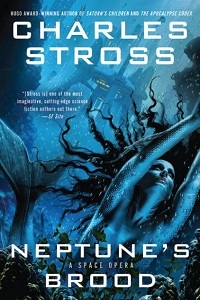
Neptune'sBroodThis is the first year that I’ve actually managed to read all of the nominees in the Hugo novel category, at least a portion of each. Charles Stross’s Neptune’s Brood is the last of the batch, and I only got my hands on it mid-July when I borrowed it from a friend–the publishers decided not to put it in the Hugo packet, and neither Stross nor Penguin were interested in providing a review copy so I had been intending to just skip the book until the opportunity to borrow it came up. I haven’t finished reading the whole book yet. I’m at about page 150 of 340. But the Hugo deadline is tomorrow and this is the last posting slot I have before the deadline, so if I want to share my review before the deadline it’s got to be a partial. You can consider this part 1 of the review; I’ll write up the rest when I’ve finished the book.

Neptune’s Brood takes place in the universe of Stross’s book Saturn’s Children, but can easily be read as a standalone. I’ve not read Saturn’s Children, but from what I gather, Neptune’s Brood is not a sequel and the time lapsed between the two is so long that there aren’t any narrative lines from one to the other in any case. If you like one, I’d guess you’d like the other, but they can be enjoyed independently.

In the universe of Neptune’s Brood, human life as we would recognize it (known in that time and place as “Fragile”) has gone extinct more than once, only to be revived. That kind of body is just generally not suitable for the rigors of space travel, the radiation and longevity problems inherent in the medium. A person’s mind is backed up on soul chips, electronic wafers that contain the essence of their mind. Without a brain a soul chip is just an inert data card, but any body is eminently replaceable. A new body can be grown for a soul chip, and the soul-chip will then decompress the mind it stores into the body. Humanity as it exists is spread across a large number of interstellar colonies. Colonization is far from easy; it is both extremely expensive and prone to failure, and also a very very slow process. Once a colony has been established, a communications beacon can be established and can import the minds of colonists that can be printed on soul chips and grown new bodies, so it is only the first colonists who have to travel by starship. Stross has clearly put a lot of thought and planning into the economy and technology that supports the spread of humanity through the stars. The explanations of them are very interesting, and I expect they would be even more so to someone whose academic focused centered around economics or space travel. And in particular, the problem of how to deal with interstellar economics without dodging around the problem of communications limited by lightspeed. There are no ansibles or wormholes or anything like that to work around the problems. It deals with them with the limitations as we understand them now. From my point of view, at least, it all seems very plausible.

Krina Alizond-114 is a historian of accountancy practices on a lengthy academic pilgrimage who learns that her sister Ana has disappeared from where she had been living on the water-world of Shin-Tethys, so Krina sets out to Shin-Tethys to find her. Eager to book the fastest passage possible on short notice, she takes a job doing unskilled labor for a Church of the Fragile. The Church is literally built in the shape of a church building as it would exist on a planetary surface, an ungainly and unfunctional shape for a starcraft to be sure. On the previous journey, a deadly accident killed several members of the crew, and several more deserted upon landing, so the Deacon is looking for help to keep the ship functional until new bodies can be grown for the dead crew members. Krina can tell early on that something fishy is going on with the crew, but soon she has to deal with the inhuman assassin stowaway intent on killing her, as well as on the insurance-underwriting pirates that capture the Church vessel and demand that Krina tell them how to find Ana so that the pirates don’t bankrupt themselves paying for Ana’s life insurance policy.

The worldbuilding of Neptune’s brood is dense. There’s a lot of meat there. Interesting stuff, and he’s taken it all into account with the history and plotting in the book. But it does take some heavy chewing to get through it all. I think that this is a large part of why I didn’t feel that the plot had much tension before about page 70. Up until that point I was considering whether I wanted to keep reading, and I could’ve gone either way, but was interested in the worldbuilding as it was rolling out so decided to keep going. I’m glad that I did because at about page 70 all the tension hits from about three directions at once and is still keeping me interested at page 140. So, if you’re like me and you really want some action, some plot to keep you going, just stick through the beginning stretch and there’s plenty of action after that to get you going. Just stick with it. It’s worth it.

Beyond that, I haven’t made it far enough in the book to say I’d recommend it for sure, but between the very interesting and complex worldbuilding and the action and plot that are now in full swing, I’m sure that enough of my interest has been captured that I will read to the end of the book. I think the odds are pretty good I’ll recommend the book as a whole–it’s a rare book that loses me once I’m halfway through, mostly just if the ending is so terrible that it ruins what came before it in retrospect. Once I finish the book (probably in a few weeks), I’ll report back on what I thought of the rest of it.


My Hugo Ballot 2014

The voting deadline for the Hugo Awards is tomorrow, July 31st, and I’ve read as much of the Hugo content as I’m going to have time for. So, the time has come for me to cast my ballot and put awards aside until next year. As I’ve done the last couple years, I’ve publicly shared what my ballot is going to look like, as kind of a final section of my Hugo review that is kind of an overarching look at what I thought of the categories. I didn’t read work in all the categories, so I’ve abstained from voting in those that I had no familiarity with and left them off the ballot.

For those of you who aren’t familiar with how the voting system works, it used an instant runoff scheme which allows you to rank all of your choices. First, they count everyone’s first choice. If no one gets more than half the votes, then the lowest ranked one in that scheme is eliminated, and anyone who chose that one as their first choice then has their 2nd choice tallied instead. And so on until there is a clear winner. It is possible to vote for “No Award” which you do if you would rather no one win at all than for the remaining ones to win, and in the end if too many ranked No Award above the eventual vote-winner, then no award is given.


Best Novel

  1. The Wheel of Time, Robert Jordan and Brandon Sanderson (Tor Books / Orbit UK) (I reviewed it here)
  2. Ancillary Justice, Ann Leckie (Orbit US/Orbit UK) (I reviewed it here)
  3. Neptune’s Brood, Charles Stross (Ace / Orbit UK) (will post review on July 30)
  4. Parasite, Mira Grant (Orbit US/Orbit UK) (I reviewed it here)
  5. No Award

I also reviewed Larry Correia’s Warbound here but ranked it below No Award. I didn’t get a copy of Neptune’s Brood until quite late in the game. I won’t finish it before the deadline but I’ve read far enough to get an overall impression to rank it here. I originally planned to post this ballot on July 30, but decided to post my partial review of Neptune’s Brood on that day to give me a couple more days of reading.


Best Novella

  1. “Equoid”, Charles Stross (Tor.com, 09-2013)
  2. “The Chaplain’s Legacy”, Brad Torgersen (Analog, Jul-Aug 2013)
  3. No Award

I reviewed this year’s Novella category here for more details.


Best Novelette

  1. “The Waiting Stars”, Aliette de Bodard (The Other Half of the Sky, Candlemark & Gleam)
  2. “The Truth of Fact, the Truth of Feeling”, Ted Chiang (Subterranean, Fall 2013)
  3. “The Lady Astronaut of Mars”, Mary Robinette Kowal (maryrobinettekowal.com/Tor.com, 09-2013)
  4. No Award

I reviewed this year’s nominees here for more details.


Best Short Story

  1. “The Water That Falls on You from Nowhere”, John Chu (Tor.com, 02-2013)
  2. No Award

I reviewed this year’s nominees here for more details.


Best Related Work

  1. “We Have Always Fought: Challenging the Women, Cattle and Slaves Narrative”, Kameron Hurley (A Dribble of Ink)


Best Graphic Story

  1. The Meathouse Man, adapted from the story by George R.R. Martin and illustrated by Raya Golden (Jet City Comics)
  2. Girl Genius, Volume 13: Agatha Heterodyne & The Sleeping City, written by Phil and Kaja Foglio; art by Phil Foglio; colors by Cheyenne Wright (Airship Entertainment)
  3. No Award

I reviewed this year’s nominees here for more details.


Best Dramatic Presentation, Long Form

  1. Iron Man 3, screenplay by Drew Pearce & Shane Black, directed by Shane Black (Marvel Studios; DMG Entertainment; Paramount Pictures)
  2. Gravity, written by Alfonso Cuarà ³n & Jonà ¡s Cuarà ³n, directed by Alfonso Cuarà ³n (Esperanto Filmoj; Heyday Films; Warner Bros.)
  3. The Hunger Games: Catching Fire, screenplay by Simon Beaufoy & Michael Arndt, directed by Francis Lawrence (Color Force; Lionsgate)
  4. Frozen,screenplay by Jennifer Lee, directed by Chris Buck & Jennifer Lee (Walt Disney Studios)
  5. Pacific Rim, screenplay by Travis Beacham & Guillermo del Toro, directed by Guillermo del Toro (Legendary Pictures, Warner Bros., Disney Double Dare You)

I reviewed this year’s nominees here for more details.


Best Dramatic Presentation, Long Form

  1. Game of Thrones: “The Rains of Castamere”, written by David Benioff & D.B. Weiss, directed by David Nutter (HBO Entertainment in association with Bighead, Littlehead; Television 360; Startling Television and Generator Productions)
  2. No Award

Game of Thrones is awesome, and that was one of the best episodes in the series so far. I haven’t seen the rest of the category, but I am tired of episodes of Dr. Who dominating the ballot. There ARE other worthwhile things being published in SF, people. I’d rather Dr. Who would not be on the ballot or win anymore, so I’m voting accordingly. I haven’t seen Orphan Black, don’t know anything about it–so I don’t want to vote for it with no knowledge, but to vote No Award above Dr. Who episodes there’s nothing to do but lump Orphan Black in with them.


Best Editor, Short Form

  1. John Joseph Adams
  2. Neil Clarke
  3. Sheila Williams


Best Professional Artist

  1. Dan Dos Santos
  2. Julie Dillon
  3. John Picacio
  4. John Harris
  5. Galen Dara

I based these entirely on the portfolio included in the Hugo packet. Though I do have a soft spot for Dos Santos–I have an autographed print of his portrait of Moiraine Damodred hanging in my office at home. They’re all good but I tend to like the styles that make the people seem very real, and convince me that everything unrealistic is just as real.


Best Semiprozine

  1. Lightspeed Magazine
  2. Beneath Ceaseless Skies


Best Fanzine

  1. Dribble of Ink


Best Fancast

  1. No Award

It’s not that I hate the nominees. It’s just that, with all the amazing fiction podcasts out there, I find it extremely disappointing that only nonfiction podcasts are on the ballot, and that the only fiction podcast that’s ever been on the ballot had to heavily pander to get there. If fiction podcasts aren’t going to be recognized in this category, then I hope this trial category is short-lived.


Best Fan Writer

  1. Kameron Hurley


Best Fan Artist

  1. Sarah Webb

I based these entirely on the portfolio included in the Hugo packet, which only included work from three of the five nominees for some reason.


Break Into TV Writing, The Time is Now

written by Carl Slaughter

What kind of alternative universe is this where there are too many writing gigs and not enough writers?

“BROADCAST NETWORKS ARE OPEN TO PITCHES†¦BUT WHERE ARE THE AVAILABLE TV WRITERS? †¦ A non-writing producer told me he has never gotten so many “not available” answers from TV lit agents when inquiring about writers.”

This quote from Deadline Hollywood is from a few years ago and the number of networks and shows has continued to explode.

Not only has the volume increased, the quality has increased.

David Fincher, director of such famous movies as The Social Network, and Fight Club, was lured by Netflix with a hundred million dollar budget and a thirteen episode commitment for House of Cards, the hit political drama starring Kevin Spacey.

Fincher’s comment on the drastically changing landscape of television drama: “AS TELEVISION BECOMES MORE AND MORE LIKE LITERATURE†¦” [Emphasis added.]

Mary McNamara, TV reviewer for the Los Angeles Times, describes the phenomenon even more vividly: “The film industry is having a tough time producing anything other than franchise fodder and Oscar bait, while HIGH PRODUCTION SCRIPTED TELEVISION IS BUSTING OUT ALL OVER. Actors will tell you they follow the stories, and IT’S PAST ARGUING THAT SOME OF THE BEST STORIES ARE BEING TOLD ON TELEVISION. But actors and writers and directors, like most of population, also follow the love. And right now, audiences are in love with television. Truly, madly, deeply, and in ways difficult to sustain in film or the theater. EPISODIC TELEVISION IS REGULARLY DECONSTRUCTED IN A WAY ONCE RESERVED FOR SHAKESPEARE OR THE ROMANTIC POETS. Meanwhile, the people creating the shows we’re all mad for are similarly lionized.” [Emphasis added.]

“The Berlin Wall was a thing of chicken wire and Kleenex compared with the barrier that once stood between film and television in America.” – Mary McNamara, LA Times TV reviewer.

I have counted seventy Hollywood actors, most of them A-Listers, who have switched from films to television. The studios are reducing the number of movies. Meanwhile, 48 television networks are offering scripted episodic dramas series. The only people outside the industry who can keep track of the number of shows are journalists on the TV beat.

Television is where the storytelling is and television is where the job security is. It’s only a matter of time before the likes of Tom Hanks and Julia Roberts join the party.

But it’s also only a matter of time before this situation equilibrates. The number of shows will decrease and the number of writers will increase. The time for print writers to make the transition is now.

The networks are not only desperate for writers, they are hungry for concepts. So here is an opportunity to not only make $40,000 per episode as writers, but to also create and oversee our own meaningful projects as visionary storytellers.

The TV literary departments of talent agencies have turned into a game of musical chairs. Agencies are laying off film agents and stealing one another’s TV lit agents in an effort to adapt to the television revolution. But I finally tracked down the key agents of the TV lit departments of the major agencies.

Josh Hornstock, UTA (LA); Mike Jelline, UTA (LA); Nancy Gates, UTA (NY); Ian Greenstein, Resolution; Katie Cates, Resolution; Mark Gordon, ICM; Ruthanne Secunda, ICM; Debbee Klein, Paradigm; Amy Retzinger, Verve; Roy Ashton, Gersh.

After reading the profiles of and interviews with these agents, I settled on Debbee Klein as the best agent to help print writers break into screen. Based on what I’ve read, she has the reputation and the stability and she’s client oriented.

I also recommend Ari Emanuel based on these comments in Current Biography: “Ari is relentless. There’s no more loyal a guy for his clients. He’ll beg, borrow, and steal to get his clients what he wants.” “With Ari, it’s all about the bottom line. In a business deal, he’s going to try to kill for you and it’s just going to be about putting as much money in your pocket as he can, until you tell him that there’s something else that’s important to you.”

Hugo Novel Review: Warbound by Larry Correia

Warbound is the third book in Larry Correia’s Grimnoir Chronicles, preceded by Hard Magic and Spellbound. It takes place in a fantasy alternate-history 1930s. The branch in history took place in the 1850s when a magical force called The Power chose some subset of humanity to draw on its magical resources and become superpowered to give them the power to fight against the monstrous Pathfinder that eats magic and twists that magic to its own devices. And the Pathfinder itself is only an advance scout of its even more powerful master.
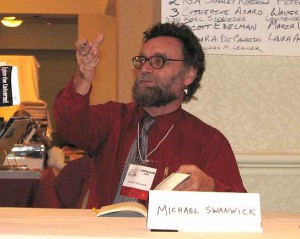
Enough people have been chosen by the Power that their abilities have become well known and part of national military forces, mostly used for international conflicts. Not many believe in the Pathfinders and even fewer believe that there is an even more dire threat waiting to attack the earth. But one organization, the Grimnoir, stands vigil. And now they’re going on the offensive.

Since this is book three in a series I started with the assumption that I’d be lost a goodly portion of the time. I admit I was interested in the challenge–I did that quite a few times in high school when I could only get books from a very limited school library that had a few fantasy books but often not all the ones in a series so I had to learn to hit the ground running and pick things up as I went.

In Warbound I had no difficulty with figuring out the setting, the characters, or the situation. In fact, even with this as my first introduction to the setting I thought some of the reveal of that setting was rather belabored. The action would regularly stop for a half a page or a page while I get an infodump detailed enough to be out of place in most any character POV. I read one-fourth of the way through the book, figuring that was more than charitable if I hadn’t been drawn in yet by that point, and it seemed like that section of the book at least was significantly bulkier than it really needed to be.

That first section of the book mostly follows Jake Sullivan, leader of the attack against the Pathfinder’s master, recruiting and organizing his attack force from Grimnoir volunteers and other sources. Which is all well and good, but that section just went on way too long and with not much to hold my interest.

Several of the sections followed Faye, an Active (the name for the superpowered folk) who has been given the gift/curse of the Spellbound so that she takes the magical power of any person she kills. As her sections unroll she finds a reluctant mentor who may help her understand and control this attribute. But again, I found these sections lacking in much to hold my interest. Maybe that section was hurt particularly by my lack of background in the series, maybe there was something in her history that would’ve made me about her.

The prologue of the book was certainly action-packed, and that part was by far the most interesting followed by these slower sections. I wouldn’t say I was hooked by these parts to be sure I was going to read a whole book, but I also wasn’t focusing on when I’d let myself set the book aside.

I suggest skipping this book. Maybe some Warbound fans can chime in on why the rest of the book is great, but that first quarter of it just wasn’t enough to make me want to keep on spending my time on it. It was heavy on infodumps, light on action and character building, and overall just didn’t make me want to keep turning the pages.

Interview: Michael Swanwick

interviewed by Carl Slaughter

swanwick 3

CARL SLAUGHTER: Common misconceptions aspiring writers have about crafting a marketable story and how to deliver ourselves from those misconceptions?

MICHAEL SWANWICK: The idea that there’s some kind of secret handshake involved in getting published. The idea that you have to trick an editor into buying your story. The idea that if you write in imitation of some successful writer’s work, his or her fans will flock to you. The idea that there’s a new movement or school you can hop aboard like a train that will take you straight to the top.

You deliver yourself from these by writing something good enough that an editor buys it and publishes it. When the book or magazine finally comes out and you hold that glorious, professionally edited and printed item in your hands, you will realize that you earned this moments. No tricks, no stunts, no politics. Just good writing. By you. That’s a terrific feeling.


Common manuscript mistakes aspiring writers make and how to recognize and correct these mistakes?

The very commonest is to open a story by “setting the scene” or “establishing mood” or giving background information that the reader is expected to memorize in order to understand the story to come. On those rare occasions I teach writing, I begin by going over the student submission stories and crossing out everything that should be cut before the story actually begins. Finally, on page two or five or eight, I’ll draw a line and write: START HERE.

This can be prevented by making sure you start at the beginning of the action. Or, better yet, in media res.

The least obvious common mistake, however, is not making sure your first and last pages are compelling and crisply written. I’ve watched editors reading slush back in the days when the slush pile was a physical heap of paper, and they would read the first page of a typescript and then flip to the last page. On the basis of that cursory glimpse, they would then put almost every submission in the reject pile and one or two stories aside to be read all the way through. “When I was starting out, I thought that was terrible and swore I’d read every story from beginning to end,” an editor told me once. “But I found out fast that you only need to read the opening and closing to know if there’s any chance the story will be good.”


tales of old earthIs there such a thing as style rules (see below) or is that conventional wisdom / dogmatism? Shouldn’t the story determine the style rather than vice versa? “Yeah, but famous author X breaks the rules all the time and the editors don’t challenge him on it.”
(Is show inherently better than tell, is activity inherently better than dialog? Are activity and dialog inherently better than narrative, are first, second, or third person inherently better than the other two? Is changing the POV in the middle of the sentence inherently confusing? Do you have to open with the most dramatic scene and then rewind? Do you have to list the contents of a room or describe a character’s physique or clothing? Does the story have to be organized like a 3 act play? Are dream sequences and info dumps inherently weak tools?)

Write as best you can and as simply as you can. That is the whole of the law. Sometimes a story can only be told in an extremely ornate or flashy manner. In those cases, it should be told in as simple an extremely ornate or flashy manner as possible.

Editors will let you get away with anything you can make work. When they challenge you on matters of style, they’re saying that you haven’t made it work and that the style is getting in the way of the reader’s comprehension.

Addressing your examples: Showing is usually better than telling, but not always. Action is usually better but dialog reads faster, so you can use the distinction to speed up or slow down the story as needed. Narrative can work brilliantly but if it’s just synoptic, it’s going to be boring. Third person past tense is what readers are most comfortable with, so you should only move away from it when you have a compelling reason to do so. In short fiction, you should have only one point of view, unless you have a compelling reason for more. The only POV shifts within a single sentence I can recall reading were in Finnegan’s Wake, which is not an easy book to read but one that rewards the extraordinary investment it asks of the reader. Flashbacks, particularly flashbacks occurring immediately after the opening of a story, are almost always a bad idea. A room or scene can be described in two perfectly-chosen details (in John Cheever’s notebooks, he recounted sitting in a friend’s living room while the man chained smoked and talked about his impending divorce, trying to think of the two details that would pin the scene; he kept looking down at the ashtray, overflowing with cigarette butts, and out the picture window at an achingly blue sky, back and forth from one to the other). Unless the story is about a character’s appearance or clothing, they can be dealt with in three or four details, tops (Marilyn Monroe: blonde, zaftig, a birthmark to one side of her lipsticked mouth). I’ve never used the three act play as a model for any of my fiction. Dreams are only rarely used well in fiction. Info dumps are to be avoided if it can be done efficiently, but sometimes a well-placed info dump saves you three or four pages of dancing about the subject and in those cases it should be embraced.

There is no such thing as one-size-fits-all pantyhose. Almost every rule of thumb has exceptions. But as a rule of thumb, the exceptions are harder to write well.


Use an outline and character profiles or wing it?

Whichever works for you. There are many kinds of writers, some of whom cannot begin writing until they know every twist and turn of the plot and others whose creative processes shut down the instant they know how a story ends, with the vast majority of us existing somewhere in between. The thing is that there is not one single skill which we can call “writing”; there’s a large family of related skills which result in superficially similar end-products. What works for one writer will stop another one dead.


Strategies for plotting swanwick 4and developing characters and reinforcing themes?
I can honestly say that I’ve never given a moment’s thought to themes, much less reinforcing them. Here’s an insight into plotting, though: As a general rule, a story requires at least three characters. With only two, the conflict ends with the protagonist either winning or losing. As fiction, this is about as interesting as tug-of-war. With two other characters pulling her in different directions, however, she ends up being pulled in a new and, one hopes, interesting direction.

Some writers base characters on real people and those times I’ve done this, it worked well. Mostly, I hold up my characters against real people to see if they’re complex enough. When I was writing The Iron Dragon’s Daughter, I taped a picture of the Sex Pistols to my monitor as a reminder that the monsters in my book should be at least as scary as them.


To revise or not to revise, that is the question.

There comes a moment when putting more work into the story just makes it worse. Stop just before you reach that point.


To workshop or not to workshop, that is the question.

Pretty much all unpublished writers workshop their fiction, so there’s no point to arguing against it. At the very least, it provides reassurance that you really are a writer and that you really are doing something to make progress at a time in your career when you need those reassurances most.

Keep in mind, though, that a workshop is only as good as its component members. That not all advice is good. That over time workshops tend to impose a house style on their participants. That they favor those who write quickly and in a conventional voice over those who are painstaking and quirkily original. That if their advice doesn’t make your story any better, the problem may not necessarily lie in you.


243859

To agent or not to agent, that is the question.

When you have a completed novel that has a chance of being published, you need a good agent. For some reason, publishing houses keep putting unreasonable clauses in their contracts which an agent knows how to remove. (But don’t count on your agent to have read the contract. Educate yourself, read before signing, and if anything looks puzzling get on the phone right away. Your agent should know if a clause is standard or not.) Also, unagented writers almost invariably get paid less for their work. The exceptions are those who know the industry so well they can do the negotiations on their own.

Notice, however, that I specified that the agent be good. Anyone can be an agent; there is no accrediting agency. And a bad agent can do horrible things to your career. Luckily, agents aren’t interested in taking you on before you’ve got a finished book to offer, so you have time to do research. Use this time wisely.


To self publish or not to self publish, that is the question.

Are you good at marketing? Do you have a business plan? Do you have a clear idea of how you’re going to let people know your work exists? Have you worked out how many units you have to move to move to cover your costs? Are your numbers realistic or just wishful thinking?

Everything depends on your situation. A conventionally published writer with a decent following and enough free time to do it right can put his or her out of print back list to work and earn†¦ well, not enough to live on, but a pleasant little supplemental income. Somebody who’s really good at the business end, is willing to work hard, and can write at least three novels a year can make a career of it. Somebody who’s been published conventionally and experienced push-back (you only get so many chances before the publishing world gives up on you) can make a comeback attempt by self publishing and sometimes it will work.

Writing is a tough business. Publishing is a tough business. Self publishing is a combination of the two. If you’re going to do it, put in the research before you spend a penny. Writer Beware is a good place to begin.


10170242To ebook or not to ebook, that is the question.
If you’re self publishing, you pretty much have to go with ebooks. If you’re not, go with whatever deal is best , but make sure the contract includes a clause reverting e-rights when payments to you go below a clearly defined level.


To write fan fiction or not to write fan fiction, that is the question.

When my son was a teenager, he and a friend spent a summer writing a fanfic mashup of two incompatible gaming worlds, and for a year they received more fan letters than I did. So far as I can tell, there was no downside. Except for the part about not getting any money for it and not having a physical book to put on the shelf.


To join the SFWA or not to join, that is the question.

I’ve been a member for over thirty years, so obviously I believe in the value of the organization for the community of genre writers. If you’re expecting individual career benefits rather than the satisfaction of promoting the common good, it’s probably not going to do much for you. The social element, the sense of community, and the SFWA Directory full of addresses for writers you may have cause to contact are all nice. But SFWA’s chief function is to encourage a set of conditions within publishing such that someday you won’t ever need to call upon their help.

Writer Beware is a SFWA site, incidentally, and it’s available free to everyone.


243855True or false: The system is rigged against the rookie and in favor of the veteran.
Not true, and in the case of short fiction extremely false. Most successful writers abandon short fiction after they make a name for themselves and so the magazines are always on the lookout for new writers. Also, editors take pride in the talents they’ve discovered.

Publishers will always prefer a new Stephen King novel over something by a complete unknown. But they also like being able to snap up The Next Stephen King at bargain rates.


True or false: An editor should have enough editorial instinct to recognize an awesome premise based on a synopsis and commission a novel rather than defer judgment until reading the entire manuscript.

Times are changing. For most of my career, I was an oddity because I finished my novels before trying to sell them. Everybody else sold by fragment-and-outline. (The sample chapters were required so the editor could get a sense as to whether you could write commercially viable prose.) More and more now, I hear, editors are willing to look at the fragment-and-outline but requiring a full novel before making a final decision. This has nothing to do with their editorial instincts, and everything to do with in-house policies set by their corporate masters.


An editor asks for a change in the story. It’s a seemingly small change, but it fundamentally alters the story. Stand your ground? Explain your vision for the story and ask the editor to yield? Politely withdraw the manuscript?

Polite is always good. Whether you politely stand your ground, politely ask the editor to yield, or politely withdraw the story depends on your honest opinion of what’s at stake.

First, however, take a deep breath and try to be objective. It’s hard to be reasonable about your own work and God knows, every time I go over a copy-edited novel, I find myself defending every quirk of phrasing and oddly-placed comma with all the emotion of a mother bear defending her cubs. But it’s important to think of the proposed change not as a moral challenge but as a well-intended suggestion that might conceivably improve the story.

Whatever you choose to do, remember that the editor hasn’t requested the change out of malice but from the simple (possibly misplaced) belief that it will improve the story. So play nice. Remember that you may find yourself working with this human being again.


I’ve interviewed more than one author who sold their first novel without getting even one short fiction byline in the magazines. Are they the exception or is this the new order of things?

It’s always been possible, and reasonably common as well, to sell a novel without selling short fiction first. The advantage of making a name in short fiction first is that it creates a following for your fiction and some name recognition for you. But not all writers are good at both lengths. Go with your strength.


Michael_Swanwick 6You described Gardner Dozois as a manuscript doctor genius. What exactly did he do to fix a manuscript?

One very small example: When he read the typescript for “The Feast of Saint Janis,” he said to me, “Congratulations, Michael. You’re the first person ever to write a story about rock and roll without once using the word ‘fuck.'” I immediately thought: Oh drat, and rewrote the dialogue.

Gardner has an uncanny ability to spot whatever it is that makes a story not work , whether it’s too wordy, or needs expansion, or requires a new character or rethinking an existing one. What makes him a great story doctor is that in doing so he doesn’t impose his own style or preferences upon the work. He looks at what the story itself wants to be and what you want to accomplish with it, and advises accordingly.

Most importantly, he’s a minimalist. He restricts his advice to those parts of the story that aren’t working. He doesn’t try to improve what’s already functioning.

Early in my career, I wrote the first chapter of a novel that was going to be about a parallel-worlds traveling con man, most of which was taken up by a clever con game I’d invented. Two pages into the second chapter, I decided that I didn’t like the protagonist or the premise and gave up on it, but not before leaving a chapter with Gardner. One day I dropped in on him and said, “What’s new?”

“Wait a second,” he said, and finished typing a page. Then he trued up a typescript, handed it to me, and said, “You’ve just finished a story.” And I had! He’d removed the first and last pages, made the story about time-traveling drug dealers, and changed it from the non-functioning opening of an abandoned novel into a witty and entertaining novelette. All the stuff in the middle was unchanged. “Snow Job” sold to High Times, was reprinted in Asimov’s, and taught me a lot about the extreme malleability of fiction.


Carl_eagleCarl Slaughter is a man of the world. For the last decade, he has traveled the globe as an ESL teacher in 17 countries on 3 continents, collecting souvenir paintings from China, Korea, Thailand, Vietnam, and Egypt, as well as dresses from Egypt, and masks from Kenya, along the way. He spends a ridiculous amount of time and an alarming amount of money in bookstores. He has a large ESL book review website, an exhaustive FAQ about teaching English in China, and a collection of 75 English language newspapers from 15 countries.