Anime Review: Rampo Kitan: Game of Laplace

written by Laurie Tom
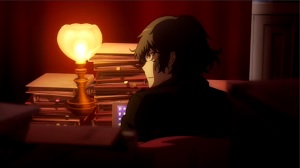
ranpo kitan: game of laplaceRampo Kitan: Game of Laplace commemorates the 50th anniversary of the death of renowned Japanese mystery author Rampo Edogawa, and each episode is based on one of his works, updating the time period from the first half of the 20th century to modern day.

Because the original pieces are not necessarily related, this results in a particularly disjointed feeling when the third episode appears to be a simple stand alone after the two-part opener, and I wasn’t sure if the series had anything more ambitious than modernizing a collection of fiction. Fortunately, Rampo Kitan makes an effort from episode 4 on to tie everything together into a loose, but cohesive story arc.

The main characters come from the Kogoro Akechi stories, though Akechi himself is now a dour teen detective instead of a married adult. Assisting him are Kobayashi, a middle school boy with a penchant for crossdressing (a trait he had in the original works), and Hashiba, Kobayashi’s worrywort classmate.

Together they get involved in solving criminal cases (usually murder) that in the real world a teenager, let alone a couple of middle schoolers, would never be allowed near. Despite the ages of the protagonists, Rampo Kitan: Game of Laplace is definitely not for those with sensitivities as many elements of the show are violent, gross, or sexually disturbing. It makes me wonder why the adaptation team decided to make all the protagonists younger.

Rather than deal with excessively censoring the show to get it on the air, the animation studio, Lerche, opted to heavily stylize most of it, which as a result makes it a unique watch. Rampo Kitan is frequently presented as though it is on a stage, with things like interior monologues happening while the viewpoint character is standing on a wooden floor with a spotlight over them. Sets slide in and out of view as needed and autopsy reports are delivered in quick comedic sketches designed to get the grisly information across without dwelling on it.

Some of the crimes are gruesome enough that those with lighter stomachs might appreciate any attempt to soften what actually happens to some of the murder victims, even the ones that had it arguably had it coming.

The stylization extends to a few viewpoint characters who have trouble seeing the world as most people do. When the camera is depicting their points of view, individuals they don’t know or care about are not drawn recognizably as people until they become important enough to be worth it. For instance, Kobayashi, our first POV character, views most other people as simply silhouettes, indistinguishable from one another until they become intrusive enough that he’s forced to acknowledge them. Characters that cease to be important, go back to being silhouettes.

Rampo Kitan is stuffed with interesting visuals like those to frame the story and the frame of mind of the current POV character.

That said, it needs them, because the plot itself is not its strongest point, which is probably the most disappointing thing to say about a series made in honor of a celebrated mystery author.

Most of the time it’s not possible to figure out who the criminal is ahead of time, which is downright miserly for a mystery series, and as a procedural it doesn’t feel like there’s enough emphasis on procedure. If the criminal’s identity isn’t confirmed before capture, the audience rarely has a chance to draw their own conclusion, and if the criminal is revealed, then capture is rarely more complicated than bringing in enough police officers, with the exception of the main story arc villain.

After Twenty Faces becomes established as a central figure, the series gains its main plot, and Akechi is more clearly allowed to be a main character. Kobayashi dominates much of the early episodes, which is rough since he’s difficult to relate to. He’s the kind of character who is thrilled to be in the middle of a murder mystery, even if it means he’s the prime suspect, and it never quite sinks in his head that he should be bothered by that.

Kobayashi never fades away entirely, but it always felt like Akechi should be the primary protagonist, being based off Edogawa’s most famous detective. Here, as in the original stories, Akechi has a rivalry with Twenty Faces.

Despite being a teenager, Akechi feels like a young adult who has been worn down before his time. He’s constantly mashing up painkillers that he washes down with canned coffee and treats his work like a job rather than a game or a means to play hero. This makes him believable when he’s called on by the police as a consulting detective.

It feels like Rampo Kitan wanted to make a statement about society, alienation, and how the cycle of violence never ends, but it doesn’t quite make it. The only things that clearly come across are the bonds between Akechi and Twenty Faces, between Kobayashi and Hashiba, and that good people will do awful things when they feel they’ve been let down by the ones who should protect them.

Though I enjoyed Rampo Kitan I don’t think it’s one to easily recommend. It’s worth trying for something different, particularly if you like to see something new in animated story techniques, but most of the characters outside of Akechi and Twenty Faces are not that well developed and neither is the plot.

Number of Episodes: 11

Pluses: use of imagery and stylization make for a visually unique show, moving soundtrack, Akechi’s weary personality is a refreshing change from more enthusiastic teenage protagonists

Minuses: rocky beginning, too much focus on Kobayashi, plot is a little lackluster

Rampo Kitan: Game of Laplace is currently streaming at Funimation and Hulu and is available subtitled. Funimation has licensed this for eventual retail distribution in the US.

 

laurietomLaurie Tom is a fantasy and science fiction writer based in southern California. Since she was a kid she has considered books, video games, and anime in roughly equal portions to be her primary source of entertainment. Laurie is a previous grand prize winner of Writers of the Future and since then her work has been published inGalaxy’s Edge, Strange Horizons, andCrossed Genres.
Energy, Pollution and Toxic Waste: Eco-Horror in Film

written by Maria Isabelle

Climate change has been a big button issue in recent years as more and more people have become aware of its negative effects. In fact, because of the burning of fossil fuels, the emission of carbon dioxide has increased about 40 percent since pre-industrial times, according to Ohio Energy. With this concern and changing environmental issues come a plethora of films that reflect our natural world’s burdens. Films have been warning us of impending ecological disaster for years. Whether it’s our own hubris coming to get us or the Earth fighting back, here are five of the most terrifying eco-horror-themed films.


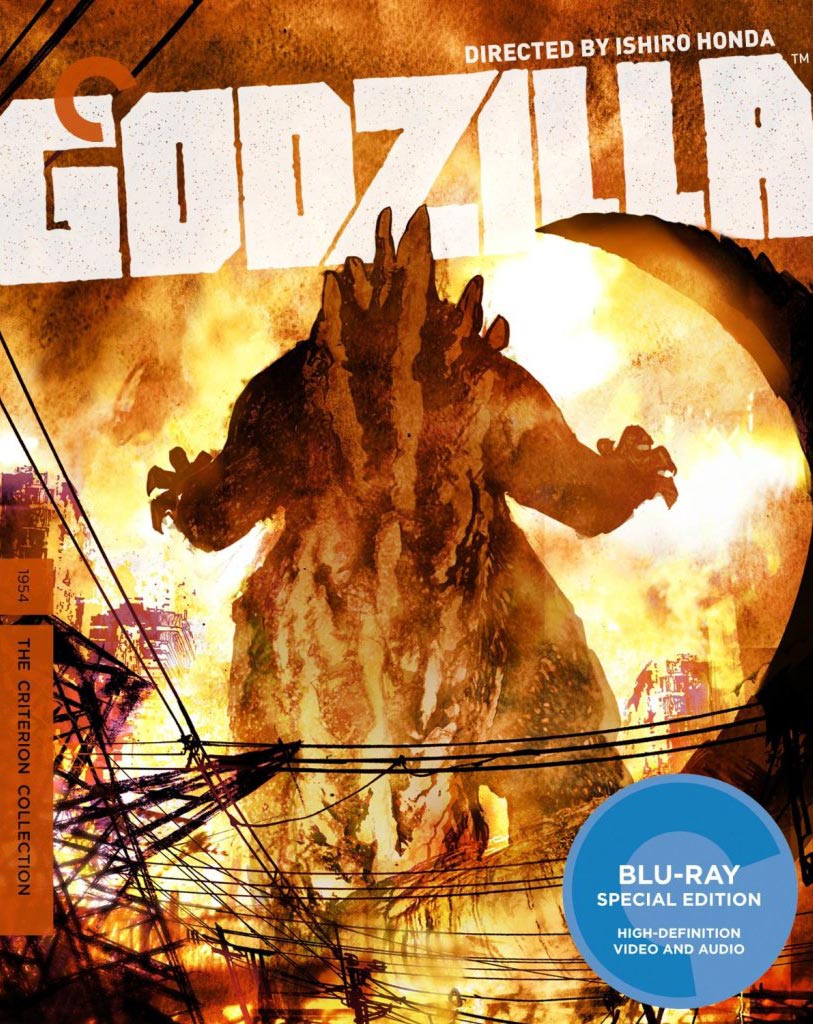
Godzilla
(1954)

Not only the King of the Monsters, Godzilla is also the king of the eco-disasters. Famously a metaphor for the unchecked use of nuclear power, Godzilla as a force doesn’t even seem to see his victims. He can only destroy, taking victims in a way that doesn’t discriminate, much like the radiation that created him. This classic film is powerfully written and directed, nothing like the sillier entries later in the franchise that would give it a reputation for high camp. Even with the oft-forgotten love triangle that dominates the majority of the film, Godzilla has a lot to say and does so fantastically.


The Bay (2012)

When two researchers discover a toxin in Chesapeake Bay (alluding to the actual pollution in Chesapeake Bay), even they couldn’t have predicted that it would release a parasite on the townspeople that turns them into violent killers. A straight-out horror film, The Bay gives us everything the genre needs: unnatural threat, savvy protagonists, and authority figures that refuse to do anything. It actually has shades of Jaws which it seems to homage quite nicely. Viewers who like heavy doses of irony will find a lot to like in this film.


C.H.U.D. (1984)

Photographer George Cooper (John Heard) discovers a civilization of “Cannibalistic Humanoid Underground Dwellers” (C.H.U.D.s) who are intent on invading the surface world. This camp classic from the renewed monster trend of the mid-80s is not subtle about how toxic waste created these mutant maniacs and doesn’t try to hide a very strong pro-environment message in between the gore and special effects.


The Day After Tomorrow (2004)

An often forgotten Roland Emmerich classic, this is the story of scientist Jack Hall (Dennis Quaid) who discovers that the Earth is headed for an imminent major freeze – one that happens almost instantly afterward leaving the survivors to find a way to keep living until humanity can respond. Like most Emmerich films, the environmental message and reference to the effects of climate change is in your face and over the top, but also sincere and couched in high action with exciting set pieces and very human characters.


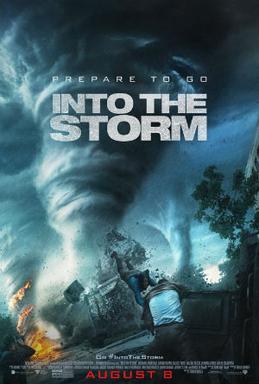
Into the Storm (2014)

A found footage disaster film, Into the Storm switches perspectives between several graduating high school students and a veteran storm chaser named Pete (Matt Walsh) who is trying to drive directly into a tornado. The action builds as the story goes on, getting the characters closer and closer to an encounter with a major whirlwind – another force alluding to climate change. This manages to use the found footage gimmick in a way that doesn’t strain the eyes and can integrate parallel plots naturally.


These are only some of the many movies we have made that look at how we’ve treated the planet and suggest that it might cause a negative reaction. Whether it’s personifying our lack of care for water or our fears of nuclear holocaust, eco-horror always hits very close to home.


Prof Pic 1Maria is a writer interested in comic books, cycling, and horror films. Her hobbies include cooking, doodling, and finding local shops around the city. She currently lives in Chicago with her two pet turtles, Franklin and Roy. 

MOVIE REVIEW (non-spoiler): Star Wars: The Force Awakens

written by David Steffen

I might write about the movie at a more spoilery level of detail at a later date, but for this review I’ll keep it as spoiler-free as possible, just the sort of information you’d hear in a synopsis before going.  I finally saw Star Wars Episode VII yesterday.  I didn’t feel like dealing with opening week crowds, but I was getting tired of trying to dodge spoilers on Twitter and Facebook.

The movie picks up about as many years after the original trilogy as have passed in real life, I suppose.  The First Order, the still active remnants of the Empire, is still opposing the New Republic that replaced it.  A group of storm troopers of the First Order raids a Resistance camp on the desert planet Jakku, looking for information.  Resistance fighter Poe Dameron (Oscar Isaac) hides the vital information in the droid BB-8 and sends it away from the camp before he is captured. One of the stormtroopers known only as FN-2187 (who is later nicknamed Finn) (played by John Boyega) chooses to turn his back on a lifetime of training and chooses not to kill anyone in the raid.  Finn helps Poe Dameron escape.  Together they meet Rey (Daisy Ridley), a Jakku scavenger and they join forces to get BB-8’s information to the people in the Resistance who need it.

I enjoyed this movie.  It wasn’t the best movie I’ve ever seen but I enjoyed it from beginning to end and I am glad to see someone has been able to turn around the series after the mess Lucas made of the second trilogy.  The special effects were good, and not the fakey CG-looking stuff that was in the second trilogy.  The casting of the new characters was solid and it was great to see old faces again.  To have a woman and a black man be the main heroes of the story is great to see from a franchise that hasn’t historically had a ton of diversity.    It was easy to root for the heroes and easy to boo at the villains.  The worldbuilding, set design, costume design all reminded me of the great work of the original.  I particularly liked the design of BB-8 whose design is much more broadly practical than R2D2’s.  Kylo Ren made a good villain who was sufficiently different than the past villains to not just be a copy but evil enough to be a worthy bad guy.

Are there things I could pick apart?  Sure.  Some of it felt a little over-familiar, but that might have been part of an attempt by the moviemakers to recapture the old audience again.  I hope the next movie can perhaps plot its own course a little bit more.  And maybe I’ll have some followup spoilery articles where I do so.  I don’t see a lot of movies in theater twice, but I might do so for this one so I can watch some scenes more closely.  I think, all in all, the franchise was rescued by leaving the hands of Lucas whose artistic tastes have cheapened greatly over the years.  I know some people knock Abrams, and I didn’t particularly like his Star Trek reboot, but Star Wars has always been more of an Abrams kind of feel than Star Trek ever was anyway.

I enjoyed it, and I think most fans of the franchise will.


Award Eligibility Post

written by David Steffen

I know some people don’t like award eligibility posts, thinking that they’re desperate pleas for attention.  As a reader, I like them because if I am behind on my reading they are a good place to catch up on the year’s published stories of another author, and as a writer to look back  at my own.  I don’t have any illusions that anyone is going to nominate me, and that’s fine–there are so many amazing people doing incredible work every year.  But I still think an award eligibility post is worthwhile, and if you don’t think so, then you should stop reading now.

This year, since I started selecting and editing fiction for Diabolical Plots, I’ll list the Diabolical Plots work first and then my fiction writing as a separate section.  For the purposes of this list I am thinking of the Hugo and Nebula Award categories because those are the awards I’m most familiar with.  Other awards have other categories that might be suitable.

People ask once in a while whether the Submission Grinder is eligible for a Hugo or Nebula.  It is not, because there are no categories that suit it for those awards.

2015 was the year the Long List Anthology was published, but it is not itself eligible.  Neither award has a category for standalone anthology (though I believe the Locus Award does), and all of the stories were first published in 2014 so are ineligible.  As the editor I would be eligible for the Hugo Award for Best Editor, Short Form for which I edited that anthology as well as the first ten stories of Diabolical Plots.

Diabolical Plots

Semiprozine

  1.  Diabolical Plots (prior to this year I believe it was a fanzine, now it’s a semiprozine)

Editor, Short Form

  1.  David Steffen (for Diabolical Plots itself, and the Long List Anthology)

Short Stories

  1.  “Taste the Whip” by Andy Dudak
  2. “Virtual Blues” by Lee Budar-Danoff
  3. “In Memoriam” by Rachel Reddick
  4. “The Princess in the Basement” by Hope Erica Schultz
  5. “Not a Bird” by H.E. Roulo
  6. “The Superhero Registry” by Adam Gaylord
  7. “A Room for Lost Things” by Chloe N. Clark
  8. “The Grave Can Wait” by Thomas Berubeg
  9. “Giraffe Cyborg Cleans House!” by Matthew Sanborn Smith
  10. “St. Roomba’s Gospel” by Rachael K. Jones

Fan Writers

  1.  David Steffen (also did fan writing work for SF Signal, and for Science Fiction Book Club)
  2. Laurie Tom
  3. Maria Isabelle
  4. Carl Slaughter

My Fiction Writing

Short Stories

  1. “Thus Spake Robby” in the Overcast
  2. “Tamers of the Green” in Sockdolager
  3. “Condemned” in the Coven Anthology, edited by Andi O’Connor
  4. “So You’ve Decided to Adopt a Zeptonian Baby!” at Podcastle
  5. “My Wife is a Bear in the Morning” at Podcastle
  6. “Echoes of Her Memory” in Stupefying Stories
  7. “Closing Statement” in T. Gene Davis’s Speculative Blog
  8. “Focus” in Space and Time
  9. “We Do Not Speak of the Not Speaking” in Stupefying Stories
  10. “Red Shoes of Oz” in Evil Girlfriend Media Shorts
  11. “To Be Carved Upon the Author’s Tombstone in the Event of His Untimely Demise” in Perihelion

DP FICTION #11: “The Osteomancer’s Husband” by Henry Szabranski

He warned his wife the villagers would come. With their pitchforks, their fire. Their hateful ignorance.

“I’m sorry,” he said. “We have to leave. They saw beneath my mask.”

She did not listen. This was their home. Their little cottage by the burbling mountain stream. Their hard-won resting place after years of rootless travel, where they kept their lovingly tended garden with its fragrant roses and flowering vines, where she eschewed her strange abilities and practiced only mortal skill. An ideal place for a family, though they knew they could never have children now.

When he began to protest her lack of urgency she forced him into stillness and silence. She had that power.

“We’ve made friends in town,” she said. “They’ve no reason to harm us.”

Always prepared to believe the best of people. Always willing to give them the benefit of the doubt. That was his wife. Too trusting. Too optimistic. One of the many reasons he loved her.

Struck mute by her spell, he could not share his thoughts. Or warn her of the fear and revulsion he had witnessed on the townsfolk’s faces when his mask slipped and they glimpsed his true nature.

“We mean you no harm,” she cried as the mob at last turned up at their rose-entwined gate. “Can’t you leave us in peace?”

No. They could not. They died even as she tried to spare them.

Banished into the deepest shadows of the house by her unbreakable command, he could only watch as the slaughter unfolded. In the end, the townsfolk’s bloody determination and sheer numbers overpowered her best defenses. Only when she fell and uttered her final spell was he at last free to move, but by then it was too late. Countless bodies littered the garden, their bones dissolved or stretched into gruesome, unsurvivable shapes. Hers lay at the center.

He ran to pick her up. He hugged her close, kissed her cooling skin, rocked her back and forth as if she were a child in need of comfort, as if holding her tight could prevent any further life force from escaping. But it was already gone. No power he possessed could bring it back.

More people from the town approached the house, stragglers to the promise of violence or perhaps those simply curious of the outcome. They darted away again when they saw the scale of the devastation. The true cost of their mindless intolerance. The osteomancer’s husband didn’t look up. He no longer cared if they returned.

On sudden impulse he laid down her body. He tore off his carefully painted mask, his human skin gloves, the cloak and thick clothes that padded and hid his body. He stood and walked to the potting shed — leaning precariously but otherwise undamaged by the violence — and retrieved a rusty but serviceable spade from inside. He stabbed the blade into the trampled lawn and carved out a shallow grave. No longer encumbered by his public disguise it did not take him long to bury his wife, his motions swift and efficient. Afterwards he sat down beside the freshly piled earth. He felt numb and hollow, unable to think of what else he should do.

He expected to die soon. To wind down. His fate was tied to hers, wasn’t that how it worked? Spells faded with their caster. But he had never really known much about her strange magic. He had always been more physical than cerebral, a doer rather than a thinker. Her perfect complement. Of her magic, he knew only that she used it to heal and to help. The children with their broken limbs. The horses and the cattle in the field when they stumbled and shattered their legs. Even the loudmouth drunkards who smashed their skulls fighting each other every payday night.

And he himself. He had felt her power, too, those years ago. Darkness one moment. Then back again, as if the fall had never happened. Except he had felt that terrible crack, that shooting final pain as his neck snapped. His lungs become so heavy he was unable to draw breath. He would never forget that.

After her magic touch he moved and spoke and did so many things as he could before. But her power was only over his bones, not his flesh. It soon began to decay. All the ointments and bindings she so desperately tried to apply could not hide the truth or stop his skin and muscles and sinew from unraveling. All too soon he was nothing but bones. Bones, and an indomitable animating spirit.

For her it was enough. “I see my memory of you,” she said. “Not the reality.” And when he got used to the strange practicalities, it was enough for him too.

The sound of shifting earth disturbed him from his thoughts. At first he feared some scavenger had slunk behind his back to disturb her grave, but when he turned he found no dog or cat or rat foraging in the freshly turned earth. Instead, he saw a creamy white stalk snaking up from the soil.

The growing bloom swayed gently, almost imperceptibly, like some undersea coral agitated by the slow tides and currents of an invisible ocean. It slowly rotated towards him.

He fell to his knees and said, “My dearest, I knew it! Have you returned?”

There was no reply.

As night descended and the townsfolk gathered again with their newly lit torches, he watched the ivory flower grow taller and sturdier and more intricate. It grew despite the sun having escaped the sky–a night bloom. Before long it was twice his height. Roots like femurs twisted through the soil, sprouting into a crescent of pelvic bones, exploding into a bloom of ribs and tibias and a crowning display of skulls and grinning teeth. Despite its grisly nature, he thought it beautiful.

For he saw the memory of her, not the reality.

The night deepened and the bone flower grew more complex, more intricate, sprouting a thousand petals, each like a curled finger bone. And clustered deep within, growing larger every moment, tiny seed-like structures.

A hot wind swirled around the devastated garden. The amassing villagers grew more bold. More belligerent. They jeered and shouted of vengeance and justice and burning out evil. A daring few drew closer, retreating as he made a move, but never quite far back as before. It would not be much longer before they realized he posed no real threat to them. His hands were stiffening, his joints seizing. Every move more difficult than the last. Eventually he knew he would simply tumble apart.

The villagers let out a roar and broke towards the house. He reached up and snapped off a handful of enameled seedlings. Like tiny teeth, tiny skulls, tiny snowflake vertebrae. The rising wind swept them from his cupped fingers, up and out, far and wide. Escaping like willful, eager children. Like dreams and hopes of what could have been.

What strange flowers they might grow.


© 2016 by Henry Szabranski


Author’s Note: The inspiration for this story were a couple of photographs used for a writing group prompt challenge. One image was of flowing water (“…the burbling mountain stream…”), the second was of a hand tossing what looked like tiny bones to the wind (“Like…tiny snowflake vertebrae…”). To me the bones looked like seedlings, so I immediately began to wonder what their origin might be.


usxOOoT1Henry Szabranski was born in Birmingham, UK, and studied Astronomy & Astrophysics at Newcastle upon Tyne University, graduating with a degree in Theoretical Physics. His stories have previously been published in Beneath Ceaseless SkiesDaily Science FictionLakeside CircusFantasy Scroll MagazineKaleidotrope and in Fantasy For Good: A Charitable Anthology, amongst other places. He lives in Buckinghamshire with his wife and two young sons. Visit his blog at http://www.henryszabranski.com or follow him on Twitter @henryszabranski


If you enjoyed the story you might also want to visit our Support Page, or read the other story offerings.