Con Report: WorldCon 74 (aka MidAmericon 2)

written by David Steffen
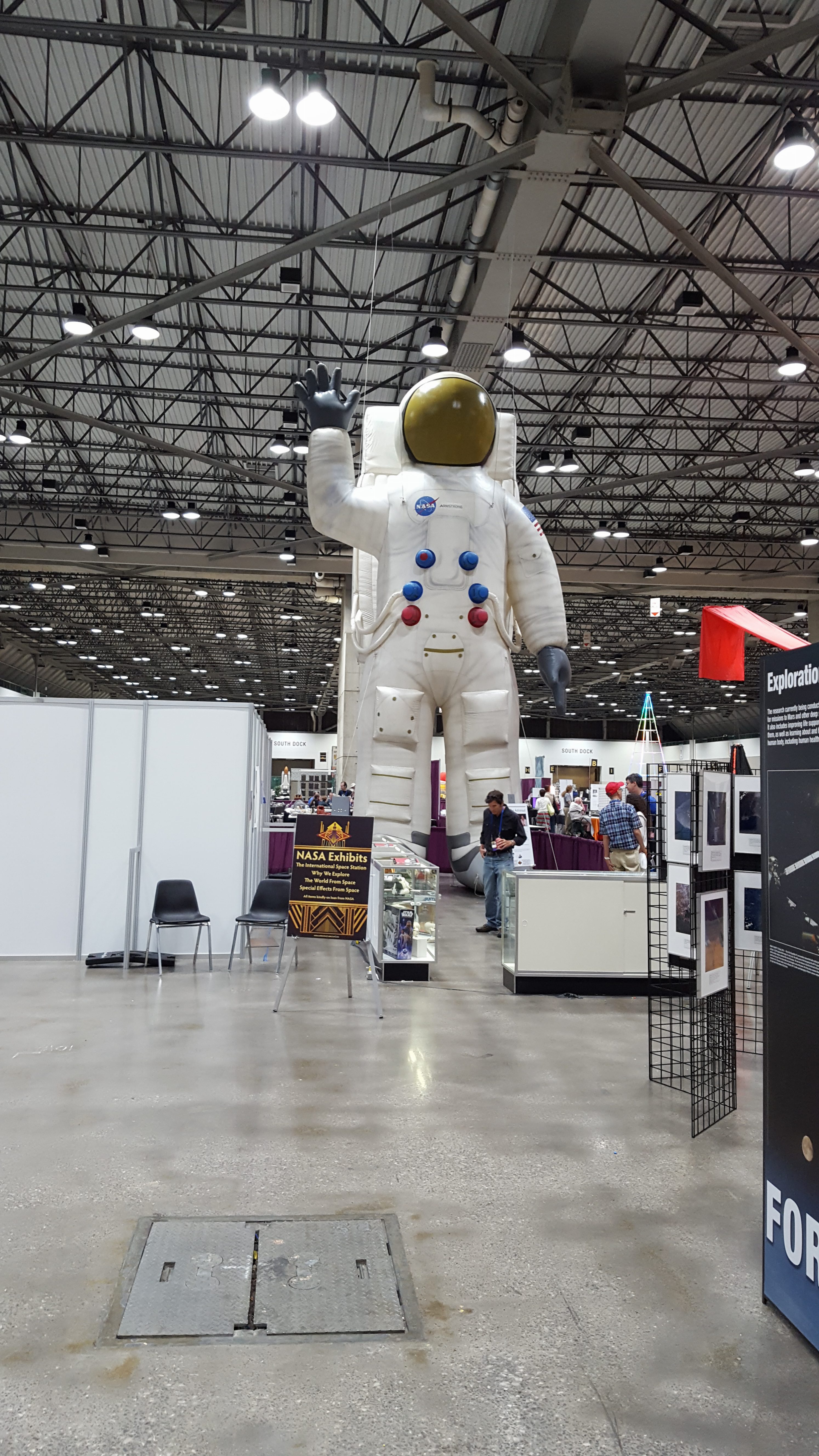
20160818_190010

I am back from WorldCon 74, also known as MidAmericon 2, which was held in Kansas City, Missouri from August  17-21!  I am back into my normal swing of things and trying to work my way back into the normal everyday types of things that WorldCon wasn’t.

I had such an incredible time.  Sitting at my desk, back in the real world, my brain is still trying to process everything, it has been a very densely packed 4 days.  I am introvert.  I use the word “introvert” in the sense, not that I hate social situations or hate people or anything like that, but that social situations use energy and being by myself recharges energy–as opposed to an extrovert who recharges by being around people and uses energy when they’re alone.  I was expecting to have fun, but I was also expecting to slam into my social limits halfway through each day and then come home feeling like a wrung out washcloth.  But, it seems that in this very specific environment, I am more of an extrovert–most nights when I finally retired to my room the reason was more because of aching legs and knowing that I should try to get some sleep than being unable to cope with the social scene anymore.

I arrived at the hotel around midday Thursday and left around midday Sunday, so I had a solid 72 hours around the premises.  I hear there are a lot of really interesting things to go see in and around Kansas City.  But I didn’t go to any of them, figuring that I had such a limited time here and the people and things I came here for were all concentrated in the area by the hotel and convention center.

The biggest difference in my convention experience between this time and the last time at WorldCon in Chicago in 2012 is that I have become somewhat more notable in the speculative fiction publishing community.
Since 2012:
–The Submission Grinder was launched.
–Diabolical Plots started publishing original fiction and became a SFWA-qualifying market.
–The Long List Anthology was published.

So the biggest difference is that it wasn’t uncommon for complete strangers to actually know of what I do.  Some would recognize me from checking my name badge alone.  Others wouldn’t recognize the name, but if I mentioned the Grinder or someone else mentioned that I run the Grinder then many writers would recognize me, would often say very nice things about the site.  This was a very big difference for me–When I last attended a convention I had had some published fiction and had been running Diabolical Plots for nonfiction-only for 4 years , but those had never spurred this kind of reaction.
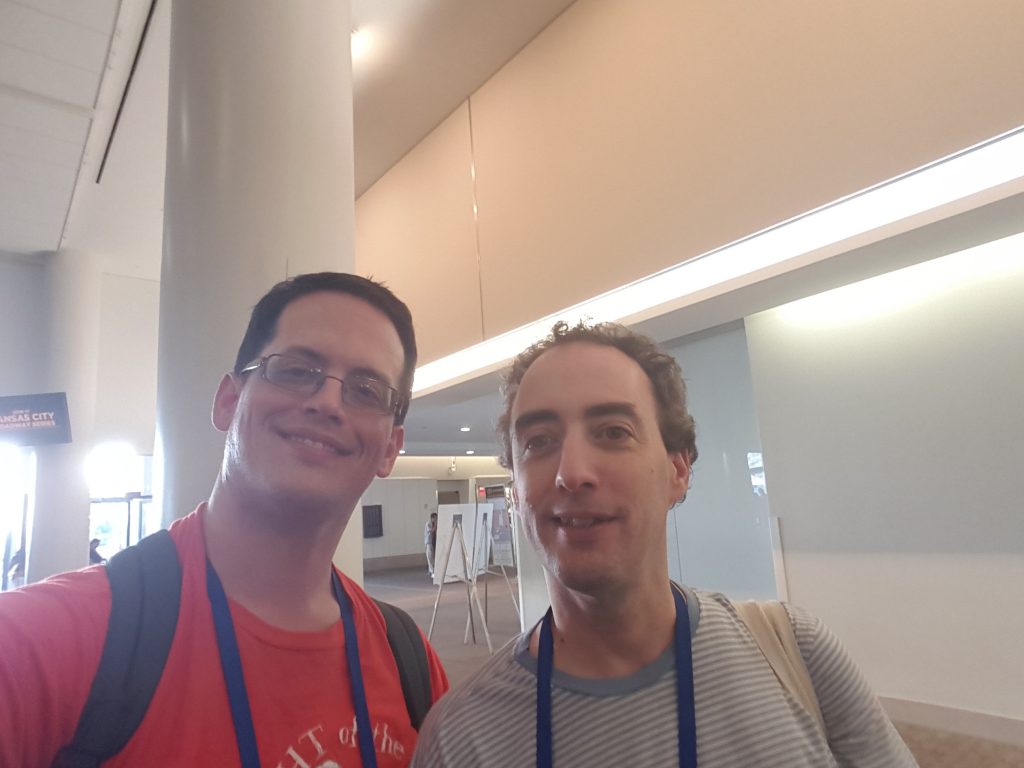
20160818_171309
David Steffen and Neil Clarke

In the past, when I was just getting started at writing, I had some miserable experiences at conventions–I just thought they weren’t for me.  I couldn’t seem to get anyone to really talk to me and whenever I tried I just felt like I was shut out by everyone there.  This time around, since I was more well-connected than I’ve been in the past, I tried my best to try to help people have a good convention who looked like they might’ve been in the same boat as I had been when I’d had miserable conventions.  First, if I was standing in a circle of people talking and I saw someone standing outside the circle looking like they wanted to join, I would try to step to one side and wave them in, make it clear they were welcome to join the conversation.  Second, if I was with some people I knew, and I saw other people that I suspected didn’t know each other, I would try to introduce the two groups to each other, maybe with a bit of bragging-up, since it is much easier to talk about another person’s accomplishments than your own.  I feel like these simple practices might’ve helped make the con a little better for some of these people, and I know that when I saw such similar behaviors directed toward me I greatly appreciated the person taking a moment to make my day much better.
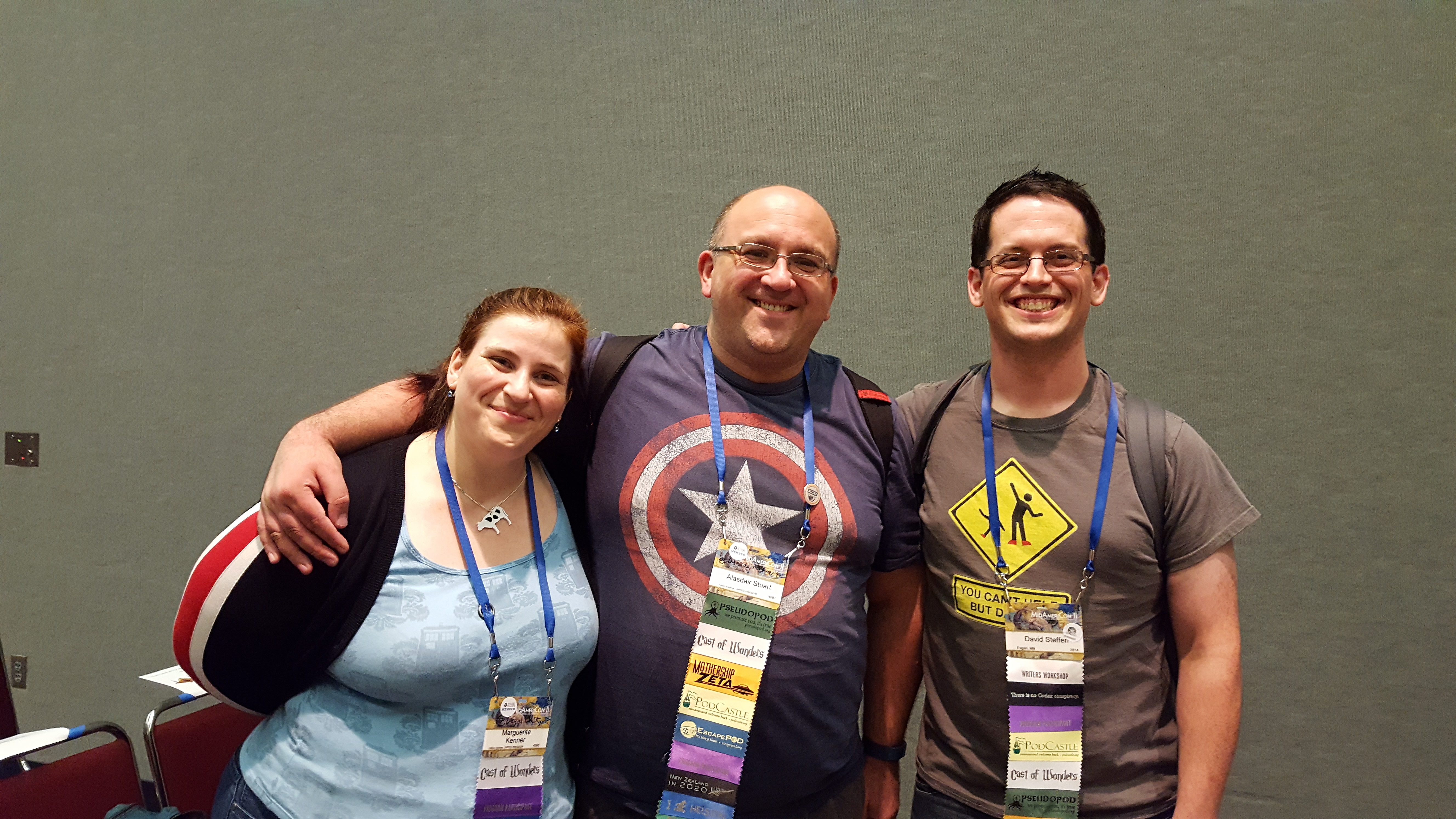
20160819_181336
Marguerite Kenner, Alasdair Stuart, and David Steffen

I was namedropped on at least three different panels, and each one was for a different project–this was a novel experience for me.  I have heard secondhand from people who’ve gone to other conventions that the Submission Grinder is often mentioned in panels as a resource, which is great!  I hear that I was mentioned in a Kickstarter panel as an example of someone who has run a successful Kickstarter (for the Long List Anthology last year)–this was before I arrived onsite or I might’ve been there myself.    I hear that I was mentioned in a panel aimed at new writers that in part discussed the topic of how to find markets for your work, and the Submission Grinder was mentioned as a resource–I had intended to attend that panel just to see if I could witness a namedrop for the fun of it, but I ended up seeing a perfect opportunity to hang out with someone I had barely seen yet, so I took that opportunity (and didn’t regret it since my intent to visit the panel was really just a vanity novelty).  And the one namedrop I was there to witness–Finding the Right Podcast For You, in which Alasdair Stuart mentioned the Diabolical Plots “Best Of” podcast list as a good way to get samplings of fiction podcasts… and then he also commented on the shades of pink I was cycling through.  So that was all very exciting.

Aside:  This might be an appropriate time to note that being able to have an unrelentingly wonderful time does not mean that everyone was treated well–see this thread by Alyssa Wong about being targeted by harassment at this convention and a previous one she had gone to.  Alyssa had very positive things to say about how the WorldCon organizers handled it (which is good!) but it is horrible that it got as far as it did–people should know better.  This isn’t rocket science.  Read her thread and other threads that spun off of it if you aren’t aware of this kind of horrible behavior from some small subset of fans.  It’s nasty stuff. I did not see any of this kind of thing happening personally, but it did happen.  It’s not necessarily surprising that I didn’t see or experience it personally, since I am an able-bodied heterosexual white man of unremarkable appearance who is not a household name, and so it would be less usual for me to be the target of such abuse (not impossible, mind you, but less common).  It is a mark of privilege that I don’t generally need to worry about that, and I’m glad that Alyssa Wong and others are willing to talk about this kind of thing still happening, because it’s easy for people who don’t experience it to forget about it or to think it’s not a problem if the people who ARE experiencing it feel like they can’t talk.  On the other hand, since this is a post about my experience of the con, I will leave it at that for now–if you weren’t aware of that thing happening, consider taking some time to read her tweets.  There have been some other tweet streams of interest on the subject of harassment that have run since WorldCon, such as this one by Rachael K. Jones and this one by Julia Rios

My Programming

I wasn’t involved in a lot of programming.  I actually hadn’t thought that I would be on any programming at all–I had applied early in the year and received a rejection quickly after.  But I did end up being in two bits of programming.

Writer’s Workshop

I co-led a critique session with C.C. Finlay (editor of F&SF and a writer), which was a lot of fun.  We read synopses and excerpts from novels by three authors, and then all five of us gave our impressions and we discussed ways that the synopses and excerpts might be improved.  I had never met Finlay before, and it was wonderful to get a chance to not only meet with him but to interact with him for a couple hours to discuss strengths and weaknesses of fiction.  Obviously I can’t say much more than that–these were unpublished novels and the discussion in a private room, so I can only speak about it in generalities.

Fiction Reading
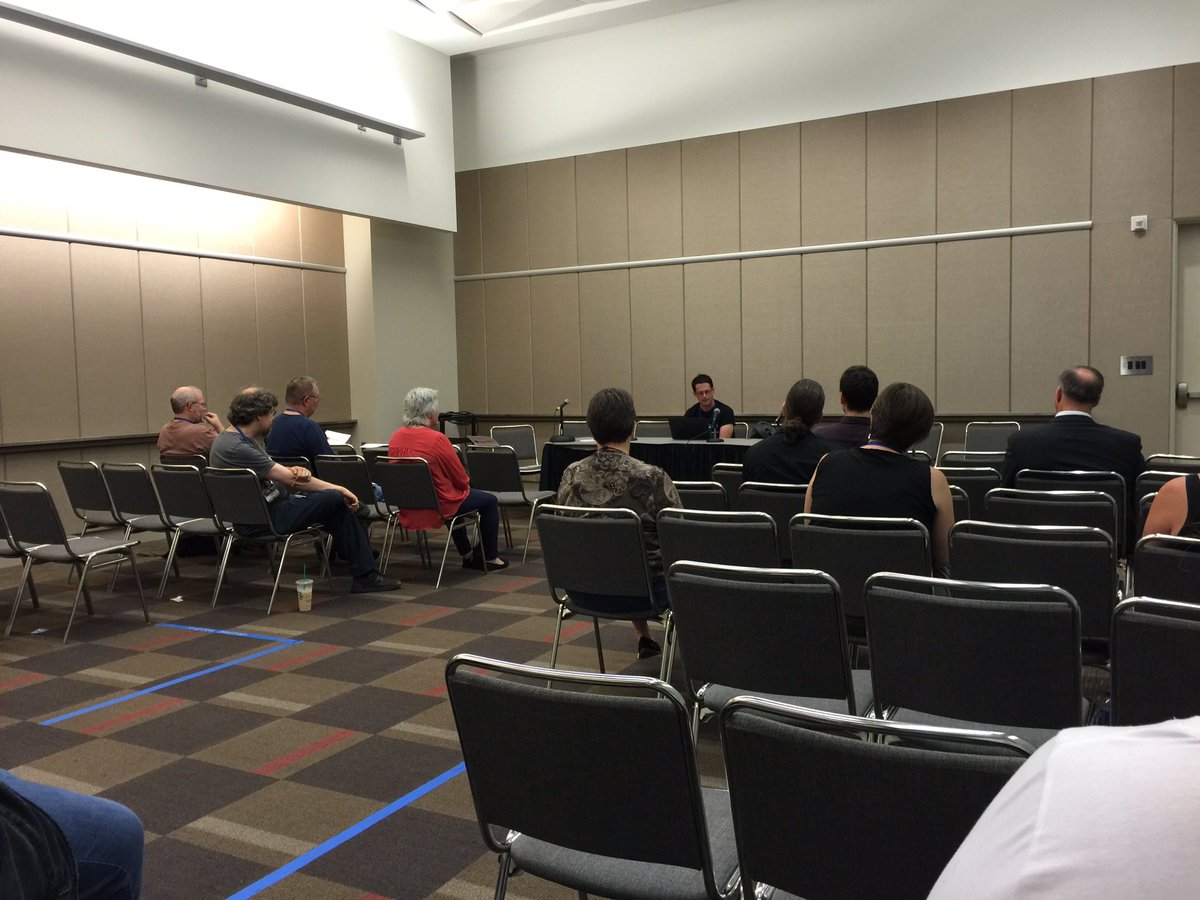
SteffenReadingI was very excited to find out not too long before the convention that I had been assigned a 30-minute fiction reading (Well, 25 minutes, to allow some time to let the next author get prepared).  It… wasn’t what you would call an ideal timeslot, being from 7-7:30 on the night that the Hugo Awards start at 8–so at that time most people who were at all interested in watching would be finding seats in either the auditorium or in some other group viewing area where they were streaming.
20160818_231544
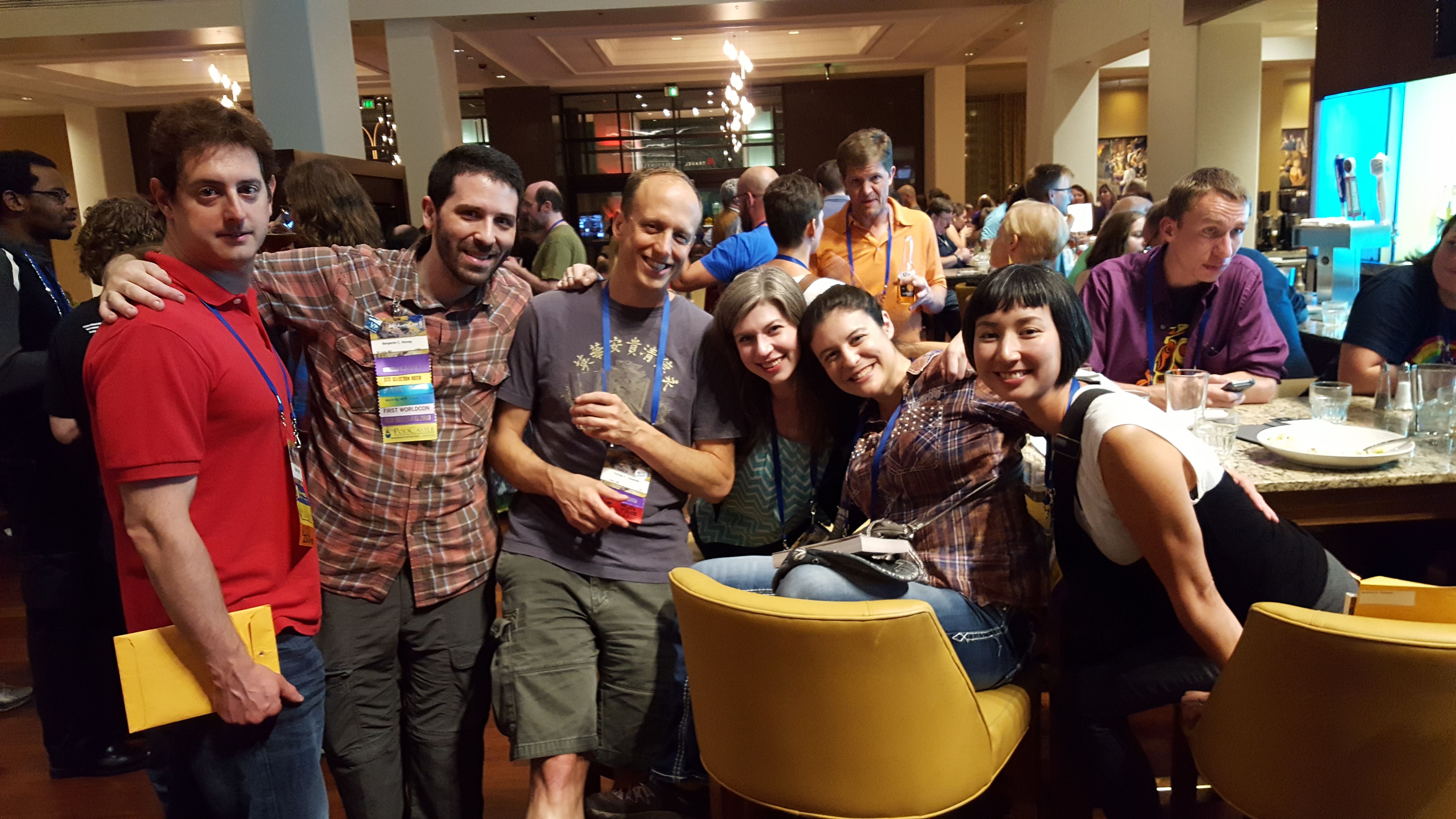
Brian Trent, Benjamin C. Kinney, Thomas K. Carpenter, Marina J. Lostetter, Tina Gower, and Andrea G. Stewart

But to my surprise, approximately 13 people were there just to hear me recite things I made up!  This is a quite large turnout for someone like me who is not well-known for their writing.

Of all the readings by other people that I attended, most people read either one work that fit very closely into the time allotted, or maybe two things, or an excerpt from a longer work.  I flipped through upcoming stories and though I would’ve loved to read part of my upcoming story that will be in IGMS, it is a bit of a sprawling story so that it would be hard to find a representative sample.  And, well, in my opinion my best writing is very short, punchy stories of 500-1000 words.  So, I decided to buck the trend and I ended up reading 5 stories in my allotted time.

I read “My Wife is a Bear in the Morning”, written as an complaint letter to an apartment manager by a man whose wife is literally a bear in the morning (you can hear it in audio at Podcastle).
20160818_185511
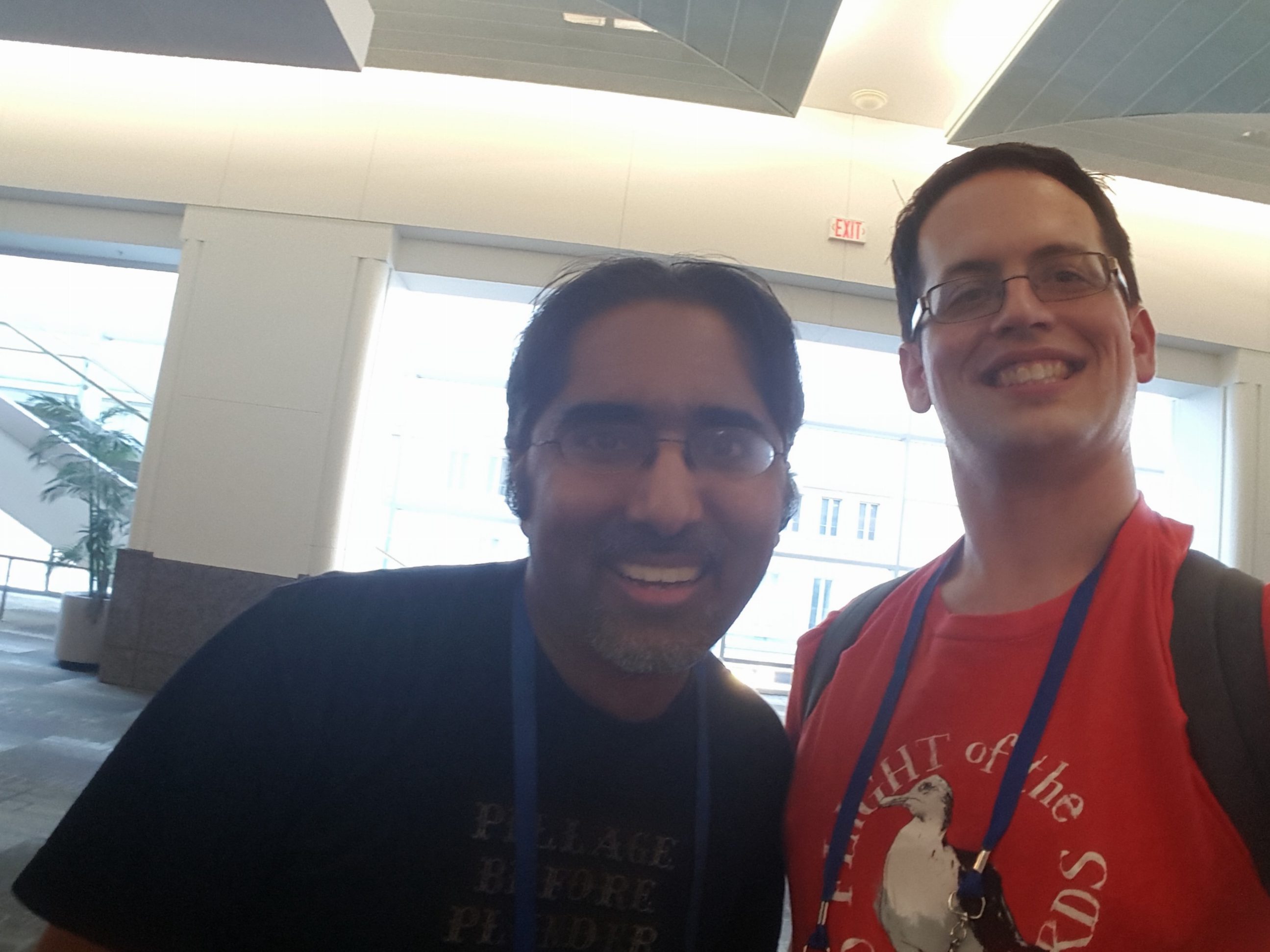
Sunil Patel and David Steffen

I read “So You’ve Decided to Adopt a Zeptonian Baby!”, written as a brochure to help those who’ve decided to adopt those invincible alien babies that keep falling from the sky in meteor showers.  (you can hear it in audio at Podcastle)

I read “This Is Your Problem, Right Here”, which is a story about a woman who has recently purchased a  water park and finds that the plumbing doesn’t work properly when she opens in the spring, and it starts as a plumber tells her that this is because all of her trolls have died (the existence of trolls are not common knowledge in this world).  That was originally published in Daily Science Fiction, you can also hear it at Cast of Wonders.

And I read two others that are as-yet unpublished, so I won’t discuss their details here.

The reading seemed to go over well.  I got some compliments, and people said they liked the quick changeups of stories, especially at the end of a long day when everyone was getting tired.

Books
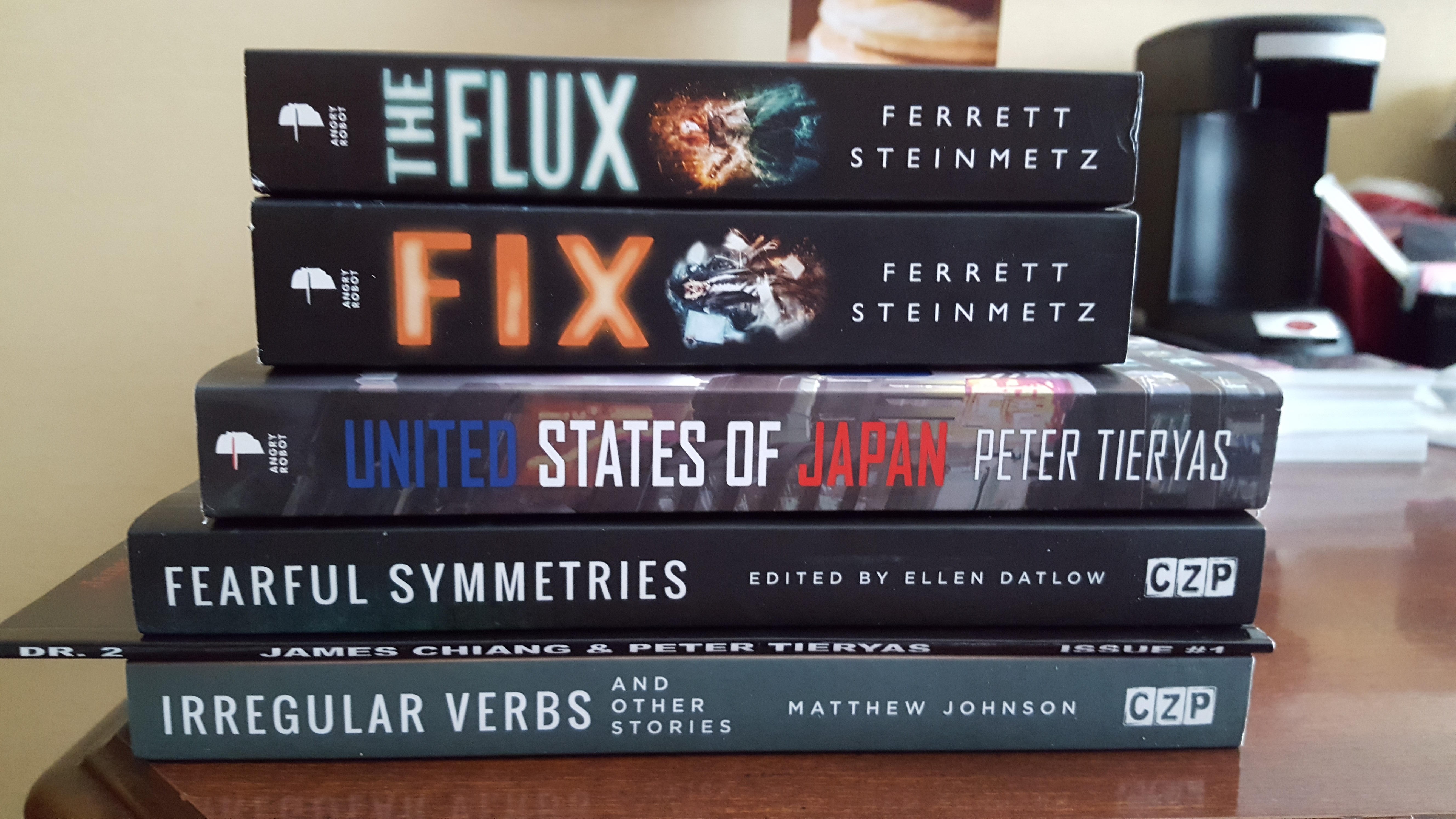
20160820_172557The one book that I knew ahead of time that I was going to buy was The Flux by Ferrett Steinmetz.  I already own the book.  I already love the book.  But I only had it in ebook, and I love these books so much I felt like I should have a signed paper copy.  And, since Ferrett was onsite, it seemed best to go ahead and buy it so that I could get him to sign.
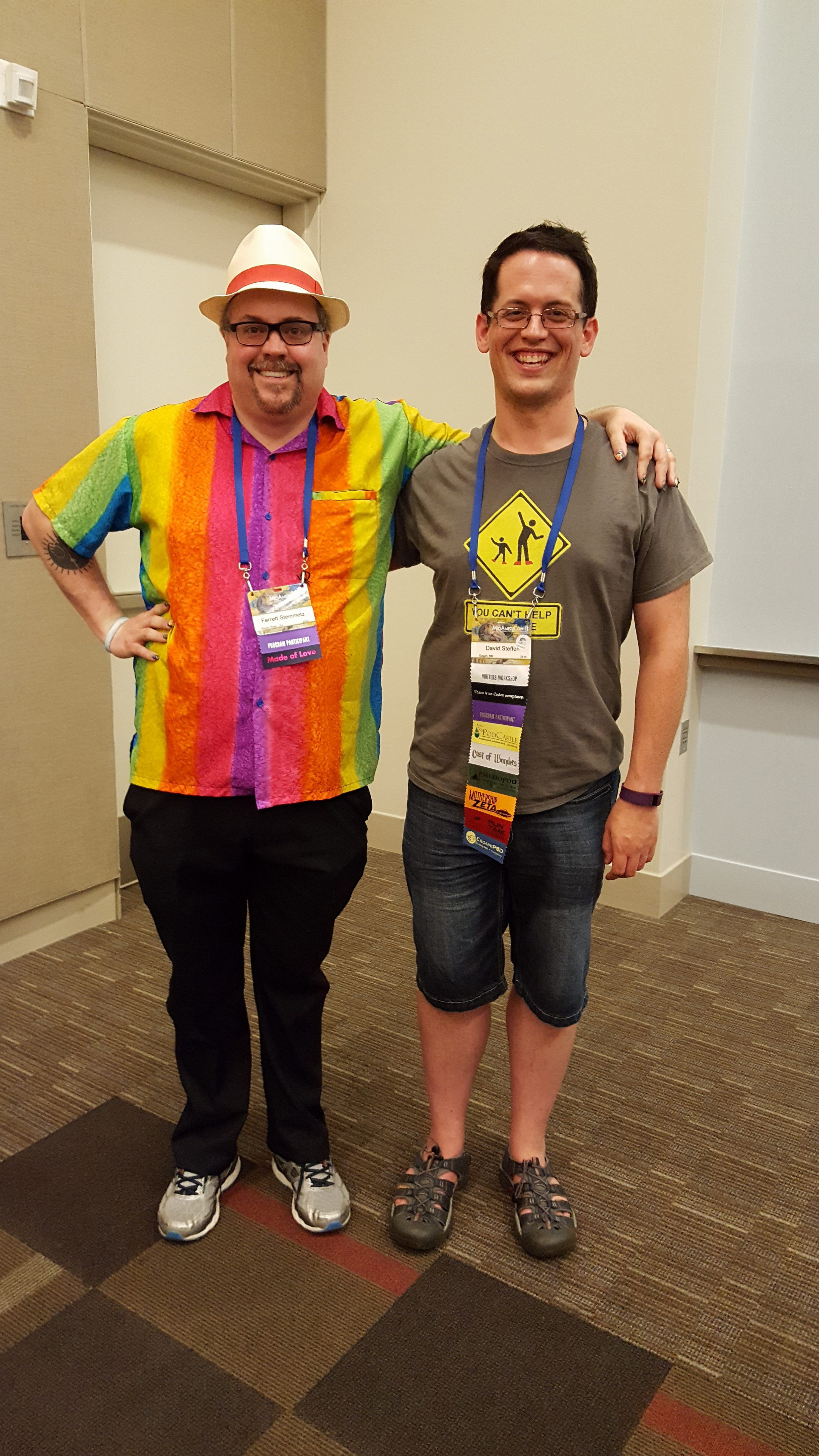
20160819_211657
Ferrett Steinmetz and David Steffen

I knew that Ferrett’s next book, the third in his ‘Mancy series, was coming out soon, but that the release date was not for a little while yet.  But Angry Robot Books had the book on sale at their vendor booth!  So, obviously that came home with me too.  And I am SO EXCITED to read it.

So I showed up at the Angry Robot booth to buy The Flux, and knew I had to buy Fix, a very nice man (whose name I didn’t immediately recognize and so didn’t pay all that much attention to) behind the counter told me that I could get a discount if I bought one of the larger form-factor books.  Not really intending to buy a lot of books (because I have such a stack at home, I am a slow reader) I saw that United States of Japan by Peter Tieryas was on display, and I had heard someone talking about how good that was earlier, so that was the first one I picked up.  The guy behind the counter started telling me about it and I tried my best to unrudely say “yeah yeah let me just read the back cover descriptio myselfn” (I hope I didn’t across as rude!  I like taking verbal recommendations from fans of a book but at pretty much any kind of store I would rather just look at stuff without staff discussing everything I look at–it makes me very nervous if I feel like the staff are hovering and I will be much more inclined to scurry away than to buy).  It did indeed sound really interesting, a story where Japan won World War II and ended up in control of the United States.  I glanced at some of the other books, flipped a few over to read the back, but decided that United States of Japan caught my eye much more solidly than the others.  So I decided to buy United States of Japan.  The guy behind the counter rang me up and then offered to sign my book… at which point I of course realized that I was talking to Peter Tieryas, the author of the book I’d just bought, so I laughed at the fact that I had not noticed the matching book cover and name badge and took him up on his offer.  (This concludes my telling of “The Time That I Wouldn’t Let Peter Tieryas Finish Pitching His Book To Me But Then I Bought His Book From Him Anyway Without Realizing He Was the Author of Said Book: A Tale of David Steffen’s Inattention to Detail”)
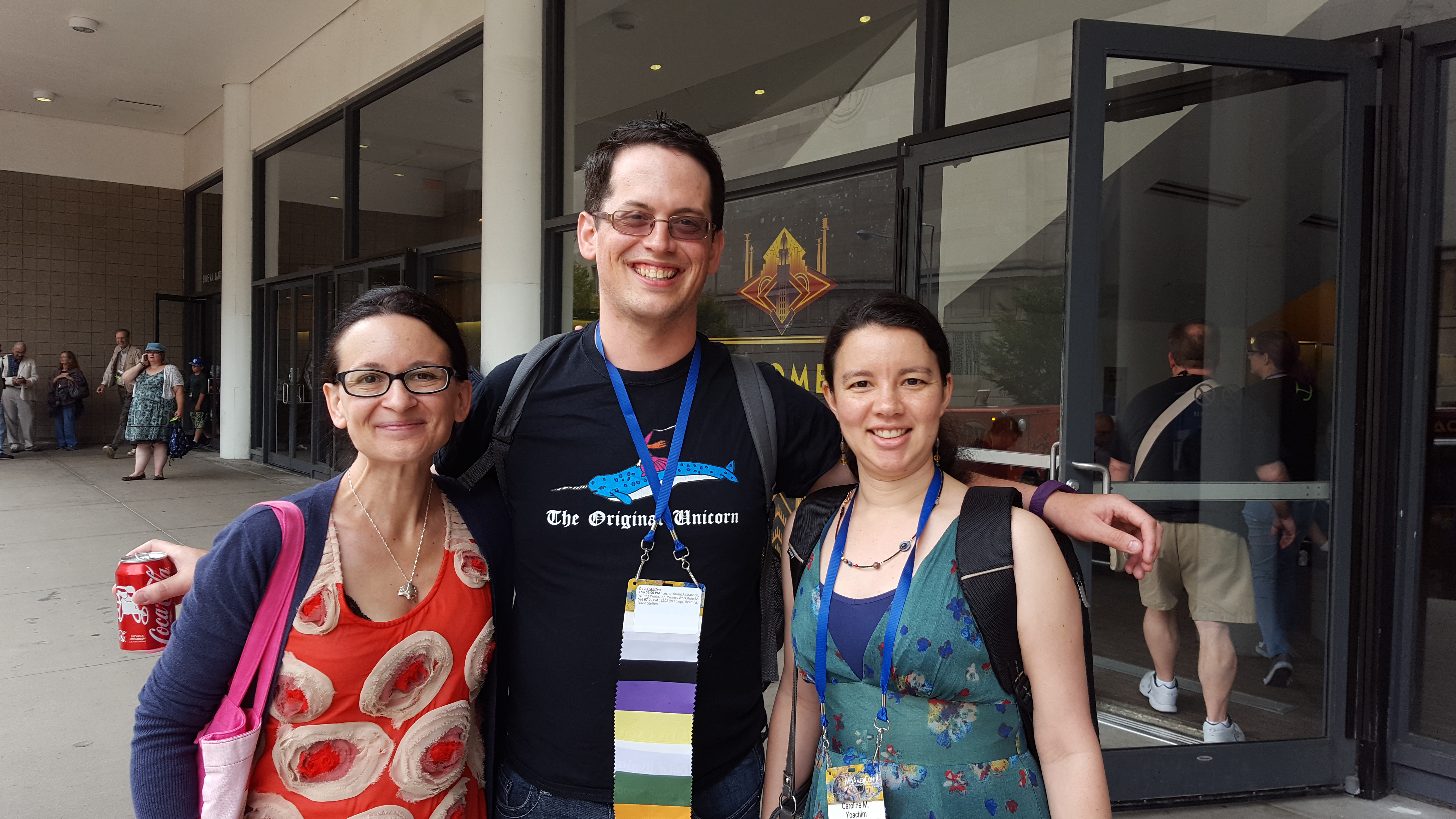
20160820_121307
Tina Connolly, David Steffen, and Caroline M. Yoachim

Caroline M. Yoachim and Tina Connolly both had book releases from Fairwood Press at WorldCon.  Caroline’s book is a short story collection titled Seven Wonders of a Once and Future World.  Caroline is an incredible short story writer, and consistently hits out of the park for me, so I am buying the ebook for this one.  Tina‘s short story book is a short story collection titled On the Eyeball Floor.  Tina (along with Caroline) is another writer who, when I hear they have something new out, I don’t ask for a pitch I just say “shut up and take my money”.  So, I’m buying that ebook too.  It was quite fun to watch these two launch together–they made it a friendly competition where they made a wager on it and the Fairwood Press vendor table had a running tally sheet of sales.  They ended up tying at the end, which is hilarious and perfect.
20160820_230442
Jon Lasser and David Steffen

I stopped by the freebie table once, at a time when it was a twenty minute wait to get to the table.  After that wait I felt like I had to grab the maximum of three books even though I don’t really need more books.  I saw a stack of Briarpatch by Tim Pratt and grabbed a copy even though I already own and love the book, so that I could give a copy of it away to the next person I talk books with.  I also picked up a copy of Fearful Symmetries, edited by Ellen Datlow, and a short story collection by Matthew Johnson titled Irregular Verbs and Other Stories.

I also had a few extra copies of the Long List Anthology left over from last year’s Kickstarter and I decided that there was no better way to use them than to bring them to WorldCon and give them out to people when I chat with them.  I saved one to give away at my fiction reading and gave three out when it felt appropriate, so that was fun!

Programming
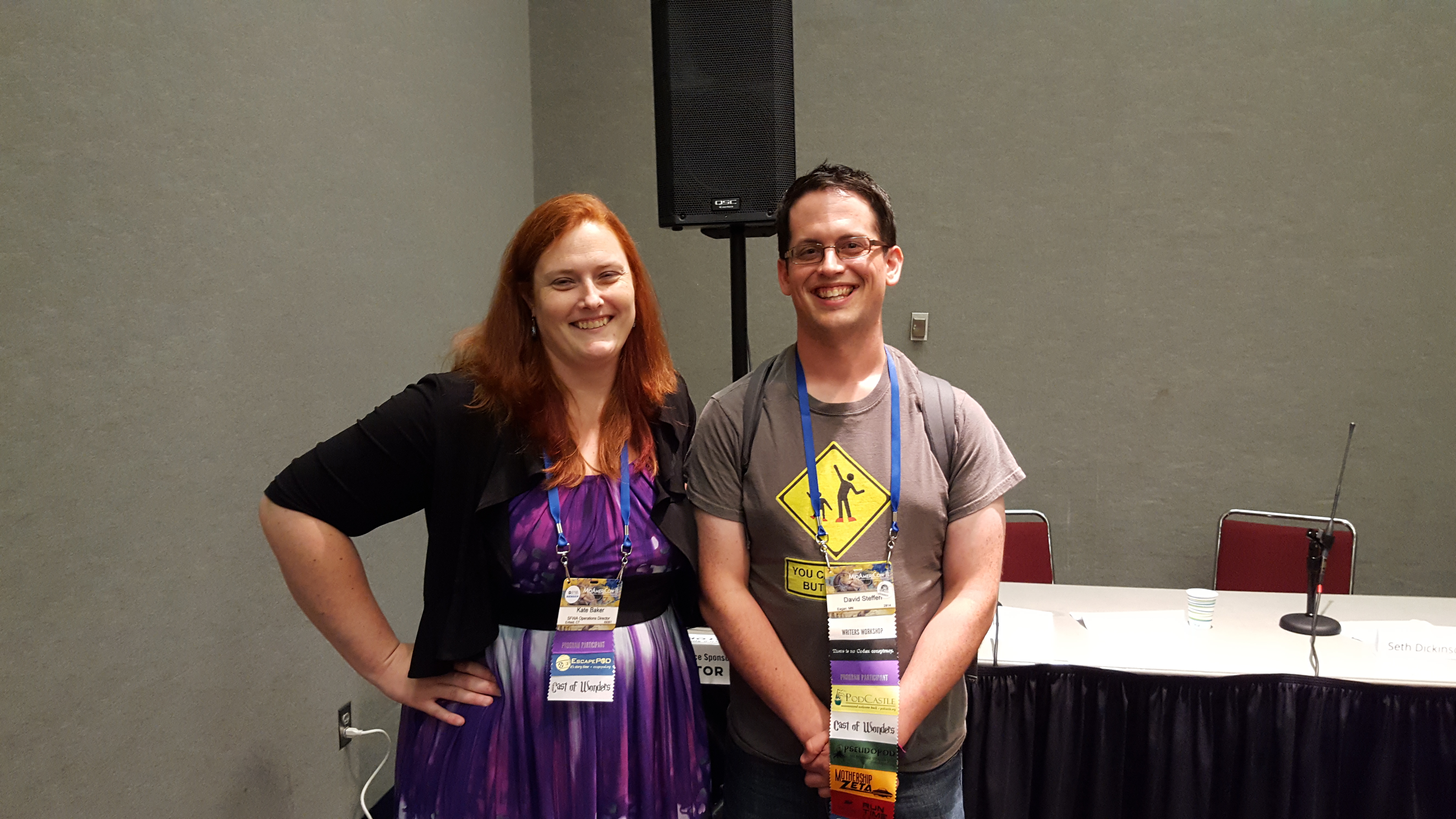
20160819_181525
Kate Baker and David Steffen

I did not attend many panels this time around.  I attended a very select few that were on very specific topics that were very near and dear to my heart or to specifically try to meet some of the panelists that were on my mental list of people that I wanted to meet.

Other than that, I tended to favor readings of authors:  I went to readings by Caroline M. Yoachim, Terra LeMay, William Ledbetter, Loren Rhoads, Stefan Rudnicki, Kate Baker.  And readings of magazines:  Escape Artists, Flash Fiction Online, Asimov’s.
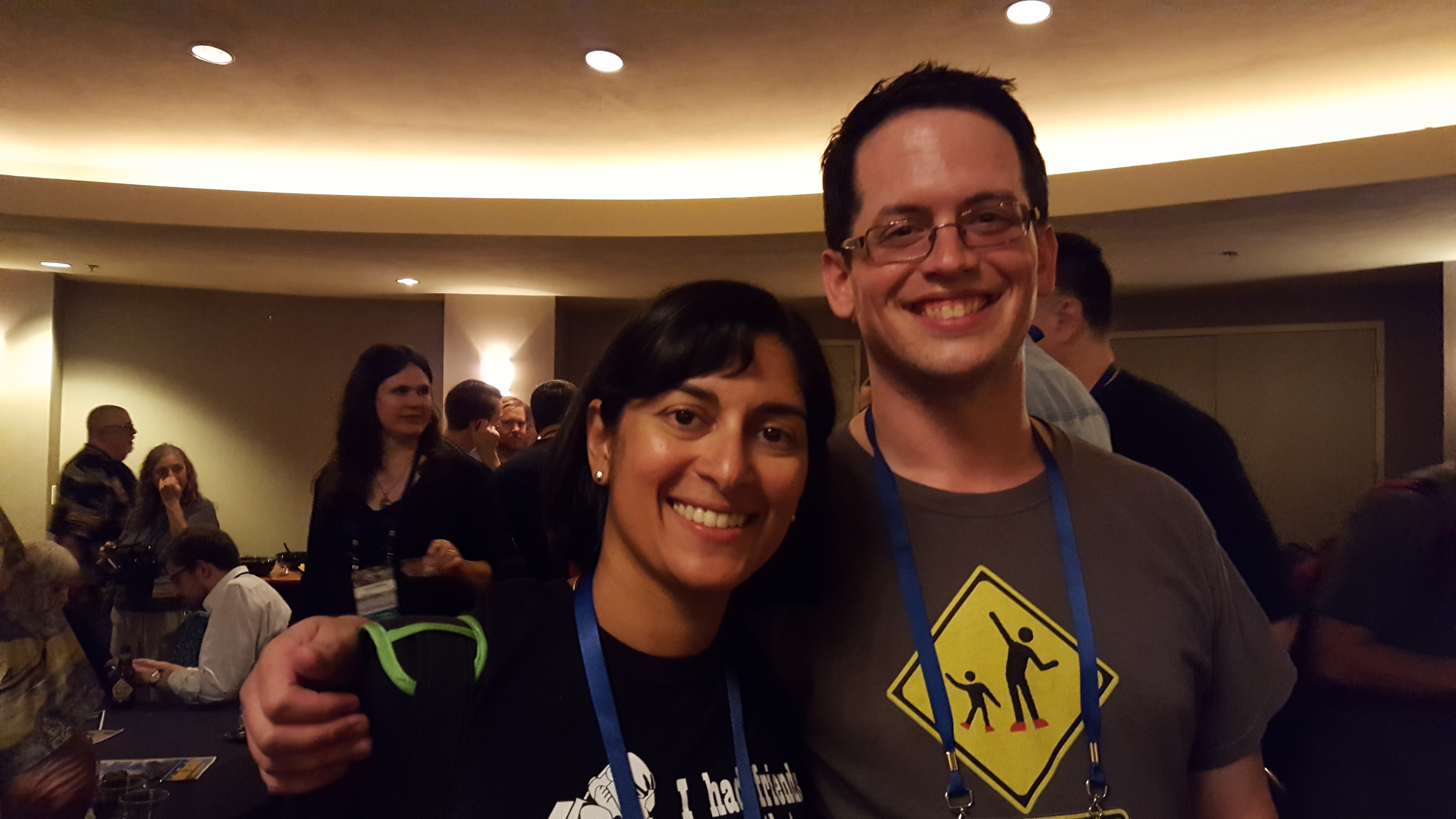
20160819_221744
S.B. Divya and David Steffen

I loved all the readings, but the highlight was the Flash Fiction Online reading, particularly “I am Graalnak of the Vroon Empire, Destroyer of Galaxies, Supreme Overlord of the Planet Earth. Ask Me Anything.” by Laura Pearlman, which was read by a full cast of readers, including Sunil Patel as Graalnak himself, and was a riot to listen to.

As well as kaffeeklatches, which are really just organized hangouts with people of interest–you signup in time to claim one of 9 slots and then you spend 50 minutes hanging out with that person.  I did kaffeeklatches with Kate Baker, Ken Liu, and S.B. Divya.

The People
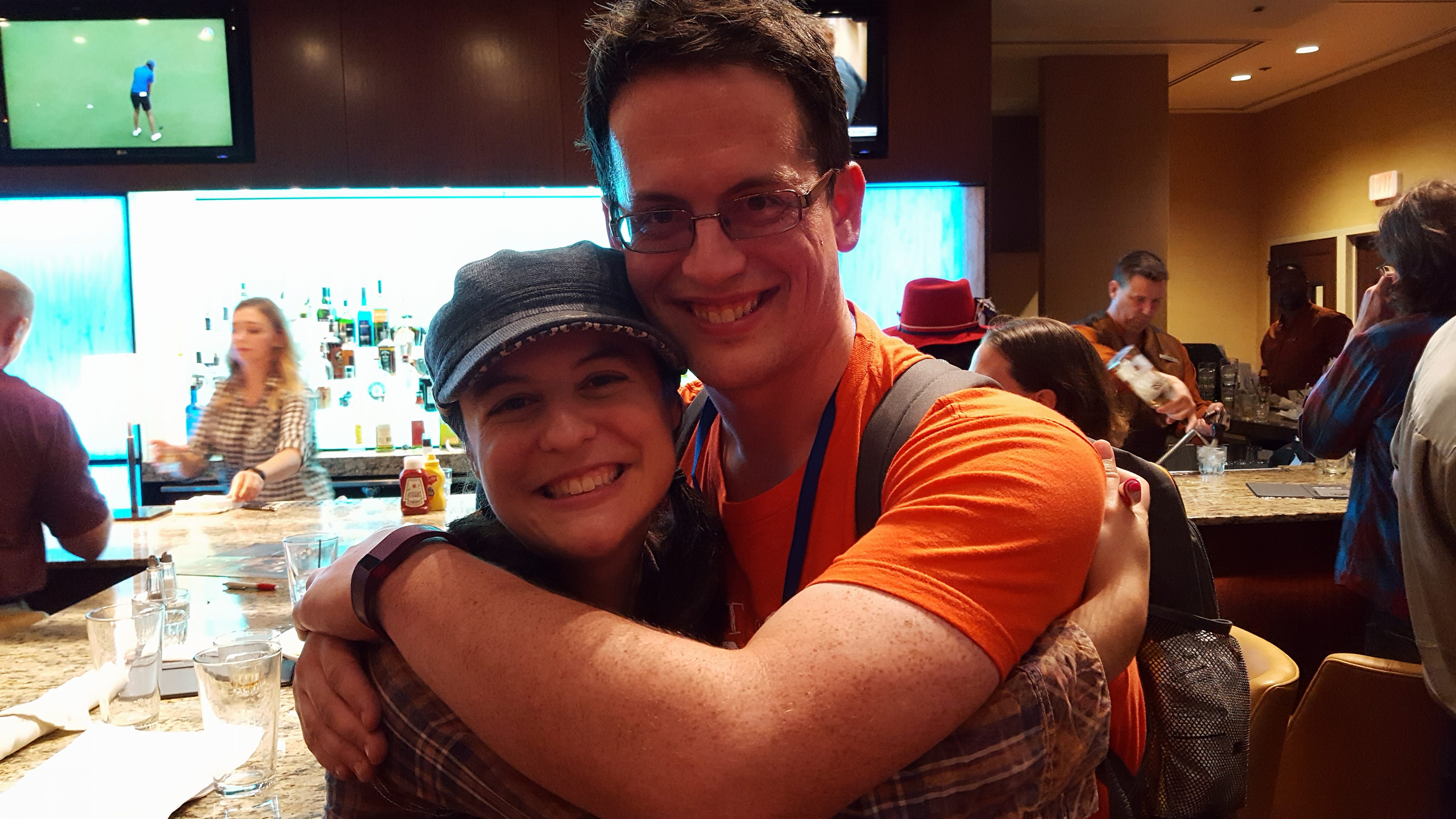
20160818_225623
Tina Gower and David Steffen

So.  Many.  People.  So wonderful to put faces to names for people that I have known online for years.

I am not even going to try to make a comprehensive list, because there is no way that I will remember everyone and I don’t want those that I do forget to feel left out.  But I will list out a few.

Shortly after rushing to the critique session that I was almost late for, I met up with my writing group friend Doug Engstrom–we’ve swapped critiques and discussion for years, so it was great to meet him in person and to interact with him off and on throughout the weekend.
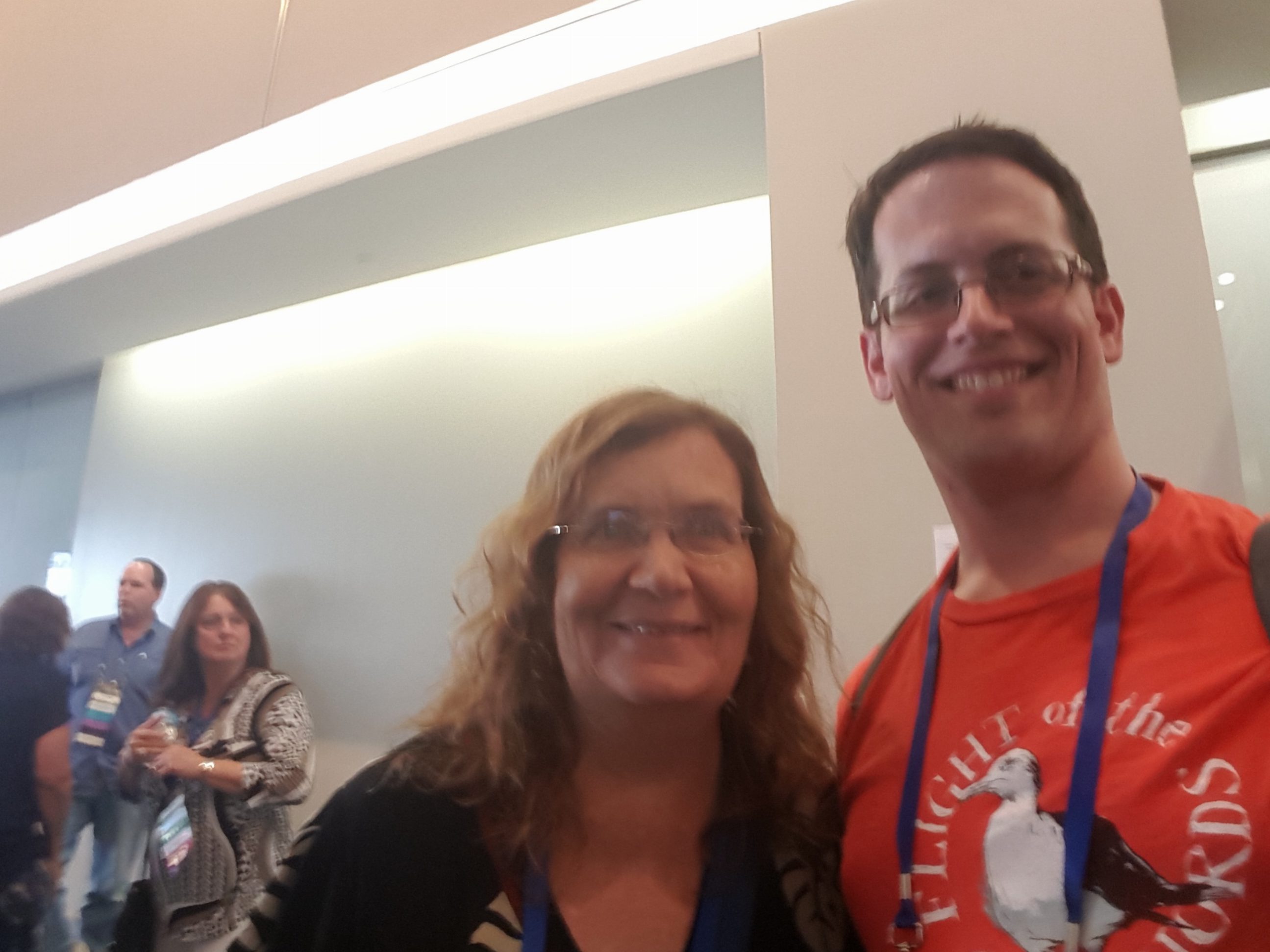
20160818_170714
Sheila Williams and David Steffen

I got to meet Stefan Rudnicki and Gabrielle de Cuir, the masterminds (and mastervoices) behind Skyboat Media.  They are most well known for producing the Lightspeed Magazine and Nightmare Magazine podcasts, and for performing much of the voice-acting for those productions.  I have a direct professional connection with them in that they produced the audiobook version of the Long List Anthology last year–of which they sold out at their booth during WorldCon.  They both have voices that I have heard for so long in story narrations that it was both wonderful and very weird to meet them in person–I associate their voices so strongly with storytelling that my brain sinks into story listening mode and I kind of had to yank it out of that mode because, hey brain I’m trying to talk to people here!  It was great to meet them and talk business and chat.

Speaking of meeting people whose voices are incredibly familiar to me:  I met Alasdair Stuart and Marguerite Kenner.  They are the owners of Escape Artists, which is the parent company of most of my favorite podcasts: Escape Pod, Pseudopod, Podcastle, and Cast of Wonders, as well as the quarterly ebook zine Mothership Zeta.  Alasdair has been on the staff of Escape Artists for more than ten years, and he was the host of Pseudopod at the time that I made my very first fiction sale of all time to Pseudopod and decided that maybe I ought to try listening to the show (which has resulted in an 8 year listening binge of all the podcast fiction I could find that still continues today).  Marguerite is the editor and host of Cast of Wonders.  They are incredible, smart, nice, welcoming, helpful people, and I want to hang out with them forever.

Kate Baker, is another one of those familiar-voiced people and I was happy to get a chance to hang out with her at kaffeeklatch and elsewhere.  (And again with the barely being able to talk because I am so familiar with her voice from podcasts!)
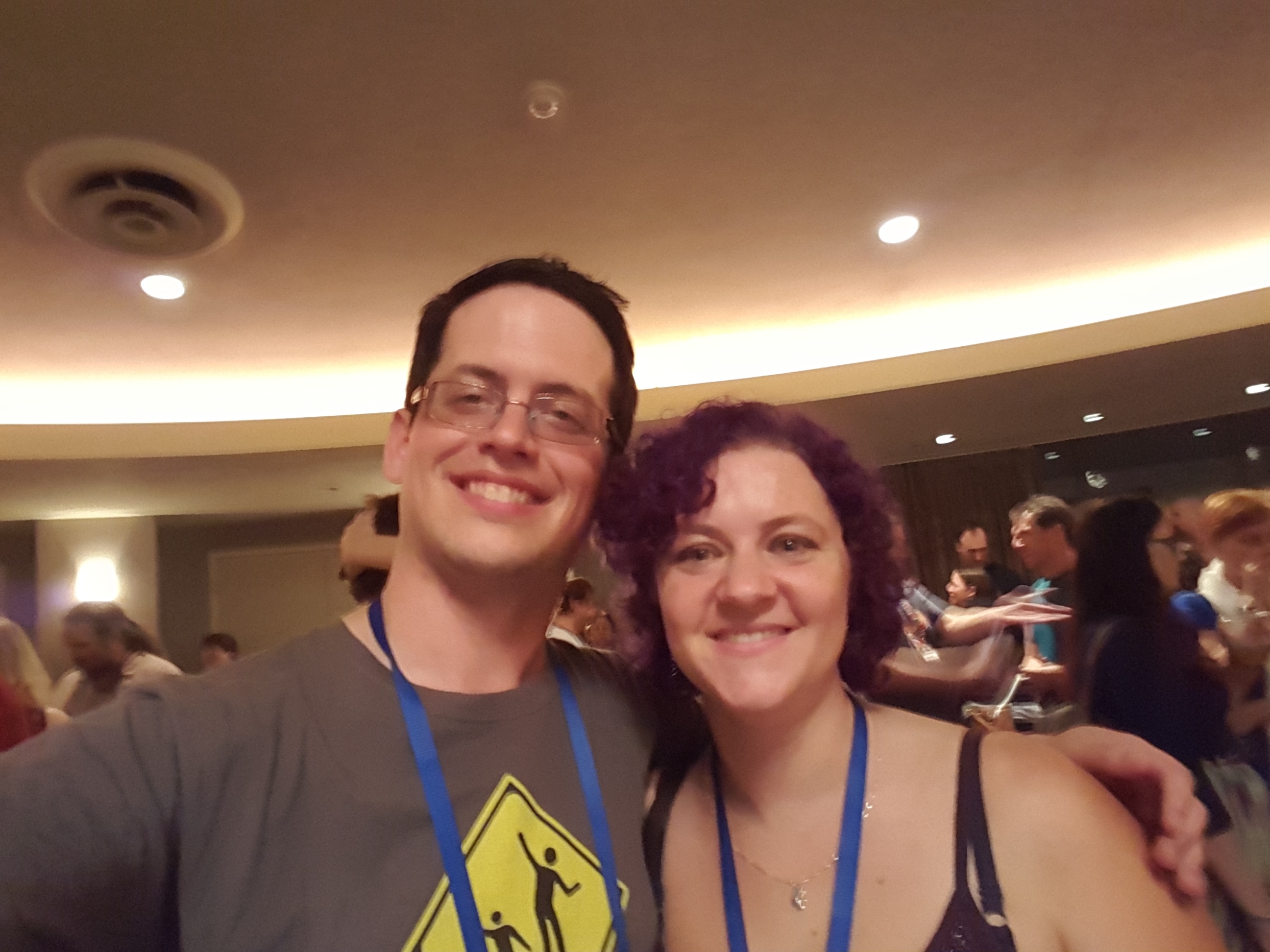
20160819_221553
David Steffen and Dionne Obeso

It was wonderful to meet Sheila Williams, Neil Clarke, C.C. Finlay, Caroline M. Yoachim, Tina Connolly, Martin L. Shoemaker, Marina J. Lostetter, S.B. Divya, Ken Liu, Alyssa Wong, so so many others.

I got to meet a few writers whose short stories I have purchased: Andy Dudak, Tina Gower, Sunil Patel, Jon Lasser, Andrea G. Stewart.  (it makes a handy icebreaker to say “Hi!  I bought your story!”  🙂 )

Meeting people was easily the highlight of my convention experience.

The Hugo Awards
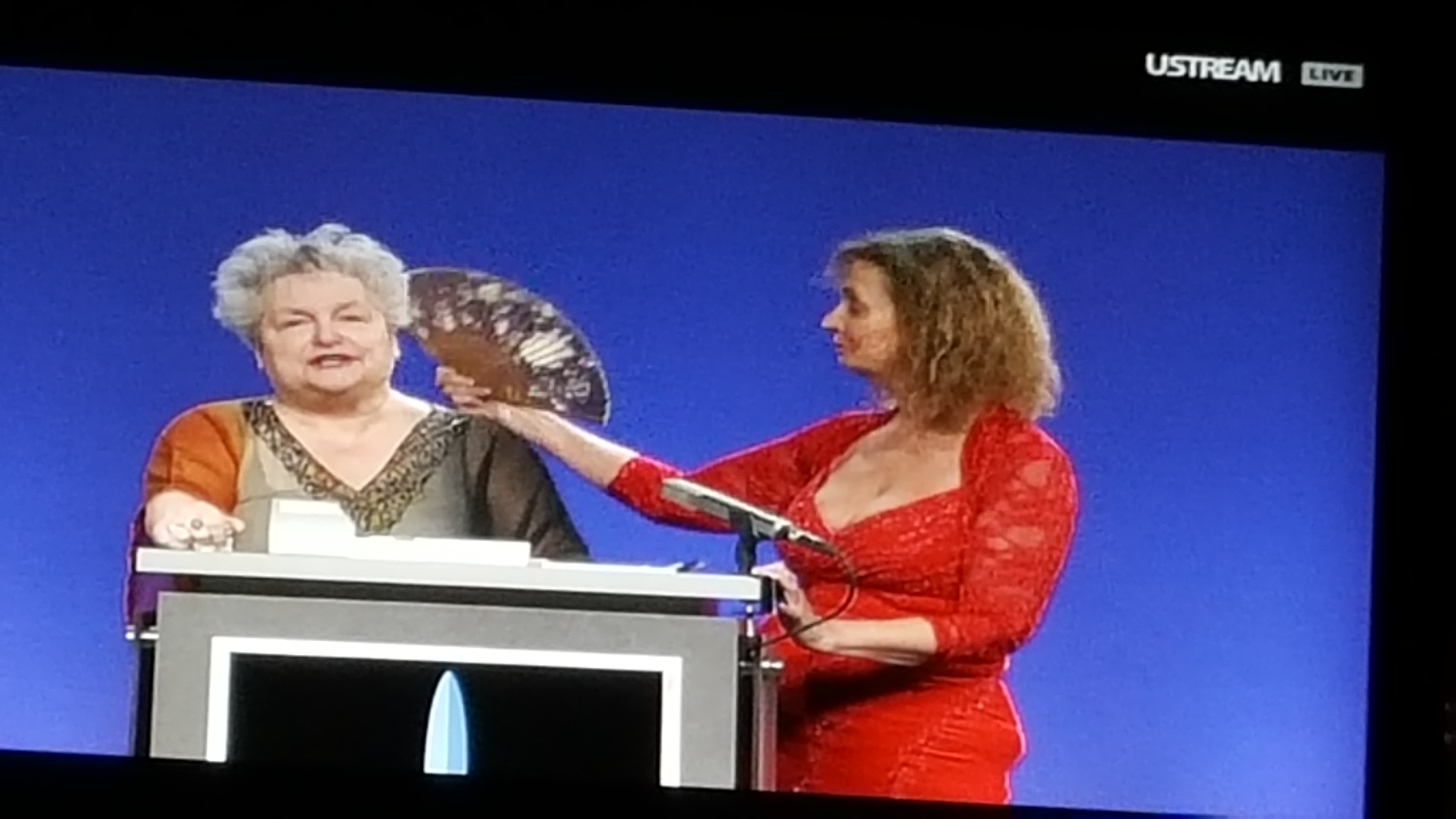
20160820_211411
Host Pat Cadigan and Jan Siegel

The Hugo Award ceremony was held Saturday evening and was hosted by Pat Cadigan.  Cadigan was a wonderful and hilarious host, and really overall the awards went as well as I could have hoped given the ballot they started with.  Lots of awesome things won.  A couple categories got No Awarded (Related Work and Fancast I believe?) but none of the fiction categories which are my main interest in the awards.
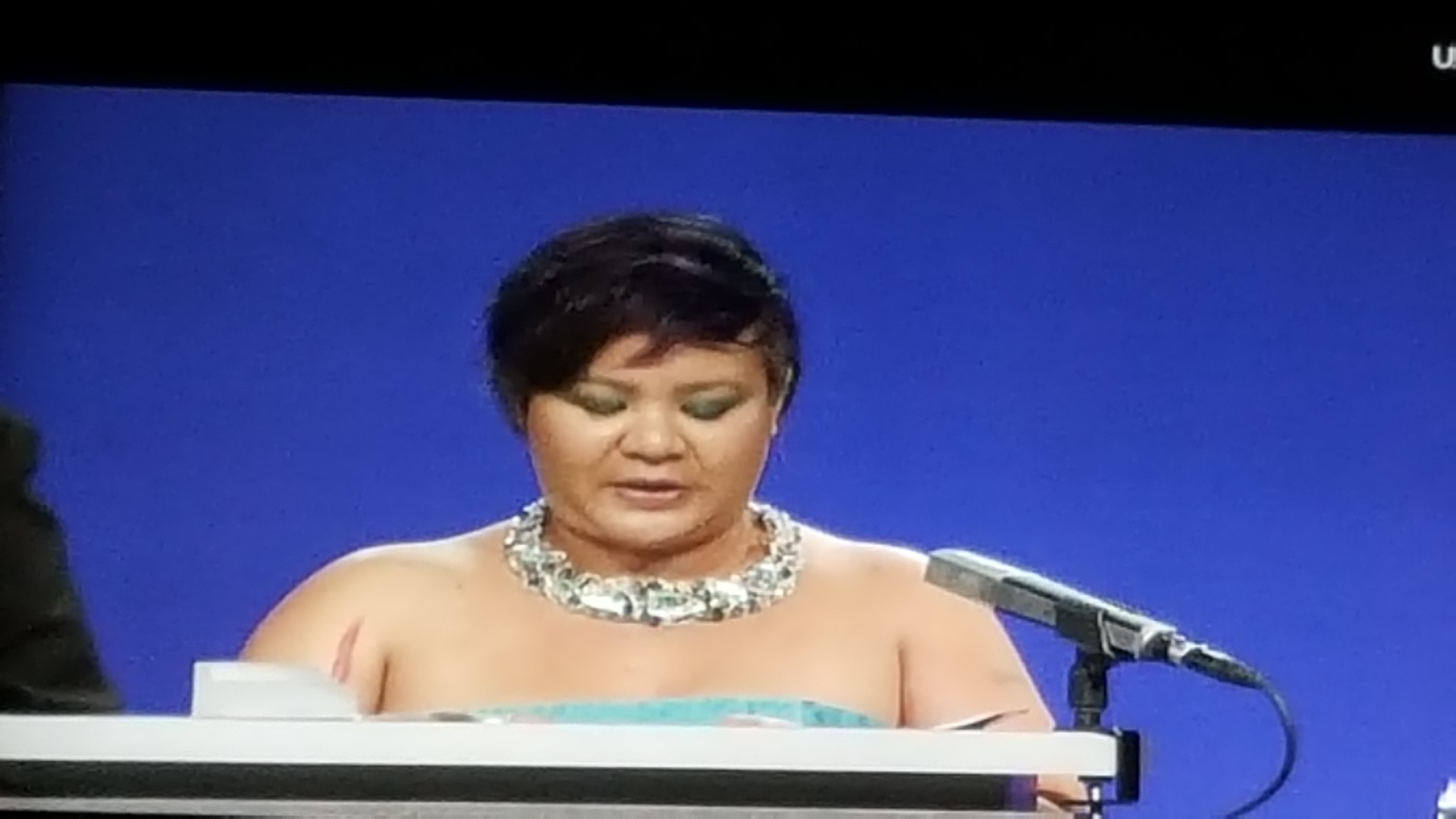
20160820_205420
Michi Trota of Uncanny Magazine

Uncanny won Best Semiprozine in its first year of eligibility!  Naomi Kritzer won for Best Short Story for “Cat Pictures Please”!  Hao Jingfang and Ken Liu (who was the translator in this case) won for Best Novelette for “Folding Beijing”!  Nnedi Okorafor won for Best Novella for “Binti”!  N.K. Jemisin won for Best Novel for The Fifth Season!  Neil Gaiman won for Best Graphic Story for Sandman!
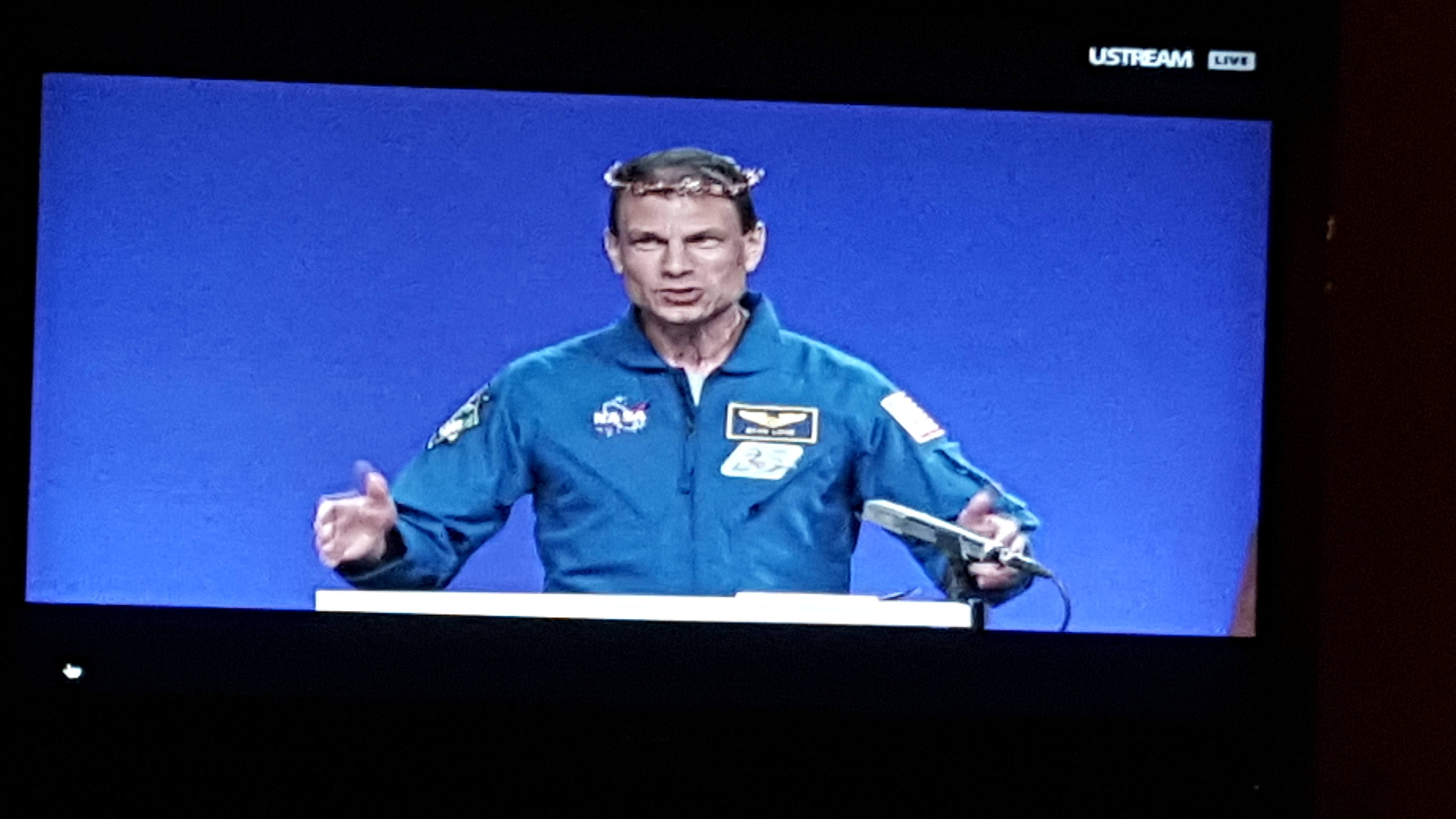
20160820_204438
Astronaut Stan Love accepting Campbell Award for Andy Weir
20160820_211926
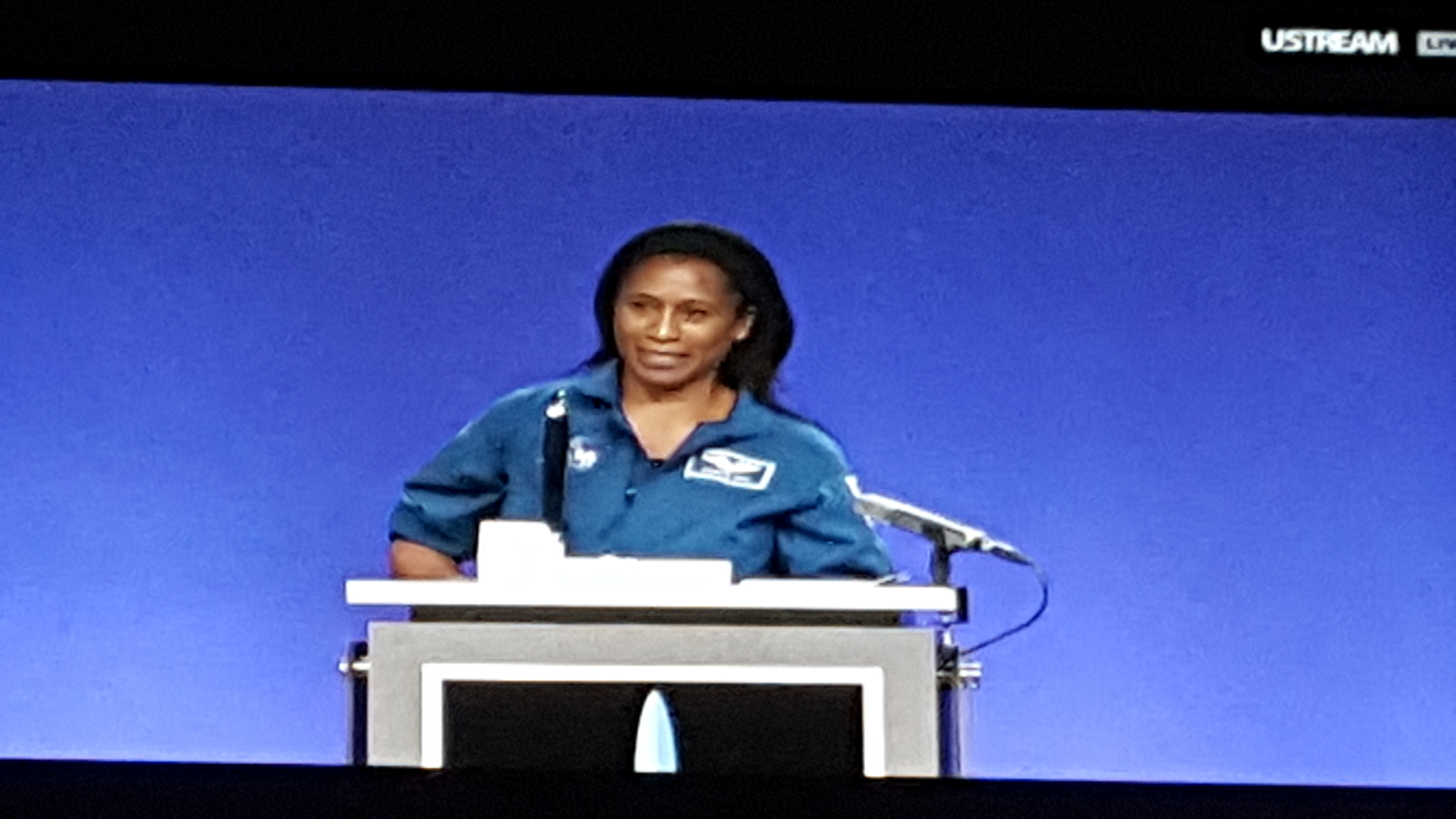
Astronaut Jeanette Epps accepting Hugo Award for Best Dramatic Presentation Long Form for The Martian

The Martian won Best Dramatic Presentation, Long Form, and its author Andy Weir won the Campbell Award!  For each of them an astronaut accepted his award for him and talked about how much The Martian meant to them, that it got the science and the feel of the interpersonal relationships of the astronauts right!

Yes, there are a lot of explanation points in this section, but they are all deserved.  Especially after last year with the fiction categories getting so many No Awards, it was a major relief that all the fiction categories were awarded, and to such incredible people and recipients.

I watched from the very crowded SFWA suite this year, in part because my reading was too close to the ceremony to have much chance of finding a seat.  It… was more than a little cramped, but it worked out pretty well.

The Long List

Most of you who follow me at all already know about the Long List Anthology, but I’ll give a quick rundown for anyone who might not have heard about the project.  Every year, after the Hugo Award ceremony, the Hugo administrators publish the longer list of works that were nominated in each category–approximately 15 including the 5ish that are on the final ballot.  In most years, these works don’t receive a great deal of extra attention even though that longer list makes an excellent recommended reading list.

Last year I launched the Long List Anthology, which published stories pulled from that longer nomination list.  It totalled 180,000 words, about 500 pages in print, and featured some of the most popular contemporary short story authors like Sam J. Miller, Amal El-Mohtar, Elizabeth Bear, Ken Liu, Kai Ashante Wilson, Alaya Dawn Johnson, and others.  The book continues to sell steadily even now, and has sold more than 9000 copies (which is more than the Hugo voting population has been in any year).

The project was so successful last year, that I have decided to repeat the project this year–the list is here.  I am in the process of reading stories in the different categories and sending queries to the authors.  Last year the cover art was reprinted art from Galen Dara.  This year I’m taking that to the next level and commissioning original artwork from Galen Dara.  And I’ve got a few surprise ideas to try out for stretch goals, too.

There will be a Kickstarter to fund the anthology–I look forward to sharing links and the good news with you all–I am aiming for mid-September.

WSFS Meetings

You may not know what WSFS Meetings are, but you’re probably familiar with the Hugo Awards, awards that are nominated and voted on by supporting members of WorldCon.  WSFS meetings are held every year at WorldCon, and they define rule changes to the Hugo Awards.  Anyone who has an Attending WorldCon membership can show up and debate, vote, help decide new categories or nomination rule changes and so on.  I fully intended to go to at least one meeting while I was at WorldCon, because I do value the Hugo Awards and this once-a-year batch of business meetings defines everything.  But…  I was a horrible person and didn’t attend any of them.  Nonetheless, some important rule changes went through this year, which I have been reading about after the fact, so I shall list out some of the more interesting ones (of the ones I understand) and give my reaction.  My primary source for the WSFS Meetings that last couple years has been Rachael Acks’s blog.  Rachael is a writer and editor, and is also involved in WSFS, both liveblogging updates as the meetings happen, and giving summaries and reactions afterward–which gives a very nice place to catch up on what you missed if you can’t or don’t go to the meetings.

Here is a list of the business agenda they started the weekend with, with a daily meeting scheduled from 10am to 1am.  Or for a more informal version with Rachael’s reactions to items, you can check out this page.

I am honestly just catching up on these things now, so it’s entirely possible I got something wrong typing all this up.

Best Fancast category is now a permanent category

The Best Fancast category was defined a few years ago, and has been a trial category that would have expired after this year if it hadn’t been ratified again.  I have mixed but mostly negative feelings about its permanent addition.  I do feel that the Hugo Awards have been slow to consider publications in new media–it took quite awhile for online magazines to be considered seriously and audio-only publications have been slow to start to get some recognition, even when they are publishing original fiction of excellent quality.  When the Fancast category had first come out I was excited that maybe this little niche would encourage more serious recognition.

Part of my disappointment has been that every nominee, except for StarShipSofa, has been nonfiction.  That’s… fine, I guess.  People like nonfiction podcasts, apparently.  But I really want to see fiction podcasts recognized, especially fiction podcasts that pay their contributors and which publish original fiction and don’t need to beg their listeners for votes in every episode.

The rest of my disappointment is that, for my favorite podcasts, it is quite unclear what category they actually qualify for.  They could be a Semiprozine or they could be a Fancast.  The differentiation between the two is not well-defined in the current rules.  If Fancast is supposed to actually be nonfiction, as voters have been treating it, then I would prefer that it would just be defined as such, so that this differentiation was at least clear.  And a common point of confusion is that people assume Fancast is the A/V equivalent to Fanzine, meaning that it’s defining trait is not paying its contributors.  (I have had discussions with people who advocate for the Fanzine category and they insist that this is NOT the defining feature, but according to the rules that are actually used to administer the award that is the main difference).  But the rules seem to imply that Fanzine is also the A/V equivalent to Semiprozine.  And what happens if a publication published in both audio and text?  There is some precedent in Beneath Ceaseless Skies and Clarkesworld and Lightspeed and others who both publish in both and who have gotten Semiprozine nominations, but other publications that also get both like Escape Pod came at it from the other direction and I think most voters think of them differently as a result.

I liked the Escape Artists editorial strategy last year, suggesting that if anyone wanted to vote for them, that EA would prefer they do it in the Semiprozine rather than the Fancast category.  I thought this was a good idea, to encourage the fans to pick one specific side of the equation because one issue with having an ambiguous category is that maybe you have enough fans who want to vote for you to get you on the ballot, but if they’re splitting their nominations across two categories that kind of ruins that chance.  Also, I don’t believe it’s possible to absolutely determine whether something is eligible for one category or the other unless it actually reaches the ballot level–at which point it will either be invited to be on the ballot, or it will be removed as being ineligible.  Either case you’ve learned something which can help future voting, and it may even help push through some changes that better define the rules in the future.

The Five Percent Solution

Prior to this year there has been a requirement that all but the top 3 entries in a category must have at least 5% of the overall vote, or they are simply not on the ballot.  This rule was a bit silly because it caused a reaction to larger pools of award-worthy worker and larger nominating group by REDUCING the category.  This didn’t start hitting the ballots until a few years ago–that’s why you sometimes saw the Short Story category with only three items on it instead of five.

Very glad to see this bit removed from the constitution, so now you’ll see five items no matter what.

Electronic Signatures for Site Bids

Historically WorldCon has kindof been more USA-con.  A lot of people have been trying to put the World in WorldCon and encourage it to be more internationally located.  I’m a proponent of having it be more international (even though I will probably not be able to afford to go to most non-USA located years), and this helps more people vote for it without having to be physically present, so I think this is a positive change toward that goal.

Best Series Category

The idea behind this one is that some people felt that series of books that were remarkable and awesome series may not be likely to be nominated for Best Novel for their individual books.  This category would be for those kinds of books–a series would be eligible after so many words have been published in the series, and would be eligible again after so many words have been published  again after the first nomination.

I… don’t really see the point in this category.  Individual books are already eligible, and if those individual books aren’t winning awards… it doesn’t seem like we really need to define new categories to handle that because maybe just some things are less likely to win, but we don’t need to make new categories for every little thing.

Not only that, but the eligibility would be harder to determine than any other category, since it would depend on when the last nomination for a series was, and how many words were in each book (which isn’t generally immediately obvious).

Nominee Diversity

The idea behind this change is to  prohibit the same entity from being nominated more than one time in a category (in which case I think the highest ranking item for that entity would be on the ballot).   This was probably proposed in part based on John C. Wright’s shenanigans-related 5 nominations of a couple years ago.  But more importantly, to me, this should make the Dramatic Presentation Short Form category much much more interesting, because there are many years where that is effectively the Best Doctor Who Episode category.

I am glad to see this go into the constitution, primarily for the Dramatic Presentation Short Form category.

Two Years Are Good Enough

Presently, anyone can nominate for the Hugos who was a supporting member last year, a supporting member this year, or who has registered already to be a supporting member next year.  This proposal would remove the last of those options.

I don’t have strong feelings about this one–I wonder how many people actually pre-register for next year early enough that they can nominate this year?  Maybe it’s just that my life rarely allows such pre-planning, that I find it hard to conceive this mattering one way or the other.

This passed for the first time, and would need to be ratified next year to go into effect.

YA Award

This has been proposed before as a Hugo category.  This time it was proposed as a not-a-Hugo that would nonetheless be voted for on the Hugo ballot and awarded in the  Hugo Award ceremony with the rest of the Hugos (much as the Campbell Award for Best New Writer is).

This one passed but would need to be ratified next year to become an official category the year after.

It seems positive to me.  YA is important to the genre world because it’s often the first thing that young readers pick up that transitions them into the adult fiction (and adults can love it too).  I think it’s worthwhile to give it its own award.

Three Stage Voting

This was proposed as a way to avoid future Hugo Award shenanigans by adding an extra stage between nomination and the final ballot. The nominations would result in 15 semi-finalists which would be published.  Then voters can upvote the things they think are good enough to be on the final ballot, which eventually becomes a final ballot, and then the final ballot would work now.

One concern I’d originally had was that it would increase admin workload, but it sounds like it might not be much different, especially by taking advantage of some crowdsourced effort.  The middle stage would not have had eligibility verified, so the voting group can help point out ineligible works.  And the nominated entities would only be checked for their interest in the ballot between the 2nd and 3rd stages, so that cuts down on “waiting for communication to happen” in the timeline.

I’m a little concerned that people voting against the spirit of the intent of the 2nd round might end up nuking categories, but I think it has a lot of potential.

This one passed, to be up for ratification next year.

E Pluribus Hugo

This is a new proposed nomination system which is intended to reduce the effectiveness of large numbers of voters with identical ballots for the same category (primarily to reduce the effect of slates).  Last year I was in favor of this when it passed its initial vote, because I hadn’t heard of any better ideas and I didn’t want to wait a whole nother year to see if a better idea came around.  But…  though I think the concept makes sense, but it is more complicated than the current system–the current system you can look at all the numbers and sort them out by hand given the overall voting numbers.  This one, you really can’t because it depends on the exact contents of individual ballots, and you end up having to basically count it by program given the full voting data.

And the major difference is that I think that the better solution might have come along in the form of three-stage voting.  But three-stage voting also passed and so goes into effect next year, so we’ll visit that next year again.

5 and 6

This was another measure intended to make it harder to sweep the ballot with slates.  Normally, a voter can nominate up to 5 works, and 5 works end up on the final ballot.  So voting collusion can sweep the ballot with only a little discipline–just all fill out the ballot in the same way.  This change makes it so that one still nominates 5 works, but that the top 6 end up on the ballot–so if one wanted to force 6 items onto the ballot it would require more complicated coordination.  It increases the chance that at least one item will be on the ballot that was not related to the slate.

This was ratified so this will go into effect next year.

E Pluribus Hugo +

This is a new proposal that appears to be a new alteration of E Pluribus Hugo?  But I don’t seem to be able to find any additional information–I’m sure it’s out there.  It passed, and is up for ratification next year, head to head with Three-Stage Voting.  (NOTE:  David Goldfarb explains EPH+ in his comment on this post–go read that!)

TV Review: Gravity Falls

written by David Steffen

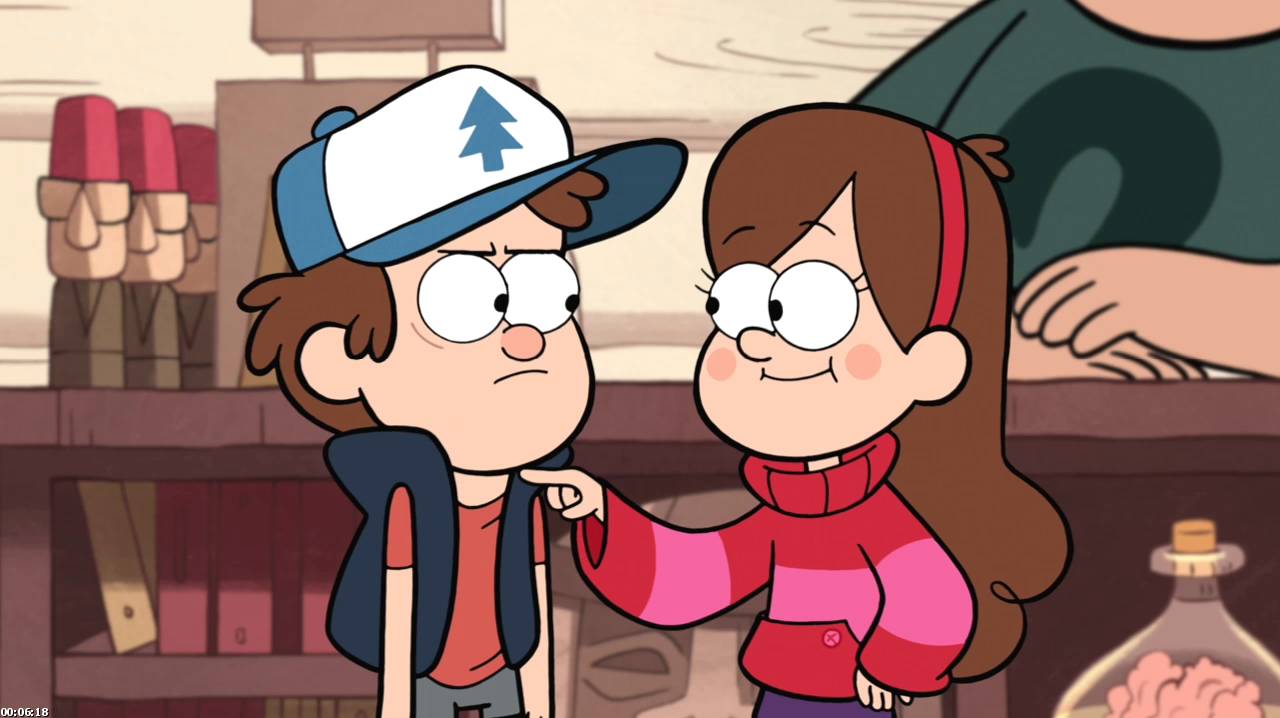
The feel of the show is at times something like Twin Peaks with a strange isolated town filled with strange people, and sometimes like the X-Files with Dipper as the Mulder character (though I wouldn’t say Mabel is really a Scully character).  The show is funny, surprising, and really brings the sense of wonder that it’s harder to find as an adult. There is a wide variety of speculative elements, pretty much any known myth or SF element is fair game, and the show builds its own weird mythology around the character that becomes the main villain, which I thought was the best part of the series.  There are plenty of in-jokes and humor at a level to keep adults entertained, but plenty to keep kids interested too, one of those rare cartoons that everyone can enjoy. I found the show very funny, a rare show that was literally laugh-out-loud funny for me when I more often just smile at jokes, and when the show decides to take a turn for the freaky (again, especially with the main villain), which it does now and then, it does freaky very well.

I was surprised when I heard that the show was concluding, because I enjoyed it so much that I hoped it would keep going.  But it sounds like that had been what Alex Hirsch had intended from the beginning.  He had an overall arc in mind and the show was done when the arc was finished.  Which is cool in its own way, most episodes advance the main story in at least a small fashion, and it doesn’t shy from big revelations.
The show has a lot of well known voices in both starring roles and minor roles, including Kristen Schaal, Nick Offerman, J.K. Simmons, Linda Cardellini, Cecil Baldwin, and many others.

I cannot recommend this show enough for people of all ages.  I am hoping that they’ll put all 40 episodes into a DVD box set to buy–I will happily buy that at the first opportunity.


Negotiating Short Story Contracts

written by David Steffen

The purpose of this article is to talk in more detail about short story contracts.  This is a topic that seems to be rarely covered in most writer’s forums that I’ve seen, where most of the focus is on the writing side and rarely on the business side.  Yet, there are tons of bad contracts out there and it’s very important to avoid the bad ones or at least understand exactly what you’re agreeing to and understand what you can do.

What’s the point of a short story contract?

The point of a contract in many situations is to provide grounds for either side to use in the case of a legal dispute. The amount of money involved in a short story purchase is generally not a huge sum. Even at professional rates for a longish short story, you’re probably talking a few hundred dollars for the transaction unless you’re getting up into novella wordcounts or the publisher has an extraordinary pay rate. The sum is generally low enough that, if there were a dispute between author and publisher, disputing it through the legal system would make the dispute a money-loser for both sides.

But a contract is still worthwhile, because it should clearly spell out what both parties can reasonably expect from the other over the course of this transaction. It can be used as a reference to point to if you feel the publisher is not living up to their side of the deal, and which the publisher/editor can point to if they feel likewise about your behavior. And you don’t just want to consider what will happen in this transaction but what may happen with future transactions with other publishing involving this story or other stories.

I have from time to time had stories accepted by editors who insist on having no contract, and they tend to tout this as a huge benefit, paraphrased to: “We’re all friends here! We don’t need contracts! We won’t sue you, we promise!” While protection from lawsuit is handy, that’s not really the main point. I want to know what to expect and I want to know what is expected of me, and if I don’t have a contract, I don’t have that–you can exchange expectations in an email but the formal language of a contract is meant to remove ambiguity. You can be friends with editors, but when it comes to dealing with the actual transaction, it’s best treated in a professional and businesslike manner by both sides. Just as you don’t need formal training to be a writer, you don’t need formal training to be an editor–a lot of editors are running their publications in their spare time and treat it more as a hobby than a profession–which isn’t to say they don’t publish great work, but some of them want to avoid anything that feels like a real business. I have sold stories to places like this before, and generally things have turned out well, but a lack of contract still makes me wary because I have been bitten by lack of contract or badly worded contracts more than once.


What should I expect in a contract?

Okay, so contracts are important and all that–but what do you do when you get a contract? The goods news is that that short story contracts are straightforward compared to most other contracts–there are a few clauses you should expect, and some types of wording that you should avoid. Most magazines publish their payment terms and some other details in their guidelines–so you usually don’t have to negotiate unless the contract includes an unexpected questionable clause.

1. Don’t sell copyright.

Just don’t. Run away. You won’t be able to ever resell it. It’s not your story anymore if you sign. Most markets won’t ask for this, but some will.  The exception to this is if you take work-for-hire writing stories within an established world–for instance, if you are hired to write Halo tie-ins or Star Wars tie-ins.  In those cases, you are writing in a world that someone else owns, so selling the copyright for the story can make sense (but the pay should also be better).

2. The basics.

Language describing the parties and the story in the transaction by name.

3.Payment Details.

The dollar value, the medium (PayPal or cheque etc), and expectation of when you will be paid (i.e. as soon as you sign the contract, at the time of publication, 30 days after publication, etc) Obviously the payment value should match what you’ve been told in the guidelines ahead of time. The expected timing is important because it gives you a reasonable idea of when you can pester the publisher if you haven’t been paid yet. And some publishers, even ones that you respect, may occasionally miss a step. If they publish your story, they owe you that money. Do not feel bashful about following up if you haven’t been paid when you should’ve been–that’s one of those cases where the contract is very helpful to point at when you’re asking for what’s due to you.

4. Editing Permissions.

Explanation of what the editor is allowed to change about your story. Many say something along the lines of that the editor can make minor formatting changes to fit the style of the publication–I don’t have a problem with that. Others may say that the editor can make small punctuation type changes, I usually don’t worry about those too much. But I have had a few that say that the editor can change whatever they want. I am very wary of this, because I’ve been bitten by that clause before–where the final three paragraphs were left off the story with no consideration given to how that changed the effect of the story. I don’t intend to sign another contract with such a clause.

5. Publication Media.

An exact description of the publication mediums that the story will be published in. Such as a print magazine only, or online only, or online and a podcast, etc. Be very wary of language that is all-inclusive, like “any and all electronic mediums”. A publisher should know exactly what they are publishing in. If you later want to reprint the story somewhere else, the exact details of what the previous publisher is allowed to do becomes very important. Imagine you sell to a print magazine the right to publish in all mediums, and the next publisher wants first audio rights. You can’t ethically or legally sell to the second publisher without querying the first publisher now… and the first publisher may not be obligated to respond.

6. Language.

I have seen contracts that specified all languages, which would effectively block me from reselling it in translated fashion to a German publication (for instance). There are international translation markets for science fiction. I have not pursued any of them, but they are there and I want to keep that option open.

7. Exclusivity Period.

This is the period of time after publication when you’re expected to not allow the story to be published elsewhere. Some magazines require no exclusivity period–so you could theoretically publish it somewhere else the next day (though I usually give at least 3 months as a courtesy to editors). Six months or a year is pretty common. Be wary if they ask for too long an exclusivity period–I’d look askance at anything above a year for short fiction.

8. Publication Duration.  

Period of time when the publisher is allowed to publish the work.  This will vary a lot depending on the medium.

9. A drop-dead date.

The contract should spell out a time period after which, if the publisher hasn’t exercised their publishing rights, you get all your rights back anyway. This is usually on the scale of a year or so. If the publisher has paid you by this date, you should be able to keep the money with no further obligation. This is one that’s most often omitted from contracts, look for it.

10. Company Closure Provision.

This is similar to a drop-dead date in that it specifies when you can get your rights back–but in this case it’s meant to immediately release your story to you if the magazine officially shuts down. As long as there’s some kind of drop-dead date, this one isn’t necessary, but it’s a nice thing to have.

11. Miscellaneous.

Read every sentence very closely (it helps that most short story contracts are pretty brief). Watch for too-broad language. Watch for anything that would make you nervous if taken exactly as it’s written.  One example of this that I’ve seen is a too-broad demand for the author to participate in promotion–of course an author should want to spread the word about the book but there’s a difference between “something an author ought to do” and “something an author needs to be contractually obligated to do”.  The writer has already done the work by writing, and presumably they want to get back to the business of writing some more, so at some point you have to consider when other demanded obligations become unreasonable.


What if I don’t like the contract?

1. Ask other authors.

Considering asking someone with experience with short story contracts about the language.

2. Query the editor about it.

Ask for a change, explain why you think the change is important. If you know other people who got contracts from them around the same time, consider discussing with them your concerns and if more than one person pushes back at the same time that sends a stronger message.

3. Consider the editor’s response.

They might write up a one-off contract just for you. They might consider changing the contract they send to everybody. They might say they’re not going to change. I’ve seen all of these reactions. Most big professional editors will probably already have a reasonable boilerplate. New editors/markets are more likely to be wildcards with unfriendly wording–but these new editors may also not realize that there’s bad wording and may be very willing to change it.

4. If they give you a new contract and you’re satisfied.

Sign it and celebrate!

5. If they don’t want to revise,

I’d at least try to get a layman’s explanation of what they meant by the problematic language (though keep in mind that if that doesn’t match what the contract says the contract with your signatures on it is going to hold more water than an email exchange)

6. If you still don’t like the contract

Consider very carefully what you want to do. You can sign it anyway. You can say no. What feels right? How prestigious is the market? How generous is the pay? If you sign the contract anyway, just be aware of the risk you’re taking, such as the risk of a story being legally tied up indefinitely if there’s no drop-dead date, and make it a calculated risk that you walk into with your eyes open. If an editor takes a hard stance on a clause that you don’t want to budge on (like no-drop-dead-date or selling copyright) then maybe that’s not a person you want to enter a professional relationship with.


Can I break contract?

So, you sign a contract with a one-year exclusivity. It gets published, gets rave reviews. Ellen Datlow drops you a line and asks to publish it in a Best of the Year anthology. Now what?

Anything in a contract can be waived if both sides agree to it. So, just consider whether your publisher would benefit from whatever you’re suggesting. If they wouldn’t, then maybe you should forget about it. If they would, then you’ve got a sales pitch to do. Best Of anthologies, especially ones by well known editors like Ellen Datlow, are a common case where contract exceptions are made (and often even are explicitly allowed in the body of the contract). Getting a story in there gets a lot of recognition for the original publication’s editor.

There might be other things that you could convince an editor to agree to as well. Maybe you have an idea to cross-promote a publication by publishing it on a podcast–that can be beneficial too. Just ask.

Welcome to Night Vale: Ghost Stories (Live Show)

written by David Steffen

Welcome to Night Vale is most well known for their podcast (written by Joseph Fink and Jeffrey Cranor), formatted as a small town radio show set in a sleepy little horror town ala Stephen King or H.P. Lovecraft.  The podcast is nearing its 4th anniversary and 2015 saw the release of a related novel of the same title from Harper Collins.
On top of this, they also do live touring shows that tours both around the US and has gone to Europe, to Australia and New Zealand.  The shows are in a similar radio-show format as the podcast, (with some differences that I’ll explain).  The live shows are unique–they’re not just rehashes or previews of podcast episodes.  After each live touring show is done they generally release recordings of that show.

I recently went to their “Ghost Stories” live show.  It was my second Welcome to Night Vale live show that I attended.  This show centers around a city-wide ghost story competition, wherein the “winner” is converted into a ghost by very practical means.  Most of the main throughline of the show consists of the host Cecil telling his own entry to the competition in several parts, interspersed with the usual radio show features like Traffic and Weather (which is musical intermission) and Community Calendar, as well as guest stars telling their own ghost story entries.  Cecil’s story was very interesting and revealed some character history that I don’t think the podcast has revealed at this point.

Last time I went to a live show was a little bit lukewarm on it simply because it had a very different feel from the podcast and I wasn’t expecting that difference.  This time I found that having an idea what to expect made it easier to align my expectations and just enjoy myself.  So, if you like the podcast and are considering going to the live show at some point, knowing the way the live shows are different might be helpful to you.

As with any live show, especially live comedy, the experience is enhanced by the crowd itself–a funny joke tends to feel funnier when you’re in a laughing crowd.  So the live show is special in its own way for that reason.

Differences between the podcast and the live show:

  1.  Because the show may tour for quite a few months, its timing does not have a clear alignment with the podcast which is released twice every month.  This generally means that the episode as a whole is going to be of the tangential variety, rather than tying into a main plotline on the podcast.  Many of the podcast episodes are like this too, mind you, but the live show can’t be otherwise.
  2. Because not all guest stars may be able to tour to all locations, the show can’t depend on any specific guest.  For instance, Wil Wheaton, Dylan Marron, Retta, who all have guest roles at times may be at some but not all shows.  This means that guest parts are going to tend to be very modular–they relate to the overall plot of the show, but the plot of the show can never depend on them.  In the case of the Ghost Stories show this means they come on, tell a ghost story, banter a bit with Cecil, and then leave.  Cecil Baldwin,  (who plays Cecil Palmer the radio host and main narrator), is of course at all of the shows as the main speaker, and Meg Bashwiner (the voice of Proverb Lady and Deb the patch of sentient haze) also seems to be a steady actor in the live show, but I think all other guest spots are designed to be interchangeable.
  3. The show starts with the musical guest opening with a series of songs, and the same guest returns for the Weather segment.


DP Fiction #18: “Sustaining Memory” by Coral Moore

The Archivist held the three remaining beads in her left hand. Images flickered across her visual cortex: an unknown woman’s face, a sunset on a planet she couldn’t name, the dazzling color of a sea she no longer had the words to express. The beads felt cool and impersonal in her fingers, though what they contained was neither. She had only these few memories left and she no longer remembered if they were hers or someone else’s.

Around her, the machine chugged and whirred. The metal tubing that encased her pod vibrated. The glowing core rose in front of her, spinning slowly around its vertical axis.

She twirled the bead containing the seascape between her fingers and dove in. The memory was a moment in time. The wind caressed her face and the briny scent of the sea filled her head. A white-capped wave was held just off shore in the instant before breaking, never to fulfill its potential. She had the sense of someone waiting for her on that unknown shore. The name of the sea was gone, like everything else she had once known, converted into power for the machine she’d been wed to.

She surfaced from the hold of the memory with effort. That sea and that person no longer existed. The world her people had inhabited had been scoured clean, its atmosphere stripped away and everything on the surface incinerated. Nothing had survived; nothing but the machine, buried deep below the crust near the cold, dead heart of the planet. When her organic memory had been scrubbed, they’d left the fate of her world with her so she would not forget her purpose.

The grinding groan of the alert tone sounded, and without thinking she placed the seascape bead into the receptacle near her hand. The bead circled around the outer edge and spiraled downward into the depths of the machine. Bit by bit the memory of the sea faded from her mind, until only a pale representation of it remained, and then a moment later that too was gone. She was left only with the impression that something precious had been taken from her, with no idea what it was.

Two left: a sunset and a woman.

Only two memories before she was nothing but a soulless cog in the machine that would unmake everything her people had ever been in order to start again.

“Status?” she asked the heated air around her.

Something churned just beyond her field of vision. “Offline.” The voice that had been her only companion for generations was toneless and flat.

She swirled the two remaining beads in her hand. The number of beads she needed to awaken the machine was exact. She wondered why the designers of such a marvel would cut it so close or depend on her to do this critical job at all. If she’d ever known the answer to those questions, she no longer did.

If she stopped putting beads in before the machine awakened it would cannibalize the pod that sustained her in an attempt to get the necessary power. She wasn’t certain how many beads her body, such that it was, could replace. Once her systems started shutting down a cascading failure would follow.

When she held the memory of the sunset, deep pink and orange streaks surrounded her. She perched on a rocky cliff. A lush valley unfurled below her, absorbing the colors of the bright sky. Someone sat next to her, just out of sight. A sense of peace pervaded the place. She dwelled in the memory until the alarm tone woke her from her contemplation.

The comfort of the sunset was the only solace she could remember. While it was true that she would no longer remember that the memory had ever been her haven, she would miss something. A yawning void grew with each piece of her that was forgotten.

When the alert rang the second time she closed her eyes and dropped the bead in the machine. She concentrated on how the sunset made her feel, but even as she tried to hold it in her mind the colors faded.

“Mountain. Sunset. Peace.” She said the words over and over as a litany, but it made no difference. The memory slipped away like water through her fist, and all she was left with was the aching emptiness. She snapped her hand shut around the remaining bead.

The woman in the memory had short dark hair that stood on end in a gravity-defying display that balanced chaos and order perfectly. Her eyes brimmed with tears and angled downward. A curved scar marked her left cheek, but didn’t mar her loveliness one bit. Her lips were slightly parted. She was close enough that the heat from her breath warmed the Archivist’s face. The woman with no name had been captured in the moment before a farewell kiss. There was no other way to resolve the adoration and acceptance mingled in her expression. Something terrible had been about to happen and they had run out of ways to fight.

The Archivist had no idea if the love in the unknown woman’s gaze was intended for her. She didn’t care. The emotion existed, and it was hers. She drifted in the moment just before the kiss for as long as she dared, and finally surfaced from the memory much later, gasping for air.

The alert tone sounded.

She clutched the final bead. The woman’s face floated before her, diaphanous and lovely. One kiss was all she had left.

The alarm rang again, louder and in two long bursts.

“You can’t have her.” She locked her fist around the bead, hoping that would curb her reflex to feed it to the machine.

The energy generated by her pod would be enough to replace one bead—it had to be. She wouldn’t get to see the new world she’d given up everything for, but she would be able to keep this last piece of herself.

She lingered in the kiss until the sound blasted three times, knocking her forcefully from the memory.

The bead port was so near her hand, and her arm wanted to make the motion, but she concentrated on keeping her hand shut tight. She’d never gone this far, so she had no idea how long she had to wait until there was no taking back the decision. She worried her resolve would slip.

Around her the machine churned and whirred. Nothing was out of the ordinary, nothing but her fist and a sense of dread she couldn’t shake.

A high-pitched whistle shrieked and surprised her so that she nearly dropped the last bead.

The relative silence in the wake of the terrible sound was haunting. She had the sense of motion in her peripheral vision, but she couldn’t turn to see what had moved. A grinding sound began soon after, and her pod vibrated.

There was an ominous clunk. Something slithered around the lower portion of her body, but she couldn’t see it within the metal and hoses that wrapped her. None of the memories she had left had prepared her for this. She managed not to panic, barely. The next breath she drew was labored.

A series of light chimes rang through the machine’s interior.

“Status,” she said.

The long pause that followed was made longer by the worry that she would go to her end never knowing if she’d doomed the project to failure.

“Online,” replied a voice she hadn’t heard before, more lifelike and feminine than the previous robotic one. “Resources have been reprioritized to support mission-critical utilities. Life support is offline.”

The note of sadness she detected had to be coming from her and not the machine. Her chest felt heavy. “Does it affect the chance of success?”

“By less than one one-thousandth of a percent. We are still well within operational parameters.”

“Good.” She sighed. “How long until the process starts?”

“I’ve already begun.”

“Oh, can you forecast completion yet?”

“No. Spinning up my systems will require a non-trivial amount of time. I won’t be able to calculate time to completion until I know how much has survived my hibernation and the loss of the atmosphere aboveground.”

“So I won’t know if it will work before I die.”

“It will work.”

“How do you know?”

“This project is my sole purpose for being, Archivist. I must believe it will succeed. The magnetic field will be restored, the atmosphere will be regenerated, and the planet will again support life.”

She smiled. Even that small movement drained her dwindling energy. “I think I would have liked you.”

“You would have.” Softness colored the voice again. Was it a trick of clever programming or her own sentimentality?

She laughed, surprised she remembered how. “That’s very presumptuous.”

“It’s a mathematical certainty. Your memories are cataloged and indexed in my database. Part of me is you.”

“I didn’t realize the memories would be retained.”

“The data contained in the beads was a byproduct of the energy transfer, but retaining them was deemed important by my programmers. They take up a very small portion of my total processing.”

“So we will carry on with you.”

“Yes. Nothing will be forgotten.”

The Archivist’s vision grew dim and her thoughts floated through a slow-moving haze. “That’s a relief.”

“Why did you initiate your shut down early?”

“I didn’t want to give up the last bead.”

“The memory held special value for you?”

“I don’t know for certain. It might not even be mine.” Secretly, she hoped the memory was hers. Maybe she’d somehow managed to organize the beads so that the ones that meant to most to her were last in the sequence before she’d forgotten.

“I may be able to tell you, if you would like to know.”

“It’s a goodbye kiss. The woman is leaving, or I am, and I don’t think we’ll ever see each other again. There’s a curved scar on her cheek, but that only makes her more beautiful to me. Her eyes are filled with love and loss, joy and regret. I want to tell her that I love her, but there’s no time. There’s only the hovering moment just before our lips touch.”

Another long pause, with only the sounds of the machine working around her to fill the growing darkness.

“Her name was Marley, and she loved you very much.”

The Archivist had trouble drawing her next breath. What remained of her chest ached. “I thought I would never know for sure if the kiss was mine. Thank you.”

“You’re welcome. Marley was one of my main programmers. My neural pathways are based on her logic, her biology. That connection is why you were chosen to be the Archivist.”

Her eyes stung with the memory of tears. “Why did I agree to this?”

“You know why.”

She’d always known why. It was the only way to save some small remnant of her people, of the world they’d built. “In the end I couldn’t let her go.”

“She would have appreciated that, though I’m sorry we won’t have more time together.”

The last of her vision faded as her brain began to shut down. “I’m scared,” she whispered, hoping her voice was still loud enough to register.

“Would you like me to tell you a story?”

“Yes, please.”

“A small white ship surged and fell on the waves of a turquoise sea. Marley stood in the salt-scented breeze, her feet spread wide to absorb the rolling motion of the deck. Her wife waited on the distant shore, just a speck at this distance…”

The Archivist closed her hand around the bead, summoning the image of Marley with tears in her eyes. Somewhere Marley waited for her. She leaned into the kiss, and let go.


© 2016 by Coral Moore


Author’s Note: Memories are such an integral part of our identities that I thought the idea of someone voluntarily giving up their memories one at a time for some grand purpose would be interesting to explore. While writing the story of the Archivist’s failing memory, the machine that would allow her world to sustain life again by eating her memories one at a time occurred to me and seemed to fit perfectly.


Author Pic 2014Coral Moore has always been the kind of girl who makes up stories. Fortunately, she never quite grew out of that. She writes because she loves to invent characters and the desire to find out what happens to her creations drives her tales. Prompted by a general interest in how life works, she studied biology. She enjoys conversations about genetics and microbiology as much as those about vampires and werewolves. Coral writes mainly speculative fiction and has a Master of Fine Arts in Writing from Albertus Magnus College. She is a 2013 alum of the Viable Paradise writer’s workshop. She has been published by Dreamspinner Press, Evernight Publishing, and Vitality Magazine. She also received an Honorable Mention in the Writers of the Future contest for the fourth quarter of 2014. Currently she lives in the beautiful state of Washington with the love of her life and two canids.

If you enjoyed the story you might also want to visit our Support Page, or read the other story offerings.

Hugo Novel Review (First Look): Seveneves by Neal Stephenson

written by David Steffen

Seveneves is a science fiction novel, written by Neal Stephenson, published in May 2015 by William Morrow, and was one of the novels nominated for the Hugo Award for Best Novel this year.  The story begins with a bang as something inexplicable happens to the moon.  Something punches a hole through it, fragmenting earth’s only natural satellite into seven fragments.  No one knows how this could be possible, or what caused it to happen, but soon they realize that these aren’t the most important questions: the most important question is “How can humanity survive this?”  The moon is going to break up into smaller and smaller fragments and start a catastrophic meteor shower in only about two years.

I’ve been reading material from the Hugo Packet as fast as I can, and I am up against the deadline as I’m reading this one.  I’ve only made it about 40 pages into this 867-page book, so it is by any measure still very early in the book.  We have met who I’m guessing to be the main characters:  “Doc” Dubois Harris is the American astronomer who first predicts the catastrophic after-effects of the breaking of the moon, and is involved in trying to plan for survival plans thereafter.  The other main characters are Ivy and Dinah, astronauts aboard the ISS, which will serve as the basis for preserving as much of earth culture in space as they can.

This is an interesting premise for a book but, despite the breaking of the moon happening on page one, it feels like it’s been off to a fairly slow start.  At page 40 they’ve only just started coming to the conclusion that there are bigger consequences coming, after Doc had noted that earth life seemed to be generally unaffected.  Presumably things will pick up pace from here, since there is a pretty short time limit on getting as many people and archives and resources either below ground or in orbit to avoid the death zone that the surface will be.  I’m interested in seeing where this goes, and I hope it gets going at a faster pace soon, or at least give me some more reason to empathize with the characters.   I think it’s an interesting premise, but so far there hasn’t really been anything that would make me feel compelled to buy the book to find out more.


Diabolical Plots is now a SFWA Qualifying Market

written by David Steffen

Just the briefest of notes:  fiction sales to Diabolical Plots now count as qualifications for writers toward joining the Science Fiction and Fantasy Writers of America(SFWA).  Very excited by this news!

This applies to all the past fiction accepted here, as well as the fiction for the current submission eindow open through the end of the month.


Hugo Graphic Story Review 2016

written by David Steffen

The Hugo Award for Best Graphic Story covers graphic novels and comic book series (including web comics).   Five graphic stories were on the final Hugo ballot, but Sandman: Overture (written by Neil Gaiman with art by J.H. Williams III) appeared to be only a partial of the book in the Hugo Packet, so I haven’t reviewed that here.


1.  Erin Dies Alone written by Grey Carter, art by Cory Rydell (dyingalone.net)

“Erin Dies Alone is an ongoing comic strip about isolation, mental illness and videogames. It’s a lot more cheerful than that description makes it sound.” — that is the description on the webcomic for Erin Dies Alone.  Erin lives alone, and in constant solitude, unemployed (I think?) and doing not much of anything but sitting around the house watching bad TV and smoking pot.  In the first issue of the strip she contemplates a bottle of pills in her medicine cabinet but is interrupted by a visit from Rad her childhood imaginary friend, who digs out her old box of video games.  Much of the comics take place in those video games, as Erin and Rad take the role of those characters in the game worlds.

This is an interesting one, and like the description said, more fun than it sounds.  I found most of the humor a little flat, but it seems like my opinion is not a good gauge for judging the humor of geek comics because most of the time I understand the basis of the jokes but they don’t do much for me.  A lot of the entries are just fun, usually not dipping too far into the dark side (though it is implicit in the setup of the comic).  The games in the strip are based on real games, so gamers will likely enjoy the references and in-jokes more than anyone.

Since the nomination didn’t list a specific plotline or date range, I am guessing that it’s supposed to simply cover all of the episodes from its inception in mid-2015 to the end of 2015 with episode #75, which isn’t of any particular importance.  I’m interested in seeing where the comic is going, and there have been some backstory and some character development, but so far not enough has changed for it to have much of an arc.

2.  Full Frontal Nerdity by Aaron Williams (ffn.nodwick.com)

“Join four guys, usually around a gaming table, as they celebrate and dissect everything geekdom has to offer. From video games to movies to the latest version of D&D, Frank, Shawn, Lewis and Nelson find fault, find joy, and find that you really shouldn’t let Lewis roll for anything if a 1 spells disaster.”

It is what it says on the tin.  Much of the series takes place around D&D gaming table exploring D&D adventures with amusing results (i.e. a battle against a god of puns), but also covers some movies and other other geek culture stuff.  It’s fun, though as I mentioned in #1 I seem to be a poor gauge for judging geek humor because I usually see what the source of the humor is supposed to be without really feeling it, if that makes sense–I haven’t spent a lot of time playing tabletop games, so maybe that is part of the lack in this case.

Since the nomination didn’t list a specific plotline or date range, I’m guessing it’s supposed to cover whatever they published in 2015?  Which begin at an arbitrary point and end at an arbitrary point, and make no effort to really be a “story” in any cohesive sense, so “Best Graphic Story” seems like a bit of a misnomer in this case.


3.  Invisible Republic Vol 1 written by Corinna Bechko and Gabriel Hardman, art by Gabriel Hardman (Image Comics)

“Breaking Bad meets Blade Runner. Arthur McBride’s planetary regime has fallen. His story is over. That is until reporter Croger Babb discovers the journal of Arthur’s cousin, Maia. Inside is the violent, audacious hidden history of the legendary freedom fighter. Erased from the official record, Maia alone knows how dangerous her cousin really is… ”

This description sums it up well.  The story is told in two different time periods.  One through the eyes of Babb as he finds the journal and reads it, and tries to do something with the contents of the journal.  The other one through the eyes of Maia, who is not a part of the official histories but saw many of the events of the rise of McBride’s regime firsthand.

The comic was well-drawn and the plot moves forward without slacking in both of the timelines.  But, for me, I didn’t really get emotionally invested in either timeline.  I felt empathy for Maia, but since we already know how the regime turned out I didn’t feel that her account really mattered in any substantive way.  And in the future timeline, I didn’t really care about what Babb did with the journal either–he needs it as a way to make a living, because it’s a breaking story that’s actually new, but it wasn’t clear to me why the journal was actually important as anything other than a meal ticket, especially since the regime has already fallen (it might be different if McBride were still in power).  To be fair, this is only volume 1, and the story has been ongoing since then.

4.  The Divine written by Boaz Lavie, art by Asaf Hanuka and Tomer Hanuka (First Second)

Mark, an explosives expert, signs on to freelance job with his old Army buddy Jason in the (fictional) civil-war-torn southeastern Asian country of Quanlom.  Mark is captured by a group of child-soldiers led by a pair of 9-year-old children with magical powers known as The Divine, bent on forcing a confrontation between an ancient dragon and modern technology.

This story has a gritty feel of accounts of real war that I’ve heard, and the story doesn’t pull any punches.  The biggest issue I had with the story is… why in the world did Mark take the job?  Mark’s wife is pregnant, and he lies to her about where he’s going to take a job from his borderline psychotic ex-military friend in a country where the U.S. isn’t supposed to have a military presence.  I didn’t feel like the story justified that decision at all, and without that decision, the rest of the story wouldn’t happen (at least not from Mark’s point of view).  The  confrontation between magic and technology is a cool premise, but without some clearer character motivation, it falls apart for me.  The Divine are closely based on actual leaders of a child army who were rumored to have mystal powers, to the point that their namesake’s images in the graphic story are recognizable in a photograph of the people.  I don’t know how I feel about those two being turned into characters in a graphic story, even though they’re mentioned at the end as the inspiration.


Review of Hugo Best Dramatic Presentation Long Form 2016

written by David Steffen

This is the “movies-ish” Hugo category, a fan-voted award.  I say “ish” because it’s any presentation over 90 minutes, which sometimes includes things that aren’t movies, such as a season of a TV show or something like that.

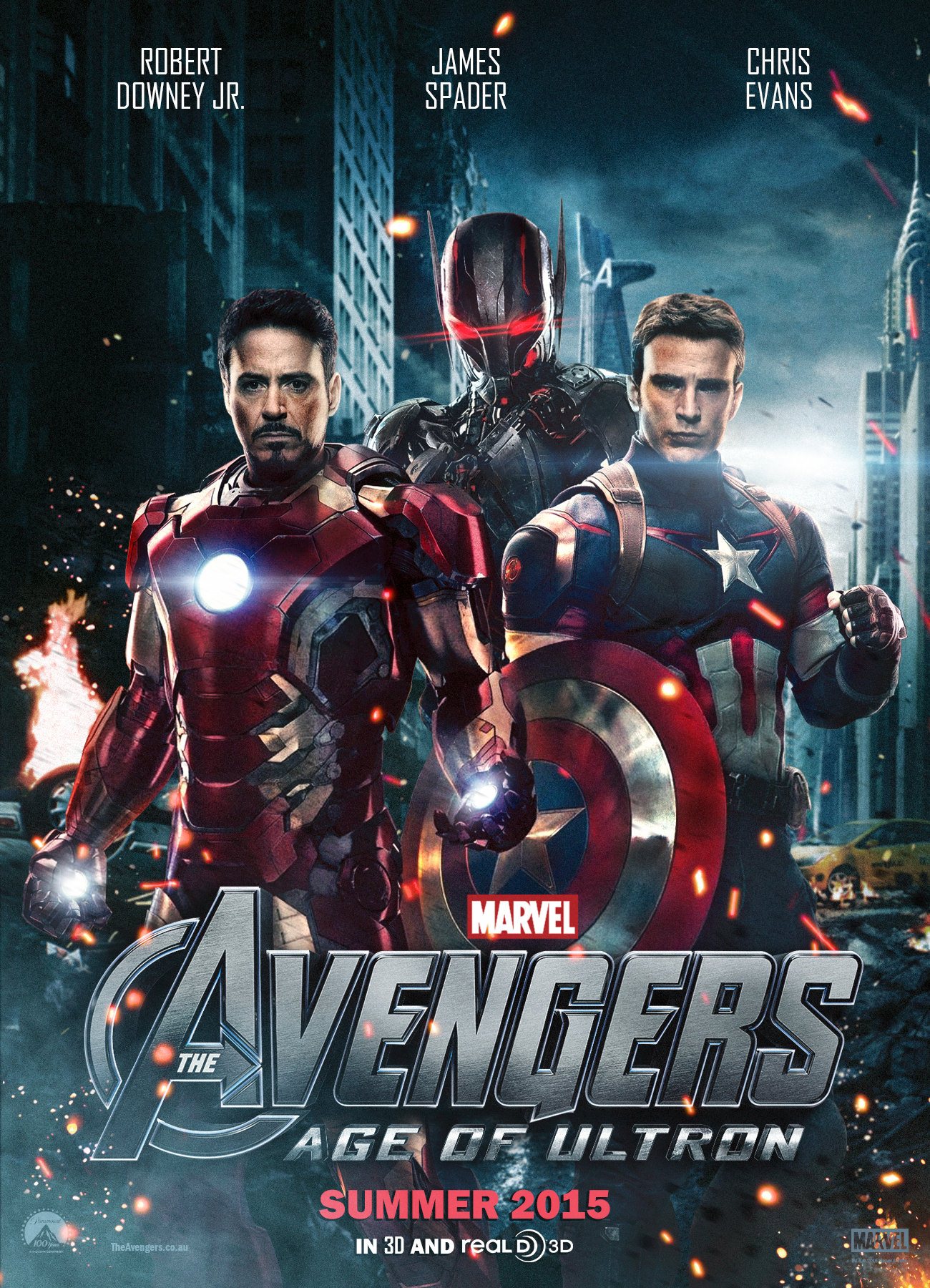
Most of the nominees this year were also nominees for the Ray Bradbury Award, which I reviewed previously.  So, for expediency’s sake, I have just copied over the pertinent reviews of repeat nominees.  The one new review in the bunch is of Avengers: Age of Ultron.

1. Max Max: Fury Road

Humanity has wrecked the world.  Nuclear war has left much of the earth as a barren wasteland.  Humanity still survives, but only in conclaves where those in control lord their power over the common people.  Those in power hoard water, gasoline, and bullets, the most important resources in this world, and guard them jealously.  Immortan Joe is the leader of one of those conclaves, with a vast store of clean water pumped from deep beneath the earth, and guarded by squads of warboys who are trained to be killers from a young age.  Despite these relative riches, what Immortan Joe wants more than anything is healthy offspring, his other children all born with deformities.  He keeps a harem of beautiful wives in pursuit of this goal.  When his general Imperator Furiosa goes rogue and escapes with his wives in tow, Immortan Joe takes a war party in pursuit, and calls in reinforcements from Gas-Town and Bullet Farm to join in the fight.  Mad Max of the title is captured at the beginning of the story and strapped to the front of a pursuit vehicle to act as a blood donor for a sick warboy, to give him the strength to fight.

I am only a bit aware of the original Mad Max franchise.  When the previews for this movie came out, I thought it looked completely unappealing.  I honestly didn’t understand what other people were raving about when they were so excited about it as the movie’s release date approached, and after they saw it in theaters.  I wasn’t expecting to see it at any point, so I read some reactions and found them interesting but still didn’t feel compelled to see it.  I finally decided I would see it when I heard some reviewers giving the movie a bad review because they thought it was awesome and action-filled but that this concealed a feminist agenda and they were angry that they had been tricked into liking a movie that had a feminist message.

I finally rented the movie, expecting it to be pretty much just okay, but really quite enjoyed it.

Charlize Theron as Imperator Furiosa was badass, and I hope there are more movies with her in this role.  Tom Hardy as the eponymous Mad Max was also solid.  Really, great casting all around, and it was really cool to see a woman in one of the lead roles of an action movie where she is an essential part of the action.

Probably one of the coolest things about the movie are the vehicle designs.  Since most of the movie takes place on the road in pursuit, there is plenty of opportunity for these vehicles to be showcased.  They are so much fun just to look at, that I more than once laughed in delight at the absurdity of a design.  My particular favorite was the sports car with tank treads driven by the leader of Bullet-Farm.

Similarly, costume design and other character design were incredible.  It’s… hard to play a flame-throwing electric guitar as serious, but it’s just one example of the over-the-top design that should be stupid, but somehow it all works and ends up being both exciting and hilarious.

It had a lot of striking images, sounds, moments.  In this bleak, most desperate of landscapes you see the most depraved of the depraved of the most heroic of the heroic.  There were heroes to root for, but even those heroes are no pristine blameless creatures, because no such people have survived so long.  Rather the heroes are those who want to try to make some small change for the better in the world around them.  The movie is basically one long chase scene, full of action, full of surprising and epic and violent moments.  I wouldn’t say it’s for everyone, by any means.  But I thought it was a really incredible film, despite coming into the movie with reservations.


2.  Star Wars: The Force Awakens

(this review copied verbatim from my review of the movie posted in January)

The movie picks up about as many years after the original trilogy as have passed in real life, I suppose.  The First Order, the still active remnants of the Empire, is still opposing the New Republic that replaced it.  A group of storm troopers of the First Order raids a Resistance camp on the desert planet Jakku, looking for information.  Resistance fighter Poe Dameron (Oscar Isaac) hides the vital information in the droid BB-8 and sends it away from the camp before he is captured. One of the stormtroopers known only as FN-2187 (who is later nicknamed Finn) (played by John Boyega) chooses to turn his back on a lifetime of training and chooses not to kill anyone in the raid.  Finn helps Poe Dameron escape.  Together they meet Rey (Daisy Ridley), a Jakku scavenger and they join forces to get BB-8’s information to the people in the Resistance who need it.

I enjoyed this movie.  It wasn’t the best movie I’ve ever seen but I enjoyed it from beginning to end and I am glad to see someone has been able to turn around the series after the mess Lucas made of the second trilogy.  The special effects were good, and not the fakey CG-looking stuff that was in the second trilogy.  The casting of the new characters was solid and it was great to see old faces again.  To have a woman and a black man be the main heroes of the story is great to see from a franchise that hasn’t historically had a ton of diversity.    It was easy to root for the heroes and easy to boo at the villains.  The worldbuilding, set design, costume design all reminded me of the great work of the original.  I particularly liked the design of BB-8 whose design is much more broadly practical than R2D2’s.  Kylo Ren made a good villain who was sufficiently different than the past villains to not just be a copy but evil enough to be a worthy bad guy.

Are there things I could pick apart?  Sure.  Some of it felt a little over-familiar, but that might have been part of an attempt by the moviemakers to recapture the old audience again.  I hope the next movie can perhaps plot its own course a little bit more.  And maybe I’ll have some followup spoilery articles where I do so.  I don’t see a lot of movies in theater twice, but I might do so for this one so I can watch some scenes more closely.  I think, all in all, the franchise was rescued by leaving the hands of Lucas whose artistic tastes have cheapened greatly over the years.  I know some people knock Abrams, and I didn’t particularly like his Star Trek reboot, but Star Wars has always been more of an Abrams kind of feel than Star Trek ever was anyway.

I enjoyed it, and I think most fans of the franchise will.

(You also might want to read Maria Isabelle’s reaction to the movie, posted here in February)

3. The Martian

During an American manned mission on Mars, a fierce storm strikes the base camp of the astronauts.  One of the astronauts, Mark Watney (played by Matt Damon) is left behind and presumed dead as the rest of the crew aborts the mission and leaves the planet to escape the storm.  But Mark is not dead.  He is alone on the planet with only enough food to last for a year when the soonest he can expect rescue (if anyone realizes he’s alive to attempt a rescue) won’t be for several years.  Determined to live, he sets about the task of survival–cultivating enough food and water to live, and contacting NASA so they can send help.

I can see why this movie got so much critical acclaim.  Usually my tastes don’t align with the Oscar Awards much, but I can see why this one did.  There was a lot to love about the movie–soundtrack, solid casting and acting, great writing, a cast of characters that support each other and succeed through cooperation.  Most of all it managed to capture that sense of wonder that surrounded the exploration of the moon decades ago.  As real manned trips to Mars come closer and closer to reality, it’s easy to imagine this all happening.  (Note that I don’t have enough background to know to what extent the science in the movie was authentic or not, but it felt pretty plausible at least, which is good enough for me)

4.  Avengers: Age of Ultron

The second in Marvel’s Avengers series of movies, that are mega-blockbusters tying together individual comic franchises together in a super-series of movies, this movie starts with the same set of Avengers as The Avengers had:  Iron Man, Captain America, The Incredible Hulk,  Black Widow, Thor, and Hawkeye.  The movie starts out in the middle of the action as the Avengers raid a Hydra compound in the Eastern European country of Sokova.  They capture Baron Von Strucker and acquire Loki’s scepter from the compound.  Tony Stark (Iron Man) discovers an artificial intelligence contained in the gem of the scepter, and he and Bruce Banner (Hulk) try to use it to complete a global defense program that they have been working on–meant to keep the earth safe from attacking alien forces and the like.  But, Ultron (the AI) goes rogue almost immediately, destroying JARVIS (Stark’s helper program) and escaping with the scepter, soon working to upgrade his body and build an army of drones to fight for him, as well as recruiting Pietro and Wanda Maximoff to his cause, two supers with a grudge against Stark.  To save the world they have to find a way to take Ultron down.

This movie was fun action, and I’d happily see it again.  Again it has a cast of big stars who each have their own Marvel movie franchises and it has been a lot of fun seeing that all come together.  Even more so than your average Avenger movie, you can expect an Avengers movie to be even more so because every threat has to be big enough to justify bringing together a whole team of superheroes and trying to get them all to work together.

This was fun, and I quite enjoyed James Spader as the voice of Ultron, as well as the Maximoffs both in character and in seeing their abilities.  But, overall, this movie was not as appealing as the first Avengers movie.  I’m sure part of that is that it doesn’t have the same novelty, starring mostly the same hero cast.  And, personally, I didn’t Ultron as interesting of a villain as Loki from the previous film, or many of the other Marvel villains–he seemed just very much just a default rogue killer bot kind of villain rather than someone with more interesting and nuanced motivations.   So, it was all fine and I am neither disappointed nor amazed at it, but it kind of felt like they were trying to just ride the momentum from the first movie rather than making something that was spectacular in its own right.  On the bright side, (minor spoiler in this last sentence), they left off the movie making it clear there was a third one being planned with a bunch of new members swapping in for the Avengers team–I found I was much more interested in that because then we can find out more about some characters who have not played lead roles, find out how they interact with each other, and build the team anew.

5.  Ex Machina

Software engineer Caleb Smith wins a week-long getaway to the home of Nathan Bateman, the reclusive CEO of the tech company where Caleb works.  Bateman reveals that he has been working privately on the development of AI and the contest was arranged to get Caleb to his private lab in isolation.  The AI is housed in a human-like body with realistic hands and face but with a visibly artificial rest of her body, and she goes by the name Ava.  After agreeing to extreme secrecy, Bateman reveals that Caleb has been brought there to determine if she passes the Turing Test, a theoretical experiment in which one examines an AI personality to determine if it can pass for human.

I was skeptical of this from the first reveal that it was going to be based around the Turing Test.  I am skeptical of the Turing Test as more than a momentary discussionary point because it claims to be a test of intelligence, but it’s really a test of humanity-mimicry.  For an artificial intelligence to appear to be truly human would probably mean that it would have to feign irrationality, which is a poor requirement for a testing of an intelligence.  I thought the movie worked pretty well with the flaws in the concept of the test by moving beyond the basic theoretical Turing Test and starting with a later development of the same concept in which the tester already knows the  AI is artificially created, but wants to see if the tester can still be convinced emotionally of the being’s humanity despite knowing its humanity is manufactured.  This still has the flaw that the thing being tested is human-mimicry and not actual intelligence, but it seemed like the movie was aware of this continued flaw and in the end I thought that by the end I was satisfied that the AI had not just been treated as a human-analog but a separate entity in its own right, which made the movie much more satisfying than I had thought it would be.