Long List Anthology Kickstarter: The Home Stretch!

written by David Steffen
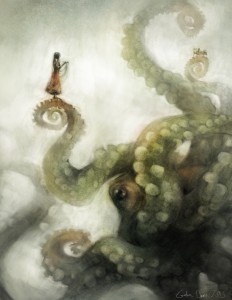
A City On It's Tentacles (1)It occurs to me 20 days into a 26 day Kickstarter campaign for the Long List anthology that I have not actually mentioned the Kickstarter campaign on my own website.  It has been a crazy 20 days and so much has been happening this particular thing has been postponed while I was working on other factors related to the campaign.  Well, better late than never, and with 6 days left in the campaign there is still some time for those who are interested to back the project to get their rewards and to help push toward the couple of remaining stretch goals.

You can read more detailed information on the Kickstarter page, but I’ll give a brief rundown here.

Purpose

Every year the Hugo Awards celebrate short stories (and other content) related to SF fandom as nominated and voted by supporters of WorldCon.  The works on the ballot receive a great deal of attention as they are distributed in a packet to voters and the voters discuss them.  Every year after the awards are given out, the Hugo administrators publish a longer list of nominated works which receive much less attention though they are also works that were greatly loved by the voting fanbase.  The purpose of the Long List anthology is to publish as many of the works from that longer list as possible.

Goals

The campaign’s base goal was relatively modest–only covering the purchase of nonexclusive reprint rights for the stories in the short story category, with stretch goals to add novelettes and novellas.  The campaign got off to big start with the base goal being reached just 2 days into the campaign, and the stretch goals being reached only a few days later.  Since the stretch goals were reached so early in the campaign I got to work making ever larger and ever more exciting stretch goals.  This added up to three stretch goals to produce an expand an audiobook of those stories for which audio rights could be acquired, produced by Skyboat Media who you may know as the folks who produce the excellent award-winning Lightspeed Magazine podcast.  The first of those goals has been reached, so there will be an audiobook which will contain 8-9 of the short stories.  There are two stretch goals remaining to add novelettes and novellas to the production.  I am very excited to have the opportunity to work with Skyboat Media–they have produced many of my favorite podcast fiction recordings and I am very excited to hear their productions.

Table of Contents

The following is the list of the table of contents of stories that will be part of the anthology.

Note that there will be 3 formats of the anthology:
1.  Ebook:  Will contain all of the stories (180,000 words of short fiction).
2.  Print book:  Will contain all of the short stories and all of the novelettes. May contain novellas depending on printing constraints. (around 140,000 words for short stories and novelettes)
3.  Audiobook:  Will contain at least 8-9 of the short stories (close to 40,000 words, which I think comes out to perhaps 4 hours of produced audio?), and if higher stretch goals are reached may contain novelettes and novellas which will add more content.

The following is the full list of stories:

Short Stories

  • “Covenant” by Elizabeth Bear
  • “This Chance Planet” by Elizabeth Bear
  • “Goodnight Stars” by Annie Bellet
  • “The Breath of War” by Aliette de Bodard
  • “The Truth About Owls” by Amal El-Mohtar
  • “When It Ends, He Catches Her” by Eugie Foster
  • “A Kiss With Teeth” by Max Gladstone
  • “Makeisha in Time” by Rachael K. Jones
  • “Toad Words” by T. Kingfisher
  • “The Vaporization Enthalpy of a Peculiar Pakistani Family” by Usman T. Malik

Novelettes

  • “The Magician and LaPlace’s Demon” by Tom Crosshill
  • “The Litany of Earth” by Ruthanna Emrys
  • “A Guide to the Fruits of Hawai’i” by Alaya Dawn Johnson
  • “The Bonedrake’s Penance” by Yoon Ha Lee
  • “A Year and a Day in Old Theradane” by Scott Lynch
  • “The Husband Stitch” by Carmen Maria Machado
  • “We are the Cloud” by Sam J. Miller
  • “Spring Festival: Happiness, Anger, Love, Sorrow, Joy” by Xia Jia, translated by Ken Liu
  • “The Devil in America” by Kai Ashante Wilson

Novellas

  • “The Regular” by Ken Liu
  • “Grand Jeté (The Great Leap)” by Rachel Swirsky


Rewards

There are a variety of backer rewards left for those who might be interested, listed briefly here.

  • Copies of ebook, print book, audiobook or combinations thereof.
  • A sonnet or sestina written by Ruthanna Emrys
  • A question for Rachel Swirsky which she’ll answer in a blog post
  • A “Women Destroy Science Fiction” (Lightspeed Magazine special edition) audiobook autographed by Gabrielle de Cuir
  • Special thank you within the audiobook
  • 11×17 poster prints of the wonderful cover art for the anthology “A City On Its Tentacles” by Galen Dara)
  • Custom digital art by Sam J. Miller in which he will sketch an animal of your choice in the occupation of your choice
  • Studio recording copy of the Long List anthology with director notes and narrator autographs
  • Audio recording of your story by voice actors Stefan Rudnicki, Wilson Fowlie, or Graeme Dunlop
  • Voice mail recording by voice actor Stefan Rudnick (of Skyboat Media)
  • Story critiques by Yoon Ha Lee, Anaea Lay, or me
  • Consultation with Skyboat Media regarding suitability of book for audiobook format
  • Lunch with Skyboat Media at WorldCon 2016 in Kansas City
  • Breakfast and watching recording session at Skyboat Media in Los Angeles
  • Audiobook co-producer credit

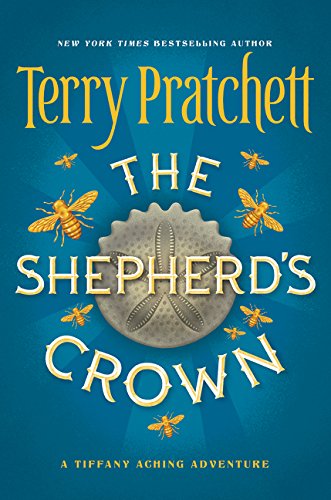
BOOK REVIEW: The Shepherd’s Crown by Terry Pratchett

written by David Steffen

The Shepherd’s Crown is the fifth installment in the Tiffany Aching subseries set on Discworld, written by Terry Pratchett, published on September 1, 2015.  Pratchett passed away earlier this year and this is his final published work.  On a personal note, it is a somber thought to think that I have read every Discworld story there ever will be.
Tiffany Aching is a full witch these days, the only witch of her homeland known as the Chalk, a land of sheep and plains, though she has a strong bond with the witches of Lancre who trained her in witchery.  She spends her days taking care of the business of witching, which is mostly a matter of taking care of practical everyday things–bringing food to the homebound elderly, helping people with their ailments, being a sort of broom-flying country doctor.

The elves across the world boundary in Fairyland are stirring, and starting to verge into our world again.  As before they are terrific, terrible, glamorous, horrible creatures who take delight in torture and pain and who wrap themselves in beautiful glamours that make you want to love them.  They used to cross into our world frequently, but after past incursions (including the book Lords and Ladies as well as the first Tiffany Aching’s entry into Fairyland in the The Wee Free Men if you want to get a sense of the elves before reading this one) they have stayed on their own side of the boundary for quite some time.  Something has changed, and to save the world from an invasion of elves, Tiffany Aching and the other witches must find a way to fight them off and send them back to Fairyland.

The Shepherd’s Crown is the final Discworld book, the final published book written by Terry Pratchett.  This alone makes it a book that will always be memorable.  Even more so because for a good stretch of the book it feels like Pratchett is eulogizing himself–which is a plausible idea since he knew his death was coming long before it came.  This book was hard to read, knowing it would be the last new Discworld I would ever read, and even more so because of that feel that he was aware of that fact as he wrote it.  The experience was very bittersweet, because I have come to feel like I know Pratchett after reading so many of his books and came to understand some extent of his views based on the compassionate way he wrote his characters.  When Pratchett died, I cried.  I hadn’t expected to cry, but I hadn’t realized until I heard that news just how much his books had meant to me, both just as simple entertainment that any good book can provide, but also in his attitudes toward certain subjects helping to shape my worldview.  Especially on the topic of death.  Death himself, as the scythe-toting robed skeleton figure, is a recurring character in the Discworld series, even starring in a number of his own books as the protagonist.  Even in the books where he might not be said to play a major role, Death shows up when characters die, and usually has at least a small bit of dialog with the newly-departed soul before he helps it cross over to the next life.  I’ve found this concept to be incredibly comforting to imagine that when someone dies, there will be someone there who means them no malice, just a person who is doing their job in the wider scheme of things, and that the person needn’t feel lost or alone.  The act of dying can be scary, but the thought of someone being there as a guide is powerful, and I’ve grown to love Discworld’s Death as though he were a friend.

Anyway, all that to say, this book tugged at my hearstrings in a powerful way.  I imagine it will for any Discworld fans.  Big things happens, there are heroes, there are villains, and there are the terrible terrific elves.  I quite like Tiffany as a character, very relatable practical compassionate person.  Even if it weren’t Pratchett’s last book, it would still have been a very memorable one in the Discworld series.  The book felt rather unfinished, the ending felt rather rushed, but judging by the afterword, it was probably not finished to Pratchett’s satisfaction–he would write a book and then go back and adjust things several times before it had to go to the publisher, and this one hadn’t finished that full set of revisions.  It is a complete story, no doubt about it, it’s not incomplete, but the ending just felt a little off-pace with the rest of it.

In the afterword, there is also mention of the other Discworld books that Pratchett had incompletely written that we will never get to read, and it even gives one-sentence sum-ups of those stories. And that brought on the sad again.


DP FICTION #7: “A Room for Lost Things” by Chloe N. Clark

“It’s not always there,” Kelly said.

Rose looked at her niece. “What isn’t always there?”

“The room next to mine. It’s not there all the time.”

Rose regretted her willingness to babysit that night. She had only said yes because her sister had finally decided to move closer to Rose. It would be a good thing to get to know Kelly who she hadn’t seen since Kelly was just a baby. Her sister had lived so far away for so long, moving not long after their parents’ death. This was Rose’s whole family now, after all.

Kelly was quiet, much less buoyant than how Rose expected a nine year old to act, rarely saying much more than a word. The three of them went out to dinner the first night after the move and the kid had just sat at the table staring at her plate of pasta. Perhaps, the move was tougher on her than she was letting on.

Rose assumed the night would be easy; the kind that every babysitter wants where the kid just keeps to herself. So this sudden unfathomable statement seemed extra odd. Was the girl going to start exhibiting stranger behavior? Or could this be leading to some sort of prank?

“You mean the guest room?” Rose asked. Kelly’s bedroom was on the outside of the house so it only had one room bordering it.

“No. Not the guest room. That’s always there.”

“Then, what room?” Rose tried not to sound annoyed. She didn’t like riddles. She’d never liked them. Her mother, a professor of mythology, had always told riddles to her and when Rose inevitably burst into exasperated tears, her mother would try to explain the answers. But the answers always made even less sense than the questions.

“The one on the other side. Sometimes there’s a door to it and sometimes there isn’t.”

Rose stared at Kelly. Kelly didn’t seem like the type to make up fantastical stories. She seemed almost too boring, neatly coloring within the lines of her drawings of tiny houses with curly-smoked chimneys. It was the kind of drawing children made in advertisements featuring perfect families.

“Is the room there now, Kelly?” Rose asked.

Kelly shrugged.

Rose peered up at the ceiling. They were in the living room which was directly underneath Kelly’s room. “Well, let’s go find out, then.”

It had to be some kind of odd game. Rose could never tell with children. She hadn’t had much experience with them. Not since she had been one at least. Kelly nodded and they walked up the stairs and then down the hall to Kelly’s door. Rose opened the door slowly. They both looked inside. The room was as it should be. Bed. Stuffed animals everywhere. No door. “No room today, huh?”

Kelly looked at the opposite wall with the window that looked out onto the garden. She shook her head, satisfied that there was nothing. They went back down and had ice cream, playing Monopoly until Kelly’s bedtime. Rose let Kelly win. She wasn’t a fan of Monopoly and so she rarely ever played it, but she knew that it was never fun to lose.

Rose sat reading in the living room. It was past ten and her sister would be back any minute. Then she heard something from upstairs. It sounded like music, the same type of music that her parents had played at Christmas when Rose and her sister were little. Her father had taught music and sometimes told the stories behind the songs. Rose used to imagine the musicians making songs blossom out of pieces of sound like the magic trick where a magician placed a seed in dirt and then it burst into a tree. So the stories of frustration and the time that it took to create music always disappointed her. She longed for music to be sudden in its creation.

Rose walked up the steps and then down the hall to Kelly’s room. She gently opened the door, peeking inside. Kelly was asleep in bed. On her wall was a door. Rose blinked. It was still there. She tiptoed up to it, a mahogany door with a golden knob. It looked a lot like the door in her grandmother’s house, the one that led into the cinnamon-scented kitchen. Her grandmother had been an amazing baker and Rose still remembered the taste of the pinwheel cookies that she made—the perfect blend of salty butter cookie with a ring of super sweet cinnamon and walnuts. She had stood on tiptoe to steal the cookies off the high shelf her grandmother kept them on. The music came from behind the door. Rose reached out, but heard her sister driving up. She turned away at the sound and then turned back quickly. The door was gone. She never thought that she was a suggestible person, but, maybe she was now.

Rose went downstairs and chatted with her sister for a few minutes. “Yes, everything was fine. I’d be happy to help again, anytime.”

A month passed and Rose began to forget about the door. It had been a silly trick of her mind. One night her sister called and asked her to babysit again. She agreed.

She spent the first part of the night helping Kelly with some math homework. Rose liked math. It always meant something and every problem could be solved. As she and Kelly were eating cookies and milk, as a reward for completing all of the questions, she asked, “Kelly, have you ever gone inside that other room?”

Kelly looked up. Her eyes were wide. She nodded. Once, quick.

“Why do you look so worried?”

Kelly looked down. “I don’t think I should have. I don’t think my mom would like it.”

“Well, it’s our secret.”

Kelly looked back up, smiling.

“What was it like in there? Was it nice?”

“Well…It was filled up with all these…Well, they were things I’d lost. A doll from years ago and my mouse that ran away. The room was so big; there was room for so much more. Shelves and shelves.”

“Was there music playing?”

Kelly looked surprised. “Yes. It, well, don’t tell my mom but it was this song that my dad used to play when we went for drives before…Before he left…It was so nice. But…” Kelly stopped to study her glass of milk, cookie crumbs floating up to the surface like dead fish.

“What, Kelly?”

“Well, I think the room, I think, it didn’t want me to leave, it wanted me to stay, to keep me safe and tucked away.”

Later, Rose tucked Kelly into bed. Then she read, only she wasn’t really reading. She was waiting. She listened but didn’t hear anything. She went up the stairs and then down the hall and opened Kelly’s door. Kelly was asleep. There was no other door. Rose sighed and went back downstairs.

Rose spent the next few days hoping that her sister would call and ask her to babysit again. She wanted to see the door again. She needed to know that it really existed or that it didn’t. She didn’t like the not knowing. She never had. When her father was in the hospital, the doctors didn’t know if he would wake up. Her mother was gone already and she overhead the police saying that he was the only surviving witness if he recovered to testify.  So much was contained in that “if”.  Rose kept wishing to know one way or the other–would he wake up or would he also be gone? Then she’d gotten her wish and hated herself for being foolish enough to make it.

One night the phone rang and she answered it on the first ring. She was already set to say yes.

It wasn’t her sister. It was the police. They spoke quietly, matter-of-factly, icily. There had been an accident. The curvy road and the rain and the moonless night.

Rose went to the station, to the morgue, and she looked at two tables. Cold tables. Two sheets pulled back. Two faces and she gave them each a name, saying the words aloud. She said the names without thinking and then couldn’t call them back. To name them made it real. They had been her whole family, she wanted to tell someone. The coroner or the police or anyone who would have understood. Can a family be reduced to one person? Was there a word for that?

Rose went to her sister’s house. She didn’t think about it. She just knew that was where she had to go. When she stepped in, she almost called out from habit. Then her voice caught in her throat and she thought that the words might be choking her.

She heard music. She went up the stairs and then down the hall and opened Kelly’s door. It wasn’t as it should be. There was no one asleep in the bed. The room was dark, drained of something that she couldn’t quite place.

There was the door. Rose walked up to it. She pressed her ear against it and could hear the faint sounds of music and voices and laughter. Rose reached out, closing her hand around the golden door knob. She gently turned it. Rose opened the door and stepped inside to see what she could find.


© 2015 by Chloe N. Clark


author_photo_4 (1)Chloe N. Clark is an MFA candidate, baker extraordinaire, and amateur folklorist. Her work has appeared in Abyss & Apex, Supernatural Tales, and more. She is currently at work on a novel about stage magic.


If you enjoyed the story you might also want to visit our Support Page, or read the other story offerings.

Diabolical Plots Fiction Lineup (Year Two)

written by David Steffen

Diabolical Plots opened for fiction submissions for the month of July, one story per writer for the submission window.  During that month 425 valid submissions arrived in the slushpile.  59 stories were held for a second look.  13 stories were purchased.  Both rounds of the process were judged entirely by me, and author names were hidden from me until the final decisions had been made, so the stories had to stand for themselves.  Here are the story titles and authors for that year of purchases.  I am very excited to bring these stories to readers.  I hope you enjoy them as much as I did!

March 2016
“One’s Company” by Davian Aw

April 2016 
“The Blood Tree War” by Daniel Ausema

May 2016
“Further Arguments in Support of Yudah Cohen’s Proposal to Bluma Zilberman” by Rebecca Fraimow

June 2016
“The Weight of Kanzashi” by Joshua Gage

July 2016
“Future Fragments, Six Seconds Long” by Alex Shvartsman

August 2016
“Sustaining Memory” by Coral Moore

September 2016
“Do Not Question the University” by PC Keeler

October 2016
“October’s Wedding of the Month” by Emma McDonald

November 2016
“The Banshee Behind Beamon’s Bakery” by Khaalidah Muhammad-Ali

December 2016
“The Schismatic Element Aboard Continental Drift” by Lee Budar-Danoff

January 2017
“Curl Up and Dye” by Tina Gower

February 2017
“The Avatar In Us All” by J.D. Carelli

March 2017
“Bloody Therapy” by Suzan Palumbo


BOOK REVIEW: Chasing the Phoenix by Michael Swanwick

written by David Steffen

Chasing the Phoenix is a science fiction novel by Michael Swanwick, published by Tor Books earlier this month.
The book stars Swanwick’s recurring characters, the con men Darger and Surplus.  As the story begins, Surplus is journeying through a future China with the Darger’s corpse carried on the back of a yak, seeking the services of the legendary healer the Infallible Physician to raise Darger from the dead.  Once that’s happened (it happens early enough in the book that I don’t think that counts as a spoiler).   Considering greed a virtue, the con men are always looking for ways to profit from their circumstances.  Surplus, who is an anthropomorphic dog, has used his appearance to his advantage by pretending to be an immortal, and with Surplus rising from the dead they have soon gained the attention of powerful people involved in a brewing civil war.  Even among one side of the war, there are always those jockeying for power and willing to kill to get their way, and soon the two con men are working all sides just to stay alive.

Since Darger and Surplus are recurring characters, of both novels and short stories, a valid question would be: Can this book be read out of order with the rest?  Yes, you can.  This was my first Darger and Surplus story, though I was familiar with the characters from short nonfiction segments that had featured on the StarShipSofa podcast on the subject of the art of confidence tricks.  My only prior knowledge was that they were con men, and that’s obvious very early in this novel.  I had no trouble picking it up.  I expect that there are probably some references and in-jokes about previous books, but nothing that interfered with my understanding.

I imagine that some people enjoy going on adventures with these con men characters–presumably they are recurring characters because books about them sell.  Honestly, I just found them irritating.  Not because of their professions, necessarily–their ethics are certainly different than mine, but I have related to such characters before.  I just found them… I don’t know what word I’m looking for… smarmy, perhaps?  I didn’t really care what happened to them, and if the book had ended with them both dying I wouldn’t have really minded.  I don’t know if this book is representative of them or not, but I probably won’t try to read any more Darger or Surplus stories unless I hear this one wasn’t representative.

I did read through the whole book.  I was curious how it would turn out.  There were some interesting challenges that the pair faced, varying from war strategies, to battling against future technology, to interpersonal challenges that they were coerced to help resolve.  The challenges and the stakes rise throughout the book as they con men play people off of each other and the war goes on.  A few times in the book the characters they seem to be in an impossible situation and those were the parts I was most interested in, to see how these two could turn things around… but more often than I thought was reasonable things would just take a turn of circumstance and save them at the last moment.  In the end there turned out to be some explanation for this, but I felt like it was a cheat and took the enjoyment out of the part that I really wanted to see–these two actually facing a real challenge.  Apart from those apparently unsolvable challenges, they breeze through the rest of the book, never stymied by anything.  Although the stakes go up and up, they just cut through the challenges like butter.

So, this book is clearly not for me.  I didn’t like the protagonists and I thought the book was too easy for them.  I imagine that fans of Darger and Surplus stories might like it, though I don’t know if this story is representative.  Swanwick is a good writer, and I’ll happily pick up other works by him that star different characters.


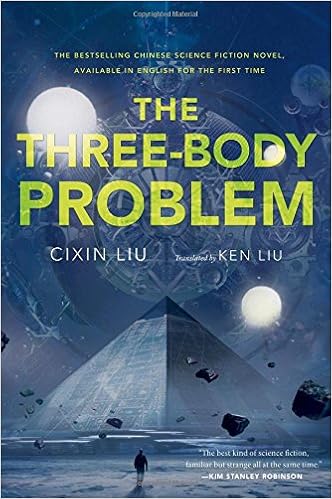
BOOK REVIEW (Conclusion): The Three Body Problem by Cixin Liu (Translated by Ken Liu)

written by David Steffen

Less than a month ago, just before the Hugo Award voting deadline, I gave a preliminary review of the first 100 pages or so of the Hugo-nominated novel The Three Body Problem.  I gave the partial review then to get it published before the Hugo deadline, but since then I’ve finished reading.  This review will be pretty brief because I don’t want to spoil everything, and the truth about what exactly explains the weirdness that’s happened so far in the book takes a while to unroll.
As mentioned in the partial review, I thought the beginning was much too slow, going into a lot of background detail on a character who was important to the story but didn’t end up being the main point of view character.

I continued to especially enjoy the in-book game titled The Three Body Problem in it’s weird representation of a world with chaotic seasons, and generally found those sections more compelling than the other parts of the book.  The book in general is more distantly told than I prefer, often with the POV character bringing up a topic that he said he’d been planning with no prior note about it.  I’m not sure how much of that is a language or cultural difference in the expectations of storytelling but I was interested enough to keep reading.

I guess I hadn’t paid enough attention and hadn’t realized that this was book one of three until it ended.  Some things are resolved by the end of the book, but I wouldn’t call it a real complete story arc on its own–its very much a Part One, not a standalone story.  Without getting into spoilery specifics, I thought the tension kind of ramped down near the end, so I’m not really sure how that’s going to carry over into the next book.

I enjoyed reading the book, finding out what was behind the weird occurrences, and finding out more about the in-book game.  But with the generally slow and uneven pacing the ramp-down in tension near the end I’m not sure I’m into it enough to want to keep reading books two and three.


DP FICTION #6: “The Superhero Registry” by Adam Gaylord

“What about ‘Copper Penny’?” Lois spread her hands out in front of her like the name was on an old Hollywood marquee.

The square-jawed applicant sitting across the desk arched an eyebrow. “Seriously?”

“Sure! Just think of the potential catch phrases. Your arch-nemesis monologues about how you’ve yet again foiled his or her plans and you say, ‘Of course. I’m Copper Penny. I always turn up.’”

She could tell he was tempted. She tried to sweeten the deal. “Plus, copper is very valuable right now.”

He frowned. “It’s just, it’s a little feminine, don’t you think?”

“No way! I think it’s very masculine.” She batted her eyelashes a little. Anything to get this guy to settle on a name so she could go to lunch. Copper Penny was a bit of a stretch as far as the rules went but she was pretty sure it would pass muster because of his natural red hair.

“Hmmm. No. I just don’t think it’s right for me.”

Lois sighed. They’d been at this all morning and he was no closer to making a decision. Working in the Registry was usually fun. She got to meet the new class of superheroes before they got famous and occasionally she’d even help one pick a name, which was usually a blast. A few of the more appreciative heroes even kept in touch. She was supposed to have lunch with The Valkyrie Sisters next week.

But every once in a while she got one of these fellas. No creativity, no initiative, just expected to have the work done for them. Pretty bad traits for a superhero, in her opinion.

He leaned back in his chair. “Can you go over the rules one more time?”

It was the third time he’d asked and she was tempted to shove her coffee cup down his throat, but the agency had been pushing customer service lately. “These are tomorrow’s superheroes,” the memo said. “We need to establish a strong working relationship from day one.”

So she smiled, brushed her curly blond hair aside, and explained again. “Your name has to have something to do with your super power and/or your look. But, you can only base your name off the latter if you already have a look established, not the other way around.”

“But why? Why can’t I pick a name and then build a look around it?”

She shrugged. “Honestly, it doesn’t come up that often. Most heroes base their costume off something pretty significant like a traumatic childhood memory or the blanket their foster parents found them in. And of course, many heroes are actually green or blue or made out of rock or whatever, so that’s easy.

“But I just look like I always have.”

“Right. So we have to pick a name based on your powers. Now, your fists turn into metal, right?”

“And my forearms.”

She resisted the urge to roll her eyes. “Right. And your forearms. Is that it?”

“What do you mean, ‘Is that it’?” He stood, rolling up his sleeves to show off his shiny metallic appendages. “I can crush cinder blocks with these things.”

“Of course,” she said with a smile. “They’re very impressive.”

He sat down, apparently placated.

“Let’s use that. What else smashes cinder blocks?”

His eyes lit up. “’The Sledge Hammer’!”

She checked the database. “Sorry, that’s taken.”

“What about just, ‘The Hammer’?”

“Nope. Taken.”

“Hmmm… ‘Iron Hammer’?”

“Are your fists actually iron?”

“I’m not sure. Still waiting on lab results. They said it might take two weeks, but I want to get started now!”

“Well, we don’t want to register you as iron if they turn out to be tin or aluminum, do we? I only suggested copper because of your hair color.”

He looked at his hands. “I don’t think they’re aluminum.”

She clicked away at her keyboard. “What about ‘Hard Hand’?”

“Hmmm…kinda catchy.”

“Or just ‘The Hand’?”

“Perfect!”

“Excellent!” She quickly entered the appropriate information into the database before he could change his mind.

“Talk about catch phrases!” He stood and pantomimed shaking someone’s hand. “No worries officer, I’m always happy to lend a hand.” He punched an invisible assailant. “Sorry, I guess I was a little heavy handed.” He thrust his chest out, hands on his hips. “No criminal can outrun the long hand of the law.”

“Arm”, she muttered.

“What?”

“Nothing.” She hit the enter button and the successful registration confirmation message flashed on the screen. “Congratulations Hand, you are now a registered superhero. I will forward your information to one of our case managers and he or she will contact you within seventy-two hours to discuss training opportunities and duty assignments.”

“Wait, aren’t you gonna help me with my look?”

She handed him a fistful of colorful pamphlets she had at the ready. “There are dozens of costume consultants that can craft you the perfect super-ensemble.”

“Oh, okay. So, a case manager will call me?”

“Within seventy-two hours.”

“Okay.” He sat looking at her for a long moment. “Okay, well thanks for your help. If you ever need a superhero, look me up.”

Lois waited a full five count after he left, then scurried for the break room. They had a running over/under board for what superheroes would make it past their first year and she wanted to be the first to lay money on “under” for The Hand.


© 2015 by Adam Gaylord


Author’s Note: I love epic action and harrowing plot twists as much as anyone, but often it’s the everyday interactions of the worlds we create that really fascinate me.


HeadShot_AGaylordAdam Gaylord lives with his beautiful wife, daughter, and less beautiful dog in Loveland, CO. When not at work as a biologist he’s usually hiking, drinking craft beer, drawing comics, writing short stories, or some combination thereof. Check out his stuff at http://adamsapple2day.blogspot.com/ and www.hopstories.com.


If you enjoyed the story you might also want to visit our Support Page, or read the earlier story offerings:
DP Fiction #1: “Taste the Whip” by Andy Dudak
DP Fiction #2: “Virtual Blues” by Lee Budar-Danoff
DP Fiction #3: “In Memoriam” by Rachel Reddick
DP Fiction #4: “The Princess in the Basement” by Hope Erica Schultz
DP Fiction #5: “Not a Bird” by H.E. Roulo

Hugo Novel Review (Partial): Three Body Problem by Cixin Liu (translated by Ken Liu)

written by David Steffen

I’ve been reading as fast as I can before the Hugo voting deadline on July 31st, but there’s been a bunch of things competing for my time  and so I haven’t been able to read as many of the nominees as I like.  I am only part way through The Three-Body Problem by Cixin Liu, translated by Ken Liu, published in English by Tor Books, but since the Hugo voting deadline is almost here I wanted to give a partial review–I’ll give a complete review when I have had the time to finish the book.

The story starts in China in 1967, during the Cultural Revolution (a social-political movement started by Mao Zedong whose stated goal was to preserve the “true” Communist ideology from the corrupting influences of capitalist and traditional elements from society.  Ye Zhetai is a physics professor at the time, trying to teach his students without coming under the ire of the movement, but in a debate about relativity he is struck dead.  His daughter Ye Wenjie follows in his footsteps, becoming a physicist as well, and ends up being recruited for a top-secret research project.

In the present day Wang Mao, a nanomaterials researcher, is called into a meeting between top researchers and military officials, where a list of physicists who has committed suicide is revealed, each for apparently the same reason, leaving long essays as suicide notes.  It has something to do with the organization called Frontiers of Science which are considered radical by the rest of the scientific community, to answer the question: “What is the limit of science?”  The implication seems to be that something about what they have found in their research is driving them to kill themselves.  He starts seeing elements pointing to a countdown in impossible places.  A countdown to what?  Wang Mao takes a position at the Frontiers of Science, and he sees fellow researcher Shen Yufei playing a game called The Three-Body Problem, which is based in a fictional world where there is no discernable pattern to the seasons and the challenge of the game is to find some pattern so that a civilization can be established in a stretch where the weather is favorable.

And that’s about as far as I’ve gotten in my reading.

The novel is very slow to begin.  It seems like half of what I’ve read so far didn’t have much relation to the other half, but I’m still in the first quarter of the novel so at this point I’m assuming it all ties together to justify that slow start.  I also figured that there might be some cultural differences about the expectations of story structure so I didn’t want to give up on the story until I’d given it a good long time.  I really felt like I got hooked as he was playing the Three Body Problem game, the details of that game and the strange challenges were interesting and caught my attention.  The problem of the physicists committing suicide has a bit of a Lovecraft feel to it–forbidden knowledge that drives one mad, though in general it feels more science fiction-y than horror-y.

Anyway, I’m interested in how it turns out, I’m enjoying the read, but without more pages consumed, I can’t say overall whether I like it or not.  I’ll let you know soon.

Why do I Value the Hugos?

written by David Steffen

I’ve been following the Hugos closely for several years, trying to read and review as many of the nominated works as I can digest between the announcement of the ballot and the final deadline.  I also follow the Nebulas, and I glance at the results from other SF genre awards, but for me the Hugos take up most of my attention come award season.  With this eventful Hugo year, it crossed my mind to wonder why the Hugos specifically, and whether I might perhaps be better off devoting more of my attention to awards that don’t collect controversy the way the Hugo Awards always seem to do, and in escalating fashion these last few years.

1.  The Hugos are Fan-Based.

Specifically, they are based on the supporters/attendees of WorldCon, which is certainly not an exact representation of fandom as a whole.  But what I mean by this is that the fan-based nature differentiates it from juried awards or the Nebulas which are voted by SFWA members, which gives that award a very different feel.

I do like the concept of the Locus Awards, since those are available for anyone to vote online, so have a broader voting audience–maybe I’ll try to pick them up next year.

2.  The Hugos Have a Long Reading Period

The Nebulas and the Locus awards have very short reading periods (the period of time between the announcement of the ballot and the voting deadline) of only about a month.  If I want to read as much of the fiction as possible, that’s not nearly enough time–I can’t finish all the short fiction, let alone start the novels.  The Hugo ballot is announced around Easter weekend (usually early April or so) and the voting deadline is at the end of July, so there are nearly four months to try to do all the reading.  The Hugo Packet isn’t released right at the beginning of the reading period, but usually enough of the short fiction was published in online venues so that I can fill my reading time with Hugo material.

3.  The Hugos Have Instant Runoff Voting and No Award

The Nebula ballot for each category is a set of radio buttons–you can only choose one winner.  On the Hugo ballot you can give a numeric vote from 1 to N, where N is the total number of nominees (usually 5).  All of the voters first choices are tallied, and the story with the lowest votes is eliminated–all of the ballots which had the eliminated story as the top vote slip down to their second choices, and so on, until there is a winner.   I like this because it’s a very common situation where I like more than one of the nominees a great deal, and this lets me give support for more than one instead of having to choose.  This is also beneficial if the same author has more than one story in a category because they don’t self-compete.

There is also a No Award vote that lets you differentiate between items you don’t care about and items you strongly feel should not win.  If there is a large enough portion of No Award votes, no awards will be given for the category, which gives a recourse in the case that you think a category has nothing worthy.

4.  The Hugos have a Graphic Story Category

I love graphic stories, but I have not been very good at keeping up with them.  The graphic story category gives me a sampler of what the graphic stories that people loved the most so that I can catch up a bit, maybe even consider picking up a subscription.  This year’s category was especially stellar, with three comics that I’d consider picking up–which I reviewed here a few weeks ago.

5.  The Hugos Have WorldCon

I made it to WorldCon 2012 in Chicago, and had a really great experience there.  That was before the launch of the Submission Grinder, so less people knew who I was, but I still knew a lot of people from Writers of the Future and Codex.  There were a lot of my favorite writers and editors there, probably partly due to the Hugos drawing them to the award ceremony.  I also thought it was fun to go to the award ceremony itself.

6.  The Hugos Have the Hugo Packet

A lot of the short fiction is available for free without actually becoming a Hugo voter–a lot of it was published for free online to begin with, other publishers (like Analog) post it there for the readers to see.  But most of the ones that aren’t available for free are in the packet, and most years most of the novels have been included as well.

This is based on kind of an odd dynamic.  The Hugo packet is only a few years old, so it’s a nice convenience.  If the Hugos were less notable, the publishers probably wouldn’t participate.  If the Hugo voting audience was huge, the publishers might be reluctant to give away that many free copies.  So it works in kind of an odd middle space where most science fiction and fantasy readers are aware of the award, enough that pasting the name on a book cover can encourage sales, but not so many actually participate (even though they all can) to deter publishers.

7.  The Hugo Rules/Categories are Chosen By Fans

OK, this one is alternately a benefit or a detriment.  A benefit because as new formats of science fiction and new publishing technologies become popular, the award can expand to include those things, and theoretically phase out those things that are outdated.  A detriment because it can sometimes end up with some long-lasting categories that don’t make a lot of sense, or new categories thrashing out of momentary conflicts.  But I like the idea in theory anyway.

Hugo Novella Review: “Flow” by Arlan Andrews, Sr.

written by David Steffen

“Flow” by Arlan Andrews Sr. was published in Analog Science Fiction and Fact.  Analog published it free to read online as part of the Hugo season.

Rist and Cruthar live with their people in the Tharn’s Lands where the world exists in unending hazy twilight.  They make their living by riding icebergs that break off from the greater ice mass to sell them to warmlanders further south.  In this story Rist takes his first berg-riding trip to the south, where the sky is blue and the light burns brightly in the sky.  They are only meant to take the iceberg as far as the ice broker, but Rist gets the idea to ride the iceberg further south, and so he and the more experienced Cruthar go on to the strange lands of the south for an adventure.  People from different lands have lived separately long enough to gain differentiating racial features, including extreme farsightedness so that none can see things clearly up close in favor of far vision.  The people of the Tharn’s Lands used carved figurines for writing, and Rist keeps a journal of everything he does, and everything he learns to share with his family (both on a philosophical level and things that might have applications in their merchant business).

For me this story brought a lot of the good old “sense of wonder” of golden age science fiction.  Both the Tharn’s Lands and the warmlands are foreign and interesting, and because the character is learning about the warmlands as the story goes on and contrasting it with his home, the story gets a lot of this comparison in.  As the story goes on Rist keeps his journal, and I find his insights about the other world interesting, to reinforce his worldview that is very different from mine–even considering the sun and the moon to be foreign concepts because of the haze of the Tharn’s Lands.

The only part that got a little bit annoying was that Rist repeatedly went on about the breasts of the women of the warmlands–it makes sense in some fashion because apparently the Tharn’s Lands women don’t have prominent breasts (another genetic differentiator like the eyesight, though it wasn’t clear why this particular thing would differentiate while leaving the two races sexually compatible) but it felt rather random and distracting in a story that I otherwise thought was quite solid.  It also struck me as unimaginative in an otherwise imaginative story that, of course a man who has never seen breasts would find them attractive, when really there could be a variety of reactions that would be more interesting–concern about her health, wondering if they hurt all the time, or being put off by their strangeness since to him they may not seem natural.  But, really, that was the only sour note in the whole thing for me, and a pretty minor one at that.

A note at the beginning of “Flow” indicates that the characters were first seen in “Thaw, which was previously published in Analog.  I could definitely see the shape of that other story, with some references to past experiences together in this one, but I thought this story stood well enough on its own, and I always felt like I had enough information.

I quite enjoyed this story and I recommend it for those who like a little longer stories with a sense of adventure and exploration of one fictional culture from the perspective of another fictional culture.  It has my top vote in the Novella category.