MOVIE REVIEW: Kim Possible

written by David Steffen

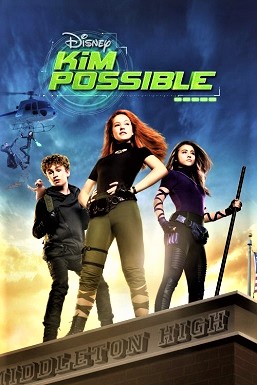
Kim Possible is a 2019 live action Disney Channel original movie about a pair of high school crimefighters Kim Possible (Sadie Stanley) and Ron Stoppable (Sean Giambrone), based on the 2002-2007 cartoon series of the same name.

By day the two of them are just regular high school kids dealing with regular high school problems. By night they save the day from supervillains with Kim’s excellent physical skills and Ron’s… Ronliness.

Dr. Drakken (Todd Stashwick) and Shego (Taylor Ortega) are hatching their new villainous plans as Kim and Ron start high school. Kim, despite being super-skilled and basically a superhero, is very nervous about high school and it doesn’t help that everything seems to go wrong in the first week, trouble getting to class on time and her sophomore enemy going out of her way to make trouble for her.

But things take a turn for the better when she makes friends with Athena (Ciara Riley Wilson) who seems destined to be Kim’s best friends, with many of the same interests and who has idolized Kim for a long time.

This movie was a fun callback to the cartoon series, and I particularly liked Todd Stashwick as Dr. Drakken who did a great imitation of the cartoon villain’s voice while making it his own. The plot was okay for a cartoon-based kid show, but will fall apart under the slightest examination. For instance, Kim Possible is well-known and visible on news stories using her real name as a crimefighter, but she is also supposed to be just a regular girl at high school, despite everyone knowing about her crimefighting. And the security issues with having a supervillain-fighting crimefighter going to a regular high school without apparently any extra security precautions. That lack of security apparent in that she carries a grappling hook on the school bus (and can afford a lab full of equipment like a collection of grappling hooks but still takes the school bus).

I wouldn’t say the movie’s outstanding, but it is fun, especially if you’re familiar with the cartoon series it is based on.

DP FICTION #50A: “Why Aren’t Millennials Continuing Traditional Worship of the Elder Dark?” by Matt Dovey

In a generational shift that some claim threatens the fabric of existence and the sanity of all humanity, surveys show that worship of the Elder Dark is at a record low for one particular group—millennials.

Bob Rawlins is worried. “When I was growing up in the 1950s, I made my obeisance before the Manifold Insanity every night, uttering the invocations to satiate the Watchers Just Beyond and keep them at bay for one day longer. But young people now aren’t prepared to make the necessary sacrifices.”

I remind him that human sacrifice was deemed unnecessary and illegal in 1985, and animal sacrifice in 2009.

“Well I don’t mean literally,” he says, though there’s a note of longing to his tone.

Bob is showing me round his inner sanctum, a converted basement given over to the worship and appeasement of the Unknowable Gods. He’s the Grand Dark Supplicant of his local chapter, and is continuing a long family tradition: men of his bloodline have been bound to the service of the Elder Dark since the days of the Pilgrims.

“Our ranks are already thin,” he says, resting a hand intimately on an idol of the Ten Thousand Staring Eyes. “I worry the world I’ll leave behind will be overrun by the gibbering horrors of the between spaces, ushering in a never-ending age of nightmares and insurmountable monstrosities. It breaks my heart to think of the Eight Palms golf course getting swallowed by a roiling pit of blackness. Hole five’s a real beauty.”

In town, I talk with a group of twenty-somethings working in the local coffee shop. Aren’t they anxious about the impending immolation of mankind and the eternal night of the Elder Dark?

“Well, I guess,” says Luiz, shaking chocolate onto my cappuccino in a cephalopodan design. “But it’s hard to get worked up about such a distant prospect when I’m mostly worried about making rent next month.”

“Yeah, yeah,” agrees Deema, another barista. “And even if I had the brainspace to worry, I haven’t got the roomspace in my apartment for a shrine. I make my obeisance when I visit my parents at the weekend, but my apartment’s so cramped the shower’s in the kitchen. Where am I meant to find the space for the Eighteen Forms of Frozen Madness?”

“Not that I have any time for the complete incantations anyway,” says Luiz. “As soon as I finish here I start a shift at the Midnight Dark Bar on 8th. Do you know how much mess is made by people burying the futility of their infinitesimal existence in drugs and debauchery? By the time I get home from cleaning that up I’ve only got five hours before I’m back here. It’s hard to muster the energy for self-flagellation on four hours’ sleep a night.”

These responses may sound cynical and resigned, but talking to Luiz and Deema, there’s a sense of frustration: they want to be doing more. But some millennials have other reasons for abandoning the worship of the Elder Dark.

“These old dudes—and they’re always old dudes, you notice that?—they’re all caught up in this spiel, like, ‘If you don’t perform the rituals of devotion then the world will fall to lunacy’, and I’m like, dude, look around already!”

Ace shakes their long dreads dismissively and sips a green tea, looking over the gray ocean from their dilapidated RV. Their parents were members of the ultra-orthodox Church of the Nineteenth Insanity; Ace left home at seventeen, sent on their mission to witness the madness of the wider world. It was meant to reinforce the importance of keeping to the convoluted strictures of the Nineteenth Insanity, necessary to resist the influence of the Watchers Just Beyond.

But instead, says Ace, they saw only human madness.

“Like, all the suffering and hurt and injustice, that’s not coming from beyond the Pierced Veil, ya know? It’s caused by politicians and corporations on this side! People are blind to the roots of their problems, blaming it all on these creatures they’ve never even seen, right?”

“It’s sad to hear,” says Kathy Halton, Honorary Senator for the Sunken State of Hggibbia. “I represent the Many Drowned Dead, so I know better than most what the cost of failure is.”

Senator Halton looks up at the huge oil-on-canvas that hangs behind her mahogany desk, The Sinking of Dead Men’s Deeds, that infamous night when eighty thousand souls were lost to the sea. The eye is drawn irresistibly to the dark slash that hangs in the sky, the Pierced Veil itself, and the indescribable creatures of the Entropic Menagerie that spill forth—and it is surely an unparalleled artistic feat to paint a creature that cannot be described—and there is a strange sensation of being drawn into the painting, as if the soul itself is being pulled out through the eyes and reeled into that perversely dark hole on the canvas. Only Halton’s smooth voice breaks the spell; she seems used to the painting, immune to its attraction.

“Some people are so desperate for a mundane explanation they’ll ignore the evidence of their souls,” she says. “The irony is many of this country’s problems can be traced back to a disturbing lack of faith in the younger generation.”

But isn’t there an increasing consensus on grassroots social media that neoliberal government policies of the last thirty years are to blame for irrevocably leading us to this point of critical failure, where the very substance of the multiverse is threatened with annihilation by wage stagnation and an untenable housing market leading to unrealistic work expectations?

“If only it were that simple,” she responds. “We’re doing everything we can to encourage participation despite the economic downturn, including state-funded glossolalia lessons and mandatory flagellation breaks for government employees. But we can’t force a free soul to act.”

Two days later we’re standing on the windy beach at Chatham, Massachusetts for the annual Sunken Memorial, facing the steel-blue Atlantic where Hggibbia once stood. Senator Halton leads a group of representatives through the Silent Evocations of the Eighteen Forms, their dark trench coats snapping in the wind like ravens fighting over scraps. Two assistants have to help the elderly Health Secretary Johnson through the movements, sometimes physically lifting him to position his limbs correctly.

Fifty yards away, behind a mesh fence and a police line, there’s a protest taking place. I’m not surprised to see Ace at the front, leading a chant of WE’RE NOT INSANE, WE’RE JUST MAD, WE BLAME YOU FOR A  WORLD GONE BAD.”It’s all a distraction!” they tell me to a chorus of agreement from their fellow protestors. “They’re using the myth of the Elder Dark to stop you noticing their corruption!”

“Yeah,” interjects another protestor, her pink hair straggling over a loose-fit chunky sweater. “Like, did you know they used this stuff to justify some super racist ideas? Most people can’t spot the subtext now, but if you read the old stuff they basically claimed Jews were in league with the Watchers Just Beyond, right? It’s unbelievable!”

Ace picks up the argument, a real bitterness in their voice. “They like, try and handwave that racism away now, ya know, claim you have to understand it in the historical context, but it just proves how they fit it to their agenda at the time. It’s all bullshit. You can’t trust them.”

I go back to see Bob Rawlins. He’s invited me up for the traditional orgy that marks the Approach of Winterdark, more commonly called the fall equinox. He prepares for the night by stripping naked, beating his tattooed skin raw with a branch of Hggibbian driftwood, and pulling a tight red hood on that covers his eyes.

He offers me the branch and a spare hood, but I respectfully decline.

There’s fifty or more participants gathered at the edge of town for the ritual, all naked bar that same red hood. It’s meant to evoke a feeling of insignificance, reminding supplicants they are only anonymous flesh to the Watchers Just Beyond, but the effect is undercut somewhat by small town America: everyone is easily identifiable from their voice and body shape, and Bob chats casually about DIY projects and school district elections as the sun sets.

Once dusk grows dark and a chill settles in, Bob climbs onto a flame-lit stage set up for the event, reminds everyone to stick around for the barbecue afterwards, then begins the Rituals of Unending Vigilance. I find myself talking to a late arrival: Eric Rawlins—Bob’s son.

“I’m only back for the weekend,” he explains, shuffling uncomfortably. “It means a lot to Dad that I get involved.” He’s eschewed the naked dedication of his father and kept his jeans on, a single Screaming Gshvaddath tattooed in Shifting Ink just below his red hood, dancing wildly in contrast to Eric’s diffidence. 

Presumably his father is grooming him to continue the family tradition?

“Yeah, he’s really enthusiastic about the whole thing. Dad’s worried that if I’m not ready to continue his work the next time his back gives out then the Elder Dark will flood the world and shackle humanity to an eternal yoke of madness while he waits on his pain relief prescription. He honestly believes he’s the only one holding it back right now.”

Does Eric think participation is down because people are coming to terms with the history of it and stepping away? I repeat some of the theories I heard at the rally.

“Yeah, I’ve heard those ideas too. I agree with them, to be honest, with the people saying the Worship has racist underpinnings, but don’t tell Dad. He thinks the texts are sacrosanct, and it’s like, if you criticise them, you’re criticising him. But there’s a growing online movement to embrace the original truth of the Unknowable Scriptures, peeling back the layers of human influence and prejudice. We’re all just meat to the Watchers after all, regardless of our skin or beliefs, beneath the notice of an unfathomable Universe made of madness and unending time. I can show you some really interesting Subreddits after this.”

On stage, Bob is in an awkward crab position, thrusting his flaccid penis towards the night sky and howling in ecstasy. Blood drips from his back where a bed of nails beneath him pierces his flesh over and over; volunteers in hi-viz jackets wait at the edge of the stage with antiseptic cream, stood before signs reminding participants to PRACTICE SAFE SUPPLICATION.

Eric looks anywhere but the stage as the crowd shrieks back, lacerating their own flesh with a variety of pointed implements. There are spiked paddles in ornately carved mahogany, hand-sharpened sticks of blasted elm, and one Hello Kitty cat o’ nine tails.

“Dad worries too much, to be honest,” says Eric. “I’ve met a lot of people at college, and at the end of the day people are decent. They do what they can when they can, even if it’s just carving Escherian shapes into their avocados at breakfast. We’re not gonna let the world run to shit with shambling horrors at the bus stop and tentacles blocking up the plumbing. We’ve gotta live here too, after all.”

Eric finally responds to his father’s exhortations with a self-conscious howl, and pricks his thumb with a pocket knife. Bob looks out from the stage, and spots his son; he lifts a hand in greeting, then, unbalanced, slips and lands heavily on the bed of nails. His scream of pain is answered faithfully by the crowd, but Eric runs forward and clambers on stage. He eases his father off the nails and they limp to the side, where a volunteer frantically unpacks a first aid kit.

A brief yet intense exchange follows. The body language is clear: Bob wants Eric to finish leading the worship. The crowd is wavering, their flagellation tools drooping like their middle-aged bodies. I see the moment Eric takes the burden on: his back straightens, his jaw clenches, his shoulders square. He’s doing a good impression of being ready for this, and I find myself hoping it convinces Bob.

Eric strips off and positions himself over the nails. He picks up the chant perfectly from where his father left off, closing out the ceremony with vigour, athleticism and rather more—shall we say—rigidity than his father could manage. 

Off to the side, Bob stands with his legs wide as his bleeding scrotum is gingerly nursed by the volunteer paramedic. He’s removed his red hood, and he watches Eric lambaste the crowd with a final chant of “Yhiu! Kaftagh falln!” and receive the answer of “Engibbigth valectia!”

His face shines with paternal pride.


© 2019 by Matt Dovey

Author’s Note: If you can’t spot the inspiration for this story, I envy you. I can’t go a week without seeing some new article blaming millennials for some natural shift in an evolving world (my favourite from my research: millennials are killing bar soap. WHO EVEN CARES). That said, it was actually reading another parody article that triggered the idea: Why Aren’t Baby Boomers Eating Pho? Given that Lovecraft pastiche is never far from my mind anyway, it only took another hour for the first draft of this to flood out of my fingertips in some indescribable frenzy, typing like a man possessed, suddenly granted ideas beyond my mortal comprehension. My mind has never been the same since, scarred by the knowledge of what lies beyond my temporal horizon: younger generations, acting differently from me. Truly, a cosmic horror to chill the soul.

Matt Dovey is very tall, very English, and most likely drinking a cup of tea right now. He has a scar on his arm from a ritual performed unto the Watchers Just Beyond, imploring them for the boon of great knowledge, but all he got were the lyrics to Dashboard Confessional’s watershed album The Places You Have Come To Fear The Most. He now lives in a quiet market town in rural England with his wife & three children, and despite being a writer he still hasn’t found the right words to fully express the delight he finds in this wonderful arrangement.

His surname rhymes with “Dopey” but any other similarities to the dwarf are purely coincidental. He’s an associate editor at PodCastle, a member of Codex and Villa Diodati, and has fiction out and forthcoming all over the place, including all four Escape Artists podcasts, Flash Fiction Online and Daily SF. You can keep up with it all at mattdovey.com, or follow along on Twitter and Facebook both as @mattdoveywriter.


If you enjoyed the story you might also want to visit our Support Page, or read the other story offerings.

GAME REVIEW: Axiom Verge

written by David Steffen

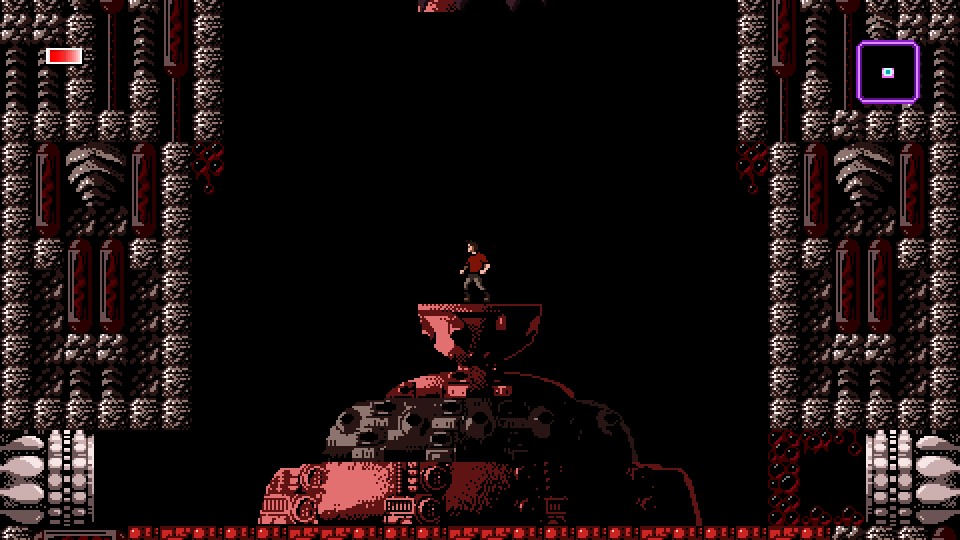
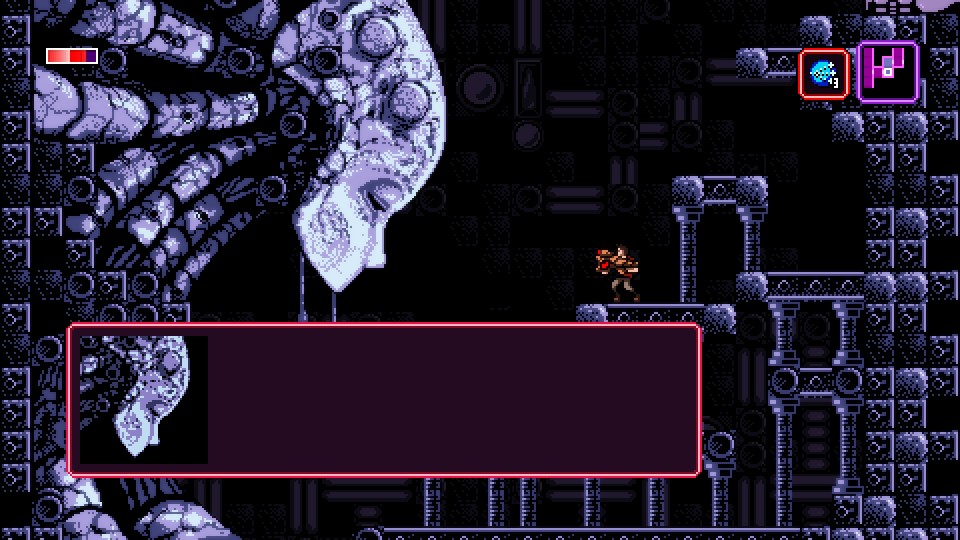
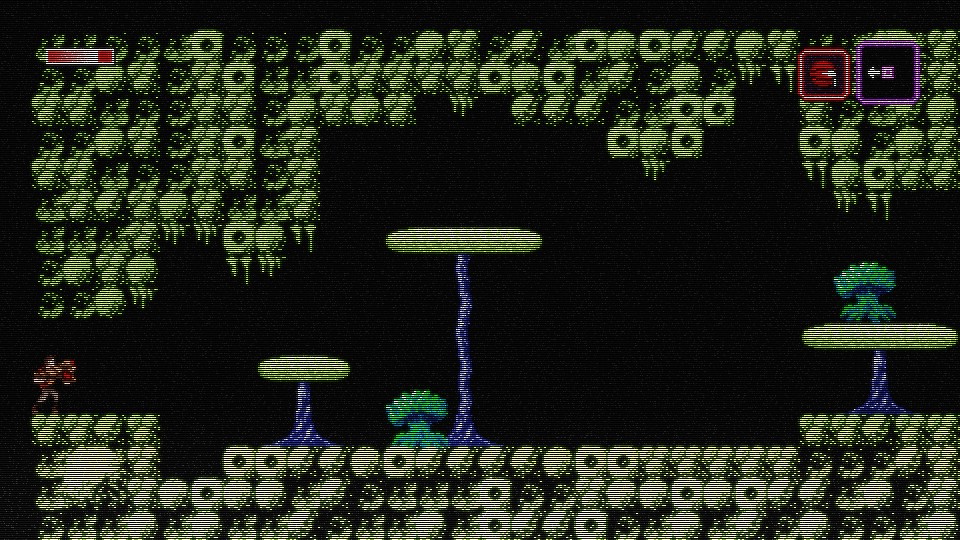
Axiom Verge is a Metroid-style exploration and action side-scroller shooter game released on Steam in 2015 by Thomas Happ Games LLC.

The game starts after Trace is the victim of a lab accident, and wakes up in a mysterious alien world with no memory of how he got there.  He begins exploring, with the guidance of a mysterious voice in his head that knows more about his situation than he does.  As he goes he finds an arsenal of new weapons and items that both help in combat and help unlock new areas of the map that weren’t reachable before.  As he explores wider and wider he finds out more about why he is here and what he is meant to do.

Visuals
16-bit style graphics, nice enough for what they are.  Amusing to have glitchy visuals as an intentional visual effect.

Audio
I didn’t use the audio too much (you can play the game without it which I often will), but the soundtrack is decent, again seems to be inspired by Metroid with its moody soundtrack.  The weapon and monster sound effects I thought were kindof annoying, just as well that I usually play muted.

Challenge
Decent platformer shooter challenge.  If you’re into exploration you can use that to reduce the challenge, because you will find new and interesting weapons and health upgrades and power upgrades and so on.  I didn’t get anywhere near finding every item, so if you were very thorough that would your ability to survive and win the game better. (Conversely if you wanted to increase the challenge, could intentionally avoid grabbing unnecessary items)

One of my favorite aspects of these games is that you will reach a place in the map where you are obstructed because you don’t have the appropriate item to pass an obstacle yet.  So you are rewarded if you kindof keep track of what kind of obstacle you saw where because then once you find the item you can head back and find whatever your reward is for passing the obstacle.

If you end up dying somewhere, you are reincarnated without losing any progress–any map you explored, any items you collected are retained.  I found that reduced the possible frustration, but I suppose it reduced the challenge to some extent as well since there is little penalty for dying.

Story
Certainly some story which unrolls bit by bit as you defeat bosses and find some sympathetic entities that need your assistance.  It’s fairly light on story, you don’t have to really pay attention to the story to move forward, you just have to keep on exploring and fighting bosses and etc.  The story there is is fine, I didn’t find it hugely compelling but I was entertained enough by the game I didn’t care.  There was one segment of the game where the story really took the forefront, transforming a level into a hallucinogenic nightmare–which both cranked the challenge way up and it was interesting to see what they did with it.

Session Time
Very quick game bootup.  You can quit the game at any time and it will save your progress, your map exploration and item acquisition and bosses you’ve defeated and etc, so it’s pretty easy to put down.  But the next time you start the game you will still start at the last save point you visited, so it may take you some time to get back to the point on the map you were at.  So it’s easy to put down, but you may have to retreat to get exactly back where you were.

Playability
Pretty standard controls for this kind of game, easy to get used to.

Replayability
You could keep playing to try to find all of the map and all of the items if you’re into that sort of thing.

Originality
The game is clearly heavily inspired by Metroid, so much of its format it owes to that.  I did appreciate that the game designers didn’t just copy everything from Metroid–the weapons are newly designed, the items to get through obstacles and that sort of thing are all original and it’s interesting to see where they’re going.

So, very familiar format based on a very well known game, but enough original pieces to make it worth playing.

Playtime
I expect this varies wildly based on how completionist you are about map exploration, how efficient you are at remembering what parts of the map have what kind of obstacle, and how good you are at the action sequences (to require more exploration to beef up your stats).

Usually I grab my Steam time on the game for this value, but it is telling me only 3 hours and I know that’s not right–the in-game is telling me more like 12 hours which is probably closer.  (But I didn’t try for completionist, I did explore the map as widely as I could as I went but didn’t worry about trying to get every single thing).

Overall
If you dig Metroid style platformer-shooters you should enjoy this game (and if you don’t know what a Metroid style platformer-shooter, it’s not a bad choice to be the first of its type you’ve played).  Action, gradual map exploration as you find items that unlock new areas, fun stuff.  $20 on Steam.


GAME REVIEW: Life Goes On: Done to Death

written by David Steffen

Life Goes On: Done to death is a platformer puzzle game with a dark sense of humor, published on Steam in April 2014 by Infinite Monkeys Entertainment Ltd.

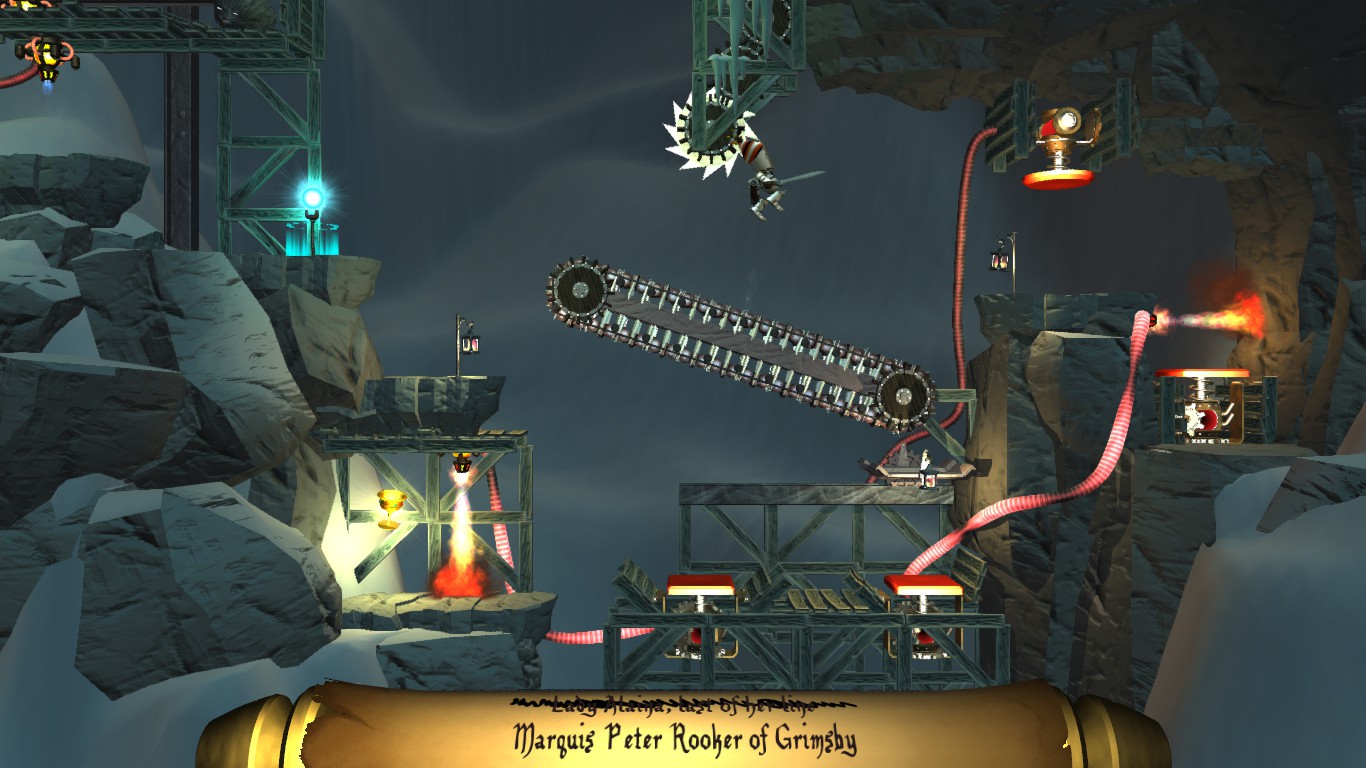
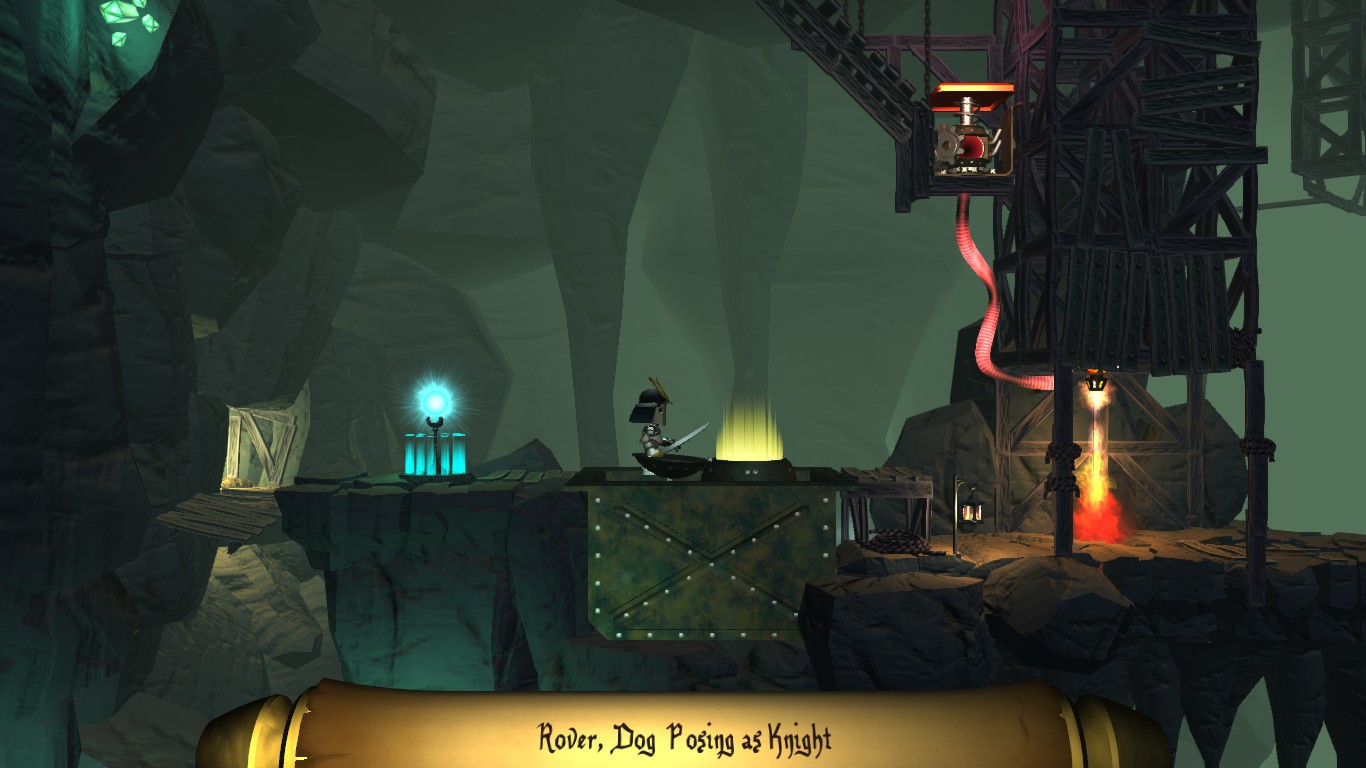
A king with an obsession with immortality sends the brave knights of his kingdom on a quest to find the Cup of Life.  There… is clearly a reason why this immortality-obsessed king didn’t go on the quest himself, since the path to the cup is so dangerous that it leaves a steady trail of dead knights, and each knight only makes their way through the obstacles by using the corpses of the knights that came before them as puzzle-solving tools.  At the end of each level is a cup, but it never seems to the Cup..

Using bodies as stepping stones to cross spike pits, to weight down switches, or to scale spike walls, new puzzle components are added every few levels to keep things fresh, though the game felt too drawn out at times so that the level felt somewhat repetitive.

The final boss fight of the game is probably one of the favorite I’ve played in a while, several stages in itself all using the puzzle components you’ve learned throughout the game and using them in a boss fight scenario.  Especially fun.


Visuals
Fun and fine for what they are, perfect for a comedy puzzle platformer like this.

Audio
Played it muted most of the time–sound is at least not necessary to play.

Challenge
Decent puzzle challenge.  I finished the game without having to look up any of the solutions–a few of the puzzles took me quite a few tries, many of them I got the gist of how to work through them in the first few minutes on the level.  Not epicly challenging by any means, but also not trivial.  The puzzles add new components as the game goes on which helps keep things fresh, though sometimes I felt like there were too many levels before adding new components, some of the levels started feeling a little repetitive.

Story
Very minor level of story, though it works for what it is–between the levels the level map there are little bits of extra text talking about the story, mostly for some extra pieces of comedy.

Session Time
Most levels, once you know how to solve them, should take only 2 or 3 minutes to finish.  Add to that a few more minutes to figure out all the pieces of the puzzle, and most puzzles you can solve without too much agonizing.  If you quit in the middle of the level you have to start the level over again, but since the levels are reasonably short that’s not a huge deal.

Playability
Easy controls, just movement and jumping.  The challenge is more in figuring out the puzzles and then making sure you do all the steps in the right order and timing and etc.

Replayability
There is some replayability built in, mostly in having target stats for each level–minimizing finish time and body count, as well as whether Jeff was fed.

Originality
Felt quite original.  In a familiar genre, but the dark-funny premise of having a steady stream of knights sent to their death and then using their corpses as puzzle components.

Playtime
Steam says it took me about 16 hours of playtime–I feel like that’s longer than it took, maybe I left the game on a few times.  But the game did feel like it dragged on sometimes, more levels than were needed to get all the puzzle variants in.

Overall
This game was fun and funny with enough novel puzzle elements and interesting premise, well worth it for fans of puzzle platformers.  I thought the number of levels did go on too long so that the puzzles felt repetitive at times.  The final boss battle of the game was a major highlight, probably one of the most fun boss battles I have played. $12.99 on Steam.


DP FICTION #49B: “The Last Death” by Sahara Frost

I stare into the endless dark, watching, waiting. It’s like all those years ago, when I was a kid on Christmas Eve. Me, lying in bed, wide-eyed with anticipation, listening for the clatter of eight tiny reindeer landing overhead. Only this time, it’s not jolly old Saint Nick I’m expecting. Nor is it sugar plums that dance inside my head, keeping sleep at bay.

The silent night drags on, one moment melding seamlessly into the next until I think the world must have stopped. Only the stars show me different, each glance out my window revealing their gradual progress across the sky. Then, at long last, it’s over. The dull gleam of first light crests the horizon, and once more, the world begins to move.

“Well,” I say to myself, “Suppose I might as well get ready.”

Heart fluttering with a giddy tingle, I throw back the covers and sit up. Immediately, my poor old bones creak in protest, reminding me to slow down. “Easy, girl. Easy!” I chide, quelling the urge to spring from my bed like some youngster, “No sense in falling and breaking a hip. ‘Specially not today of all days.” I release my impatience with a huff and bob my head in a reluctant nod. Then I plant my feet firmly on the floor, reach for my cane, and carefully hoist myself up.

Once my balance is sure, I begin to move about my home, preparing for the day. There isn’t much to be done. There never is, these days. Still, I want everything to be absolutely perfect. So I throw open all the doors and windows to let in light and fresh air. Then I busy myself with one last tidying-up, straightening the bed, sweeping the floor, and wiping a rag over any surface that might have collected dust overnight.

The next time I look up, my heart skips a beat. Slashes of crimson and gold have already begun to streak the sky. It won’t be long now. Going to the front door, I search the skeletal remains of what had once been a thriving subdivision with bated breath. “Today is the day,” I insist, the words hissing through my teeth like a prayer, “Surely, today is the day.”

I sweep my eyes back and forth for only a moment longer before spying what I seek. There, where the empty street curves out of sight behind a thinning copse of bone white trees, is the stark outline of a shadow. A shadow with which I am now quite familiar. Every morning, it appears on my horizon and, throughout the day, makes its slow approach. When the sun sets, it runs away, but by the next morning, it’s back again, a little closer than the day before. Yesterday, it nearly reached my doorstep before it turned and fled. “It has to be today. It has to!”

Knowing there’s not much time left, I go to my bookcase and take down the lone photo album occupying its shelves. I turn it over and over in my hands, slowly tracing my fingers over the familiar creases in its soft, worn cover. When at last I crack it open, I do so with my eyes closed, breathing deep the sweet, musty tang wafting up from its yellowed pages. Then I open my eyes again and finally allow myself to look at the smiling ghosts trapped within.

An old pain twinges deep within my chest at the same time that a smile tugs at my lips. “Hello, loves,” I say, “It’s been too long, hasn’t it?” I gently turn the album’s pages, pausing to touch the faces captured in each photograph. “Yes, far too long indeed.” When I finish going through and greeting them all, I shut the photo album and clutch it tight to my chest. “But it won’t be much longer now,” I promise, “I’ll be seeing you soon.”

As the words leave my mouth, I am again seized by a giddy feeling. “Soon,” I say to myself, as though repeating the word will make it that much more real to me, “Soon!” Bolstered by my own words, I stand a little straighter and even allow myself a small, excited grin. Returning the photo album to its shelf, I let go my last earthly treasure. There’s only one thing left to do now. Just one last thing. Filled with a sense of renewed determination, I turn to go outside.

“Good heavens!” I cry, heart leaping into my throat when I see the pintsized, hooded figure now standing in my doorway. Thinking I’ve lost track of time again, I ask, “Is it that late, already?” and glance over its head. The sun’s bright eye meets my gaze through the open door. “Oh,” I say, understanding dawning with a bittersweet twinge of disappointment, “You’re early.”

“No, not early,” the figure sighs with a soft, mournful wisp of a voice, “Quite late, actually.”

“Ah,” I say, not entirely sure how to respond, “Well I’m sure you had your reasons.”

“Reasons,” replies the figure, a tremor now audible in its voice, “Excuses.”

“You’re here now,” I try, “That’s what’s really important, right?”

In a gesture reminiscent of a sullen child, the figure twitches its slumped shoulders in an indifferent shrug. I wait for it to say something, but no word comes, and soon, the silence grows awkward. I’m not really sure what it is I envisaged for this moment. A word or a beckoning hand. I just know I’m waiting for something. Anything. But the figure says nothing, does nothing, and we just stand there facing each other, a chasm of silent expectation growing ever wider between us.

Keen to go, my impatience starts to get the better of me. I begin to wonder if I shouldn’t say something. After all, maybe it’s not just me that’s waiting. Perhaps I need to give some sort of sign to show that I’m ready. “Or,” my second-guessing mind whispers. Or maybe I was wrong about today. Maybe my time hasn’t come after all. Maybe it never will. “Or,” it whispers again. Or maybe it already has. Maybe my time came and went long ago. Maybe I’ll wait here forever, suffering in this lonely hell. “Or.”

Panic twists my stomach into a knot and tightens its claws around my throat. I struggle to catch my breath, my lungs dragging painfully, desperate for air. My mind whirls, and I feel myself slipping into a tailspin. As the room seems to tilt around me, I squeeze my eyes shut and hold onto my cane for dear life. It is then, just as I think the chaos will devour me whole, that a sound cuts through the silent screaming in my mind, the soft sobbing of a weeping child.

Opening my eyes, I cast about for the source of the sound. But my home is empty. Nobody else is here. Nobody but me and my strange, small companion. A closer look shows me that it is, indeed, my visitor who weeps. Its shaking form is evident, even beneath the concealing folds of its several-sizes-too-large robe.

As I look at the pitiable creature trembling in my doorway, my panic loosens its grip upon me, giving way to another emotion. One I have not felt in far too long. Compassion. “Oh, come now!” I say, “No need for that! Here, why don’t you come in and sit awhile with me. It’s been a long time since I’ve had anyone to talk to.” Moving to my kitchen table, I slowly lower myself into one of the two chairs I had already pulled out in preparation for today. When I look up to see that my visitor has made no move to join me, I gently add, “Besides, you’re already late. I’m sure it won’t matter if you’re a little later.”

My words apparently afford some small measure of comfort. Though my visitor still hesitates in the doorway, its sobbing subsides into a quieter snuffling. “I suppose that’s true,” I hear it say, pinpricks of hope stippling its muffled words, “Maybe if it’s only for a moment or two.” Then, as though expecting to be struck by a divine bolt of lightning, the figure ducks its head, hunches its shoulders, and takes one tentative step forward. Then another. Then another. When it at last climbs into the empty seat next to me and still nothing happens, it allows itself to relax once more.

“So,” I start, only to discover I haven’t actually thought of what to say, and thus petering out with a lamely trailing, “so…” A moment later, I open my mouth to try again, but having failed to solve the initial problem, am forced to shut it once more. Again and again, this cycle repeats itself, resulting in a long silence that my visitor shows no intention of helping to break. Until, at last tiring of my tongue-tying indecision, I throw all caution to the wind and begin spitting out my every thought as it comes to mind.

“Huh. Well what do you know. Here I am with someone to finally talk to, and I can’t seem to find a single thing to say. It’s not like I don’t have anything to say. I’ve got loads to say! I just can’t seem to decide where to begin. After all this time to think about it—and believe you me, I’ve had plenty of time—you’d think I’d have that part figured out. And maybe I did, once. But now that it’s come to it, I just don’t know. I just don’t know!”

Laughing softly to myself, I shake my head and give my silent companion a wry smile. “Sorry, kiddo. Guess I’m a little out of practice with this whole conversation thing. What about you? What’s your excuse?”

A beat passes in silence. Two beats. Three. Just as I am ready to give up waiting for a response, my companion shrugs and says, “You humans don’t usually want to talk to me.”

“Really?” I ask, genuinely surprised, “Why not? I’d think they’d have all sorts of questions for you. I know I do.”

Another stretch of silence, then, “Some have questions. But they’re usually the kind I can’t answer.”

“And the ones you can?”

“They still don’t often lead to a conversation. Demanding. Cursing. Pleading. But not a conversation.”

“O-Oh. I…I see.” I falter, unsure of where to go from there, but I’m saved the trouble.

“But most people,” my companion continues without prodding, “don’t say anything at all. They can’t. They’re too shocked or sad or scared. And besides, I don’t get to be with any of them that long. So by the time they realize there’s nothing to be afraid of, it’s too late to talk. They’ve already moved on.”

As I listen to all of this with rapt interest, I become aware of a sensation like a knot being loosened within myself. It starts in my chest, works its way up the muscles of my neck, then spreads into my shoulders and down my back. I’m free, I realize. Free of a weight I hadn’t even realized I was carrying. Free of a fear that I’d long ago buried and forgotten. The very same fear that I now recognize being reflected in the figure sitting next to me.

“Sounds like lonely work,” I say, “Must be tough.”

“Yes, sometimes, but I don’t mind,” it replies, a new vitality entering its voice so that it practically gushes, “After all, I was made for this work, and it for me. Only I can do this. No one else was made to endure the responsibility. And besides, the reward more than makes up for the hardship. I know it might be difficult for you to understand, but there’s nothing quite like the sight of a soul when it realizes it’s been brought home. Nothing quite like it at all.”

“I can only imagine,” I say, wondering what sort of expression now hides behind the cowl, “It sounds like you really love your work.”

“I do,” enthuses my companion, then more subdued, “I did.”

“You did?” I question, a touch incredulous, “You mean to tell me you don’t love it anymore? I find that hard to believe.”

“Oh, no. Never that,” assures my companion, “Never that.”

“Then…?”

For a long moment, my companion doesn’t answer, picking at its robes in silence. Then, in a voice so quiet I almost don’t hear it, it slowly whispers, “I always knew, even from the very beginning, that it wouldn’t last forever. That my work…my role…my purpose…would eventually end.”

“End?” I repeat, slow to understand, “But wait…then wouldn’t that mean—?”

“Yes,” interjects my companion, anticipating my question before I even fully realize what it is I’m asking, “It is exactly as you suspect.” Then, without warning, it begins to speak in a foreign tongue. “KAÌ Ὁ THΆNATOS KAÌ Ὁ HAÍDĒS,” it says, its tone deepening and expanding, “EBLĒTHĒSAN EIS TḖN LIMNÉ TOŨ PYRÓS.” Its voice continues to grow, reaching a powerful timbre of such magnitude that the walls around me begin to shake. “OὟTOS ESTIN.” And though I cannot understand the words, “Ὁ DEÚTERÓS THΆNATOS,” they reverberate through me, speaking to my very core.

In the silence that follows, my ears ache with a painful ringing. For a moment, I fear that I have gone deaf. But then I hear my companion, in a low voice, say, “Then Death and the Grave were cast into the lake of fire. This is the second death.” Almost as an afterthought, it adds, “The last death.”

“The death of Death,” I murmur, at last understanding. I pause, contemplating this new development, then ask, “So I really am the last?”

“Yes.”

“I see,” I reply, inwardly marveling at how calmly I accept this confirmation of my long-held suspicions, “I had thought so, but there was no real way for me to know for sure.” I pause again, longer this time, reluctant to ask my next question. Finally, though, I manage, “So if I am the last, then that must mean when I…” Here I stumble, unable to bring myself to say the word. “…you also—?”

“Yes.”

This time, the confirmation hits hard, and I am unable to say anymore for a long while. When I finally do find my voice again, it comes out weak and fearful as I ask, “Is that why it took you so long to come for me?”

The silence that follows is all the answer I need. All at once, I am overwhelmed by the powerful sense of relief that washes over me. Dropping my face into my hands, I cry, “Thank God! Thank you, thank you, God! I had thought that maybe…but no. Thank you, Lord. Oh thank you, thank you, thank you!”

I continue like that for a time, letting out all my years of built-up feelings in a catharsis of tears. When I at last finish crying out all my fear, doubt, frustration, and despair, I dry my eyes and start, “I’m sorry, I—”

“No,” interrupts my companion, its tone heavy with shame, “It is I who should be s-sorry.” Voice breaking on this last word, it sobs, “I’ve been so afraid. I let my fear get in the way of my duty and have caused you such suffering. I’m so sorry. So, so sorry for what I have done to you.”

I listen to these profuse apologies in solemn silence, unsure how to accept them. Part of me is tempted to wave them away with a blithely assuring, “It’s okay,” but that would ring false. Because the truth is it isn’t okay. It hasn’t been okay for a very long time. So rather than try to bandage over my pain with comforting lies, I instead reach out in the spirit of solidarity and say, “I think we all do sometimes. I know I’ve said and done things I’m not exactly proud of, all because I was afraid.”

“But you’re human!”

“And you’re…well, I guess I don’t really know what you are…but you’re not God, are you?”

“No.”

“Then I think it’s probably fair to assume that you’re forgiven a mistake from time to time too.”

“Maybe,” my companion relents, though still sounding unconvinced, “I don’t know.”

“Well why not? You’re sorry aren’t you?”

It nods.

“And you’re here to repair your mistake, aren’t you?”

It starts to nod again, then hesitates.

“You are here to repair your mistake,” I repeat with a jolt of panic, “Right?”

It hesitates another moment, then finally dips its head, finishing its nod.

Releasing my held breath in a nervous laugh of relief, I say, “Well that’s all anyone can really ask for. Just gotta give it our best shot and trust God to take care of the rest.”

Speaking slowly, painfully, as though each word is a struggle to say, my companion admits, “What you say is true, but…” Its voice lowers to a whisper. “…but I am still afraid.”

Leaning forward, I reach out my hand and, with a small smile, whisper, “Me too.”

For a long moment, my companion sits there, staring at my outstretched hand. Then slowly, ever so slowly, it reaches out and takes my hand in its own. The moment our hands meet, my companion finds its courage. Before my very eyes, it undergoes a sort of transformation, straightening its back, squaring its shoulders, and lifting its head. Then, taking a deep breath, it looks me in the eye and bravely quavers, “Y-You have nothing to be afraid of. I-I’ll stay with you every step of the way.”

“And I with you,” I promise, giving its hand a gentle squeeze, “I’ll stay with you too. Every step of the way.”

“O-Okay,” it stammers, with a small frantic nod, “I-I’m ready.”

“Okay,” I say.

Getting to my feet, I help my companion down from its chair. Then, hand in trembling hand, we walk to the front door. When we step up to the threshold, we are met by a vision so breathtakingly glorious that I am momentarily stunned to stillness. As I look upon this final sunset, I am filled to overflowing with a profound sense of peace. I am ready.

We look at each other then, my companion and I.

“Together?” I ask.

“Together,” it agrees.

Then, holding fast to each other’s hands, we cross the threshold and step into bright, burning light.


© 2018 by Sahara Frost

Author’s Note:    I originally wrote this story in response to a call for submissions from Zombies Need Brains. They were looking for short stories to publish in a few themed anthologies, including one dedicated to exploring Death as a character. From the moment I read the prompt, I knew that I wanted to write Death as a sympathetic character, particularly as a child (or at least a child-like entity). The idea for my short story didn’t fully form, though, until I stumbled across a Bible verse in Revelations that describes Death being thrown into a lake of fire at the end of days. When I read that verse, I suppose you could say I felt a bit of sympathy for Death. The lake of fire struck me as a pretty raw deal for someone just doing their job. I thought about how if that was the future waiting for me, I would probably be living in constant terror. With that, an idea began to grow in my mind, and my story came to life.

Sahara Frost grew up in the foothills of Tennessee, reading anything and everything she could find. When books were not enough to feed her ravenous imagination, she began to write her own. An M.A. in English and an M.S. in Information Science later, she now supports her reading addiction by daylighting as a librarian while staying up all hours of the night to pursue her real job: writing fantasy. Fortunately, her supportive husband tolerates her many obsessions and makes sure her coffee mug stays full so that she can continue writing.


If you enjoyed the story you might also want to visit our Support Page, or read the other story offerings.
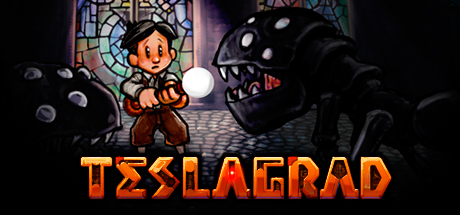
GAME REVIEW: Teslagrad

written by David Steffen

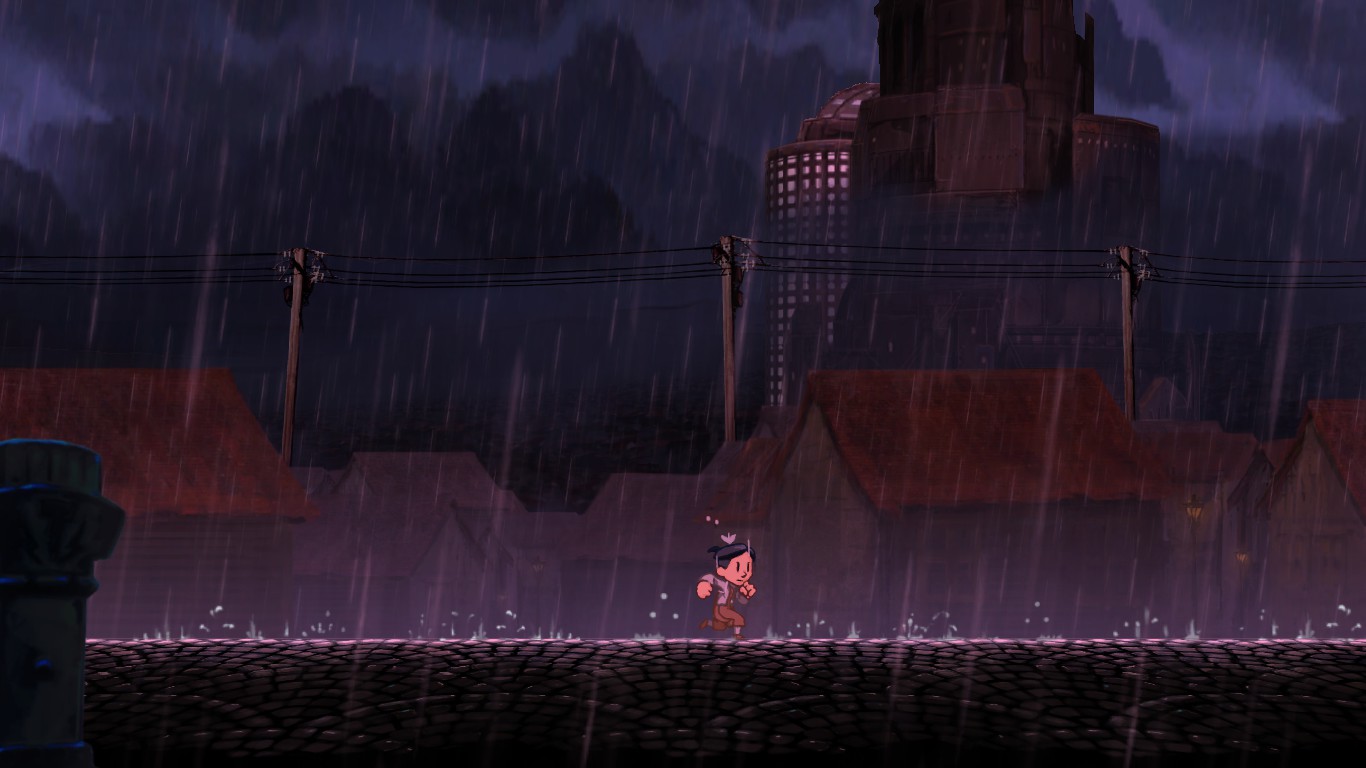
teslagradA man walks through the night, carrying a staff and a baby.  He knocks on a door, gives the baby to a woman there, and then keeps walking.  The baby becomes a man, and henchmen come pounding on the door.  The boy flees the men through the night, eventually finding refuge in the mysterious and deadly Tesla Tower.
Teslagrad is a Metroid-style platformer action/adventure puzzle game published by Rain Games in 2013.  As you might expect from the name, the obstacles and tools in Tesla Tower are based around electricity and magnetism–opening/closing electrical gates, changing the polarity of objects or of yourself to repel or attract in strategic ways to achieve your objectives.

20161227070934_1
Throughout the game you get tools to help you do these things (and these are shown in the trailer for the game, so it’s nothing you won’t see just checking out the ad material for the game).  The first of this is polarity gloves–which you can punch certain objects to switch their polarity.  My favorite item is the blink boots, which turn you into a zip of electricity that jumps to the side a short distance–good for bypassing deadly obstacles or for extending your jumping distance.

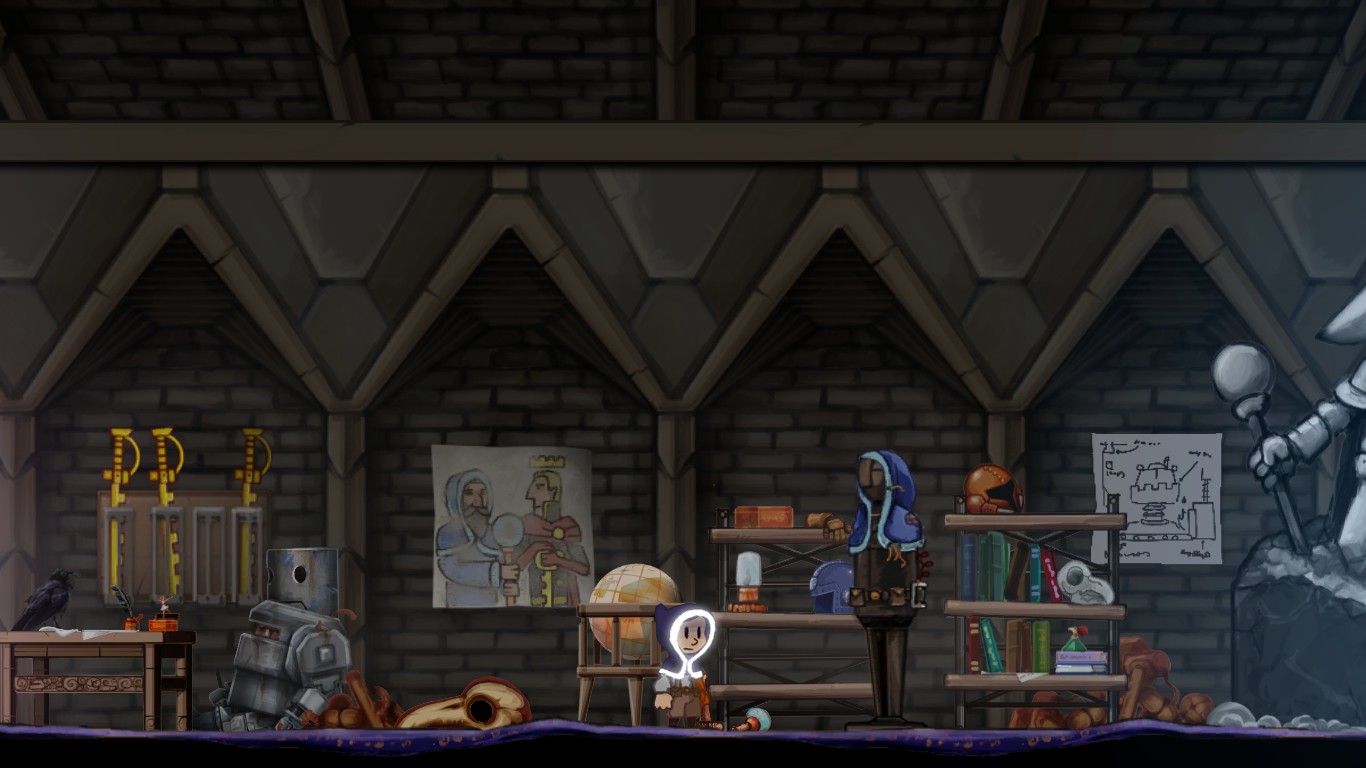
There are no words in the game apart from the menus.  The back story is laid out for you with puppet plays you can discover in theater rooms.  New items are not given a wordy tutorial, but rather you are presented with puzzles to figure them out for yourself, or perhaps you will have a drawing on the wall to give you some hints.

20161228154641_1If you die you just restart in the room where you died, so there isn’t a big penalty for meeting your death–which is good because some of the puzzles are very challenging and it would be very frustrating if dying did have more of a penalty.

Visuals
Nice artwork in the game, some particularly striking areas of the game, and the little puppet plays are a fun way to get the backstory.

Audio
Nice instrumental work (admittedly I often played with no sound)

Challenge
A good level of challenge with puzzles of gradually increasing complexity even as more tools to solve those puzzles becomes available.  There are some puzzles that took me quite a few tries to get through, and some of the boss fights are quite challenging (though I did get through them all).

Story
The story of the player character is a bit slight–you know that he is fleeing from violent men in the night, but I’m not exactly sure why they came for him specifically, though I could guess.  What’s more fleshed out is the back story of the tower, which you get to watch through a series of puppet shows you can find in different theater rooms in the tower, telling of a prince whose wizard granted him the power of lightning.

Session Time
The game starts and stops quickly, and it saves your progress when you move from one area to another.  If you happen to be in the middle of a longer or more complicated room, or happen to be in the middle of a boss fight, then shutting it off may lose some progress, but usually that’s not more than a few minute’s effort.

Playability
The controls are pretty straightforward, with WASD keys for movement and the four arrow keys for tool usage as well as a jump button.  Which is good because some of the puzzles require you to use several tools in quick succession while moving through deadly obstacles, so if the control scheme were too complicated it would be hard to keep track.  My only complaint is that there is one tool that you get late in the game which acts as a weapon–but nothing in the game tells you that the weapon can be directed upwards.  The lack of this information makes the next boss fight not entirely impossible but probably ten times harder.

Replayability
There is some replayability in collectible batteries that require extra little puzzles to be solved to find them.  To reach the final boss you have to collect a certain number of those (which I did).  There are indications that if you collect them all you will unlock something else (which I didn’t).

Originality
The puzzles felt pretty new to me, I don’t think I’ve seen another game based mostly around polarity puzzles.  The “Tesla” in the title served well to catch my eye and draw me into that aspect.

Playtime
It took me about 7 hours to play through the main course of the game, and collecting enough batteries to reach the final area and face the final boss (but without going back through to collect all of the batteries).

Overall
Excellent Metroid-style adventure/puzzle game, cool visuals, challenging puzzles and even more challenging boss fights all based around electricity/magnetism based puzzles.  Well worth the play time!  $10 on Steam

VIDEO GAME REVIEW: Human Resources Machine

written by David Steffen

humanresourcemachine

You’re a new employee at the company, and it’s time for you to start making your way up the career ladder.  They say it’s hard to find good help, but with clear enough instructions, you’ll do exactly what you’re told.

Human Resource Machine is a computer programming logic game that requires no prior programming experience, released in 2015 by Tomorrow Corporation.

20161216231846_1As you work your way up the career ladder you are given tasks by the company dictating how you need to process the input values that come in on one conveyor belt and produce output values to send on the next conveyor belt.  When the game starts you have only a couple simple instructions, Input (which grabs a value off the input belt), and Output (which puts whatever value is in your hands onto the output belt).  But soon those instructions expand to include add/subtract operators, conditional branches, unconditional branches, storing values in memory, to retrieving values from variables by reference.  The challenges get more complex as you work your way up the career path, and there are extra difficult side-branches you can take if you’re up for a challenge.

20161216231953_1On each level you can move on if you solve the problem, but you can reach extra achievements if you try to finish optimization challenges.  If you can complete the goal under a target amount of instructions in your program, then you will get one achievement.  If you can complete the goal with a runtime under a target amount, then you’ll get another.  In many cases you will not be able to get both achievements with the same program because in many cases the goals are somewhat counter to each other–reducing the number of instructions means you reuse lines of code as much as possible, but that requires extra jump commands that add to your runtime.  The optimization programs will probably be easier if you have a programming background and have covered some material about optimizing code (even though these days most compilers will handle most speed optimizations for you it’s still not a bad idea to understand the concepts).  If you want a major hint at optimizing for speed though, search for the term “loop unrolling”–that is the single biggest concept that I used to optimize the first half of the challenges (after that it got harder and I ended up focusing more on just passing the main objective).

Visuals
Simple, but fun.

Audio
Fine, I usually played with the sound off while doing other things, so I didn’t use it too much.

Challenge
Decently escalating challenges, with some optional tracks off the main career tracks that are more challenging.  You can also take on some extra challenge by trying to optimize each solution for the number of commands, and optimize for the runtime length.

Story
The story was pretty slight, but that’s fine.  With each level you get an explanation for why the company needs you to do this particular thing–such as removing all vowels for budget cuts, etc.  As you get further and further in your career you get some glimpses of major things happening in the outside world, but I wouldn’t say they really affect the game, so they’re really only for your amusement.

Session Time
The game is easy to pick and put down.  The game boots up and shuts down quite quickly, and it retains whatever work you had put into any job, so if you leave in the middle of finishing a program you can finish where you left off.  Makes it very easy to tackle the game in short intervals.

Playability
Straightforward to pick up–click and drag commands from the dictionary, click on variables to finish populating the commands, click and drag commands around inside the program, etc.  Then when you run you can adjust between automatically running at different speeds or stepping through or backward for debug purposes.  Only thing that would be nice is if there were an option to type commands instead of clicking-and-dragging, simply because my laptop touchpad is kind of annoying and it would’ve been faster to type, but that’s a minor quibble.

Replayability
There is some replayability in that there are some optional branches of jobs to do that are meant to be harder than the main career path, so if you didn’t do those the first time through, you can go back and do them.  You can also try to get the optimization achievements on each level by optimizing for speed and optimizing for number of commands (but usually not with the same solution).

Originality
The structure of the puzzles themselves are based on general programming principles common to different languages, but I haven’t seen a lot of games based around it at least.

Playtime
I think that I spent about 8 hours playing the game.  That included finishing all the main career path levels as well as all of the optional career path levels, and also getting the optimization achievements for about the first half of those levels.

Overall
If you’re interested in programming or want to at least get a feel for what it’s about, or if you just really like problem solving logic games, then this is probably a good game for you.  If you haven’t done any programming before it’s a good way to ease your way in because the way it’s set up is more forgiving then a freeform programming environment where you’re going to spend your early days wrestling with syntax errors.  If you have done programming before you will have a major leg up figuring out how to do everything but there is still plenty of challenge there, especially in that the set of commands you have available is fairly simple, meaning that anything complicated you have to handle yourself.  Well worth some time and money to play through the game.  I thought it was good puzzly fun.  $10 on Steam

MOVIE REVIEW: Ralph Breaks the Internet

written by David Steffen

Ralph Breaks the Internet is a 2018 computer-animated children’s movie by Walt Disney Pictures, a sequel to the popular 2012 film Wreck-It Ralph. Six years have passed since the events of the first movie, and Wreck-It Ralph (John C. Reilly), the villain of the Fix-It Felix Jr. (Jack McBrayer) game, is still best friends with Vanellope Von Schweetz (Sarah Silverman), one of the player characters in Sugar Rush racing game. They work in different games in an arcade, and they meet to hang out every night when the arcade closes.

Vanellope has grown bored with her game; she knows all three tracks in her game by heart. Ralph tries to help her by making his own new track, but it all goes wrong and the steering wheel of the Sugar Rush game is broken by accident by a frustrated player. Ralph and Vanellope overhear the arcade owner Mr. Litwick (Ed O’Neill) talking with some teenagers who find a replacement wheel online for $200, but that’s more than the game makes in a year, so Mr. Litwick unplugs the game, and Vanillope and all of the others flee into the power strip, orphaned.

Meanwhile, Mr. Litwick has also added a Wi-Fi router, and Ralph and Vanellope set out into the wild unknown of the Internet to go find the wheel themselves, so they can buy it and save Vanellope’s game. With no idea how the Internet works, or anything about humanity besides what they can observe within the arcade.

Overall, this movie was fun, full of little Internet jokes, but it is nowhere near as good as the original Wreck-It-Ralph. Many of the jokes are tired, and unsubstantive, easy often-repeated jokes about spam and pop-ups, which aren’t particularly up-to-date. Almost all of the obstacles in the movie are self-made, and could’ve been avoided by just making better choices. That’s not to say that there aren’t some truly shining moments: the Disney Princesses are a particular highlight, voiced by their original Disney movie actresses!, and Shank (Gal Godot) the best racer in the Slaughter House racing game.

SPOILER SECTION

I usually don’t have a spoiler section in reviews, but there was a part of this movie that I wanted to talk about that is too far into the plot to be part of a spoiler-free review.

As Ralph and Vanellope find ways to make money to buy the steering wheel, Vanellope falls in love with the Slaughter Race game, and Ralph overhears her saying that it feels like home. Ralph is so jealous about this that he goes to dark web and buys a computer virus to let loose into the Slaughter Race game with the intent that it will slow down enough that she won’t want to stay there anymore. Predictably, this goes horribly wrong and becomes the major source of conflict for the movie. They end up working it all out and they stay friends at the end.

And I know this is a children’s movie, and forgiveness is often a big theme of children’s movies. But I think we also have to consider how kids can absorb the themes in such movies, and I think that there are some things that you can’t expect someone else to just get over. Ralph sets loose a harmful contagion because he’s jealous that his friend might take a job far away from him. The contagion gets loose and wreaks havoc. Sure, he asked questions about whether it’s really harmful or not, but he was asking them of someone selling viruses on the dark web.

DP FICTION #49A: “Heaven For Everyone” by Aimee Ogden

The summer that God came to Whartonville, I ended up trapped on the drugstore roof with only half a peanut butter sandwich and a seraph to keep me company.

The sandwich part is true! Hell, all of it is true. I’d eaten the rest of my lunch on the bus, before God’s approach hit the news. I can always buy more lunch in the hospital cafeteria. When the cafeteria and the rest of the city aren’t under three feet of water, at least. I know it was bad, and people died, but I’m still glad we got a flood instead of the plague of locusts that just hit Fargo. Two months later and you still can’t step outside without a crunch, is what I hear.

Anyway the seraph must have flown up before the rain really started coming down, and I managed to climb up onto the street light and from there to the roof. So there we were together in the middle of the storm. “I thought He didn’t do this shit anymore,” I said to the seraph. They shrugged, or at least I thought they did. It’s hard to read body language on someone who’s seven feet tall with six wings and a dozen mouths, but I’ve had practice lately. You know they can’t really speak for themselves? Sure, they talk, but everything they say is an echo from the Almighty’s own lips. Or at bare minimum from one or another of His prophets. So body language turns out to be kind of important. “There was a covenant or whatever.”

I pushed away from the ledge. I still had my umbrella at that point, I think, though with the way the rain was blowing I probably wasn’t any dryer for it. You’ve seen pictures of the flooding? They don’t do the wind justice. “I guess you probably can’t just fly us up and out of here, either.” The seraph’s burning wings were too drenched to do more than smolder. They shook their head, and a hospital ID card rattled around their neck. I knew we had a few angels working in the morgue. They liked to stay out of sight, and everyone else liked it that way too.

“Damn,” I said, because I didn’t have anything else to say. When we said we wanted heaven for everyone, you know, this wasn’t what we had in mind. We unlocked the doors and flung them wide open, but heaven didn’t let us in. Heaven came to us. “The storm’s getting worse.”

“YOU HAVE BEEN CAST DOWN, YOU THAT ONCE LAID LOW THE NATIONS,” said the seraph, and my teeth rattled in my skull. That voice had been created to level mountains and humble the mighty. I wasn’t that mighty and it didn’t make me feel humble, just headachey. I told the seraph not to rub it in and that I was pretty well aware by that point just how low I’d been cast, and they looked down at their bare leathery feet. And then I wasn’t so sure just who they’d meant.

That was when I heard the screaming. A little break in the wind, maybe. No, don’t call it the eye of the storm. What was at the center of that squall had a lot more than just one eye. But I’ll get to that. Just sit tight.

The screaming was a woman down on the street. Well, not on the street itself. The street was a riverbed by then. She’d grabbed a door somewhere, one of those interior jobs with the cork core to make it float. Might’ve been okay on a lazy river or something, but a trip down Almond Street meant real whitewater rafting.

The seraph leaned down next to me to get a view of her. They shook their head, and the long silver chains of their hair scraped against their guttering wings. “THOU SHALT NOT KILL.”

“You’re the angel,” I told them. “Do something.” But I don’t need to tell you how that rankled. I didn’t go to medical school for a million years because I like just standing around and watching people die. Did you know that most of the hospital staff were Paradisists? I don’t know the exact numbers, but upwards of eighty percent for sure. You see that many people die, you see that many people live badly, you’re going to want change. Well, we got it. First, do no harm, we said, but it turns out you can’t crack your way into heaven without screwing things up something serious.

Where was I? Oh, the woman. So the current was sweeping her down the street right in front of the drugstore and I thought, you know what? I’m already wet. So I grabbed the downspout and slid down and probably would have about broken both my ankles if there hadn’t been three feet of water to slow my fall. I’m tall but three feet of water is tall too, and it knocked me right over, and my first thought was, well, this lady and I are going to die together.

Then this huge splash, practically a tsunami, right next to me. The seraph took a cannonball right off the roof. Lucky they didn’t land on me or this story would be a lot shorter and also you’d have to hear it from my wandering soul. Assuming I’m heavenbound in the first place. That might be a big assumption for any Paradisist, I don’t know. They came down between me and the lady on the door and I was glad for that, I was halfway to the suburbs by then but at least I didn’t take the plunge for nothing, I got off the roof to save her and if my swan dive didn’t accomplish anything besides getting that seraph in gear, that’s okay.

I was underwater more than I was above, but I saw them grab her. They put her up on their shoulders like a kid riding piggyback. And then the last thing I saw before I went under again was them spreading their wings wide. And when I say wide—have you ever seen a seraph in flight? Their wingspan half filled the street. Diverted some of the water around the corner, onto Pierson Avenue—my apartment’s down that way, but that was the last thing on my mind at the moment, let me tell you. Not enough to stop the water, but enough to slow it down. I got my feet under me again, and I got to the seraph. “Now what?” I asked, because it was still raining too hard for their wings to light up. Not that a takeoff in gale winds probably would have been a great idea.

Well, that seraph picked me up like a rag doll and set me on top of the roof across the street, just a single story, and lifted the woman up right next to me. Then they started climbing up too, but lord, were they heavy. They tried stepping on the windowsill and ripped it clean out of the façade. We tried to heave them up, the two of us together, but like I said: heavy. And just then, guess who decided to come cruising around the corner? Yes, the Almighty Himself, a thousand blazing eyes and a hundred tongues professing His very own glory. You could see the rain sloughing off Him, rivers of the stuff. Literal rivers. I didn’t know then that January Lake had already burst its banks. That’s what happens when a man-made lake meets a heaven-made catastrophe. But still: could’ve been a plague of locusts.

After all of it, there’s still a part of me that wants to take a swing at the big guy. A stupid caveman gut reaction. You can’t punch a cloud, even one chock full of eyeballs. But you can want to punch it, and boy do I.

Anyway Almond Street had become Almond River at that point, really, and all we had was to hang on to the seraph like their life depended on it. Maybe it did. We hung on, together, just the three of us alone in the world for all we knew. That seraph held on so tight they broke my wrist, can you believe that? Still hurts when a storm’s coming. But we held on. That was all that mattered just then. And eventually the storm died down, and the river dried up, and the seraph lifted us down from the roof like the infants we were.

The woman looked around. “It’s still raining,” she said. “I thought it would have stopped by now. I mean—He’s gone, isn’t He?”

But I ignored her. Not at my best form just then. “It’s not fair,” I said, which was a damned stupid thing to say, because fair was never the point, was it? The idea of heaven for everyone wasn’t fair, it was just right. It was just … just.

The seraph spat a giant loogie onto the wet street. “RENDER UNTO CAESAR,” they said, and jerked a pair of wings in the general direction of where God had gone.

“You’re mad at the big man?” My wrist hurt like hell, but I remember the thing that bothered me most was that my shoes each weighed about a thousand pounds. Never occurred to me to just kick them off. “We’re the ones who pulled you down here into the mucky-muck.”

“We” was more literal than the seraph might guess. Or maybe they did know? It’s not like I’ve ever made a big secret of it. Doctors are supposed to help people, aren’t they? But they weren’t looking at me. Their stare drifted along the street, where the marble façade had come off the old theater and the windows had blown out of Martinelli’s. There were a dozen bodies left behind where the river had been.

I wondered then, what it was like in heaven before we brought the walls down. Which way the anger blew when He’d promised He wouldn’t turn it earthward again. Well, we wanted heaven for everyone. Maybe we just weren’t clear enough on the details of what heaven was supposed to look like, or who exactly counted as everyone.

The storm had passed, but there was still wreckage to clean up. Some of it human. “We’ll make things right,” I said. As right as they can be, after all this. “We’ve done harder work than this,” I said.

The seraph raised one wing. Sheets of rain slashed off the edges of their brass feathers, but I ducked underneath, and the woman—Karen, did I say that yet? Her name was Karen—anyway, she did too. They closed their wings around us and we huddled together until the last of the Almighty’s wrath had passed. Shared that PB&J, too, even if it was a little soggy, and before the rescue teams came through I gave the seraph my number in case they wanted to check out my lab. Maybe get out of morgue work. As for the Almighty, I think He headed north out of Whartonville, but I forget if that’s the summer He hit Winnipeg or Regina.


© 2018 by Aimee Ogden

Aimee Ogden is a former software tester and science teacher; now, she writes stories about sad astronauts and angry princesses. If she went to Hogwarts, she would be a Ravenclaw, and her patronus would be She-Hulk punching a nazi in the face. Her work has also appeared in Shimmer, Apex, and Analog.


If you enjoyed the story you might also want to visit our Support Page, read Aimee’s previous story “When One Door Shuts”, or read the other story offerings.

THEATER REVIEW: Elf (The Musical)

written by David Steffen

Elfthemusical.jpg

Elf is a musical theater production that made it’s Broadway debut in 2010, based on the 2003 movie of the same name.

The play features a very similar plot to the movie, starring Buddy, a human who was accidentally brought to the North Pole by Santa Claus when he was a child and raised by Christmas elves ever since. Buddy is now an adult and struggling to fit in because of his gargantuan size and underperformance in the toy factory (lacking the elfish extreme aptitude for toymaking). He happens to overhear someone say that he’s really a human. He finds out that he had been given up for adoption by his mother who passed away, but his father is a businessman working in New York City.

So Buddy sets out to find his father Walter Hobbs, who is working at a publisher in the Empire State Building that makes children’s books. He has no familiarity with the human world, how money works, or that anyone thinks that Santa Claus isn’t real. Walter Hobbs has a wife and son and doesn’t welcome the presence of a man dressed as a Christmas elf who claims to be his son.

I love the movie version of this. I’m generally not a Will Ferrell fan, but to me the movie was Will Ferrell at his best, with the perfect performance for the wide-eyed innocence of a human being who has grown up in the miniature saccharine world of the North Pole, and much of it comes from the unexpectedness of the story. The play, since it’s based on the movie, loses much of the novelty inherent, and it does very little new with the concept. It does add the musical element of it, but as far as musicals go, it didn’t have any songs that stick in my head the way they do for a great musical (the only one that I remember at all is the title song “The Story of Buddy the Elf” and I think I only remember that one because they played it frequently on TV commercials for months ahead of time. On top of that, it was hard not to measure the main actor’s performances against Will Ferrell who, as I say, I’m not generally a fan of but pulls of this particular role quite spectacularly.

If the story sounds like fun, I would definitely check out the movie version, but the theater version didn’t wow me.