
BOOK REVIEW: The Last Town by Blake Crouch

written by David Steffen

The Last Town is a… I guess I’d call it an SF/horror thriller… the final book in a trilogy written by Blake Crouch and published in 2014 by Thomas & Mercer.  There’s no way to discuss the events of this book without major spoilers for the first two books, so if you don’t want to know anything about book 1 and book 2, stop here.  I have reviewed book 1 and book 2 already.

It is nearly two thousand years in the future, and pollution of the environment has caused humanity to mutate into vicious animals with only a minor resemblance to the human species we know today.  In the late twentieth century rich the scientist David Pilcher predicted this and prepared to save as much of humanity as he could–he perfected the technology of cryogenic sleep, and took 1000 people into sleep with him.  This group of people included both a staff of volunteers who came willingly, and those who were abducted without their knowledge under the guise of car accidents and other incidents.  After waking up in almost two millennia later, Pilcher discovered that his prediction was correct, and the world was overrun with what he called aberrations or “abbies” for short, humanoid vicious predators who had replaced our species of humanity.  He rebuilt the town of Wayward Pines in the mountains of Idaho.  Those who had been abducted were woken to live in this town, the nature of the world kept a secret from them and living under the constant threat of capital punishment for breaking a long list of oppressive rules.  No one was allowed to leave, though none of the residents know that there is nowhere safe to leave to.  Pilcher’s volunteers kept surveillance over the town from a base in the mountains.

Secret Service agent Ethan Burke was one of those abducted, and he fought against the town rules until Pilcher decided to promote him to the position of sheriff to protect and oppress the people of the town.  Ethan played along for a time, knowing that there would be lethal consequences for anyone who oppossed Pilcher, but he arranged a plan to reveal the whole truth to the entire town all at once so that Pilcher couldn’t stop it, with the intention that with the whole truth in front of them the townspeople could plan a better future without the need for the oppressive rules and deadly consequences for breaking them.  He hadn’t counted on the depth of Pilcher’s mania, because in reaction to this sharing of information, Pilcher shut down the defenses that keep the abbies out of the valley and let a huge swarm of abbies loose into the town.

That’s where the book starts.  Phew, okay, all that out of the way.

This book, as the previous two, follows Ethan Burke as the main POV character.  As the book starts the stakes are already high as Ethan is just realizing the extent of the lethal problem that Pilcher has triggered.  He is a leader with military experience, and he has to do his best to organize hundreds of civilians with only limited access to weapons survive a brutal attack from the abbies.  And there’s still the question of what to do about Pilcher and Pilcher’s staff, still safe in the stronghold of the mountain.  Near the end of the last book Pilcher’s psychotic helper Pam was left outside the wall by Ethan to die at the hands of the abbies, but with the door open she can stroll right back in.  And meanwhile, Adam Hassler returns from a long trip away.  Adam Hassler is Ethan’s former boss at the Secret Service who offered up an unwilling Ethan for inclusion in Wayward Pines, and who was “married” to Ethan’s wife for a year in Wayward Pines unbeknownst to Ethan before being sent off on a long voyage to investigate abby country.

Although this one was probably the most action packed, given the premise, I found this the least enjoyable of the trilogy.  What I really enjoyed about the first book was the mystery of what the heck was going on in this town and what the point of the rules are, and all of that.  What I really enjoyed about the second book was the step up in understand that Ethan gets when he becomes sheriff, but there is still a lot of truth to uncover, and a lot of dramatic tension inherent in Ethan knowing that the townspeople are in the only area safe from the abbies and that their attempts to escape would only be suicide.  Book three wrapped up the threads from the trilogy, so it served its basic purpose.  I didn’t hate it, but I didn’t find it remarkable in the same way that I found the first two books to be remarkable because it was more of a straightforward action hero story. The townspeople all know what’s going, there’s no more attempt at the facade of a small town, the villains are very clear and obvious at every stage.

The ending of the book was, I thought, pretty weak as well. Felt like it wasn’t really planned, wasn’t really part of the story, but was just tacked onto the end because it had to do something.

The Last Town is not a bad action hero book, but it is a rather unremarkable one.  I would still recommend the series as a whole, and if you read the first two books you’ll probably want to find out what happens to the characters, but the finale is its weakest link.


BOOK REVIEW: Wayward by Blake Crouch

written by David Steffen

Wayward is a… I guess I’d call it a mystery SF thriller… the second of a trilogy written by Blake Crouch and published in 2013 by Thomas & Mercer.

If you follow reviews on this site regularly, and this one seems familiar, that’s because I’ve already posted a TV review of Wayward Pines Season 1 which is based on Blake Crouch’s trilogy of books and covers a similar set of events as the trilogy of books.  And I recently posted a review of Pines, the first book in the trilogy.  The first book relied a lot on big mysteries for a lot of its appeal and revealed many of those mysteries at the end. I can’t talk about book 2 without talking about those mysteries, so if you want to be surprised go read the first book.

To give a quick recap of the first book, Secret Service agent Ethan Burke and his partner travel to Wayward Pines, Idaho to investigate the disappearance of two Secret Service agents.  They get in a car accident in town and Ethan wakes up in the hospital, and something is very wrong about the little town.  There are all kinds of bizarre rules, such as no one is allowed to talk about their past, and everything about the town seems set on forcing its residents to stay–the only road that’s supposed to lead out of town just loops back into it.  Ethan fights hard against the town and becomes the target of a fete–where the sheriff of the town  leads the citizens of the town to find and kill someone who has broken the rules.  Ethan survives the fete and because of his resourcefulness he is let in on the secret of the town.  David Pilcher, the secret leader of the town, has had a decades-long project that started when he discovered that the human genome was becoming corrupted and the human species was quickly changing into something else entirely.  When no one believed his research, he set out on a project to preserve as much of humanity as possible, gathering people he could trust to act as his staff and collecting others against their will.  His research perfected the technology of cryogenic sleep and  he put all of these people (including Ethan) into cryosleep.  1800 years later he and his staff woke up to find that his prediction had come true–the world as far as they could explore had been overrun by the evolutionary descendents of humanity–which they dubbed aberrations (or abbies for short)–vicious human predators.  They set out to rebuild Wayward Pines, protected by sheer cliffs and a high voltage fence and then woke up people to populate the town.  During his first attempt to populate the town he tried telling people the truth, but suicide rates quickly rose, and he salvaged what he could by starting over again (putting people in cryosleep erased their memory since the last sleep).  David Pilcher names Ethan Burke as his new sheriff to help enforce the rules of the town and keep people safe both from the abbies outside the wall and to keep the growing discontent among the townspeople from exploding into revolution.

Phew, sorry, long back story, but most of that’s important to understanding the basic plot of this book.

Near the start of the story Ethan Burke discovers a corpse of a woman who has apparently been murdered, and Pilcher assigns him the task of investigating.  Although the violent fetes are a part of life in Wayward Pines, unsanctioned murders are rare, due in large part to the constant surveillance of the residents.  The murdered woman was one of Pilcher’s employees working in the mountain to oversee the surveillance and discipline of the town, and she had been venturing into town in the guise of a townsperson to root out the secrets of a group of residents who have found ways to dodge the surveillance.  Meanwhile, Ethan has been reunited with his wife and son–when he first came to Wayward Pines 2000 years before he came there before her, and she was taken by Pilcher more than a year later.  But, skip forward 2000 years, and she and their son was woken from cryo more than 5 years before him so she has already settled into living in the town by the time he arrivs.

Although the setting and protagonist the same, this book has a decidedly different feel from the first book, Pines.  The first book feels more like weird fiction because of the unexplained oddities of the little town and the constant attempts of the protagonist to pick at the edges of the strangeness.  By the start of this book Ethan has a much clearer idea of what’s going on and has been drawn into the conspiracy himself, so rather than being in the position of rebellious loner he is a family man in a position of precarious power whose job is both to protect and oppress the people of the town.  He hasn’t lost his rebellious nature, but he is in a very difficult position.

The mystery of the murder made a good centerpiece for the book, (and was a surprise to me even though I’d seen season one of the TV show because of changes in the adaptation), and Ethan’s interactions with Pilcher are a constant source of new information to understand the situation this little town is really in.

The most interesting new addition to me that differentiated this book from the first one is to see more deeply into the point of view of the staff that live in the mountain surveilling the town.  While the people in the town yearn only to get out of the town, the people in the mountain yearn to get into it–to live under the open sky and be able to live a comparatively carefree life and just forgetting all the strangeness around them.  That was an interesting dichotomy to read about, and one that was largely absent from the TV show.

The book is interesting throughout, and manages to avoid the Book Two Slump of many series.  Although it depends on knowledge from the first book and leads directly into the events of the third book, it has an arc that stands on its own that starts with the major change of Ethan being promoted to sheriff and ending with major events that lead into the third book’s story.

BOOK REVIEW: Pines by Blake Crouch

written by David Steffen

Pines is a… I guess I’d call it a mystery fantasy/SF thriller… the first of a trilogy written franchise tie-in novel written by Blake Crouch and published in 2012 by Thomas & Mercer.

If you follow reviews on this site regularly, and this one seems familiar, that’s because I’ve already posted a TV review of Wayward Pines Season 1 which is based on Blake Crouch’s trilogy of books and covers a similar set of events as the trilogy of books.

The story begins as U.S. Secret Service agent Ethan Burke travels to Wayward Pines, Idaho to investigate the disappearance of two fellow agents who were last heard from as they approached the mysterious little town. After a car accident en route, Ethan wakes up in the Wayward Pines hospital, unable to contact anyone and unable to leave. In many ways it seems like a stereotypical small town, but there are big warning signs that something is not right in this little town–the strange things that people say, the strict rules the town keeps about not talking about your past and not asking questions. He wants nothing more than to escape the small town and get back home to his wife and son, but every route out of town is blocked–the main road only loops back into town again.  He finds one of the agents he was looking for (whom he had had an affair with in the past), but she seems to aged more than she should have.  Everything is a mystery in this mysterious, ominous, little town.

I read the books after already seeing season 1 of the TV show, and so I knew pretty much what to expect but I was interested in where it differed and where it was the same.  Pines stuck pretty close to the TV show, albeit covering only the first few episodes.  There are some notable differences, probably just to compress the plot enough to fit it on TV, and the book had more of an emphasis on Ethan’s past torture at the hands of a terrorist.  The main things that differed were supporting details like character appearances and character ages, and that sort of thing, which is always a little confusing but not terribly so.

I commented in the TV Review that some of the “weird little town” moments kind of reminded me of Twin Peaks but that the show did a reasonably good job with them and didn’t make it just a ripoff.  I was interested to read in the introduction that Blake Crouch is a huge Twin Peaks fan and this trilogy was his attempt to write something that had some of the same feel to it, so I think it’s interesting that I picked up the reference.

Book 1 provides a pretty solid plot arc on its own, making it a reasonably good standalone book on its own. By the end of the book you find out clear explanations for most of the weirdness in the town but with enough questions left to leave plenty of remaining mystery, the immediate plot arc resolves in a satisfying and interesting way, and at the end of the book the situation changes drastically enough to serve as an excellent hook for reading the next book–many things are the same but big big things have changed so if you’re like me you’re immediately drawn by the question of “WHAT HAPPENS NEXT?”


DP Fiction #20: “October’s Wedding of the Month” by Emma McDonald

When Percy and Astrid met they’d no idea that only a few short weeks later they’d be getting married.

“Percy really swept me off my feet” said Astrid. “I’d just stepped outside the pub for a quick smoke and suddenly this guy was bundling me into his car.”

“It was love at first sight,” Percy confirmed. “I saw her and I just had to have her.”

Despite their unconventional first meeting our October couple are obviously very much in love. Sitting in their home, admiring the various objects of cult paraphernalia, including an antique sacrificial dagger, it’s also obvious that this was never going to be a normal wedding.

“We never really discussed it, because the cult is so important to Percy that I just took it for granted that the wedding would be a dark ceremony honouring the Elder Gods.” Astrid says. “Also, as I spent the weeks building up to the wedding locked in a cellar most of the preparations had to be done by Percy and I wouldn’t have felt comfortable asking him to compromise his beliefs when he was having to put in so much effort to make the day perfect.”

“Astrid was incredibly supportive.” Percy gives her a quick hug. “She even agreed to convert to the cult of the Elder Gods, which was something I’d not dared hope for. I’d had a few previous engagements which I’d had to break off once the bride realised what the cult involved, but Astrid just went for it.”

“Killing the owl was difficult,” said Astrid. “But it made for a really memorable hen night. Percy’s mother helped mix the cocktail of laudanum, owl blood, and gin that’s part of the traditional cult initiation and I don’t remember much of what happened afterwards, but I woke up covered in feathers and children’s teeth so it must have been a good night.”

While Percy’s wedding suit was fairly traditional cult attire, including a mask made out of broken dreams, the couple wanted the wedding dress to be a bit more personal. Astrid’s confinement made fittings difficult, but the final gown was still something spectacular.

“I think everyone worries about the dress.” Confided Astrid. “I was definitely one of those girls who cut wedding dresses out of magazines and I’d always seen myself getting married in something big and white.” So the vintage lace dress was something of a departure. “Percy’s mother brought around a trunk of old dresses, including her own, which was a long Bohemian number from the seventies. Sadly we had to reconsider because of the blood stains, but we salvaged some of the lace from the sleeves and used it for my hairpiece.’

“The dress I eventually chose was a real one-off. We think it might have been made for a great aunt, but the pictures of the wedding it was worn at have all been defaced so it’s only a guess. I was worried that it might seem a bit ordinary, but the rotten seams and mildew stains helped lift it above what you’d find on the high street.”

Percy chose the venue in accordance with the rituals necessary for the cult ceremony he’d always dreamed off. “Several people commented on how isolated the chapel was. Although it did make things easier from the point of view of parking, and it was very convenient for the reception which we held on the beach. The most important thing about the venue for me was that it was in the same place that I’d been having premonitions about since I was a small child. Nightmarish visions can be tricky things to pinpoint, and it took me several years of investigation before I found the perfect venue. When I told my mother she laughed and said I should have just asked Uncle Norman, as it’s the very chapel he was baptised at. There’s a funny story attached to that, because shortly after he went mad and murdered his twin brother.”

“The family connection is very important to Percy,” Astrid interrupts. “He went to a lot of trouble to ensure that my family were present at the ceremony, even chloroforming my dad when he objected to being kidnapped. We want to have a big family in the future and by making the wedding so family-oriented. I hope we’ve started off on the right track for that.”

The wedding was officiated by Mordiggan, a deity chosen by Percy due to a longstanding family connection. “It did mean we had to advise the guests to close their eyes during the ceremony, as any sighting of him causes blindness. The photographer had a particularly difficult job, and sadly didn’t survive, but he did get some beautiful shots of the service.” Indeed one of these was our cover for this month. The ominous dark cloud that stands at the altar while Astrid and Percy exchange rings gives a real sense of atmosphere, and it’s hard to fault Percy for risking his guests’ eyesight when the end result is so impressive.

While the wedding ceremony was a small affair, the reception was even more select, something most couples would consider unusual. But for Percy and Astrid the process of culling the guests was a core part of their day.

“I think we were both a little wary of how our friends and family would perceive Astrid’s newfound religious zeal,” admitted Percy. “There was a lot of talk of brainwashing and some mentions of the police, although the local police force is very sympathetic to cult members and we’d paid the usual bribes.”

“Percy and I didn’t want anyone at the reception who wasn’t really celebrating with us.” Astrid takes over as Percy seems visibly upset by the idea of anyone doubting their affection for each other. “The ritual culling wasn’t something I’d ever heard of before, but it’s part of Percy’s religion and I thought it was a good way of symbolising our new life together.” For those who aren’t adherents, the ritual culling is a ceremony in which guests are pursued and slaughtered by beasts. A small number of guests survive, either by luck or prior knowledge, and these are then invited to the reception. “Percy choose to have the pursuit led by his father, who owns a pack of dire wolves. The slaughtered guests were then dismembered and their brains and hearts used to adorn the wedding cake.”

The cake was a custom-made four-tier chocolate cake from a local baker who specialises in catering for occult ceremonies, so were well aware of the need for discretion and dark ritual.

“Chocolate cake was the one thing I was adamant about,” said Astrid, “as I’m a huge chocoholic and I didn’t want to go without on my big day. The caterers covered it with ganache, but otherwise left it bare so it could be decorated with the spoils of the hunt. We had to offer a tier to Cthulthu, along with the remains of the dead guests, but otherwise it was sliced up and handed round. As is tradition, the blood of Percy’s family and mine had been mixed into the batter so the consuming of the cake really brought us closer together.”

“Sadly Astrid’s father was one of those who died during the culling, but we placed his heart on the very top of the cake so that we could both take a big bite and make sure he’s with us in the years to come.” Percy gives Astrid a hug as she wipes away a tear at the memory. “It’s a huge shame that so many of Astrid’s close family died on the day, but I like to think that they’d have been glad to know that their sacrifice helped ensure a happy future for us both.”

The reception was held on the beach as is traditional for cult weddings. The summoning of Cthulhu that formed the climax of the evening can only be done in an area next to tidal waters and while it might have been possible to hire a local pier Percy explained that he’d been reluctant to do so due to the likelihood of losing his deposit. “Cthulhu does tend to cause damage, and while there are some local venues which are sympathetic, most of them will charge for broken windows and bloodstains.

“Despite living only a short drive away Astrid had never before seen Cthulhu, so the reception was extra special as it meant I got to introduce her to the Elder God as my wife, as well as see the horror on her face that all new initiates experience.”

“It was really terrifying.” Astrid nods. “Percy had said a lot about how important it was to him that Cthulhu accepted me, and I think I’d just built it up in my mind to something which made it a lot scarier than it really was. There was all the stress of having just gotten married and then having had to run down a cliff while being chased by dire wolves and seeing this huge tentacled dragon-man-thing emerge from the sea was sort of the last straw.”

“She went a little mad, but luckily my mother had remembered the straitjacket and once Astrid had been restrained she calmed down a lot.”

“The laudanum helped.” Astrid giggles. “I felt so stupid once it was all over, but Percy didn’t mind at all.”

“I’d been to a few weddings where the bride really lost it. My cousin Irene cut off her husband’s fingers and ate them, so Astrid was pretty unfazed by comparison. I don’t think you can expect everyone to adapt to the Elder Gods in the same way, especially if they’ve not really been part of your upbringing.”

It seems a bit unfair to ask if Astrid has any concerns about that difference in upbringing now, especially when they make such a lovely couple, but her words on the subject are an inspiration to any young bride in a similar situation.

“Everything before the wedding was such a whirlwind that I didn’t really have time to sit down and think about what was happening, but since then I’ve been on a few retreats and had my mind eaten by Shogothath and that’s made a real difference. I guess my advice to any bride in a similar situation would be to not panic, and remember that you’re needed for breeding. If the Elder Gods are going to eat anyone it’ll be the groom.” With that Astrid smiles and turns to Percy and as they exchange a heartfelt kiss we bid them adieu.


© 2016 by Emma McDonald


Author’s Note: The story was inspired by a conversation at a friends wedding about the different types of wedding you could have and how a fancy wedding magazine might cover them.  (The friend’s wedding was very nice and no one was sacrificed)


head shotEmma McDonald has been writing for years, but this is her first piece to be accepted for publication.  She usually writes regency era stories with a touch of magic and the occasional vampire – and generally uses this as an excuse to visit English Country Houses for research.  Her website is at www.emmamcdonald.co.uk and she’s on twitter as @telute.


If you enjoyed the story you might also want to visit our Support Page, or read the other story offerings.

Long List Anthology Vol 2 Kickstarter!

written by David Steffen

long-list-antho-cover-art-color-comp-lg-1The Kickstarter has been launched for the Long List Anthology Volume 2!

Same premise as last year, to put together an anthology of works from the longer Hugo Award nomination list.  This year, Galen Dara has been commissioned for original cover art–the art at the top of the post is not the final version, it is a color proof of the art, but the final version will be shared as soon as possible.

Check out the rewards, besides copies of the books there are critiques from Martin L. Shoemaker, Sunil Patel, Erica Satifka and myself.

Check out the Kickstarter page for additional information, but here’s the list of the stories that will be included if funding levels are reached.

Short Stories and Letters (base goal)

  • “Three Cups of Grief, By Starlight” by Aliette de Bodard
  • “Madeleine” by Amal El-Mohtar
  • “Pockets” by Amal El-Mohtar
  • “Tuesdays With Molakesh the Destroyer” by Megan Grey
  • “The Women You Didn’t See” by Nicola Griffith (a letter from Letters to Tiptree)
  • “Damage” by David D. Levine
  • “Neat Things” by Seanan McGuire (a letter from Letters To Tiptree)
  • “Today I Am Paul” by Martin L. Shoemaker
  • “Pocosin” by Ursula Vernon
  • “Wooden Feathers” by Ursula Vernon
  • “Hungry Daughters of Starving Mothers” by Alyssa Wong

Novelettes (stretch goal at $3900)

  • “The Heart’s Filthy Lesson” by Elizabeth Bear
  • “So Much Cooking” by Naomi Kritzer
  • “Another Word For World” by Ann Leckie
  • “Grandmother-nai-Leylit’s Cloth of Winds” by Rose Lemberg
  • “The Deepwater Bride” by Tamsyn Muir
  • “The Long Goodnight of Violet Wild” by Catherynne M. Valente
  • Up to 1 other

Novellas (stretch goal at $5000)

  • “The Pauper Prince and the Eucalyptus Jinn” by Usman T. Malik
  • “The Sorcerer of the Wildeeps” by Kai Ashante Wilson

Movie Review: What We Do in the Shadows

written by David Steffen

What We Do in the Shadows is a mockumentary horror comedy film which had a theatrical release in 2014.  It was directed by Jemaine Clement (who you might know as half of New Zealand’s fourth most popular folk comedy duo Flight of the Conchords) and Taika Watit, who also both acted in the film.  The film is structured as a documentary following four vampires who are flatmates in New Zealand, chronicling their everyday lives including flatmate disputes, their feeding habits, their human familiar, their night life, and avoiding vampire hunters.
Vlago, Vladislav, and Deacon are several centuries old and have maintained their human appearances, though the necessity to avoid sunlight has left them very behind the times.  The fourth vampire Petyr, who is around 8000 years old, has become more monstrous in appearance and also monstrous in behavior compared to the other three.


I will pretty much see any movie featuring Jemaine Clement without knowing anything else about the movie, because he consistently brings great humor.  In this movie he plays Vlad the Poker (because he likes to poke things).  All of the casting (including Jemaine) were perfect in their roles, and I had to rewind the movie more than once because I was laughing too hard to catch all the lines–for instance, when the vampires attempt to go clubbing, but can’t get into clubs unless someone invites them in.  Probably my favorite bits of the movie were the ones that involved Rhys Darby (who I also knew from the Flight of the Conchords HBO show) playing the alpha of a local pack of werewolves.

I highly recommend the movie.  Great, funny stuff.  Since it does involve vampires who have to feed on humans to survive, there are some dark parts but I thought they did a good job spinning even the dark moments toward humor.

GAME REVIEW: Journal

written by David Steffen

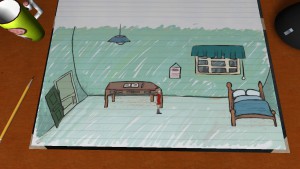
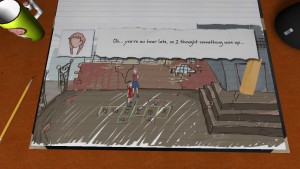
journalJournal is a dialog based narrative story game by Locked Door Puzzle released in 2014.  The story follows a young girl who has discovered that the pages in her journal have gone blank and she sets out to try to find what happened to them.  The game plays out as she talks to different characters in life, and asks them about the journal, and different interpersonal conflicts arise–her mother, her father, her classmates, teacher, priest.  The game is a little bit of exploration as she walks around a larger area and finds new people to talk to with each level of the game, but mostly the game comes down to dialog choices.  When her best friend accuses her of not being a good friend, does she apologize or deny it?  When her teacher asks her if she cheated on a test does she own up to it or cover it up?  Making the “right” choice doesn’t always produce a happy outcome–as with many things in life.  As the game goes on she’s always kind of feeling her way around things that she doesn’t really want to remember.

2015-09-30_00001I thought the idea for this game was interesting.  I liked how it didn’t go the straightforward After School Special route where if you do the right thing then everything will turn out happy for you.  I thought the art was nice enough, and the voice acting good.  I picked up on the sense that the narrative was kind of feeling around the empty spaces where other events in her life would be revealed to be, which I thought was an interesting technique.
But I found the narrative frustrating.  It seemed like at every turn I was being asked to resolve a situation that had been made by some poor choice the girl had made off-camera before the game started.  In some cases the poor choice happened during the game narrative but in a way that I had no control over.  I get what the game was going for, she is having a difficult time of it and her choices are not always the right ones and that’s just the way life is.  But the way the game was structured I felt like I was playing the role of a friend who is always cleaning up after their friend’s poor decisions.  I think it would’ve been more effective if I could’ve been somehow drawn into the poor decisions themselves, somehow.  As it was, I felt like the character was going out of her way to mess things up and expecting me to clean it up for her, which I found frustrating more than entertaining.

2015-09-30_00002Visuals
I thought the hand-drawn visuals were nice enough, but found the “twitchy” nature of the background annoying (that is, it looks like the background was drawn several times in similar but not identical drawings and then cycles through those drawings so the outline of many objects are constantly twitching.

Audio
Nice voice acting.

Challenge
Nil.  The narrative progresses no matter what you choose and there’s not specific outcomes you’re aiming for.

Story
More story than anything else.

Session Time
Can save and quit at any time, which is handy.

Playability
Easy.  The only thing I occaisonally had difficulty with is that it’s not always obvious with the way the screens are laid out  how to move from one screen to another–I felt that could’ve been arranged a little more clearly.  But other than that.

Replayability
Different dialog choices affect the outcome, so you could replay a few times trying for different outcomes to conversations.

Originality
Well, it didn’t remind me overmuch of other games I’ve played, at least.

Playtime
I think it took me about an hour to play through once in no particular rush.

Overall
Interesting idea, dialog choice based narrative game where you try to sort out your life in a difficult time, but one that I found frustrating because I always felt like I was cleaning up after someone else’s mess.  $10 on Steam.

Guidelines for Short Fiction Guidelines

written by David Steffen

I read thousands of fiction guidelines of all genres every year as part of my work at The Submission Grinder, in order to distill those guidelines down into their basic components for market listings.  After reading so many guidelines I wish that there were guidelines that editors had to follow when they’re writing their guidelines pages.  Writers can be criticized for using tired cliches, but editors would do well to turn that critical eye on their own guidelines.  Note that none of these are meant to single out any particular publisher or market, and don’t affect the availability of listings. But are, rather, general impressions I have after reading so so many guidelines.


GUIDELINE NECESSITIES

I wouldn’t have thought the listing out necessities would be a thing that needs doing, but I see important information omitted quite often.

  1. Pay Rate

Most short fiction sales have a non-negotiable pay rate, and most short fiction markets post the rate right in their guidelines so authors can decide before they submit what level of pay they consider reasonable compensation.  It can save both parties hassle in the long run because the authors should have already known the pay rate before the acceptance letters are sent out and that shouldn’t be a point of contention.  If you don’t provide information about pay rate you give the impression that you don’t pay.  If you really don’t pay, be upfront about it and just state clearly that you don’t pay.  If you do pay you should state that clearly also.

  1. Genre/Style/Subject of story

In the absence of genre information, you might simply mean that you want contemporary fiction aimed at a mainstream audience.  You might, or you might not.  An author might assume differently than you.  Why not just say explicitly what kinds of things you’re interested in?  Maybe you want only “literary” style, or maybe you want nothing of that style.  If you don’t say something you can’t blame writers for submitting it.  If there’s some subject material you want absolutely nothing to do with, whether it’s a heavily used trope like zombies or a real life thing like child abuse, just say so.

  1. Word Count Range

Some guidelines say that submissions of any length are acceptable, others say that any short fiction is acceptable.  But where does it become unreasonable for an author to submit?  What is “short” fiction and what is “long” fiction?  If you give at least a ballpark of the boundary you’re thinking of, then authors who read the guidelines can avoid sending something you know you won’t be able to use.

  1. Reprint/Multiple/Simultaneous Submissions

Whether or not you take reprints (stories that have been published already), multiple submissions (more than one story submitted to you from same author at a time), or simultaneous submissions (same story submitted to you and another publisher at a time), just say so.  The default guess for most savvy authors will be no on all three, but it’s not like guidelines words are rationed.

  1. Timeframe for querying

Even if you intend to stay on top of submissions and reply to them in a timely manner, there may be circumstances where you get behind or an email gets eaten by the internet.  So it’s important to state a time period after which an author can feel free to query about the status of a submission–long enough so that you are not constantly pestered about statuses but short enough that the author isn’t left hanging for a very long period of time (30, 60, or 90 days are common values).

  1. Any peculiar specifics

Be sure to list any specific requirements peculiar to your process.  Requirement for anonymity and any extra hurdles that requires, file formats, etc.

  1. Easy to find guidelines

Some sites hide the submission guidelines like they’re some kind of dirty secret.  Preferably a writer should be able to find a link to the guidelines page linked right from the home page of the site, marked with a name like “Submit” or “Guidelines” or “Contribute”.


THINGS TO AVOID

There are certain trends that I’ve noticed that may raise my eyebrow about whether a publication is writer-friendly.  Think twice about putting these in your guidelines and be aware you are driving some writers away with them.

  1. Contests that use first rights unpaid

If you have a contest, and you want people to vote on entries to decide which stories win, put it in a private section of the site.  Otherwise you are using up the writer’s first publication rights for no benefit to them.  If you insist on doing this, at least explain in your guidelines that the writer is giving up their most valuable product without certainty of compensation. Along similar lines, if you claim to be a paying contest, pay for every work that is published.  The exceptions often take the form of saying that the winner will be paid and published, and that runners-up will be published with no mention of payment on the latter.  If you insist on doing this, make it clear in your guidelines that writers are gambling their first publication rights with a chance of nothing in return.

  1. “Pay” in anything that is not currency

You can’t pay for groceries with exposure.  You can’t pay your mortgage with contributor copies.  So don’t claim you are “paying” in these things.  If you’re not paying, say so.

  1. Saying that you can’t afford to pay writers, but also requiring first publication rights.

If you can’t afford to pay writers, it’s worth considering why those writers should give away the most valuable aspect of their story–first publication rights.  Do you actually have a platform that will provide them more exposure than posting on their blog or self-pubbing on Amazon would offer?

  1. “Send only work of great quality”

Writers can’t judge the quality of their own work accurately, so don’t ask them to.  Often as a writer develops in skill their opinion of the quality of their own work will actually lower as they come to understand how far they have to go yet–probably in part due to Dunning-Kruger effect.  Presumably this statement is put in guidelines in an attempt to decrease the volume and increase the quality of slush.  But it doesn’t work and might, in fact, have the opposite effect.  You’re an editor, do your job and handle the slushpile (either by yourself or with slushreaders)–if you don’t want to do that then perhaps you are in the wrong occupation.

  1. Condescending language

Even if you don’t like romance, or you don’t like literary, or you don’t like science fiction, or you don’t like whatever else, there’s no need to talk down about it in your guidelines. Keep in mind that there are many writers who write in many different genres, and some might write well in both genres you prefer and those you don’t.  Talking down about “genre fiction” is especially telling because “literary” is also a “genre”–everything fits into one or more genres, and speculative fiction can be literary in style.

  1. Nitpicky formatting requirements

Guidelines often refer to “standard manuscript format”, but since there is no centralized source of standards, there are more than one “standard” you’ll see.  Some will specify that you use a different font, different spacing, tell you to set Word to indent your paragraphs instead of pressing Tab.  For a short story writer to make sales they have to continually send and resend their stories to different magazines.  This takes time, but what would take way more time is rejiggering the manuscript every time it goes back out because different markets have different preferences.  If you want something different, as long as you can read the story, any nitpicky formatting can wait until the acceptance is sent out, at which point there’s a clear motivation for making the effort.  An obvious exception to this is when there is a clear and immediate need for an alteration, most notably the stripping of author name from a manuscript when dealing with anonymous slushpiles.

  1. “We can’t pay yet, but we hope to  pay someday”

This isn’t generally how the business works.  If you treat your writers well, and you pay well for their fiction, and you show that you have good taste in your choices, and you can get the word out about your stories, then you will attract more writers and more experienced writers who have had the time to develop the skill you want to use.  This will increase the overall quality of your slushpile and if you choose from that slushpile carefully you will end up with a much better result.  If you don’t pay writers then you will only get submissions from writers who are willing to submit stories to you for no pay, which is a much smaller group that is going to exclude most of the best active writers.  With lower quality work in the publication, you will have a harder time finding a paying reader base–it’s hard enough finding funds if the quality of the work is high, it’s nigh impossible if the quality is low.  So “we can’t pay yet but we hope to someday” tends to hint that you don’t really have a good idea how to run this business, which combined with the lack of pay is not a great sign to someone thinking of submitting.


BONUS POINTS

The things following are things which are not expectations in the guidelines, but if you feel comfortable putting something like them in the guidelines they make your guidelines page especially useful and attractive to writers.

  1. Sample contract

There can be a big gap between the general terms listed in guidelines and the specific terms listed in a contract simply because the former is conversational language and the latter is formally structured legalese.  If you have an author-friendly contract template in hand, there should be no reason why you can’t share that publicly to help authors make an informed decision.

  1. Diversity Statement

If you want to increase the diversity of the authors and stories in your slushpile, it can help to ask for this in your guidelines–especially reaching out to demographics that have historically been excluded for either the author identity or the content of a story–gender, race, sexuality, culture, religion, neural profile, etc.

  1. “Don’t self-reject. If in doubt, submit.”

Statements like this are particularly welcoming to writers, because there can be a tendency for writers to self-reject out of doubt because they think they don’t write the kind of stories you buy.  Writers are inaccurate judges of their own work–encourage them to let you do your job.

  1. A bulleted list of important points

A writer new to your publication should read the whole guidelines page before submitting, but a quick bulleted list makes it both more likely that newbies will catch the important points and that veterans will refresh their memory before submitting again.

  1. A brief list of exemplary famous authors

If you say you want stories that bring to mind Phillip K. Dick, Terry Pratchett, Octavia Butler, Isaac Asimov, or Douglas Adams, these all give useful information to a writer about what kind of aspects of fiction you value most to help them decide what to send to you first.  If you truly want everything in every style, leave this list out.  And keep the list short–if you have too many authors on it, then trying to distill a meaning from that list becomes impossible.


DP Fiction #19: “Do Not Question the University” by PC Keeler

“History,” spoke The University.

Albert had no interest in History. Nor had he interest in Mathematics, Science, Language, Art, or any of the other schools of The University. But one did not question The University, let alone defy it. Tales skittered among the Uneducated about Accepted Candidates thrown back from the gates for a single unwisely chosen word. The accepted response was safe.

“I so pledge,” said Albert.

A hole dilated open in the hallowed wall in front of him, symbolic of the forthcoming opening of Albert’s own eyes as he gained his Education. Antiseptic blue light spilled out. He waited for the command, to demonstrate his patience and submission to the sacred Policies and Procedures. One page of the Packet had detailed precisely how he was to behave, and he had no intention of failing now. Not when greatness lay before him.

“Insert your left hand,” The University instructed Albert. He obeyed. His skin looked a sickly sallow under the light, until the opening sealed around his wrist and held him in place. He felt the mildest of twinges as an airjet drove the new chip into his wrist, neatly tucked beneath his radial artery. His own pulse would provide the micropower the chip would need for the rest of his life.

“Welcome, Freshman,” The University boomed, loudly enough for the rest of the Application Center to hear. No one cheered. No one ever cheered. The Uneducated saw the Educated as mad, and yet dreamed of one day joining their ranks. Every Accepted Candidate meant there was one less spot available for the rest of them that year. He was no more Educated than he had been when he stepped into the Application Center ten minutes prior and submitted his forms, and yet now he was counted among their ranks for the potential that The University had seen within him.

The porters arrived. He had brought nothing with him, as per the Policies and Procedures, save for the clothing they now demanded he remove. He had made arrangements for the rest of his personal effects, as every Potential Candidate did. But this year, those arrangements would be put into action. He had a single cousin, who would have it all, the same as if Albert had died.

He donned his University Uniform. For the next six years, he would wear the comfortable, loose canvas of the jeans and the casual, distinctive blue shirt of the University Student, and carry the slim-line screen on which so much of his life would now depend. The porters gave him that screen when he was dressed. It was already turned on, and his class schedule was displayed in glowing green letters. His first class was in thirty minutes: Introduction to Speculative Analysis.

He left the Application Center without another word, either to the porters or to The University. The University had other Candidates to evaluate, and the porters would eagerly scrutinize his every word for signs of rebellion. He would give them nothing. He would be Educated in History and then the porters would have no power over him ever again.

Only The University would. Forever.

Six years. Six years of glorious freedom, and yet, only by abstaining from the temptations of life at The University could Albert become Educated. Many did not. To be a University Student was, after all, to be free to travel anywhere in the world, to be free to order any goods or services one desired, to be free to take part in all the wonderful bounty the world had to offer.

But The University was keeping track. Education was priceless. No man could possibly possess the wealth needed to pay even a single year of the most abstemious life at The University. It was solely by the generosity of The University and its ancient, mythical Donors that any man could become Educated, by surrendering himself to the wise and remorseless command of The University. To be given the opportunity for Education and to waste that chance was the most foolish possible outcome a man could achieve. And yet so many did, trading six short years of glory for a lifetime of drudgery.

History was a rare subject. Only four others shared the topic with Albert in his class. The first thing Albert learned was the wisdom of The University, for he was fascinated from the moment of his first lesson. All sorts of strange and wonderful secrets were his, matters that the Uneducated could never hear.

How once, The University had a great rival, whose name had been deliberately expunged in the riotous celebration when The University achieved its final victory.

How before that, The University had been but one of many, invited to ally itself with great powers among its brethren but choosing to stand proudly alone, growing in wealth and import with each passing year.

How once, not a lifetime but a single summer’s labor was deemed sufficient to repay the cost of a year’s Education, and how the years of labor per year of study grew each year.

How beyond The University’s reach there had been other places that refused the benevolent counsel of The University – and Albert could understand the implications of the phrase ‘had been.’

How the University had turned its wisdom upon itself, and seen the fallibility of man, and acted to remove that element from its own administration. It had been a very long time since mere human decisions had guided it, since bureaucracy and greed had played a role in the administration of the world. It was only among the University Students that folly remained despite The University’s rigorous selection; of the few tens of thousands chosen around the world each year, one in ten would squander the priceless gift of Education, and another one in twenty would fail its rigors despite their best efforts.

It was not merely human history that Albert learned. Alone among his classmates, The University chose for him courses of study that took him deep into the Restricted Archives, regions where The University’s own processes of deliberation had been recorded. Organization charts, acceptance criteria, secrets that many of the Uneducated would beamingly murder to learn, to gain their own entry into the ranks of their betters. He began from the most ancient of files and moved forward.

Many of Albert’s classmates had dissipated their precious days, losing the favor of The University but still through its grace permitted their full term of freedom. Albert did not travel. Albert did not spend his nights in drunken stupors. Albert was engaged, in the fullest sense of the word. The University guided Albert, drove Albert, but where it drove him was deeper and deeper into itself, into understanding how The University had once functioned, how it grew over time, how its Policies and Procedures had developed into the heart of the world.

When six years had passed, Albert was given the highest of trials The University had to offer. He would not be given the multiple-choice tests that his wastrel classmates would take (and fail), to perfunctorily prove their lack of worth. He would not sit for days filling out Blue Book after Blue Book, demonstrating his grasp of rote facts and simple analysis. He would not even sit before a panel of Professors to be judged for fitness to join their exalted ranks.

No, Albert stood before The University itself, the hallowed Seal etched into the floor of an ancient chamber. Speakers and sensors embedded into every wall left The University aware of his presence at its symbolic heart as he faced his Final Examination.

The University asked him, “What went wrong?”


© 2016 by PC Keeler


Author’s Note:  One evening, my writing group, the Fairfield Scribes (collective authors of Z Tales: Stories from the Zombieverse), assembled in my living room, with the express purpose of shamelessly engaging in literary generation. That afternoon, I had been working on unpacking boxes of books, and came across “Legends of the Ferengi” – in which it was noted that those avaricious aliens would decades’ worth of debt to pay for a prestigious education, a concept that was just a joke when the book was written. Nowadays, that doesn’t seem quite so funny… and it doesn’t show signs of stopping.


MePictureBorn in the far-off days of the Second Millennium, PC Keeler spends his days writing detailed instructions for very dim but precise silicon brains to follow and finds it a relaxing change of pace to write more conversationally for charming, handsome, intellectual readers like you.  He enjoys past, present, and future, preferably all at once. Steampunk and Ren Faires work well for this.


If you enjoyed the story you might also want to visit our Support Page, or read the other story offerings.

Announcing the Diabolical Plots Year Three Fiction Lineup!

written by David Steffen

Diabolical Plots was open for its yearly submission window for the month of July. During that time, 803 writers submitted 1070 stories.  This year, the maximum word count was raised from 2000 words to 3500 words, and this year instead of one story per month Diabolical Plots will publish two stories, for a total of 24 stories that will begin running in April 2017 which is when the Year Two stories have all been published.

Thank you to all the writers who submitted.  You made the final choices incredibly difficult, which is a very good problem for an editor to have.  If we had the resources to publish more right now, there would have been plenty of excellent stories to choose from.

OK, without further ado, here is the list of stories and authors and their publishing order!

April 2017

“O Stone, Be Not So” by José Pablo Iriarte

“The Long Pilgrimage of Sister Judith” by Paul Starkey

May 2017

“The Things You Should Have Been” by Andrea G. Stewart

“The Aunties Return the Ocean” by Chris Kuriata

June 2017

“The Existentialist Men” by Gwendolyn Clare

“Regarding the Robot Raccons Attached to the Hull of My Ship” by Rachael K Jones and Khaalidah Muhammad-Ali

July 2017

“Monster of the Soup Cans” by Elizabeth Barron

“The Shadow Over His Mouth” by Aidan Doyle

August 2017

“For Now, Sideways” by A. Merc Rustad

“Typical Heroes” by Theo Kogod

September 2017

“Strung” by Xinyi Wang

“The Entropy of a Small Town” by Thomas K. Carpenter

October 2017

“Lightning Dance” by Tamlyn Dreaver

“Three Days of Unnamed Silence” by Daniel Ausema

November 2017

“When One Door Shuts” by Aimee Ogden

“Shoots and Ladders” by Charles Payseur

December 2017

“Hakim Vs. the Sweater Curse” by Rachael K. Jones

“The Leviathans Have Fled the Sea” by Jon Lasser

January 2018

“Six Hundred Universes of Jenny Zars” by Wendy Nikel

“Brooklyn Fantasia” by Marcy Arlin

February 2018

“9 Things Mainstream Media Got Wrong About the Ansaj Incident” by Willem Myra

“Artful Intelligence” by G.H. Finn

March 2018

“What Monsters Prowl Above the Waves” by Jo Miles

“Soft Clay” by Seth Chambers


ETA: Note that this list originally include “Smells Like Teen Demon” by Sunil Patel, which was removed from the lineup.  This list has been edited because it is the easiest way to reference which stories are in which year, and I didn’t want this to be a source of confusion.